Department of Parasitology, Faculty of Medicine, Chiang Mai University, Chiang Mai, Thailand.
Department of Pathology, Faculty of Medicine, Chiang Mai University, Chiang Mai, Thailand.
Parasit Vectors. 2018 Jun 18;11(1):351. doi: 10.1186/s13071-018-2908-3.
Leishmaniasis is an emerging disease in Thailand with an unknown incidence or prevalence. Although the number of properly characterized and clinically confirmed cases is about 20, it is suspected that this low number masks a potentially high prevalence, with clinical disease typically manifesting itself against an immunocompromised background, but with a substantial number of subclinical or cured cases of infection. To date leishmaniasis in Thailand has been mainly ascribed to two taxa within the recently erected subgenus Mundinia Shaw, Camargo & Teixeira, 2016, Leishmania (Mundinia) martiniquensis Desbois, Pratlong & Dedet, 2014 and a species that has not been formally described prior to this study.
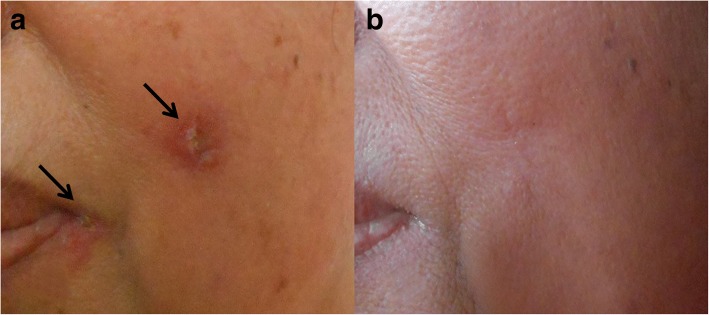
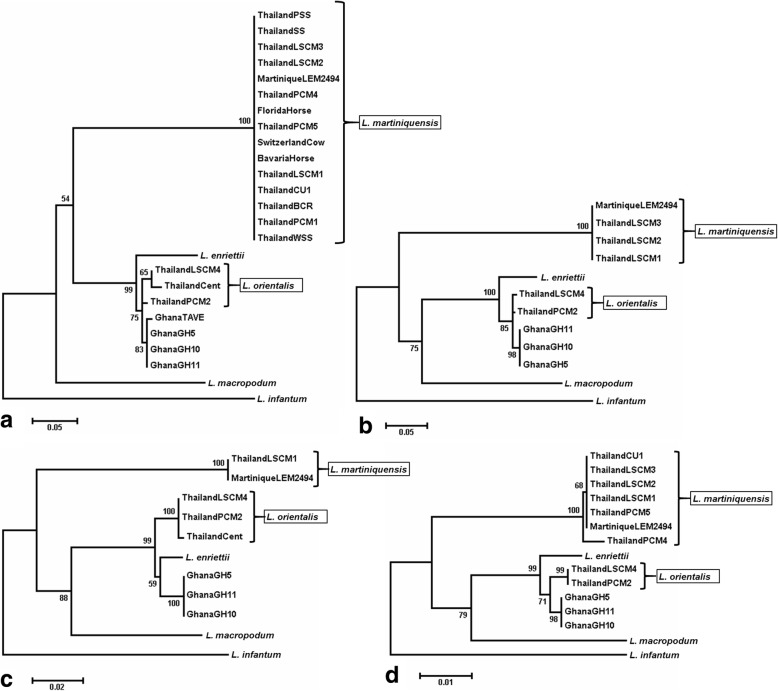
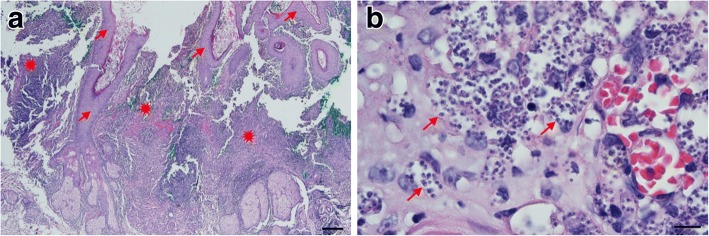
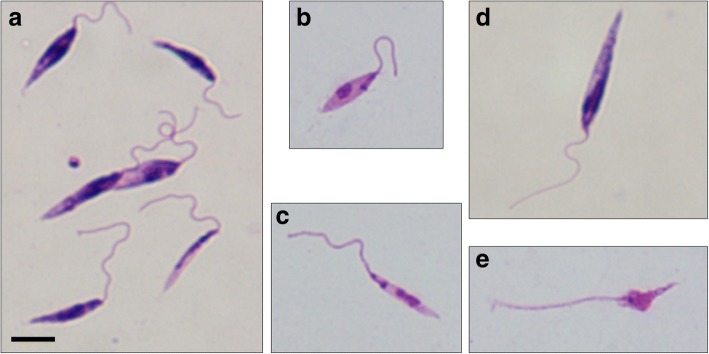
A case of simple cutaneous leishmaniasis was diagnosed in a patient from Nan Province, Thailand. Molecular analysis of parasites derived from a biopsy sample revealed this to be a new species of Leishmania Ross, 1908, which has been named as Leishmania (Mundinia) orientalis Bates & Jariyapan n. sp. A formal description is provided, and this new taxon supercedes some isolates from the invalid taxon "Leishmania siamensis". A summary of all known cases of leishmaniasis with a corrected species identification is provided.
Three species of parasites are now known to cause leishmaniasis is Thailand, L. martiniquensis and L. orientalis n. sp. in the subgenus Mundinia, which contains the type-species Leishmania enriettii Muniz & Medina, 1948, and a single case of Leishmania infantum Nicolle, 1908. This study now enables epidemiological and other investigations into the biology of these unusual parasites to be conducted. It is recommended that the use of the taxonomically invalid name "L. siamensis" should be discontinued.
利什曼病在泰国是一种新出现的疾病,其发病率或患病率尚不清楚。尽管经过适当特征描述和临床确诊的病例数约为 20 例,但据推测,这个低数字掩盖了潜在的高流行率,因为临床疾病通常在免疫功能低下的背景下表现出来,但实际上存在大量亚临床或已治愈的感染病例。迄今为止,泰国的利什曼病主要归因于最近成立的 mundinia 亚属中的两个分类群,Shaw、Camargo 和 Teixeira,2016,Leishmania(Mundinia)martiniquensis Desbois、Pratlong 和 Dedet,2014 和一种在本研究之前尚未正式描述的物种。
在泰国那空拍侬府的一名患者中诊断出一例单纯皮肤利什曼病。从活检样本中分离出的寄生虫的分子分析表明,这是一种新的利什曼原虫物种,被命名为 Leishmania(Mundinia)orientalis Bates 和 Jariyapan n. sp.。提供了正式描述,这个新分类群取代了一些来自无效分类群“Leishmania siamensis”的分离株。提供了所有已知利什曼病病例的摘要,并进行了正确的物种鉴定。
现在已知有三种寄生虫可引起泰国的利什曼病,即 mundinia 亚属中的 L. martiniquensis 和 L. orientalis n. sp.,其中包含模式种 Leishmania enriettii Muniz 和 Medina,1948,以及一例 Leishmania infantum Nicolle,1908。本研究现在使对这些不寻常寄生虫的生物学进行流行病学和其他研究成为可能。建议停止使用分类学上无效的名称“L. siamensis”。