Barratt Joel, Kaufer Alexa, Peters Bryce, Craig Douglas, Lawrence Andrea, Roberts Tamalee, Lee Rogan, McAuliffe Gary, Stark Damien, Ellis John
School of Life Sciences, University of Technology Sydney, Sydney, New South Wales, Australia.
Insect Research Facility, University of Technology Sydney, Sydney, New South Wales, Australia.
PLoS Negl Trop Dis. 2017 Jan 12;11(1):e0005215. doi: 10.1371/journal.pntd.0005215. eCollection 2017 Jan.
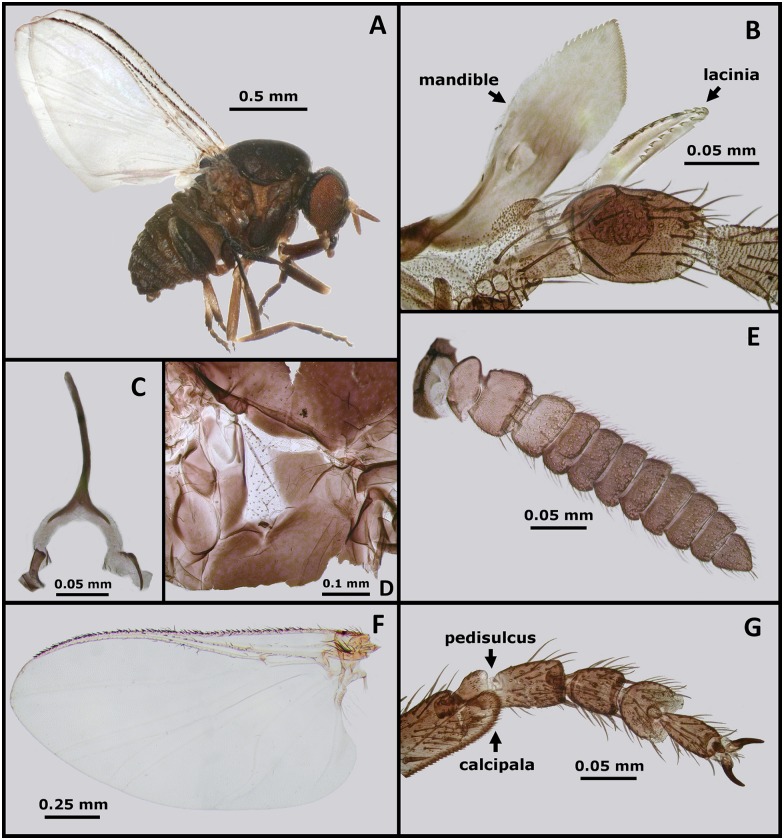
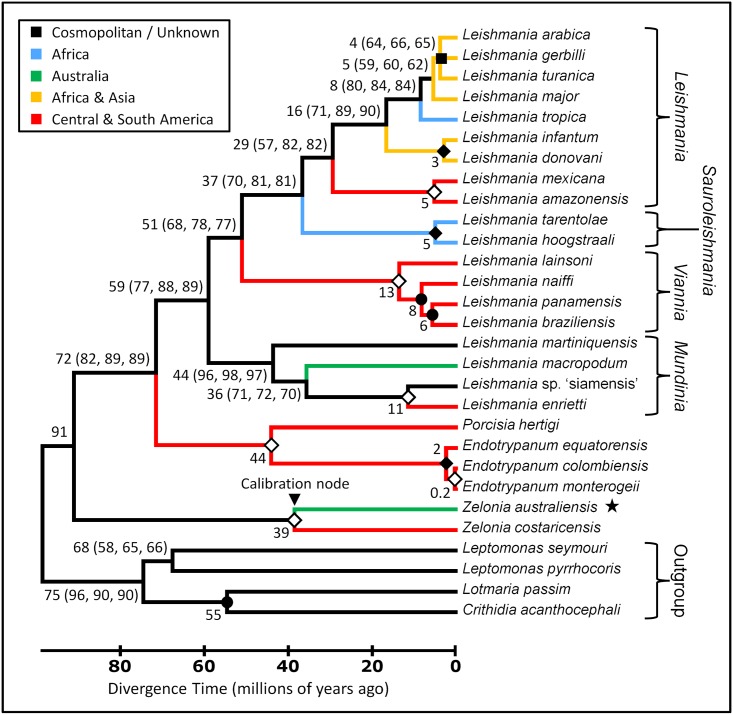
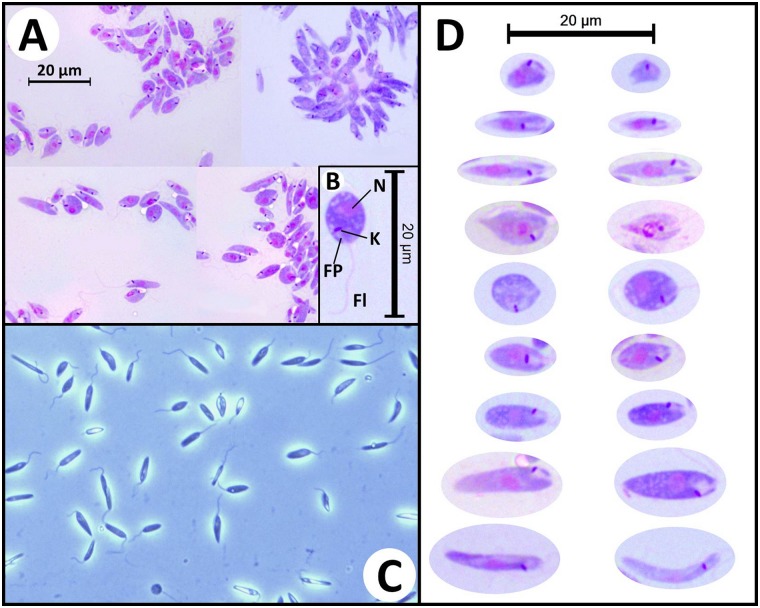
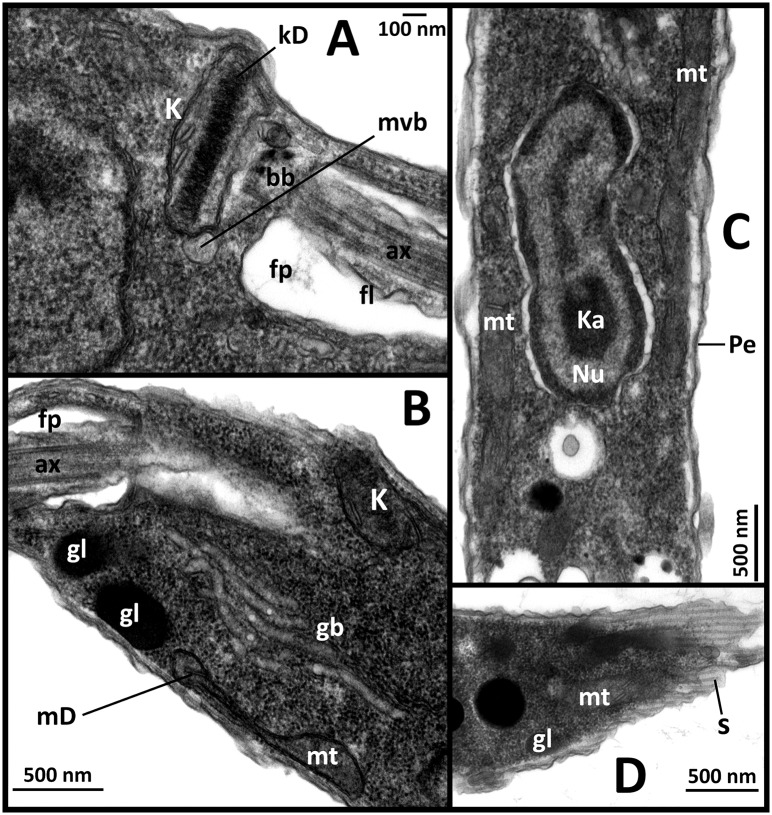
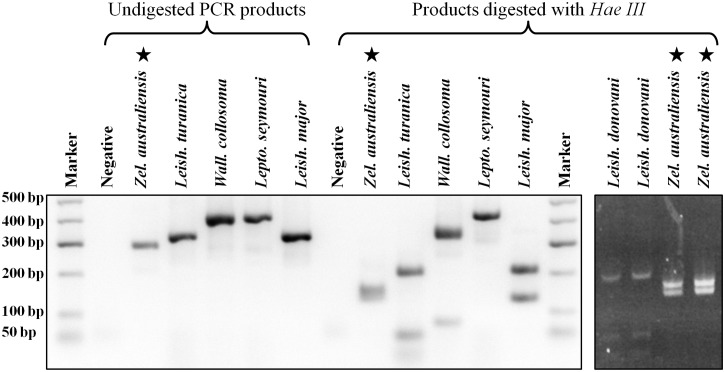
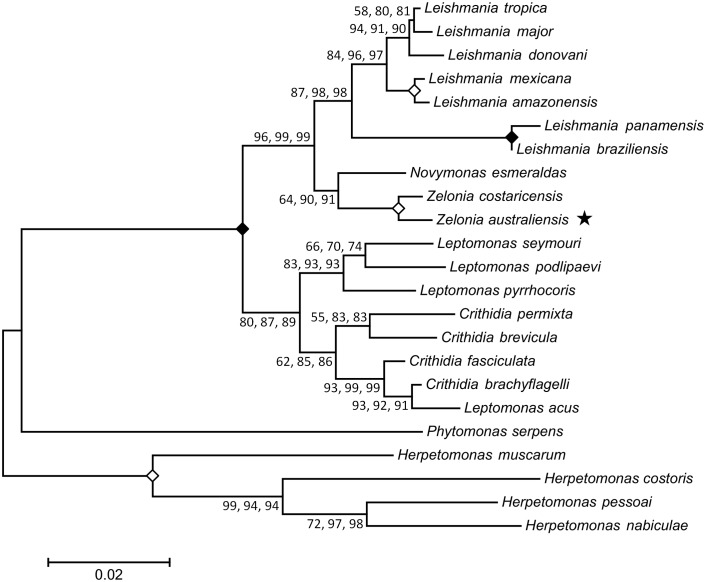
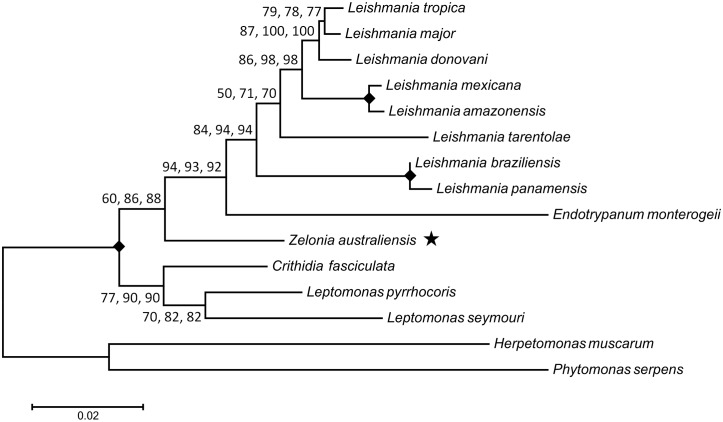
The genus Leishmania includes approximately 53 species, 20 of which cause human leishmaniais; a significant albeit neglected tropical disease. Leishmaniasis has afflicted humans for millennia, but how ancient is Leishmania and where did it arise? These questions have been hotly debated for decades and several theories have been proposed. One theory suggests Leishmania originated in the Palearctic, and dispersed to the New World via the Bering land bridge. Others propose that Leishmania evolved in the Neotropics. The Multiple Origins theory suggests that separation of certain Old World and New World species occurred due to the opening of the Atlantic Ocean. Some suggest that the ancestor of the dixenous genera Leishmania, Endotrypanum and Porcisia evolved on Gondwana between 90 and 140 million years ago. In the present study a detailed molecular and morphological characterisation was performed on a novel Australian trypanosomatid following its isolation in Australia's tropics from the native black fly, Simulium (Morops) dycei Colbo, 1976. Phylogenetic analyses were conducted and confirmed this parasite as a sibling to Zelonia costaricensis, a close relative of Leishmania previously isolated from a reduviid bug in Costa Rica. Consequently, this parasite was assigned the name Zelonia australiensis sp. nov. Assuming Z. costaricensis and Z. australiensis diverged when Australia and South America became completely separated, their divergence occurred between 36 and 41 million years ago at least. Using this vicariance event as a calibration point for a phylogenetic time tree, the common ancestor of the dixenous genera Leishmania, Endotrypanum and Porcisia appeared in Gondwana approximately 91 million years ago. Ultimately, this study contributes to our understanding of trypanosomatid diversity, and of Leishmania origins by providing support for a Gondwanan origin of dixenous parasitism in the Leishmaniinae.
利什曼原虫属大约包括53个物种,其中20种可导致人类利什曼病,这是一种虽被忽视但却很重要的热带疾病。利什曼病折磨人类已有数千年之久,但利什曼原虫有多古老,它起源于何处?这些问题已激烈争论了数十年,并且已经提出了几种理论。一种理论认为利什曼原虫起源于古北区,并通过白令陆桥扩散到新世界。其他人则提出利什曼原虫在新热带区进化。多重起源理论表明,某些旧世界和新世界物种的分离是由于大西洋的形成。有人认为,双宿主属利什曼原虫、内锥虫属和猪锥虫属的祖先在9000万至1.4亿年前在冈瓦纳大陆进化。在本研究中,对一种新的澳大利亚锥虫进行了详细的分子和形态学特征分析,该锥虫是从澳大利亚热带地区的本地黑蝇——1976年的戴氏蚋(Simulium (Morops) dycei Colbo)中分离出来的。进行了系统发育分析,并确认这种寄生虫是哥斯达黎加利什曼原虫的近亲——哥斯达黎加泽洛锥虫的姐妹种。因此,这种寄生虫被命名为新物种澳大利亚泽洛锥虫(Zelonia australiensis sp. nov.)。假设哥斯达黎加泽洛锥虫和澳大利亚泽洛锥虫在澳大利亚和南美洲完全分离时发生分化,它们的分化至少发生在3600万至4100万年前。利用这一地理隔离事件作为系统发育时间树的校准点,双宿主属利什曼原虫、内锥虫属和猪锥虫属的共同祖先大约在9100万年前出现在冈瓦纳大陆上。最终,本研究通过支持利什曼亚科双宿主寄生起源于冈瓦纳大陆,有助于我们理解锥虫的多样性以及利什曼原虫的起源。