Department of Pharmacology, Institute of Biology, Rio de Janeiro State University, Rio de Janeiro, RJ, Brazil.
Department of Chemical Processes, Institute of Chemistry, Rio de Janeiro State University, Rio de Janeiro, RJ, Brazil.
PLoS One. 2018 Jun 19;13(6):e0199207. doi: 10.1371/journal.pone.0199207. eCollection 2018.
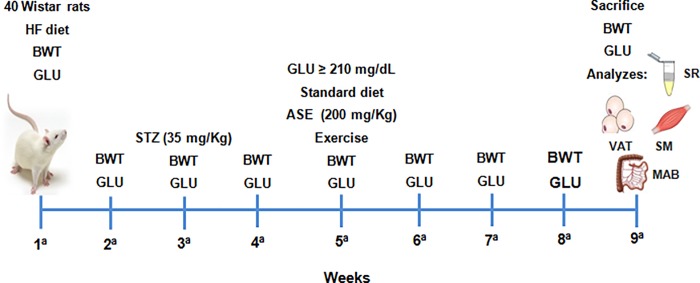
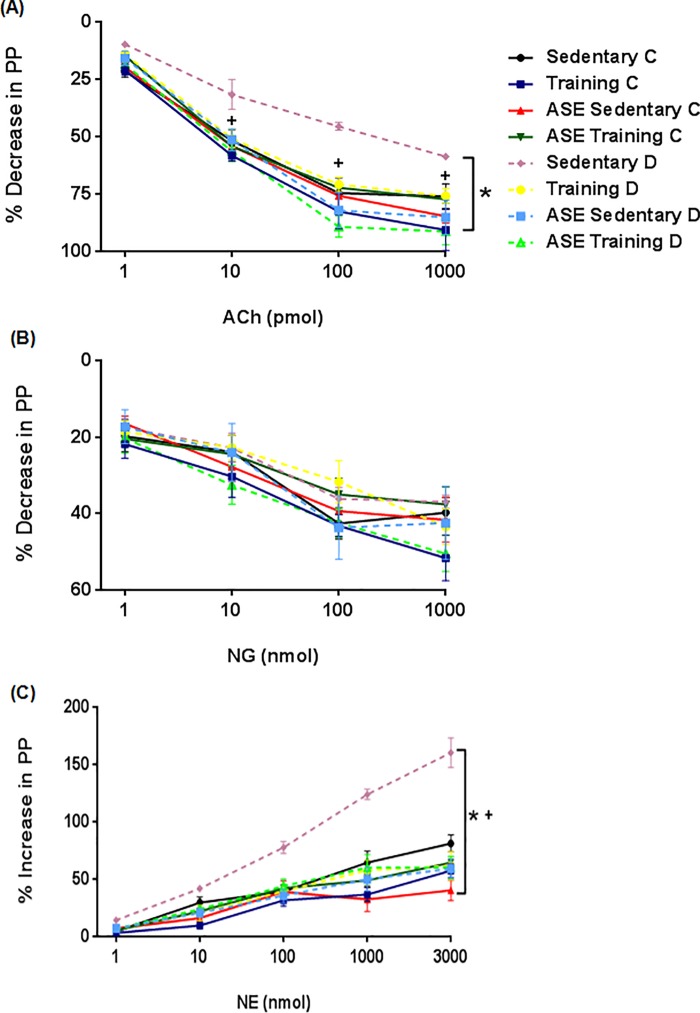
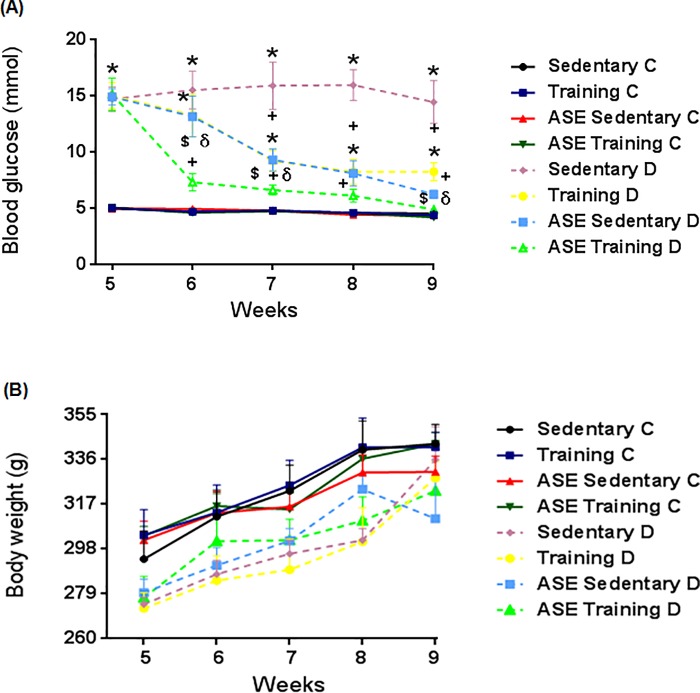
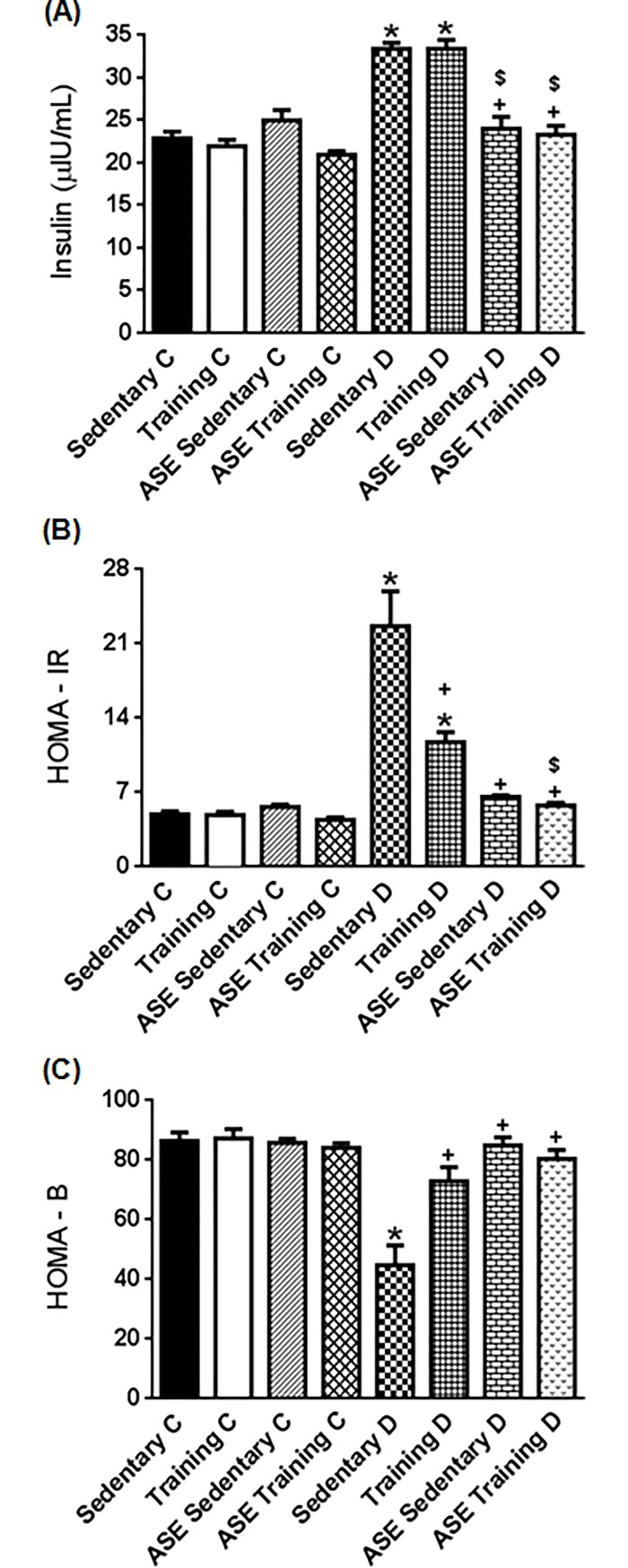
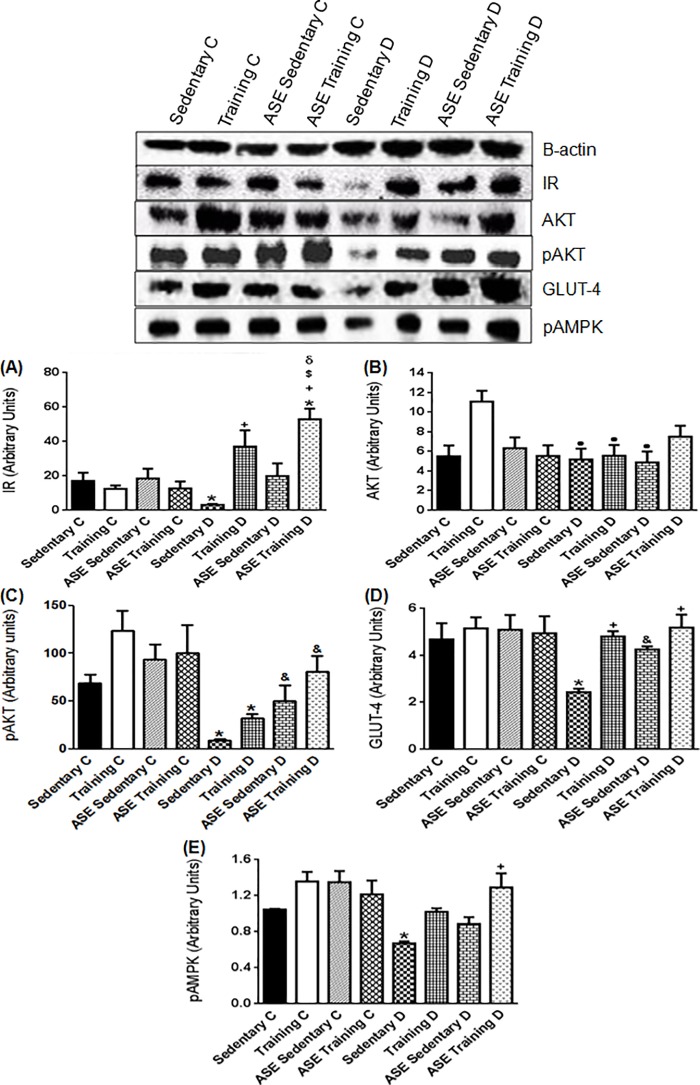
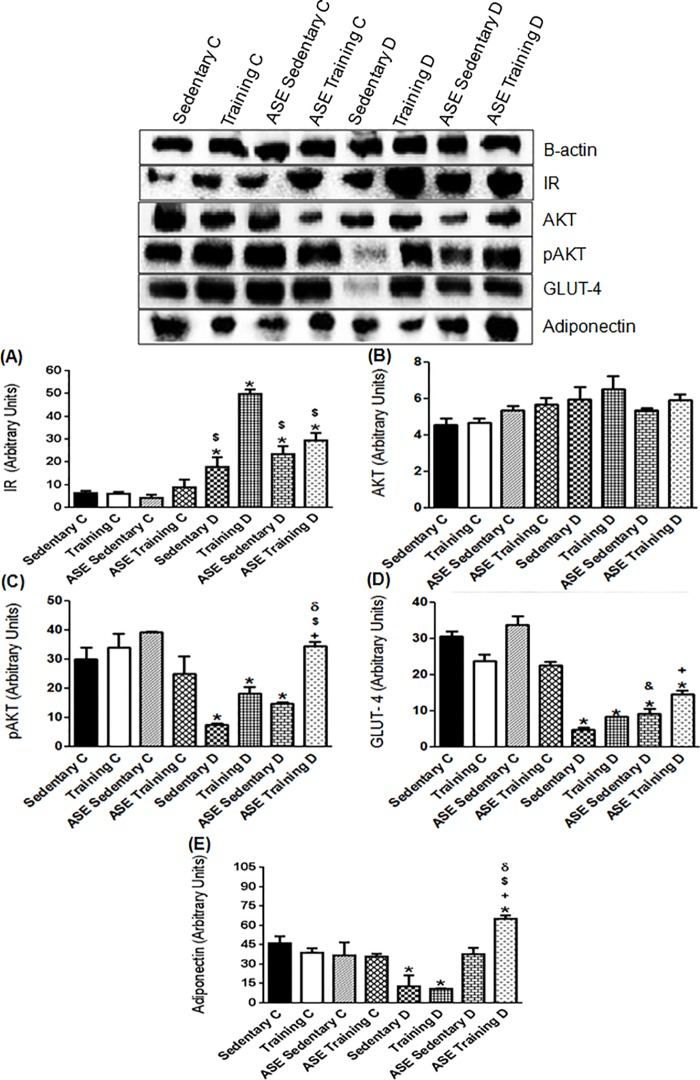
A growing body of evidence suggests a protective role of polyphenols and exercise training on the disorders of type 2 diabetes mellitus (T2DM). We aimed to assess the effect of the açaí seed extract (ASE) associated with exercise training on diabetic complications induced by high-fat (HF) diet plus streptozotocin (STZ) in rats. Type 2 diabetes was induced by feeding rats with HF diet (55% fat) for 5 weeks and a single dose of STZ (35 mg/kg i.p.). Control (C) and Diabetic (D) animals were subdivided into four groups each: Sedentary, Training, ASE Sedentary, and ASE Training. ASE (200 mg/kg/day) was administered by gavage and the exercise training was performed on a treadmill (30min/day; 5 days/week) for 4 weeks after the diabetes induction. In type 2 diabetic rats, the treatment with ASE reduced blood glucose, insulin resistance, leptin and IL-6 levels, lipid profile, and vascular dysfunction. ASE increased the expression of insulin signaling proteins in skeletal muscle and adipose tissue and plasma GLP-1 levels. ASE associated with exercise training potentiated the reduction of glycemia by decreasing TNF-α levels, increasing pAKT and adiponectin expressions in adipose tissue, and IR and pAMPK expressions in skeletal muscle of type 2 diabetic rats. In conclusion, ASE treatment has an antidiabetic effect in type 2 diabetic rats by activating the insulin-signaling pathway in muscle and adipose tissue, increasing GLP-1 levels, and an anti-inflammatory action. Exercise training potentiates the glucose-lowering effect of ASE by activating adiponectin-AMPK pathway and increasing IR expression.
越来越多的证据表明,多酚和运动训练对 2 型糖尿病(T2DM)的疾病具有保护作用。我们旨在评估与运动训练相结合的巴西莓籽提取物(ASE)对高脂肪(HF)饮食加链脲佐菌素(STZ)诱导的大鼠糖尿病并发症的影响。通过用 HF 饮食(55%脂肪)喂养大鼠 5 周和单次 STZ(35mg/kg 腹腔注射)诱导 2 型糖尿病。对照(C)和糖尿病(D)动物各分为 4 组:静息、训练、ASE 静息和 ASE 训练。ASE(200mg/kg/天)通过灌胃给药,并且在糖尿病诱导后进行 4 周的跑步机运动训练(30min/天;每周 5 天)。在 2 型糖尿病大鼠中,ASE 治疗降低了血糖、胰岛素抵抗、瘦素和 IL-6 水平、血脂谱和血管功能障碍。ASE 增加了骨骼肌和脂肪组织中胰岛素信号蛋白的表达以及血浆 GLP-1 水平。ASE 与运动训练联合使用可通过降低 TNF-α 水平、增加脂肪组织中 pAKT 和脂联素的表达以及骨骼肌中 IR 和 pAMPK 的表达来增强 2 型糖尿病大鼠的降血糖作用。总之,ASE 治疗通过激活肌肉和脂肪组织中的胰岛素信号通路、增加 GLP-1 水平和抗炎作用,对 2 型糖尿病大鼠具有抗糖尿病作用。运动训练通过激活脂联素-AMPK 通路和增加 IR 表达来增强 ASE 的降血糖作用。