Ramírez-Barrantes Ricardo, Córdova Claudio, Gatica Sebastian, Rodriguez Belén, Lozano Carlo, Marchant Ivanny, Echeverria Cesar, Simon Felipe, Olivero Pablo
Laboratorio de Estructura y Función Celular, Escuela de Medicina, Facultad de Medicina, Universidad de Valparaíso, Valparaíso, Chile.
Departamento de Ciencias Biologicas, Facultad de Ciencias de la Vida, Universidad Andres Bello, Santiago, Chile.
Front Physiol. 2018 Jun 5;9:682. doi: 10.3389/fphys.2018.00682. eCollection 2018.
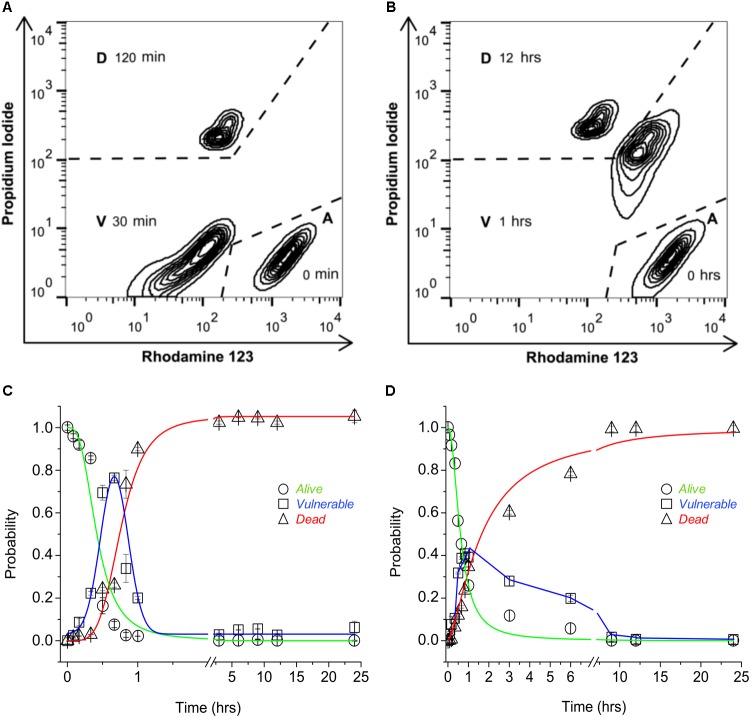
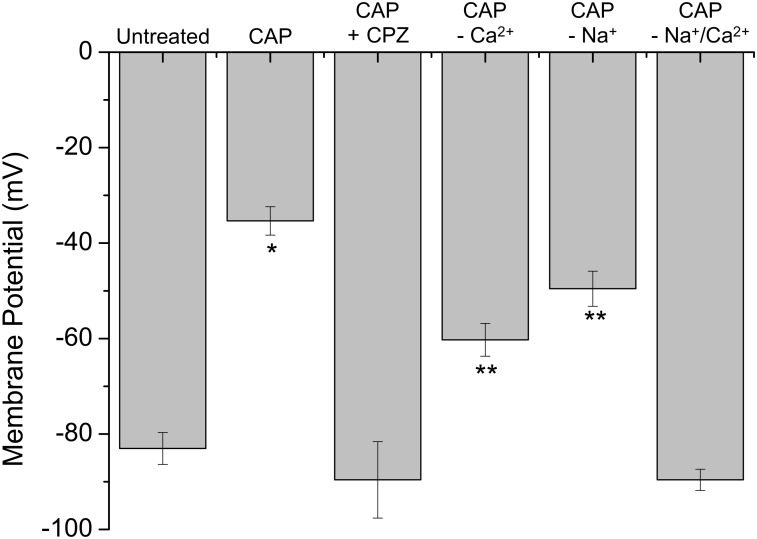
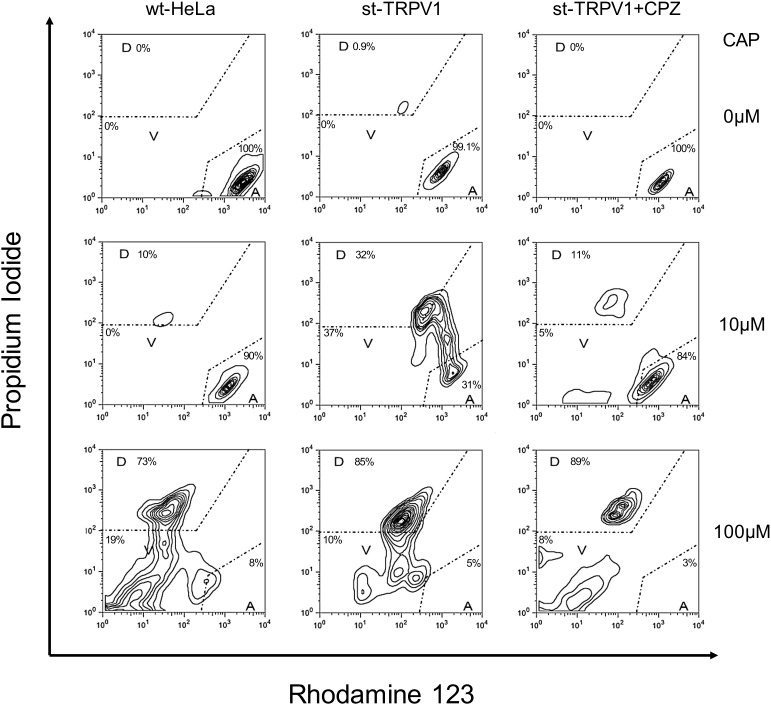
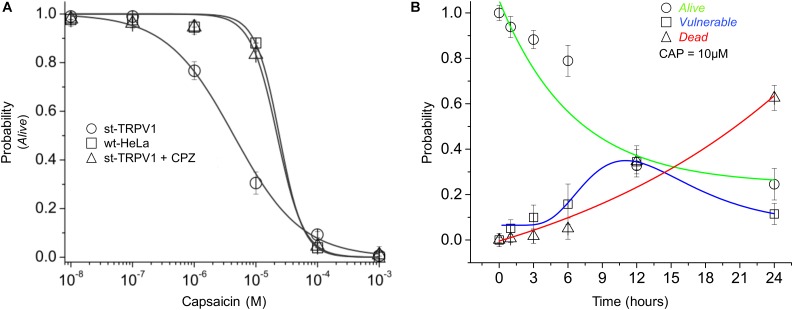
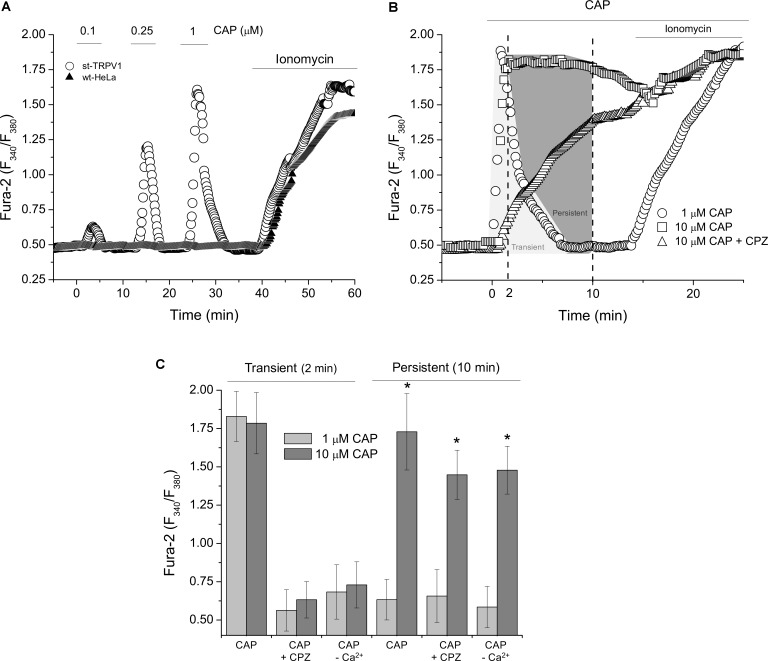
The transient receptor potential (TRP) ion channel family consists of a broad variety of non-selective cation channels that integrate environmental physicochemical signals for dynamic homeostatic control. Involved in a variety of cellular physiological processes, TRP channels are fundamental to the control of the cell life cycle. TRP channels from the vanilloid (TRPV) family have been directly implicated in cell death. TRPV1 is activated by pain-inducing stimuli, including inflammatory endovanilloids and pungent exovanilloids, such as capsaicin (CAP). TRPV1 activation by high doses of CAP (>10 μM) leads to necrosis, but also exhibits apoptotic characteristics. However, CAP dose-response studies are lacking in order to determine whether CAP-induced cell death occurs preferentially via necrosis or apoptosis. In addition, it is not known whether cytosolic Ca and mitochondrial dysfunction participates in CAP-induced TRPV1-mediated cell death. By using TRPV1-transfected HeLa cells, we investigated the underlying mechanisms involved in CAP-induced TRPV1-mediated cell death, the dependence of CAP dose, and the participation of mitochondrial dysfunction and cytosolic Ca increase. Together, our results contribute to elucidate the pathophysiological steps that follow after TRPV1 stimulation with CAP. Low concentrations of CAP (1 μM) induce cell death by a mechanism involving a TRPV1-mediated rapid and transient intracellular Ca increase that stimulates plasma membrane depolarization, thereby compromising plasma membrane integrity and ultimately leading to cell death. Meanwhile, higher doses of CAP induce cell death via a TRPV1-independent mechanism, involving a slow and persistent intracellular Ca increase that induces mitochondrial dysfunction, plasma membrane depolarization, plasma membrane loss of integrity, and ultimately, cell death.
瞬时受体电位(TRP)离子通道家族由多种非选择性阳离子通道组成,这些通道整合环境物理化学信号以进行动态稳态控制。TRP通道参与多种细胞生理过程,是控制细胞生命周期的基础。香草酸(TRPV)家族的TRP通道与细胞死亡直接相关。TRPV1可被包括炎性内源性香草酸和辛辣外源性香草酸(如辣椒素(CAP))在内的致痛刺激激活。高剂量CAP(>10μM)激活TRPV1会导致坏死,但也表现出凋亡特征。然而,缺乏CAP剂量反应研究以确定CAP诱导的细胞死亡是优先通过坏死还是凋亡发生。此外,尚不清楚胞质Ca和线粒体功能障碍是否参与CAP诱导的TRPV1介导的细胞死亡。通过使用转染了TRPV1的HeLa细胞,我们研究了CAP诱导的TRPV1介导的细胞死亡所涉及的潜在机制、CAP剂量的依赖性以及线粒体功能障碍和胞质Ca增加的参与情况。总之,我们的结果有助于阐明用CAP刺激TRPV1后随之而来的病理生理步骤。低浓度的CAP(1μM)通过一种机制诱导细胞死亡,该机制涉及TRPV1介导的细胞内Ca快速短暂增加,刺激质膜去极化,从而损害质膜完整性并最终导致细胞死亡。同时,更高剂量的CAP通过一种不依赖TRPV1的机制诱导细胞死亡,涉及细胞内Ca缓慢持续增加,诱导线粒体功能障碍、质膜去极化、质膜完整性丧失,最终导致细胞死亡。