Pino Alessandra, De Angelis Maria, Todaro Aldo, Van Hoorde Koenraad, Randazzo Cinzia L, Caggia Cinzia
Department of Agricultural, Food and Environment, University of Catania, Catania, Italy.
Department of Soil, Plant and Food Sciences, University of Bari Aldo Moro, Bari, Italy.
Front Microbiol. 2018 Jun 5;9:1125. doi: 10.3389/fmicb.2018.01125. eCollection 2018.
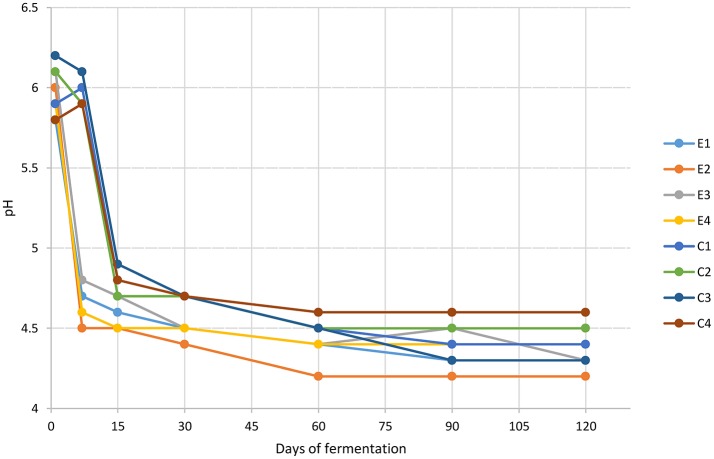
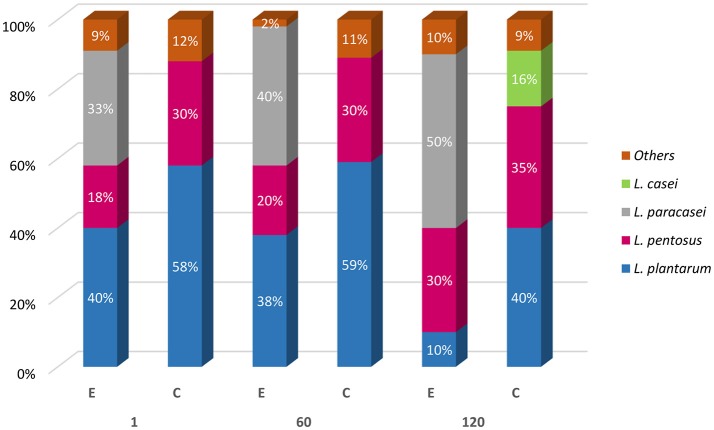
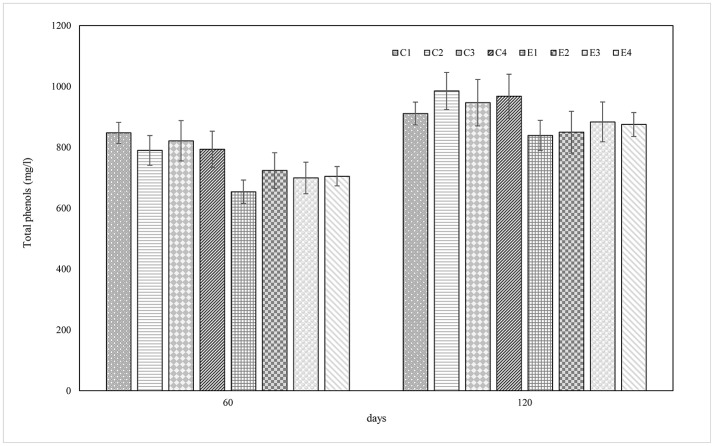
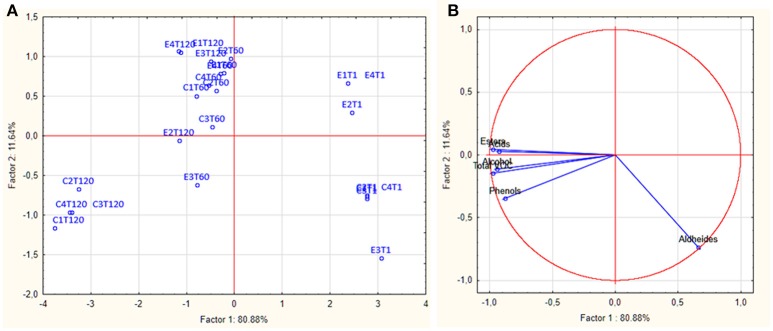
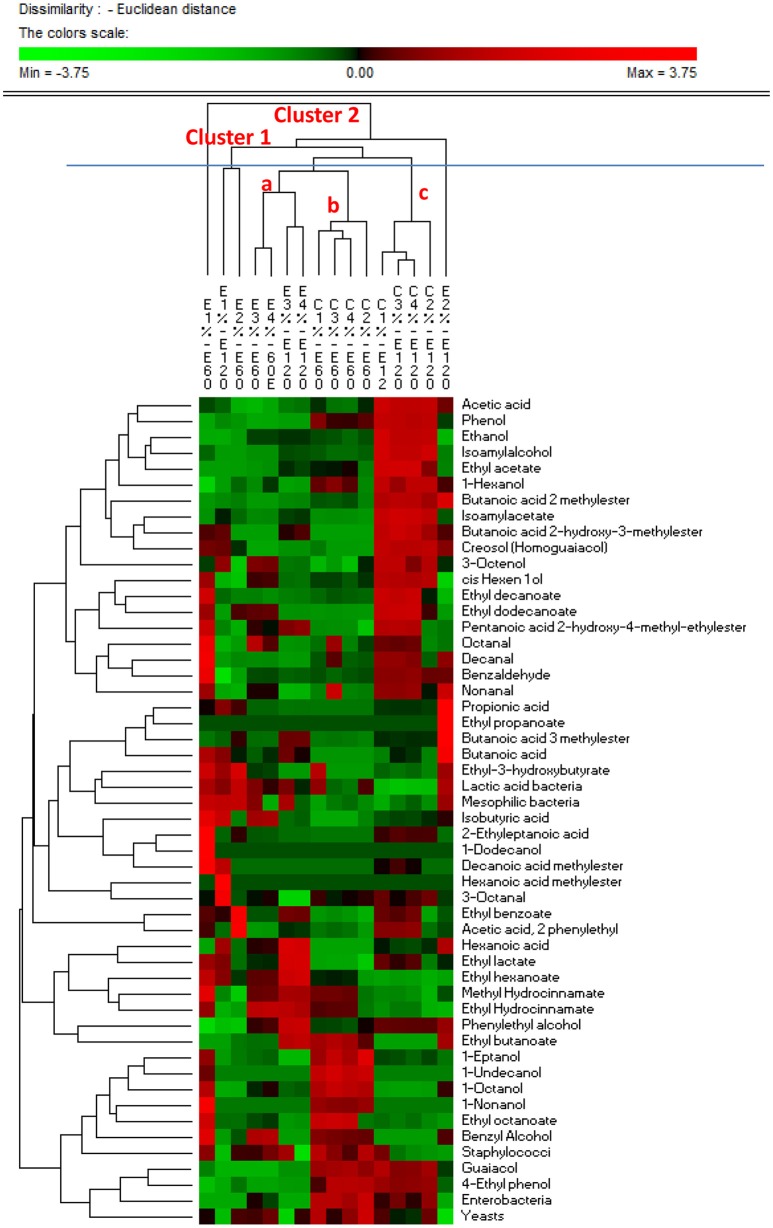
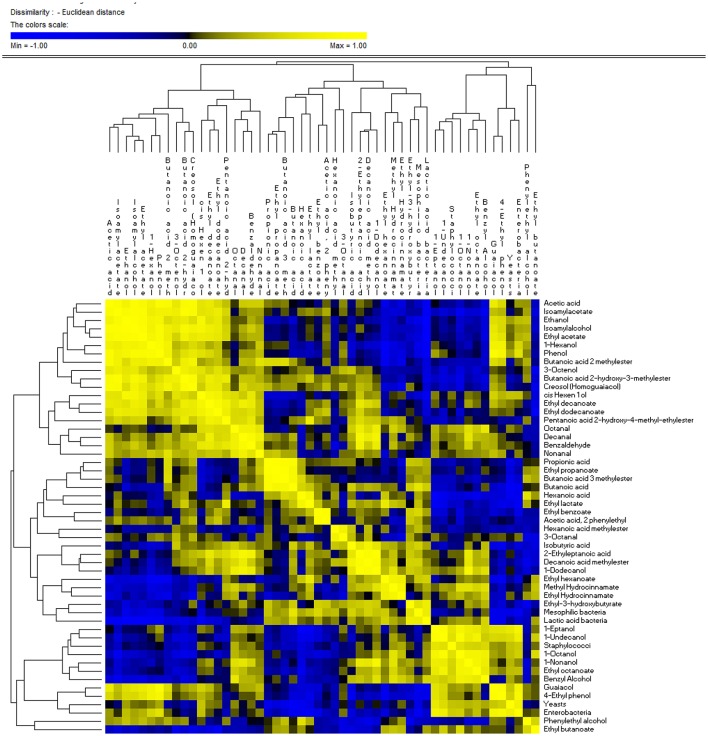
Nocellara Etnea is one of the main Sicilian cultivars traditionally used to produce both olive oil and naturally fermented table olives. In the present study, the effect of different salt concentrations on physico-chemical, microbiological, sensorial, and volatile organic compounds (VOCs) formation was evaluated in order to obtain functional Nocellara Etnea table olives. The experimental design consisted of 8 treatments as follow: fermentations at 4, 5, 6, and 8% of salt with (E1-E4 samples) and without (C1-C4 samples) the addition of starters. All the trials were carried out at room temperature (18 ± 2°C) and monitored for an overall period of 120 d. In addition, the persistence of the potential probiotic N24 at the end of the process was investigated. Microbiological data revealed the dominance of lactic acid bacteria (LAB), starting from the 7th d of fermentation, and the reduction of yeasts and enterobacteria in the final product inoculated with starters. VOCs profile highlighted a high amount of aldehydes at the beginning of fermentation, which significantly decreased through the process and a concomitant increase of alcohols, acids, esters, and phenols. In particular, esters showed an occurrence percentage higher in experimental samples rather than in control ones, contributing to more pleasant flavors. Moreover, acetic acid, ethanol, and phenols, which often generate off-flavors, were negatively correlated with mesophilic bacteria and LAB. It is interesting to note that salt content did not affect the performances of starter cultures and slightly influenced the metabolome of table olives. Sensory data demonstrated significant differences among samples registering the highest overall acceptability in the experimental sample at 5% of NaCl. The persistence of the N24 strain in experimental samples, at the end of the process, revealed its promising perspectives as starter culture for the production of functional table olives with reduced salt content.
诺切拉埃特纳是西西里岛的主要栽培品种之一,传统上用于生产橄榄油和自然发酵的食用橄榄。在本研究中,评估了不同盐浓度对食用诺切拉埃特纳橄榄的物理化学、微生物、感官和挥发性有机化合物(VOCs)形成的影响,以获得功能性食用橄榄。实验设计包括8种处理方式,如下:在添加(E1 - E4样品)和不添加(C1 - C4样品)发酵剂的情况下,分别用4%、5%、6%和8%的盐进行发酵。所有试验均在室温(18 ± 2°C)下进行,整个监测期为120天。此外,还研究了潜在益生菌N24在发酵过程结束时的存活率。微生物学数据显示,从发酵第7天开始,乳酸菌(LAB)占主导地位,在接种发酵剂的最终产品中,酵母菌和肠杆菌数量减少。VOCs谱表明,发酵开始时醛类含量较高,在整个过程中显著降低,同时醇类、酸类、酯类和酚类含量增加。特别是,酯类在实验样品中的出现百分比高于对照样品,有助于产生更宜人的风味。此外,经常产生异味的乙酸、乙醇和酚类与嗜温菌和LAB呈负相关。值得注意的是,盐含量不影响发酵剂培养物的性能,对食用橄榄的代谢组有轻微影响。感官数据表明,样品之间存在显著差异,5% NaCl的实验样品总体可接受性最高。在发酵过程结束时,N24菌株在实验样品中的存活情况表明,它作为生产低盐功能性食用橄榄的发酵剂具有广阔的前景。