Ruuskanen Matti O, St Pierre Kyra A, St Louis Vincent L, Aris-Brosou Stéphane, Poulain Alexandre J
Department of Biology, University of Ottawa, Ottawa, ON, Canada.
Department of Biological Sciences, University of Alberta, Edmonton, AB, Canada.
Front Microbiol. 2018 Jun 5;9:1138. doi: 10.3389/fmicb.2018.01138. eCollection 2018.
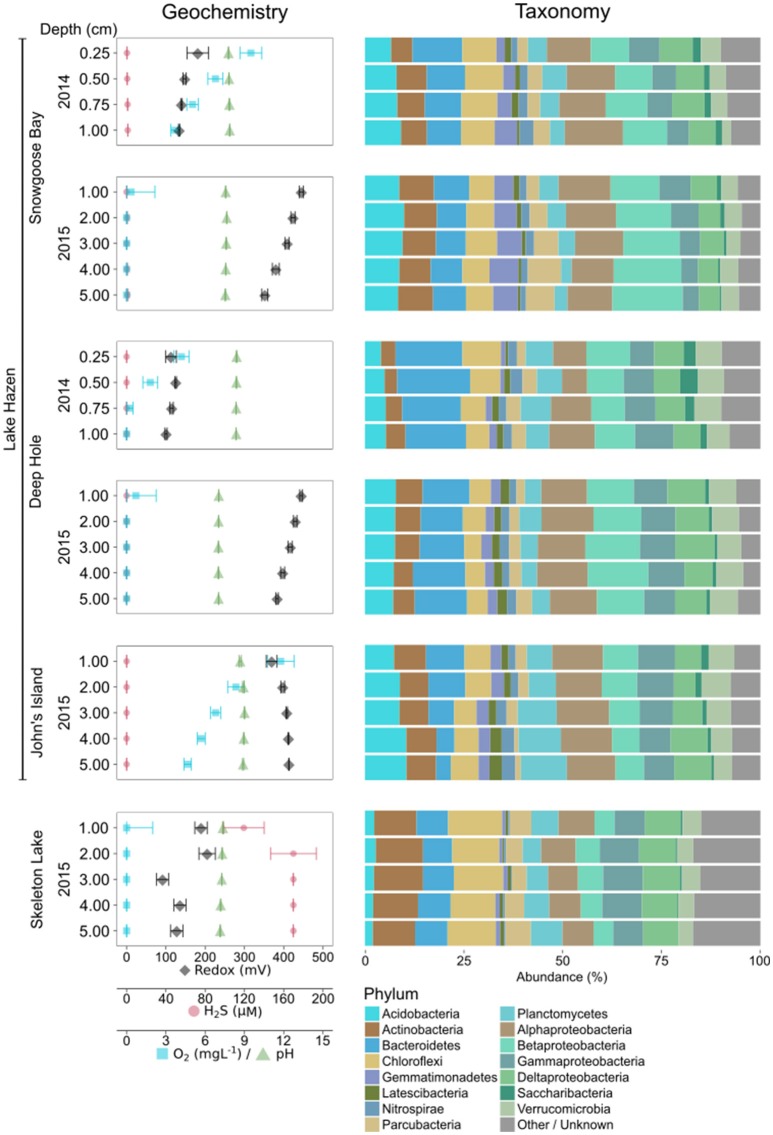
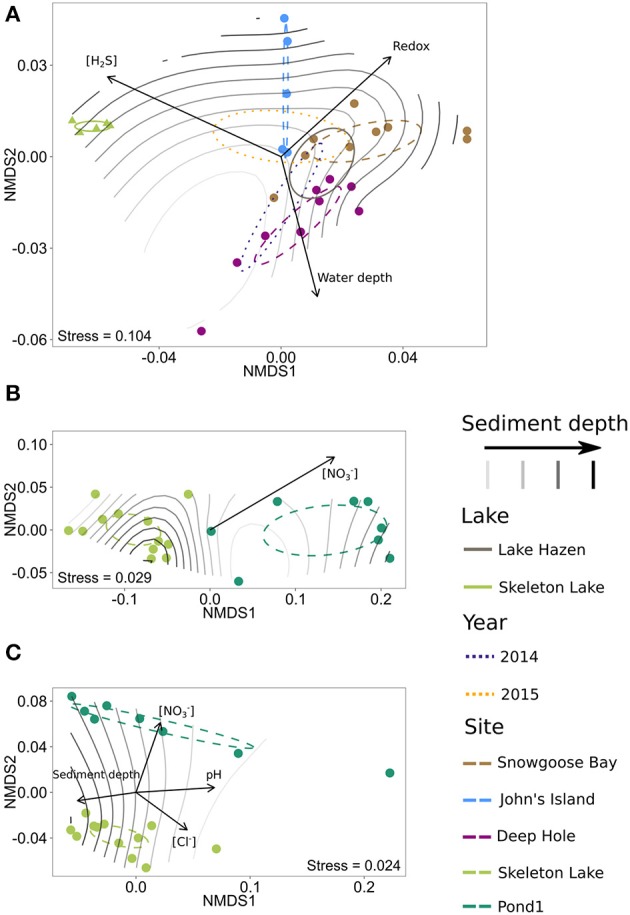
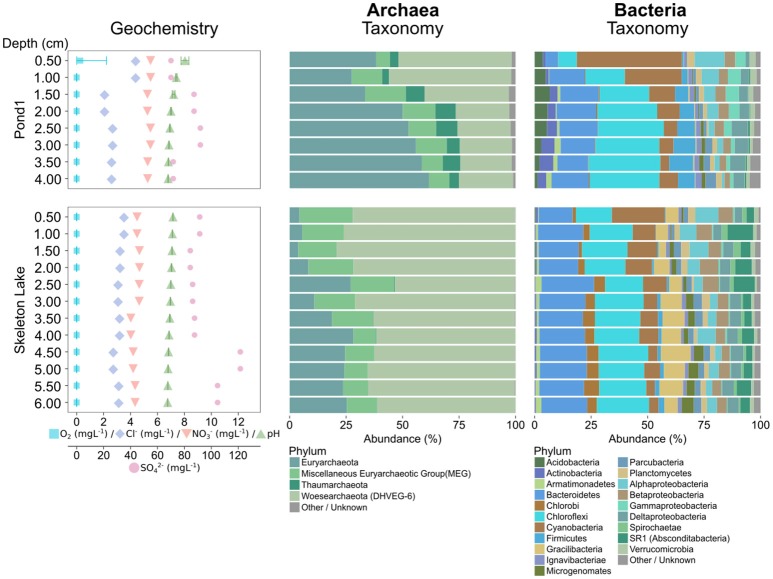
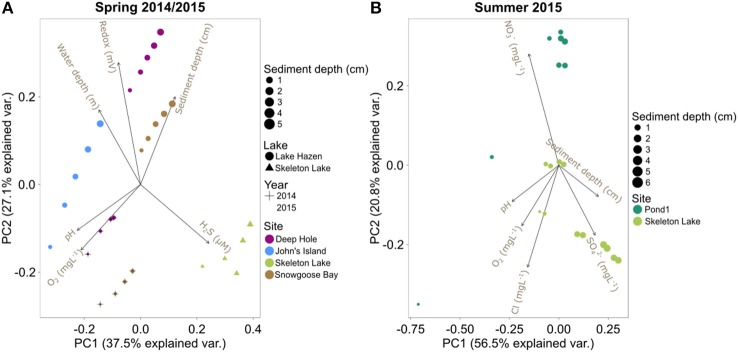
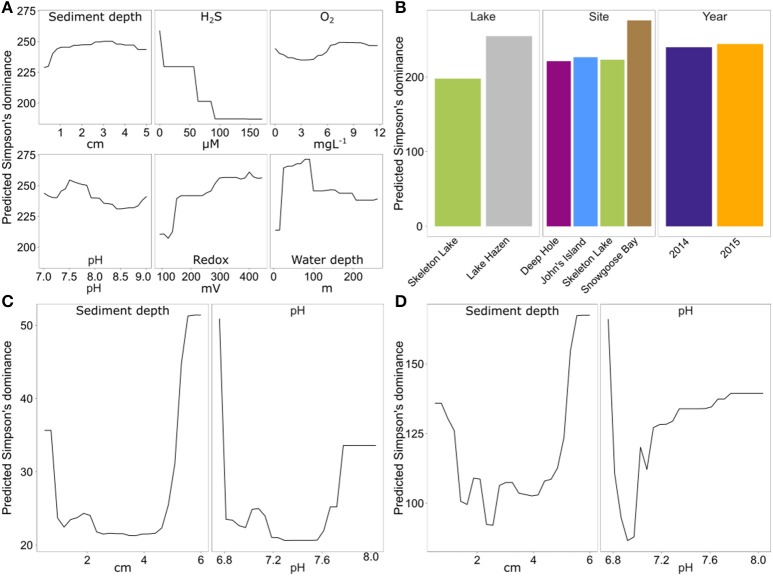
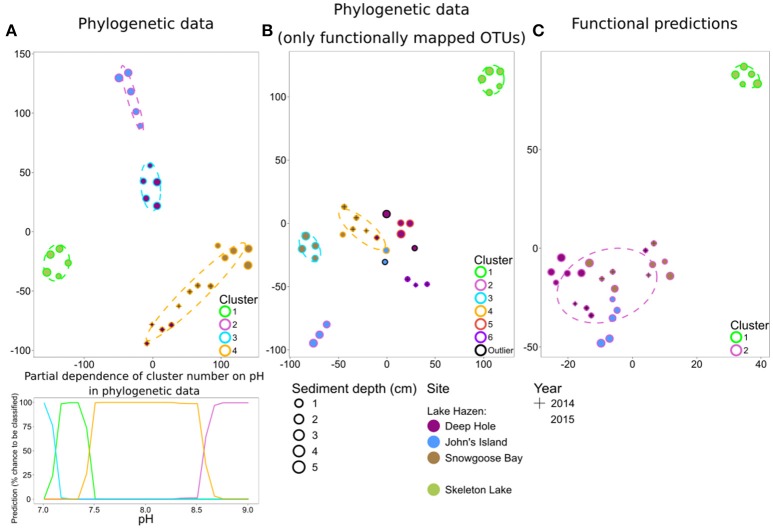
The Arctic is undergoing rapid environmental change, potentially affecting the physicochemical constraints of microbial communities that play a large role in both carbon and nutrient cycling in lacustrine environments. However, the microbial communities in such Arctic environments have seldom been studied, and the drivers of their composition are poorly characterized. To address these gaps, we surveyed the biologically active surface sediments in Lake Hazen, the largest lake by volume north of the Arctic Circle, and a small lake and shoreline pond in its watershed. High-throughput amplicon sequencing of the 16S rRNA gene uncovered a community dominated by Proteobacteria, Bacteroidetes, and Chloroflexi, similar to those found in other cold and oligotrophic lake sediments. We also show that the microbial community structure in this Arctic polar desert is shaped by pH and redox gradients. This study lays the groundwork for predicting how sediment microbial communities in the Arctic could respond as climate change proceeds to alter their physicochemical constraints.
北极正在经历快速的环境变化,这可能会影响微生物群落的物理化学限制因素,而这些微生物群落在湖泊环境中的碳循环和养分循环中发挥着重要作用。然而,此类北极环境中的微生物群落鲜有研究,其组成的驱动因素也鲜为人知。为填补这些空白,我们调查了哈森湖(北极圈以北体积最大的湖泊)及其流域内一个小湖泊和岸边池塘中具有生物活性的表层沉积物。对16S rRNA基因进行高通量扩增子测序后发现,该群落以变形菌门、拟杆菌门和绿弯菌门为主,与其他寒冷和贫营养湖泊沉积物中的群落相似。我们还表明,这个北极极地沙漠中的微生物群落结构受pH值和氧化还原梯度的影响。这项研究为预测随着气候变化改变北极沉积物微生物群落的物理化学限制因素,这些群落将如何做出反应奠定了基础。