Departamento de Inmunología, Instituto de Investigaciones Biomédicas, Universidad Nacional Autónoma de México, Mexico City, Mexico.
División de Estudios de Posgrado e Investigación, Facultad de Odontología, Universidad Nacional Autónoma de México, Mexico City, Mexico.
Front Cell Infect Microbiol. 2018 Jul 4;8:226. doi: 10.3389/fcimb.2018.00226. eCollection 2018.
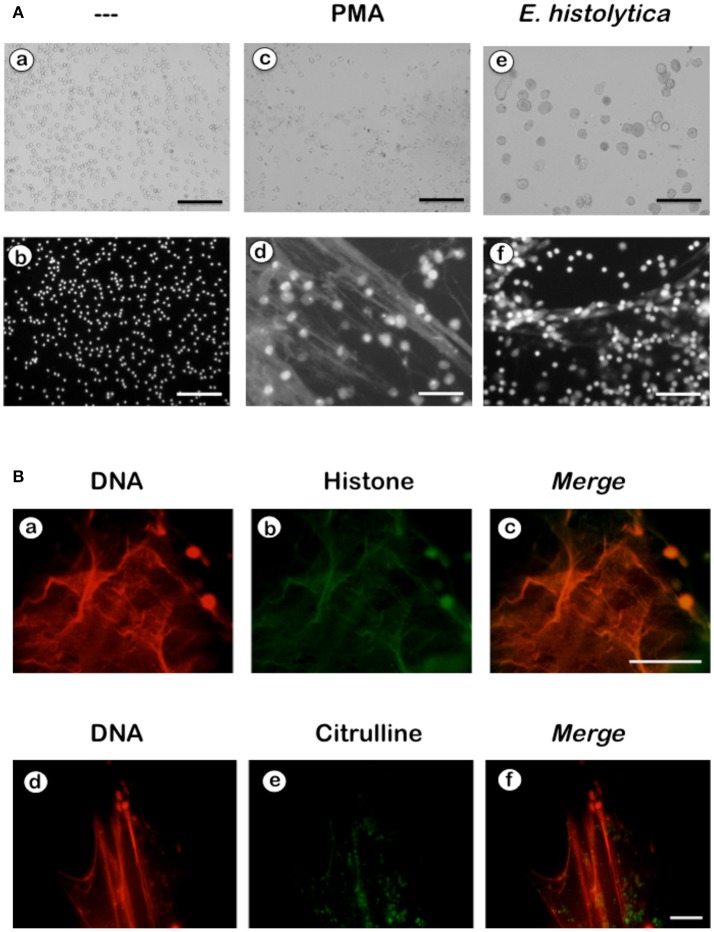
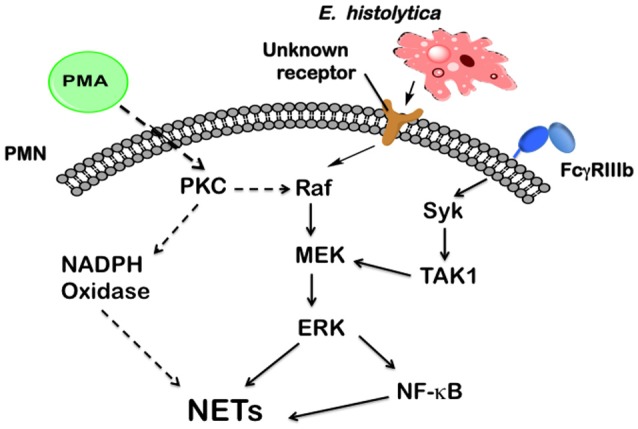
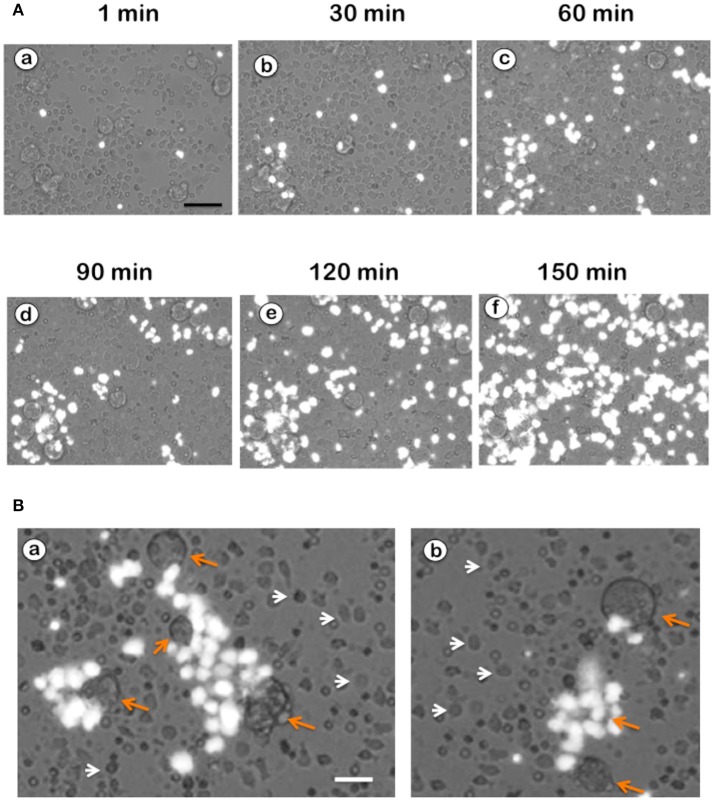
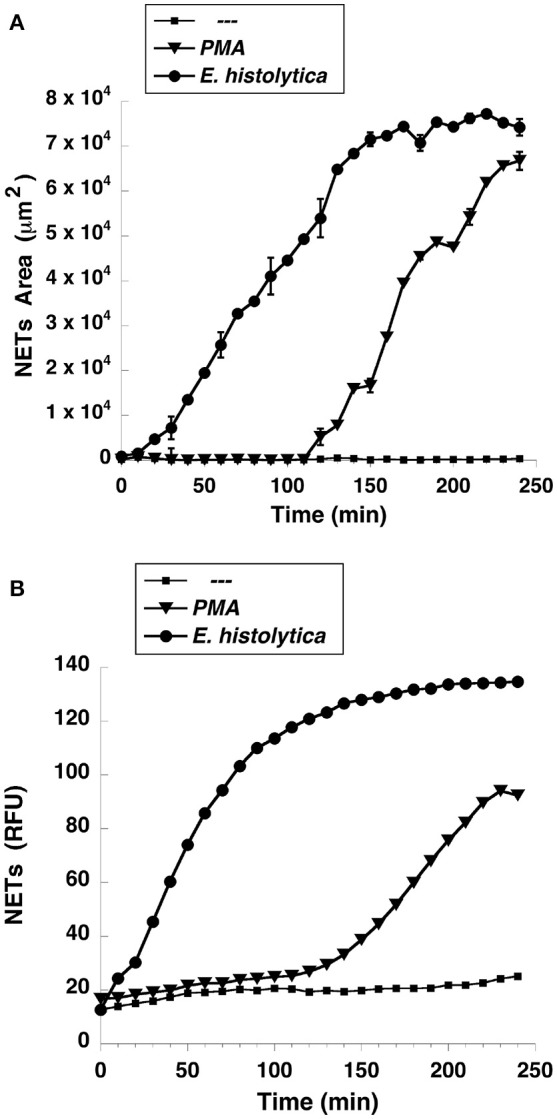
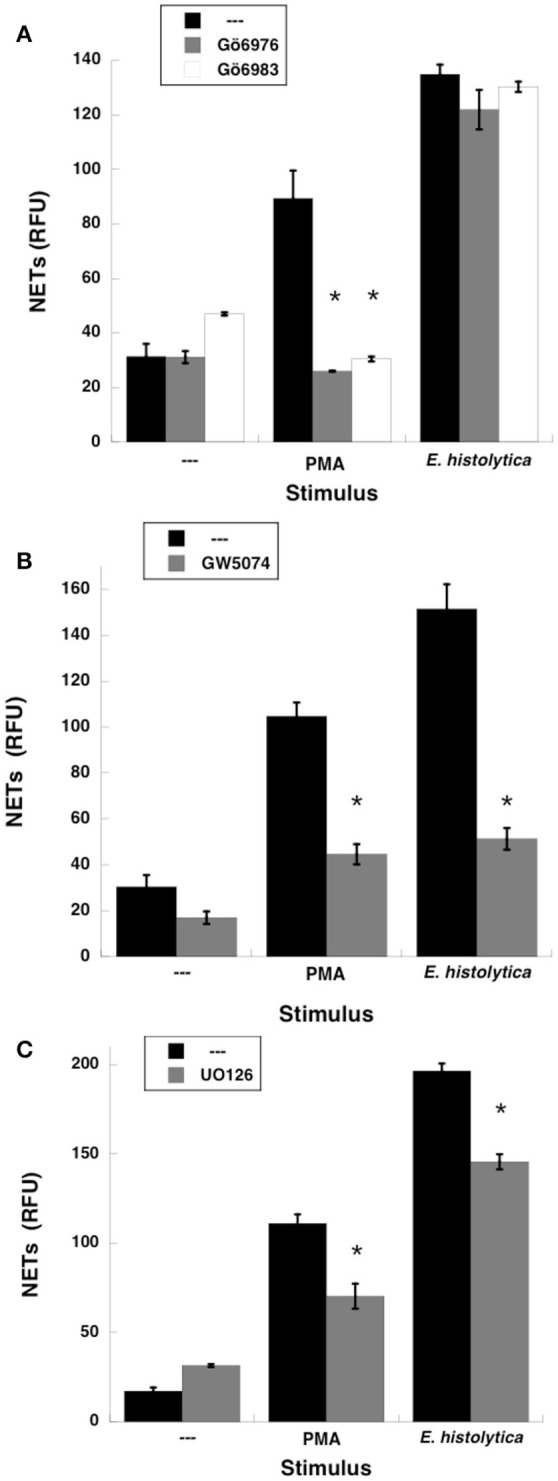
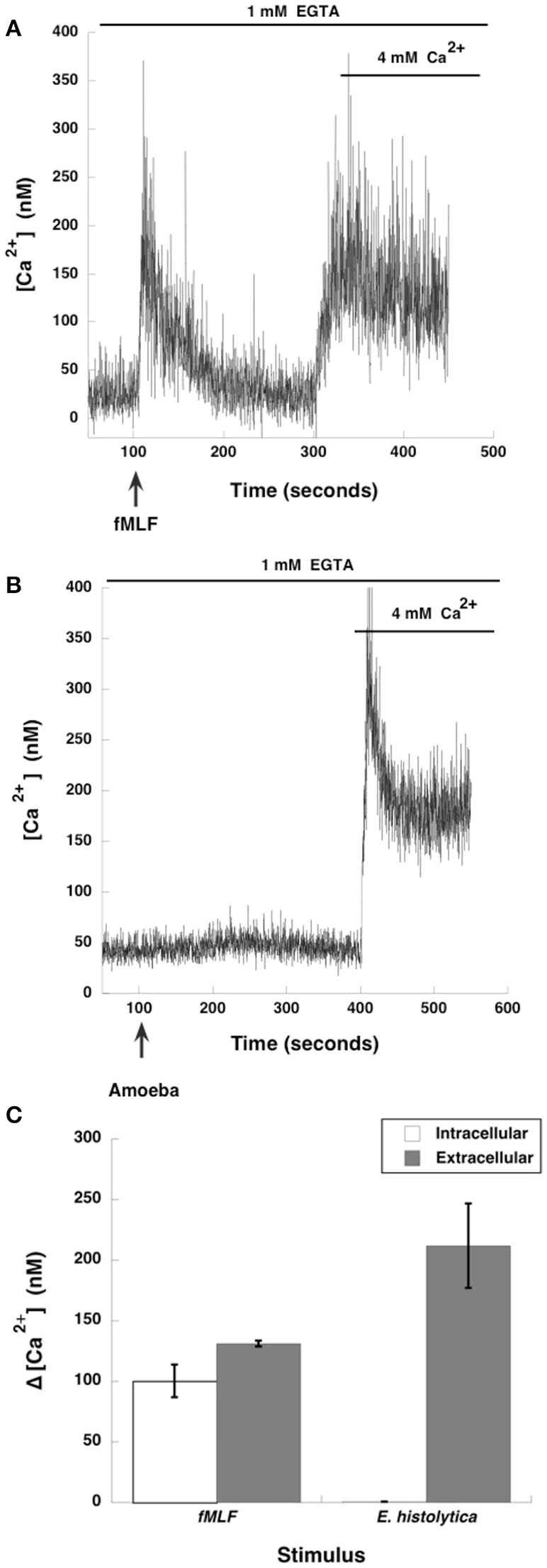
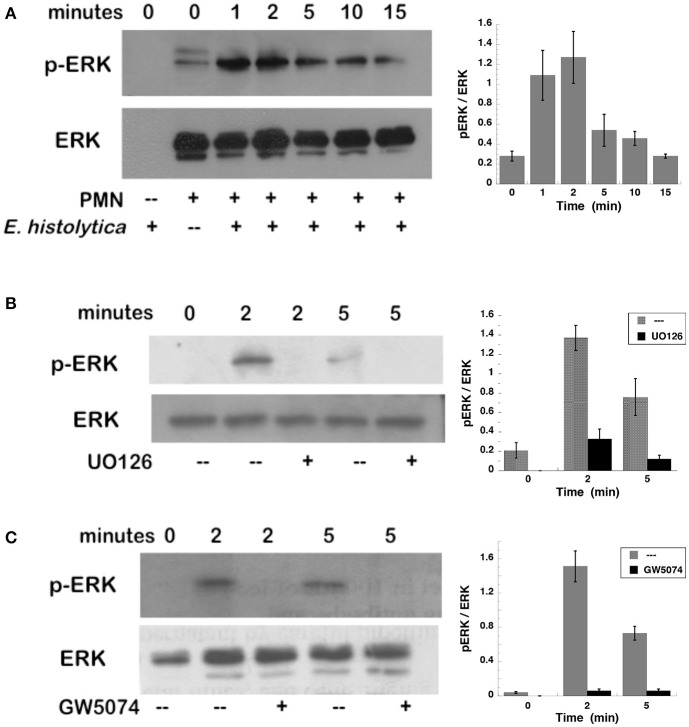
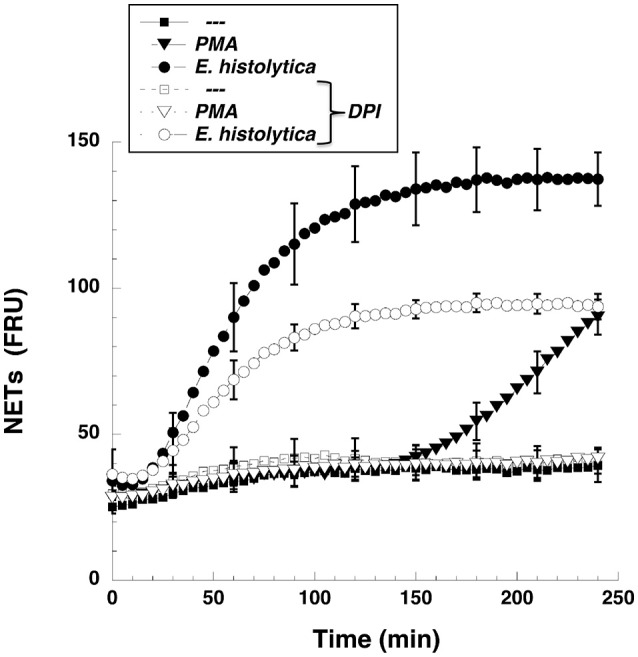
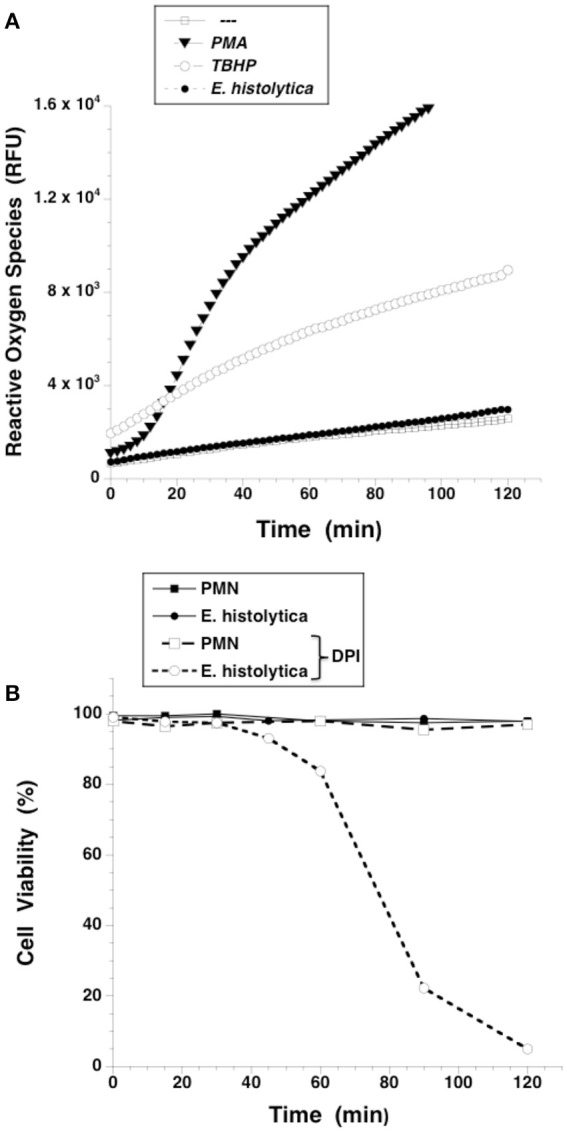
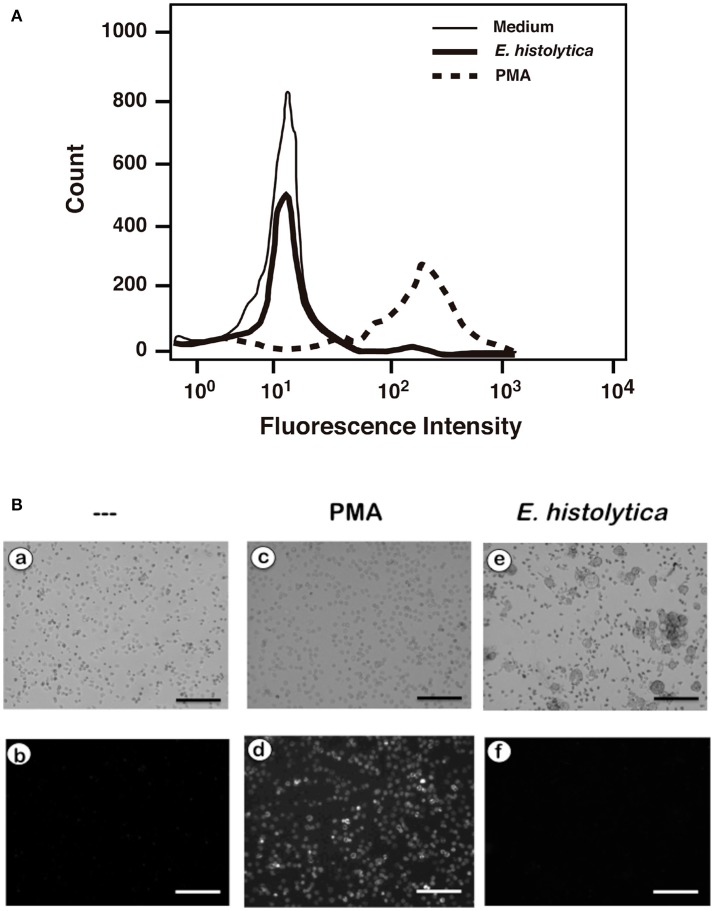
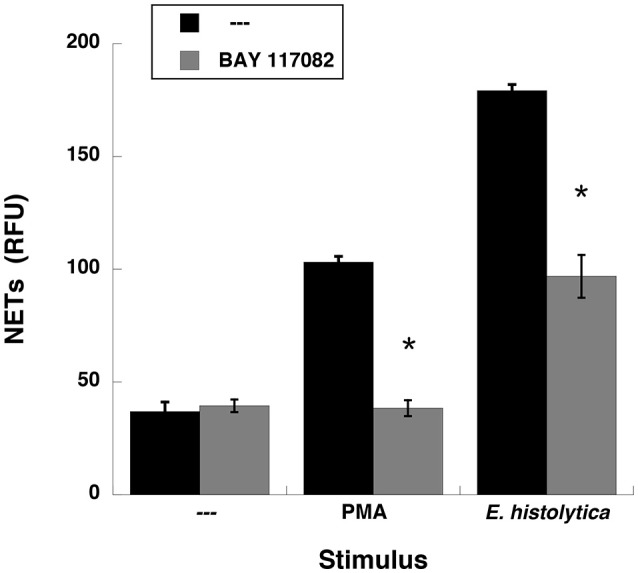
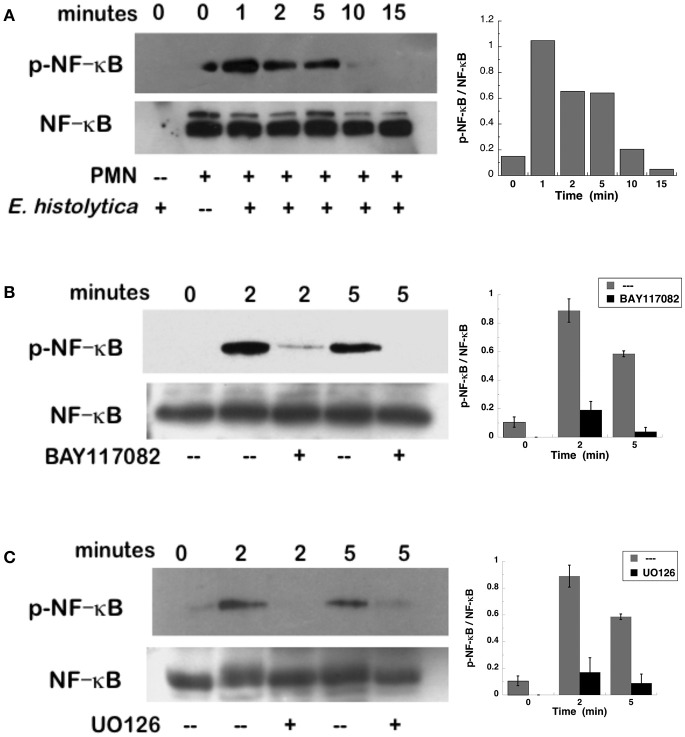
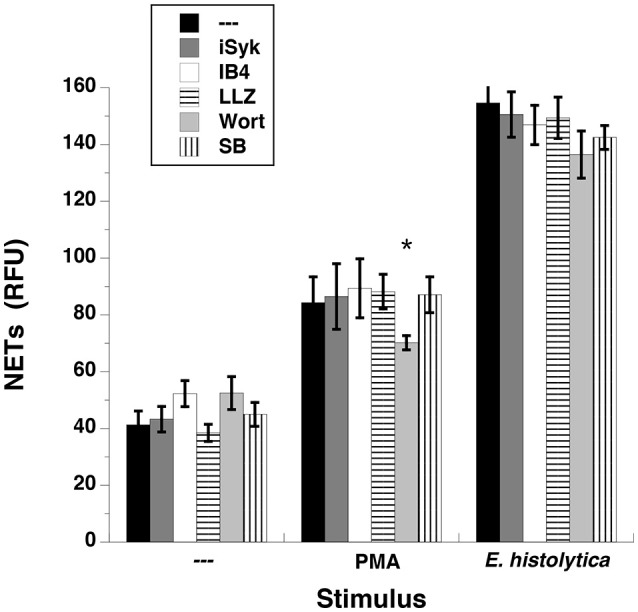
Amoebiasis, the disease caused by is the third leading cause of human deaths among parasite infections. was reported associated with around 100 million cases of amoebic dysentery, colitis and amoebic liver abscess that lead to almost 50,000 fatalities worldwide in 2010. infection is associated with the induction of inflammation characterized by a large number of infiltrating neutrophils. These neutrophils have been implicated in defense against this parasite, by mechanisms not completely described. The neutrophil antimicrobial mechanisms include phagocytosis, degranulation, and formation of neutrophil extracellular traps (NETs). Recently, our group reported that NETs are also produced in response to trophozoites. But, the mechanism for NETs induction remains unknown. In this report we explored the possibility that leads to NETs formation via a signaling pathway similar to the pathways activated by PMA or the Fc receptor FcγRIIIb. Neutrophils were stimulated by trophozoites and the effect of various pharmacological inhibitors on amoeba-induced NETs formation was assessed. Selective inhibitors of Raf, MEK, and NF-κB prevented -induced NET formation. In contrast, inhibitors of PKC, TAK1, and NADPH-oxidase did not block -induced NETs formation. induced phosphorylation of ERK in a Raf and MEK dependent manner. These data show that activates a signaling pathway to induce NETs formation, that involves Raf/MEK/ERK, but it is independent of PKC, TAK1, and reactive oxygen species (ROS). Thus, amoebas activate neutrophils via a different pathway from the pathways activated by PMA or the IgG receptor FcγRIIIb.
阿米巴病是由 引起的疾病,是寄生虫感染导致人类死亡的第三大原因。据报道, 与全球 2010 年约 1 亿例阿米巴痢疾、结肠炎和肝脓肿病例有关,导致近 5 万人死亡。 感染与炎症的诱导有关,其特征是大量浸润的中性粒细胞。这些中性粒细胞被认为通过尚未完全描述的机制参与了对这种寄生虫的防御。中性粒细胞的抗菌机制包括吞噬作用、脱颗粒和形成中性粒细胞胞外陷阱(NETs)。最近,我们小组报告称,NETs 也会因 滋养体的刺激而产生。但是,NETs 诱导的机制仍然未知。在本报告中,我们探讨了以下可能性:即 通过类似于 PMA 或 Fc 受体 FcγRIIIb 激活的信号通路,导致 NETs 的形成。用 滋养体刺激中性粒细胞,并评估各种药理学抑制剂对 诱导的 NETs 形成的影响。Raf、MEK 和 NF-κB 的选择性抑制剂可阻止 诱导的 NETs 形成。相比之下,PKC、TAK1 和 NADPH 氧化酶的抑制剂不能阻止 诱导的 NETs 形成。 诱导 ERK 的磷酸化依赖于 Raf 和 MEK。这些数据表明, 激活了一条信号通路来诱导 NETs 的形成,该通路涉及 Raf/MEK/ERK,但它不依赖于 PKC、TAK1 和活性氧(ROS)。因此,阿米巴通过不同于 PMA 或 IgG 受体 FcγRIIIb 激活的途径激活中性粒细胞。