AstraZeneca Farmacéutica Spain, Serrano Galvache, 56, Building Álamo, Madrid, Spain.
Weber, Majadahonda, Madrid, Spain.
Eur J Health Econ. 2019 Feb;20(1):135-147. doi: 10.1007/s10198-018-0986-y. Epub 2018 Jun 19.
To assess the economic burden of epithelial ovarian cancer (EOC) in incident patients and the burden by disease stage in Spain.
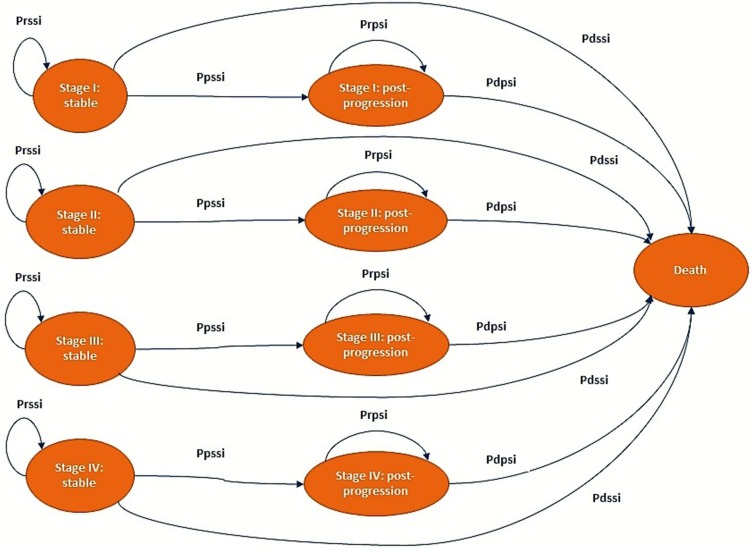
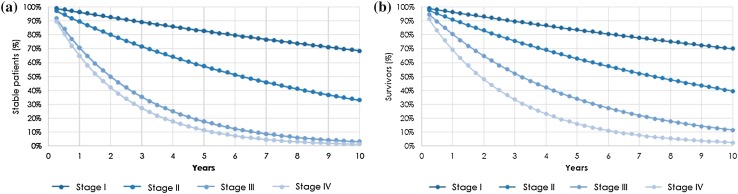
We developed a Markov model from a social perspective simulating the natural history of EOC and its four stages, with a 10-year time horizon, 3-week cycles, 3% discount rate, and 2016 euros. Healthcare resource utilization and costs were estimated by disease stage. Direct healthcare costs (DHC) included early screening, genetic counselling, medical visits, diagnostic tests, surgery, chemotherapy, hospitalizations, emergency services, and palliative care. Direct non-healthcare costs (DNHC) included formal and informal care. Indirect costs (IC) included labour productivity losses due to temporary and permanent leaves, and premature death. Epidemiology data and resource use were taken from the literature and validated for Spain by the OvarCost group using a Delphi method.
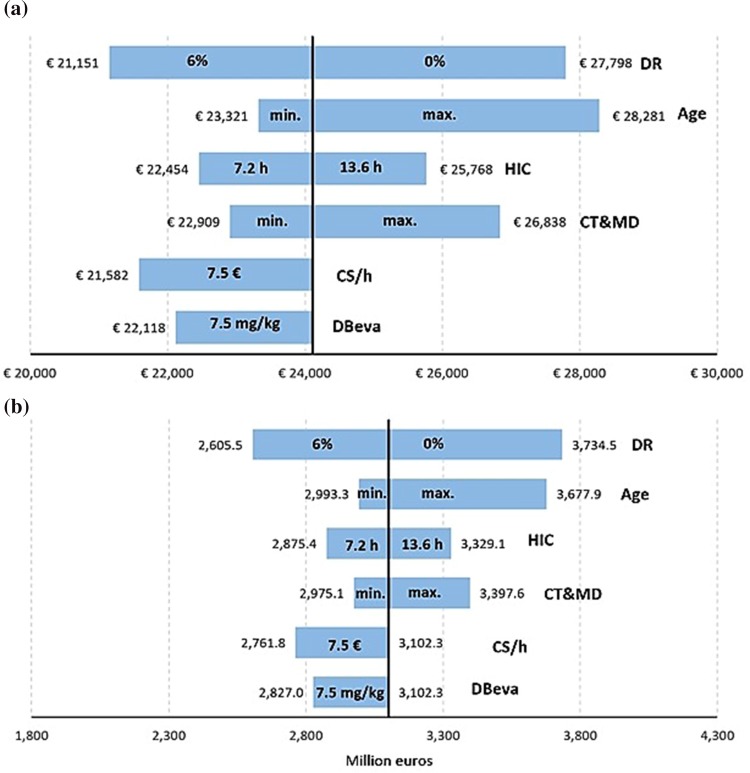
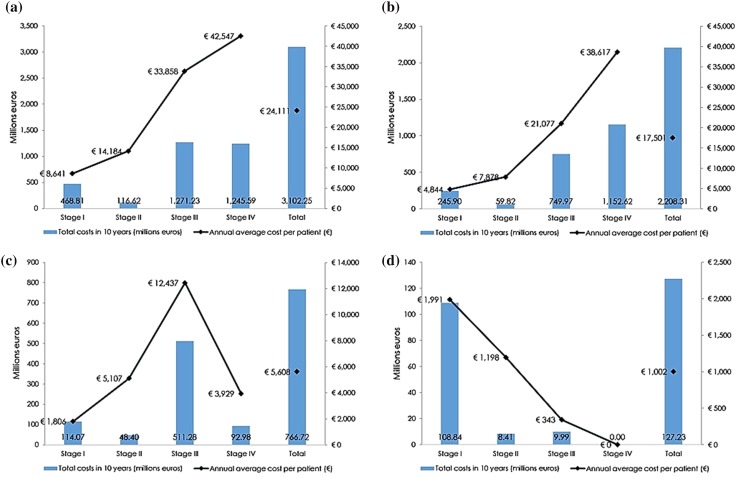
The total burden of EOC over 10 years was 3102 mill euros: 15.1% in stage I, 3.9% in stage II, 41.0% in stage III, and 40.2% in stage IV. Annual average cost/patient was €24,111 and it was €8,641; €14,184; €33,858, and €42,547 in stages I-IV, respectively. Of total costs, 71.2% were due to DHC, 24.7% to DNHC, and 4.1% to IC.
EOC imposes a significant economic burden on the national healthcare system and society in Spain. Investment in better early diagnosis techniques might increase survival and patients' quality of life. This would likely reduce costs derived from late stages, consequently leading to a substantial reduction of the economic burden associated with EOC.
评估西班牙上皮性卵巢癌(EOC)患者的经济负担及各期疾病的负担。
我们从社会角度开发了一个马尔可夫模型,模拟了 EOC 及其四个阶段的自然史,时间范围为 10 年,周期为 3 周,贴现率为 3%,货币单位为欧元。根据疾病阶段估算医疗保健资源的利用和成本。直接医疗保健成本(DHC)包括早期筛查、遗传咨询、就诊、诊断测试、手术、化疗、住院、急诊服务和姑息治疗。直接非医疗保健成本(DNHC)包括正规和非正规护理。间接成本(IC)包括因临时和永久缺勤以及过早死亡而导致的劳动生产力损失。流行病学数据和资源使用情况来自文献,OvarCost 组通过德尔菲法验证了其在西班牙的适用性。
EOC 在 10 年内的总负担为 3102 百万欧元:I 期占 15.1%,II 期占 3.9%,III 期占 41.0%,IV 期占 40.2%。患者的年平均成本为 24111 欧元,I-IV 期分别为 8641 欧元、14184 欧元、33858 欧元和 42547 欧元。在总费用中,71.2%是由于 DHC,24.7%是由于 DNHC,4.1%是由于 IC。
EOC 给西班牙国家卫生保健系统和社会带来了重大的经济负担。投资于更好的早期诊断技术可能会提高生存率和患者的生活质量。这可能会降低晚期疾病相关成本,从而显著降低与 EOC 相关的经济负担。