Montgomery Jacob E, Wahlstrom-Helgren Sarah, Wiggin Timothy D, Corwin Brittany M, Lillesaar Christina, Masino Mark A
Department of Neuroscience, University of Minnesota, Minneapolis, Minnesota.
Department of Physiological Chemistry, University of Würzburg, Biocenter, Würzburg, Germany.
Dev Neurobiol. 2018 Jun 19. doi: 10.1002/dneu.22606.
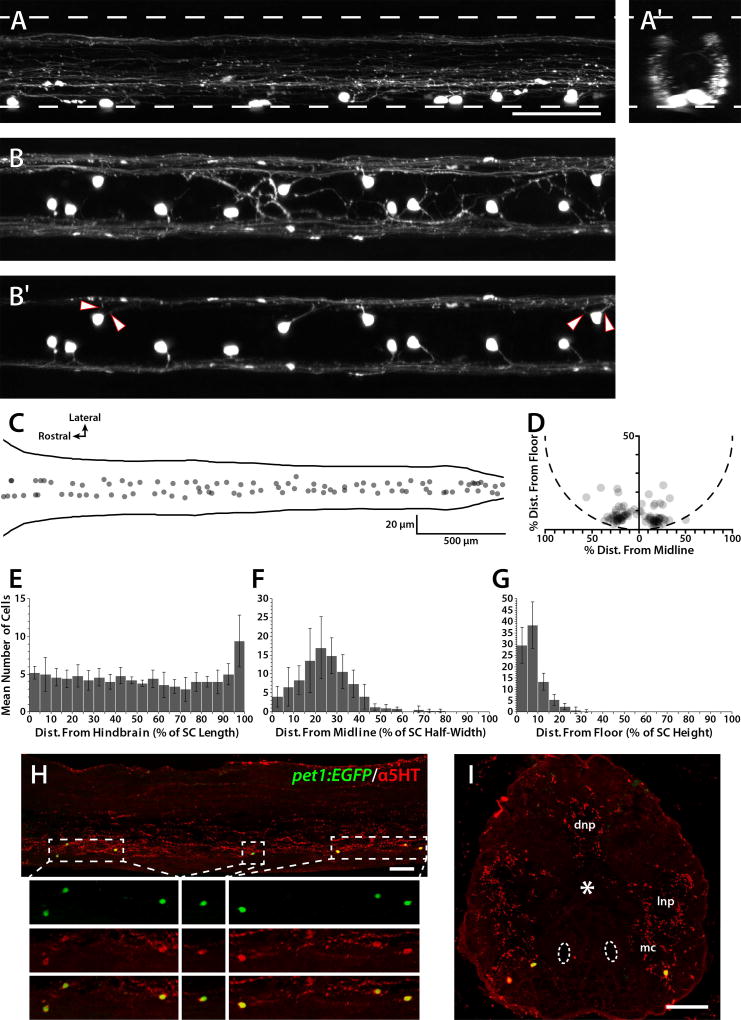
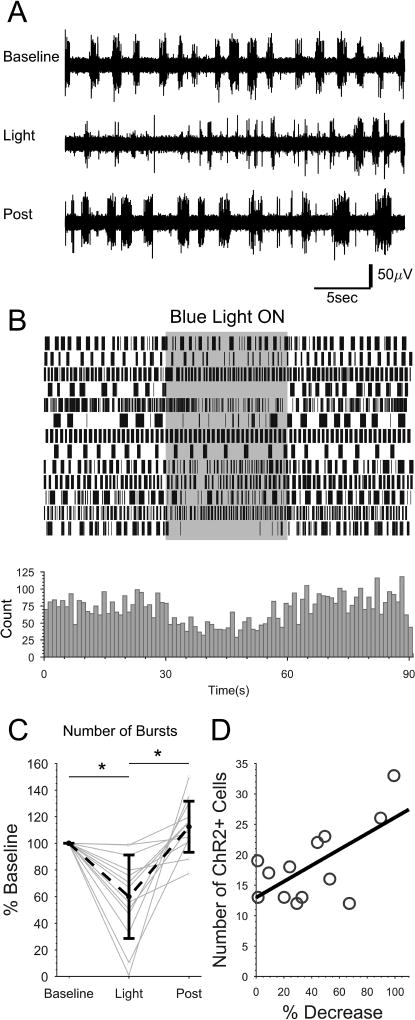
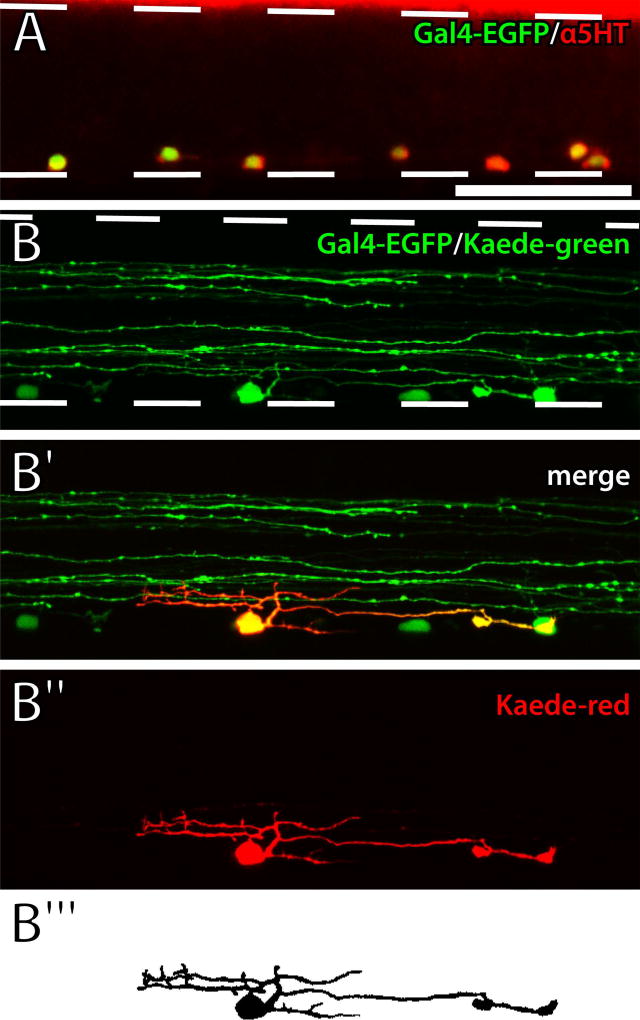
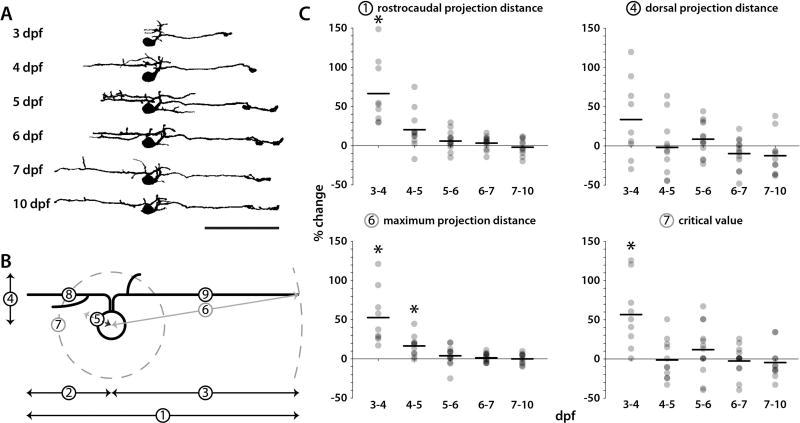
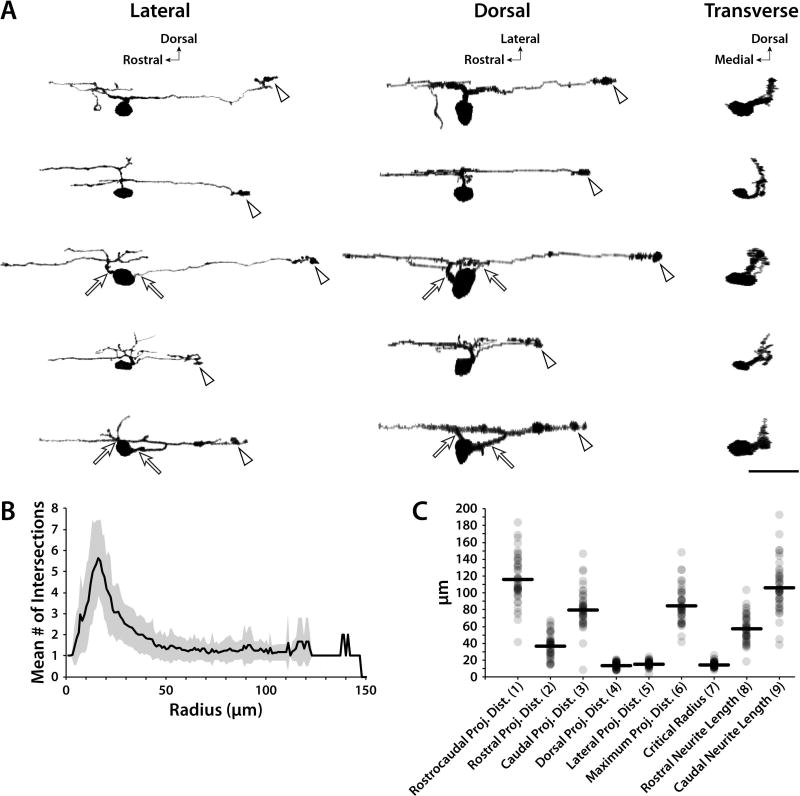
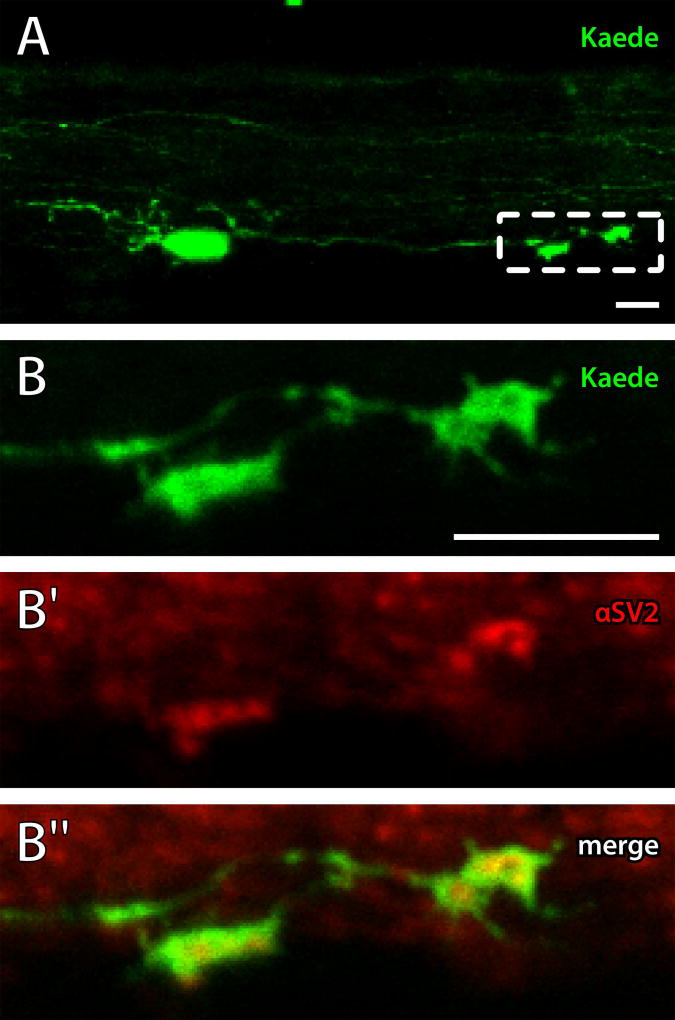
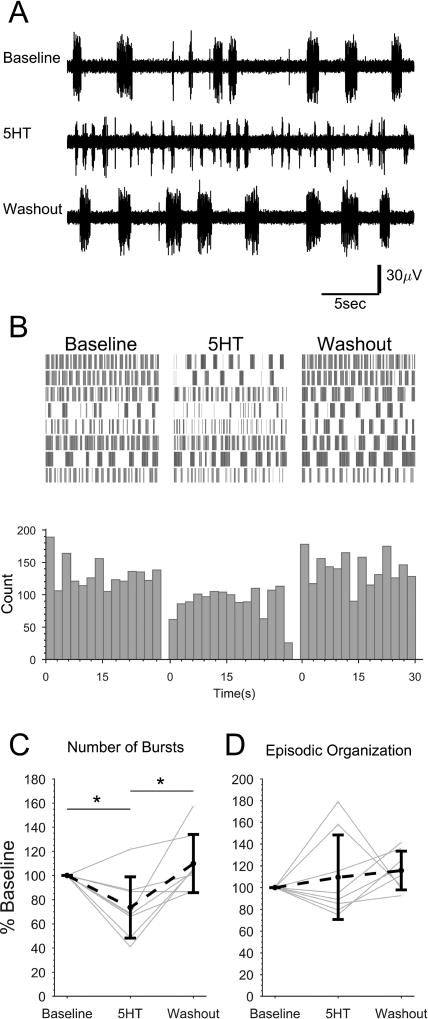
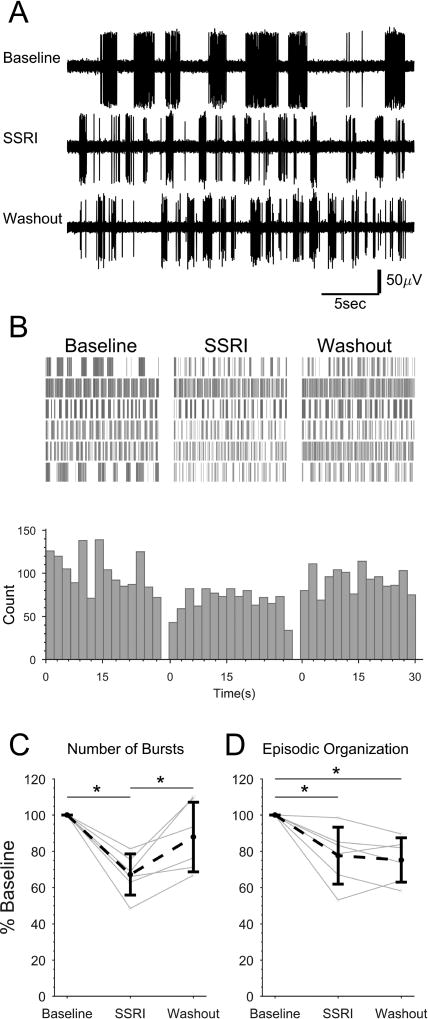
Serotonin (5HT) is a modulator of many vital processes in the spinal cord (SC), such as production of locomotion. In the larval zebrafish, intraspinal serotonergic neurons (ISNs) are a source of spinal 5HT that, despite the availability of numerous genetic and optical tools, has not yet been directly shown to affect the spinal locomotor network. In order to better understand the functions of ISNs, we used a combination of strategies to investigate ISN development, morphology, and function. ISNs were optically isolated from one another by photoconverting Kaede fluorescent protein in individual cells, permitting morphometric analysis as they developed in vivo. ISN neurite lengths and projection distances exhibited the greatest amount of change between 3 and 4 days post-fertilization (dpf) and appeared to stabilize by 5 dpf. Overall ISN innervation patterns were similar between cells and between SC regions. ISNs possessed rostrally-extending neurites resembling dendrites and a caudally-extending neurite resembling an axon, which terminated with an enlarged growth cone-like structure. Interestingly, these enlargements remained even after neurite extension had ceased. Functionally, application of exogenous 5HT reduced spinally-produced motor nerve bursting. A selective 5HT reuptake inhibitor and ISN activation with channelrhodopsin-2 each produced similar effects to 5HT, indicating that spinally-intrinsic 5HT originating from the ISNs has an inhibitory effect on the spinal locomotor network. Taken together this suggests that the ISNs are morphologically mature by 5 dpf and supports their involvement in modulating the activity of the spinal locomotor network. © 2018 Wiley Periodicals, Inc. Develop Neurobiol, 2018.
血清素(5-羟色胺,5HT)是脊髓(SC)中许多重要生理过程的调节因子,如运动的产生。在斑马鱼幼体中,脊髓内血清素能神经元(ISNs)是脊髓5HT的来源,尽管有众多的基因和光学工具,但尚未直接证明其会影响脊髓运动网络。为了更好地理解ISNs的功能,我们结合多种策略来研究ISN的发育、形态和功能。通过在单个细胞中光转换Kaede荧光蛋白,ISNs彼此在光学上得以分离,从而在其体内发育过程中进行形态测量分析。受精后3至4天(dpf),ISN神经突长度和投射距离变化最大,到5 dpf时似乎趋于稳定。细胞之间以及脊髓不同区域之间,ISN的整体神经支配模式相似。ISNs具有类似树突的向头端延伸的神经突和类似轴突的向尾端延伸的神经突,其末端为增大的生长锥样结构。有趣的是,即使神经突延伸停止后,这些增大结构仍然存在。在功能上,外源性5HT的应用减少了脊髓产生的运动神经爆发。一种选择性5HT再摄取抑制剂以及用通道视紫红质-2激活ISN均产生了与5HT相似的效果,这表明源自ISNs的脊髓内源性5HT对脊髓运动网络具有抑制作用。综合来看,这表明ISNs在5 dpf时在形态上已成熟,并支持它们参与调节脊髓运动网络的活动。© 2018威利期刊公司。《发育神经生物学》,2018年。