Department of Molecular and Human Genetics, Baylor College of Medicine, One Baylor Plaza, MS BCM225, Houston, TX, 77030, USA.
Mouse ES Cell Core, Baylor College of Medicine, 1 Baylor Plaza, Houston, TX, 77030, USA.
BMC Biol. 2018 Jun 21;16(1):69. doi: 10.1186/s12915-018-0529-0.
The International Mouse Phenotyping Consortium is generating null allele mice for every protein-coding gene in the genome and characterizing these mice to identify gene-phenotype associations. While CRISPR/Cas9-mediated null allele production in mice is highly efficient, generation of conditional alleles has proven to be more difficult. To test the feasibility of using CRISPR/Cas9 gene editing to generate conditional knockout mice for this large-scale resource, we employed Cas9-initiated homology-driven repair (HDR) with short and long single stranded oligodeoxynucleotides (ssODNs and lssDNAs).
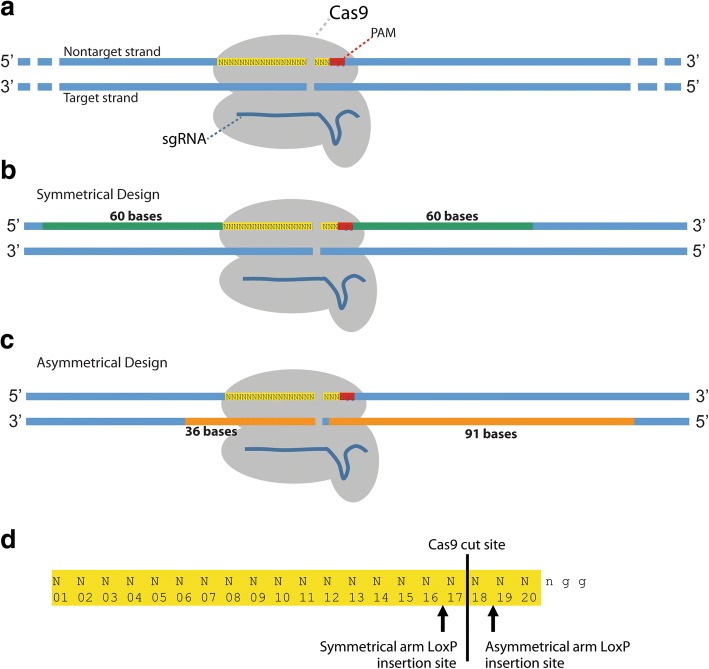
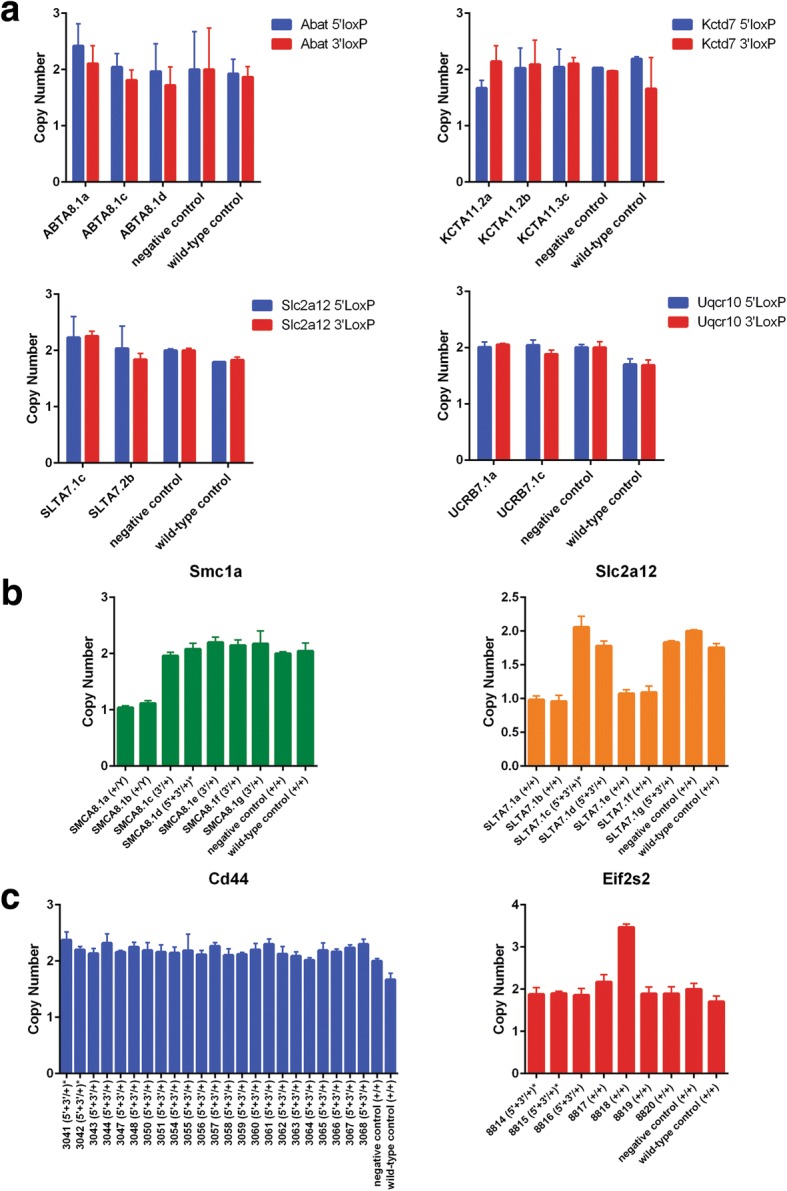
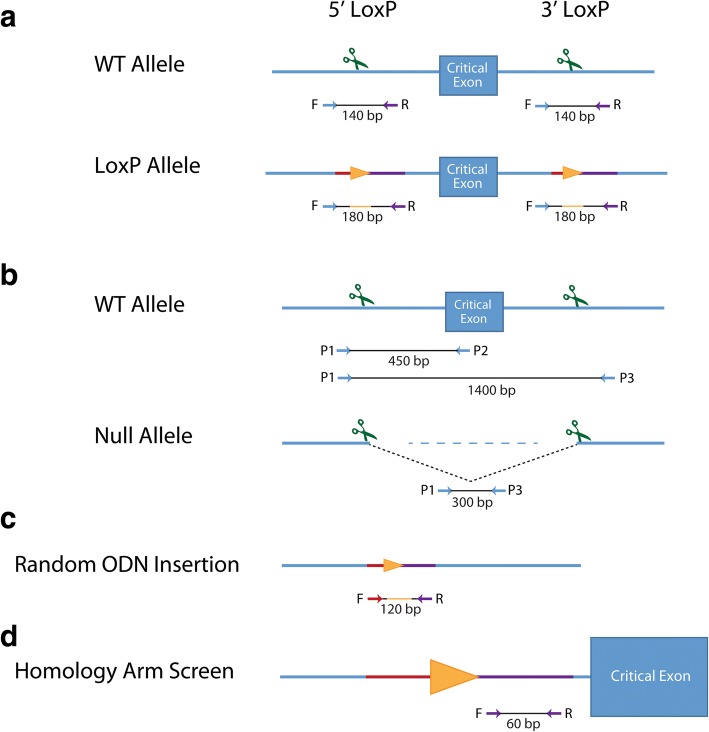
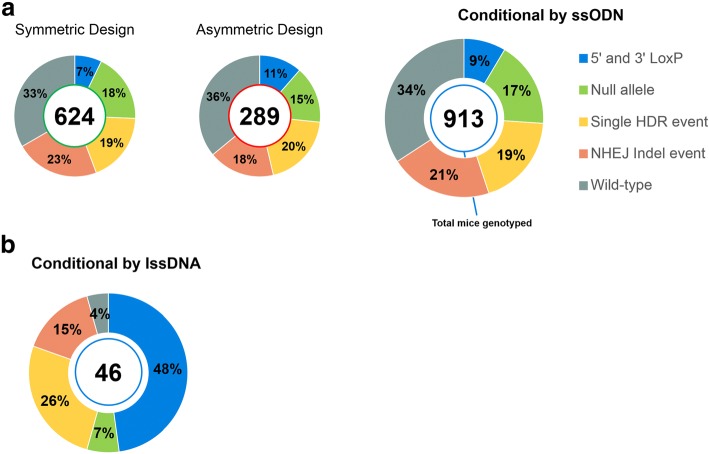
Using pairs of single guide RNAs and short ssODNs to introduce loxP sites around a critical exon or exons, we obtained putative conditional allele founder mice, harboring both loxP sites, for 23 out of 30 targeted genes. LoxP sites integrated in cis in at least one mouse for 18 of 23 genes. However, loxP sites were mutagenized in 4 of the 18 in cis lines. HDR efficiency correlated with Cas9 cutting efficiency but was minimally influenced by ssODN homology arm symmetry. By contrast, using pairs of guides and single lssDNAs to introduce loxP-flanked exons, conditional allele founders were generated for all four genes targeted, although one founder was found to harbor undesired mutations within the lssDNA sequence interval. Importantly, when employing either ssODNs or lssDNAs, random integration events were detected.
Our studies demonstrate that Cas9-mediated HDR with pairs of ssODNs can generate conditional null alleles at many loci, but reveal inefficiencies when applied at scale. In contrast, lssDNAs are amenable to high-throughput production of conditional alleles when they can be employed. Regardless of the single-stranded donor utilized, it is essential to screen for sequence errors at sites of HDR and random insertion of donor sequences into the genome.
国际小鼠表型分析联盟正在为基因组中的每个蛋白质编码基因生成缺失等位基因小鼠,并对这些小鼠进行特征分析以确定基因表型关联。虽然 CRISPR/Cas9 介导的小鼠缺失等位基因的产生效率很高,但产生条件性等位基因已被证明更为困难。为了测试使用 CRISPR/Cas9 基因编辑为这个大规模资源生成条件性敲除小鼠的可行性,我们使用 Cas9 起始同源驱动修复(HDR)与短和长单链寡脱氧核苷酸(ssODN 和 lssDNA)。
使用一对单指导 RNA 和短 ssODN 在关键外显子或外显子周围引入 loxP 位点,我们获得了 30 个靶基因中的 23 个具有潜在条件性等位基因的启动子小鼠,这些小鼠都携带 loxP 位点。至少有一只小鼠中 loxP 位点在顺式中整合,这在 23 个基因中的 18 个中发生。然而,在 18 个顺式系中,有 4 个的 loxP 位点发生了突变。HDR 效率与 Cas9 切割效率相关,但受 ssODN 同源臂对称性的影响最小。相比之下,使用一对向导和单个 lssDNA 引入 loxP 侧翼外显子,所有 4 个靶基因都生成了条件性等位基因启动子,尽管一个启动子被发现其 lssDNA 序列间隔内存在不期望的突变。重要的是,当使用 ssODN 或 lssDNA 时,检测到随机整合事件。
我们的研究表明,Cas9 介导的 ssODN 对可以在许多基因座上生成条件性缺失等位基因,但在大规模应用时效率低下。相比之下,当可以使用时,lssDNA 易于实现条件性等位基因的高通量生成。无论使用哪种单链供体,都必须在 HDR 和供体序列随机插入基因组的位点筛选序列错误。