Department of Signal Theory and Communications and Telematics and Computation, Rey Juan Carlos University, Camino del Molino s/n, 28943, Fuenlabrada, Madrid, Spain.
Center for Computational Simulation, Universidad Politécnica de Madrid, Madrid, Spain.
Biomed Eng Online. 2018 Jun 20;17(1):86. doi: 10.1186/s12938-018-0519-z.
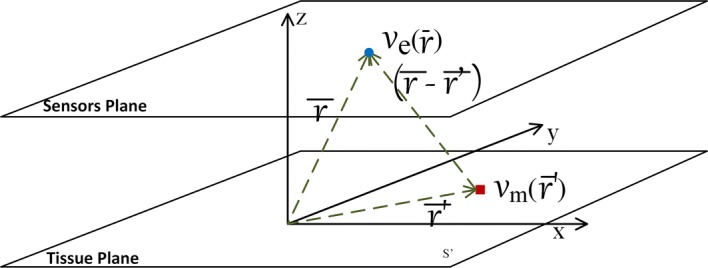
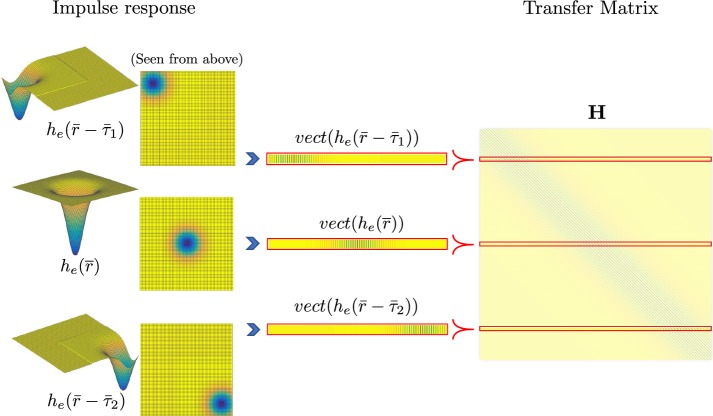
The inverse problem in electrophysiology consists of the accurate estimation of the intracardiac electrical sources from a reduced set of electrodes at short distances and from outside the heart. This estimation can provide an image with relevant knowledge on arrhythmia mechanisms for the clinical practice. Methods based on truncated singular value decomposition (TSVD) and regularized least squares require a matrix inversion, which limits their resolution due to the unavoidable low-pass filter effect of the Tikhonov regularization techniques.
We propose to use, for the first time, a Mercer's kernel given by the Laplacian of the distance in the quasielectrostatic field equations, hence providing a Support Vector Regression (SVR) formulation by following the principles of the Dual Signal Model (DSM) principles for creating kernel algorithms.
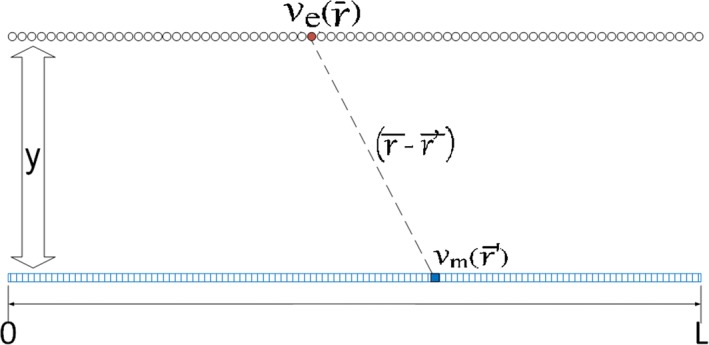
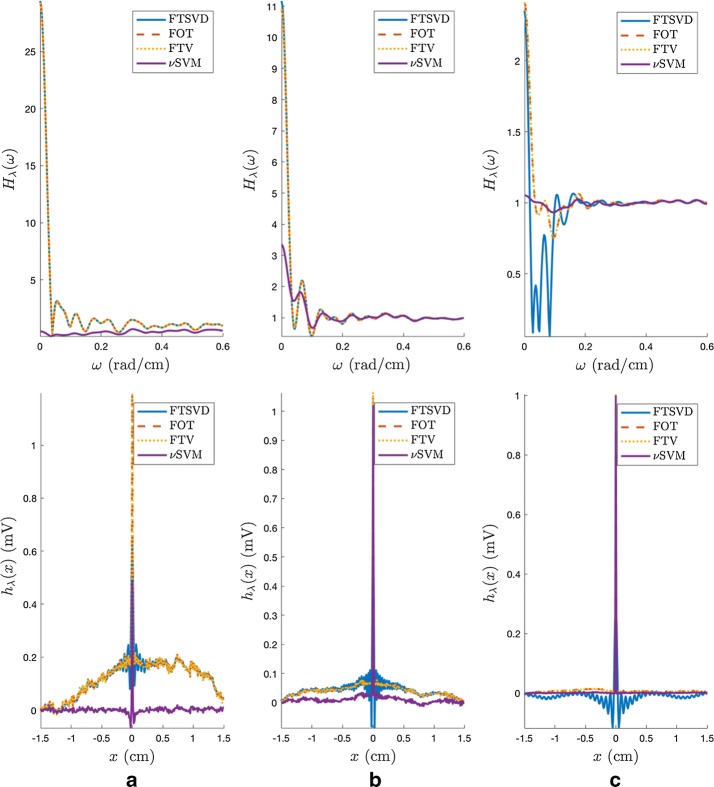
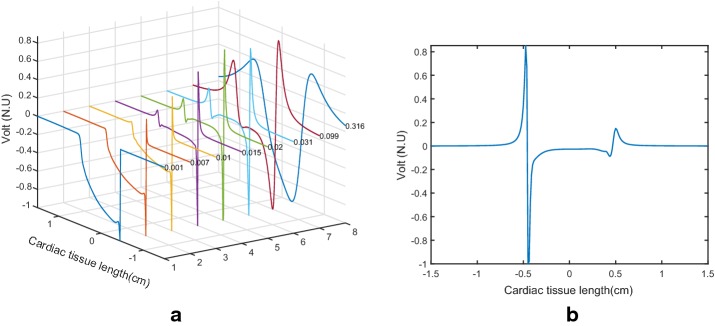
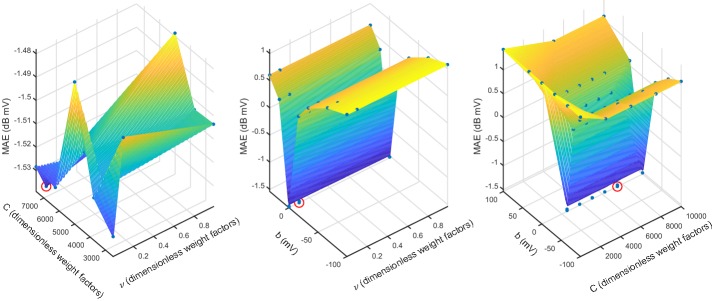
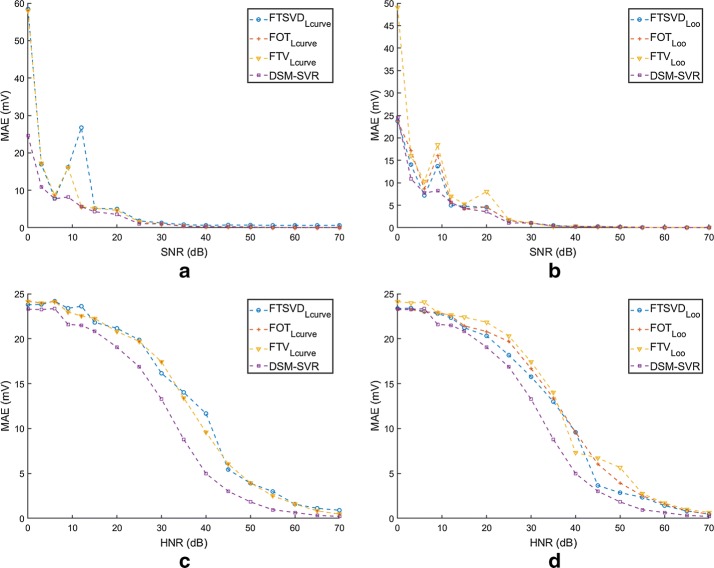
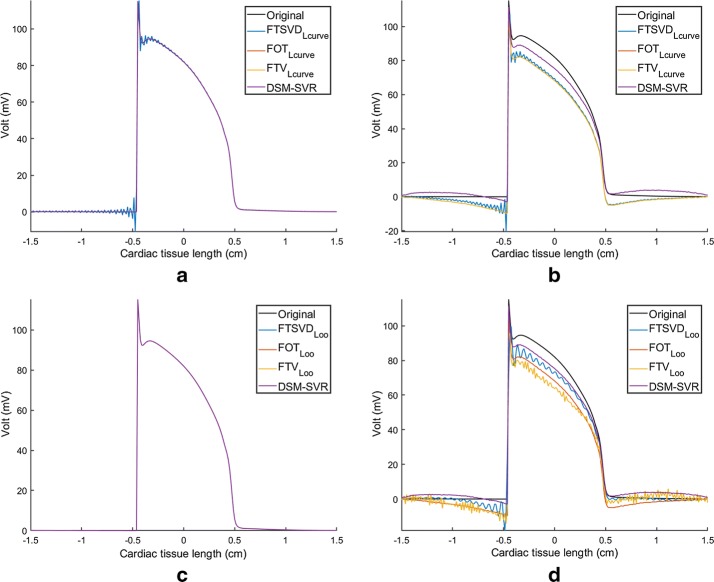
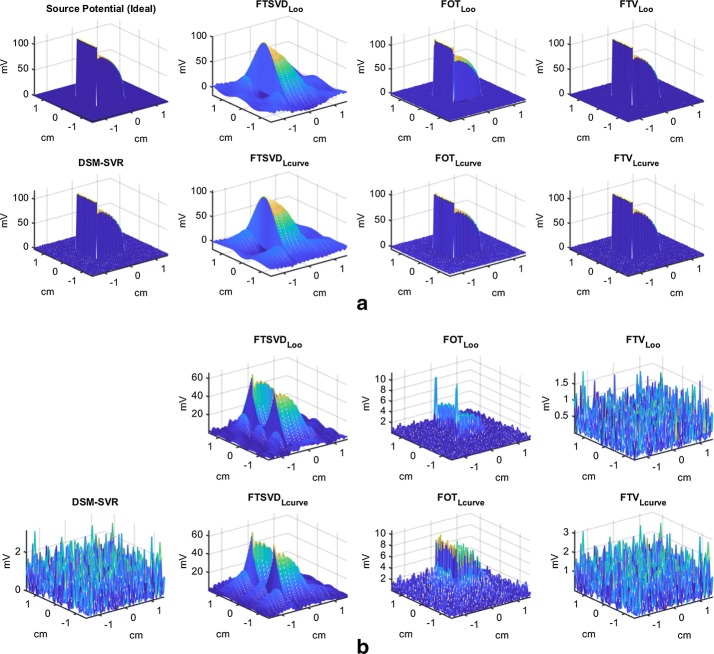
Simulations in one- and two-dimensional models show the performance of our Laplacian distance kernel technique versus several conventional methods. Firstly, the one-dimensional model is adjusted for yielding recorded electrograms, similar to the ones that are usually observed in electrophysiological studies, and suitable strategy is designed for the free-parameter search. Secondly, simulations both in one- and two-dimensional models show larger noise sensitivity in the estimated transfer matrix than in the observation measurements, and DSM-SVR is shown to be more robust to noisy transfer matrix than TSVD.
These results suggest that our proposed DSM-SVR with Laplacian distance kernel can be an efficient alternative to improve the resolution in current and emerging intracardiac imaging systems.
电生理学中的逆问题包括从短距离和心脏外部的少量电极准确估计心内电源。这种估计可以为临床实践提供有关心律失常机制的相关知识的图像。基于截断奇异值分解(TSVD)和正则化最小二乘的方法需要矩阵求逆,这由于 Tikhonov 正则化技术的不可避免的低通滤波器效应而限制了它们的分辨率。
我们首次提出使用由拟静电场方程中的距离的拉普拉斯给出的 Mercer 核,从而通过遵循双信号模型(DSM)原理为创建核算法提供支持向量回归(SVR)公式。
在一维和二维模型中的模拟表明了我们的拉普拉斯距离核技术与几种常规方法的性能比较。首先,一维模型被调整为产生记录的电图,类似于电生理研究中通常观察到的那些,并且为自由参数搜索设计了合适的策略。其次,在一维和二维模型中的模拟均表明,在估计的传递矩阵中噪声敏感性比观测测量中的噪声敏感性更大,并且 DSM-SVR 比 TSVD 更能抵抗噪声传递矩阵。
这些结果表明,我们提出的带有拉普拉斯距离核的 DSM-SVR 可以作为提高当前和新兴的心脏内成像系统分辨率的有效替代方法。