Gramegna Laura Ludovica, Evangelisti Stefania, Testa Claudia, Baiardi Simone, Mitolo Micaela, Capellari Sabina, Stracciari Andrea, Poda Roberto, Di Stasi Vitantonio, Cretella Lucia, Lodi Raffaele, Tonon Caterina, Liguori Rocco
Functional MR Unit, S. Orsola - Malpighi Hospital, Bologna, Italy.
Department of Biomedical and NeuroMotor Sciences, University of Bologna, Bologna, Italy.
Am J Case Rep. 2018 Jun 21;19:729-733. doi: 10.12659/AJCR.909167.
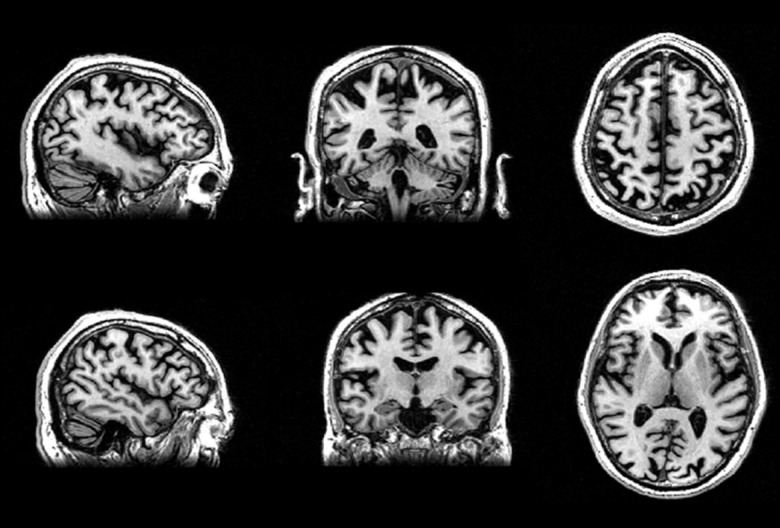
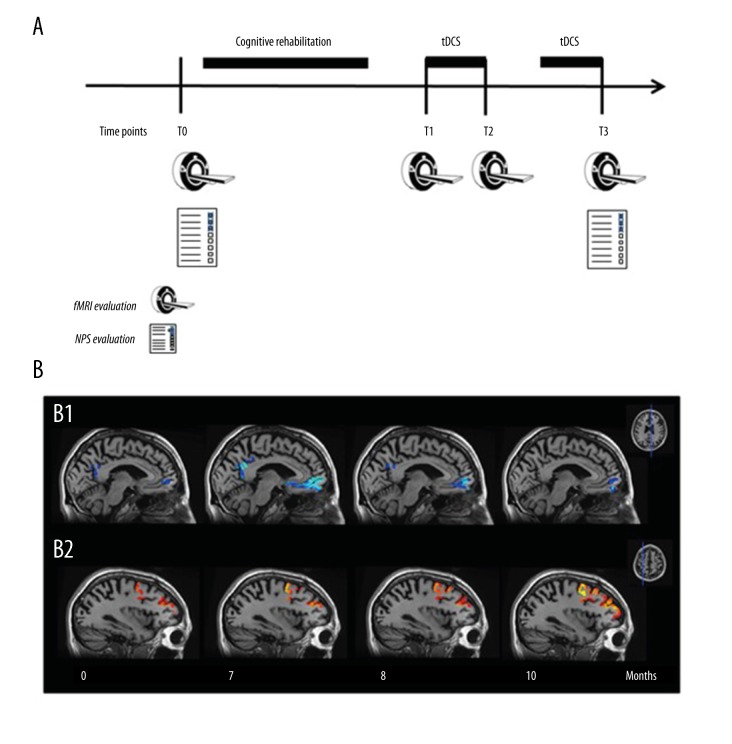
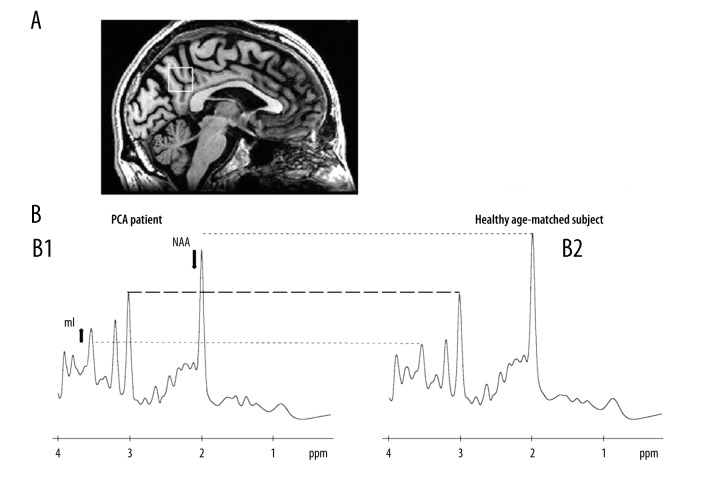
BACKGROUND Posterior cortical atrophy (PCA) is a neurodegenerative syndrome that accounts for 5% of the atypical presentation of Alzheimer disease (AD). To date, only a few studies have explored the effect of non-pharmacological treatment in PCA patients and no studies have evaluated the efficacy of transcranial direct current stimulation (tDCS) in this disorder. CASE REPORT A 58-year-old PCA patient underwent a cognitive rehabilitation treatment followed by 2 cycles of tDCS stimulation. The effects of both treatments were monitored over time with a standardized task-based fMRI protocol and with a neuropsychological assessment. Improvements in cognitive abilities, increased fMRI activation in the dorsolateral prefrontal cortex, and deactivation of the default mode network during the Stroop test performance were detected after each session treatment. CONCLUSIONS This combined approach lead to both cognitive improvements and neurophysiological adaptive changes, however, further studies on a larger cohort are needed to confirm these preliminary results.
后皮质萎缩(PCA)是一种神经退行性综合征,占阿尔茨海默病(AD)非典型表现的5%。迄今为止,仅有少数研究探讨了非药物治疗对PCA患者的影响,尚无研究评估经颅直流电刺激(tDCS)对该疾病的疗效。病例报告:一名58岁的PCA患者接受了认知康复治疗,随后进行了2个周期的tDCS刺激。通过标准化的基于任务的功能磁共振成像(fMRI)方案和神经心理学评估对两种治疗的效果进行了长期监测。每次治疗后均检测到认知能力的改善、背外侧前额叶皮质fMRI激活增加以及在Stroop测试表现期间默认模式网络的失活。结论:这种联合方法导致了认知改善和神经生理适应性变化,然而,需要对更大的队列进行进一步研究以证实这些初步结果。