Department of Plant Breeding and Genetics, Punjab Agricultural University, Ludhiana, Punjab, India.
PLoS One. 2018 Jun 21;13(6):e0199330. doi: 10.1371/journal.pone.0199330. eCollection 2018.
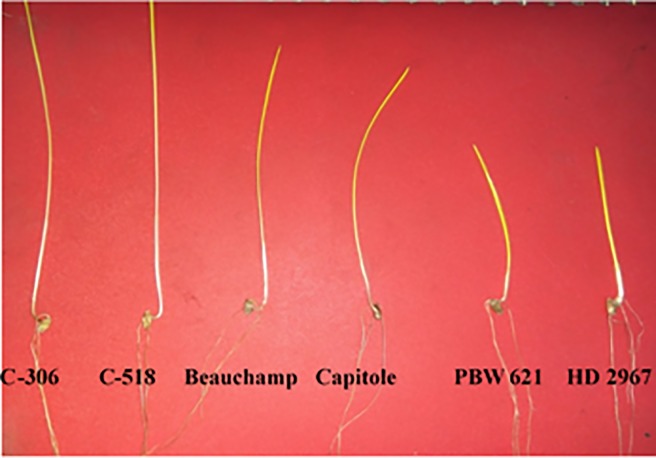
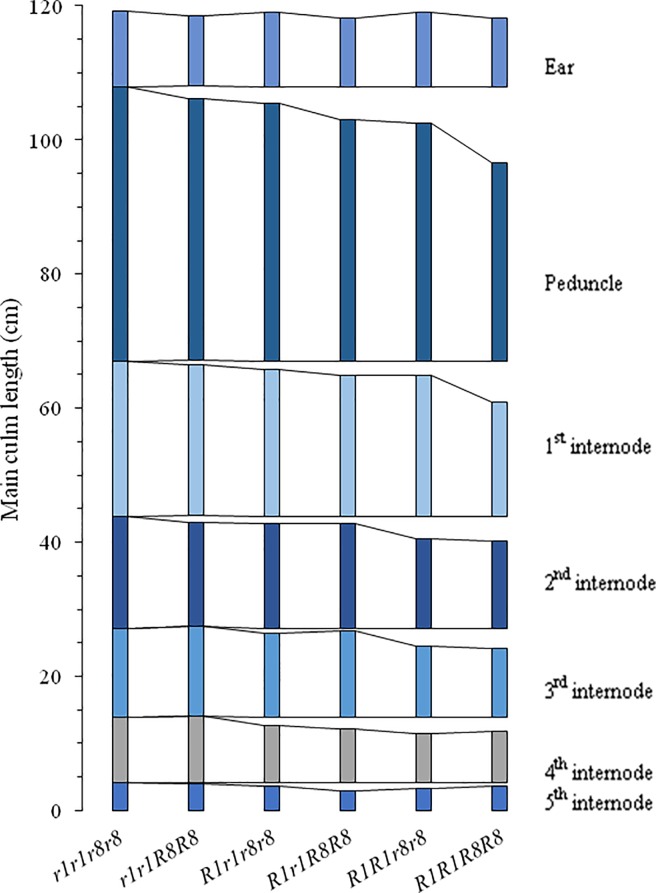
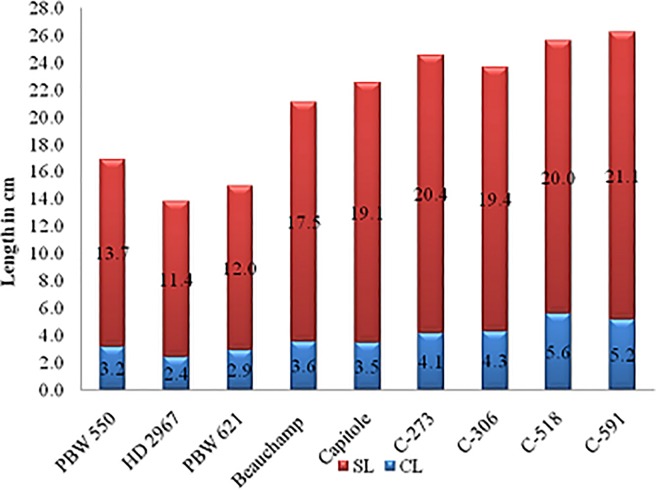
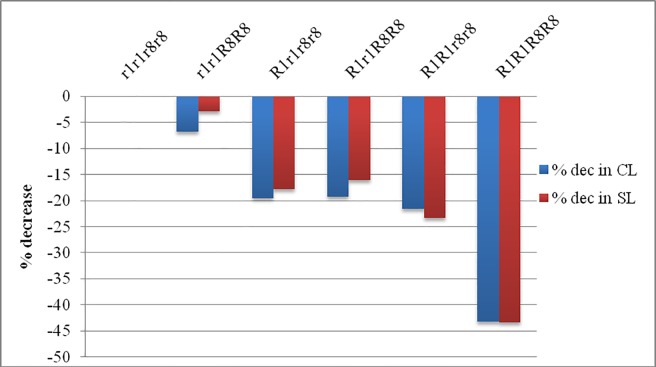
Optimizing wheat height to maximize yield has been an important aspect which is evident from a successful example of green revolution. Dwarfing genes (Rht) are known for yield gains due to lodging resistance and partitioning of assimilates into ear. The available and commercially exploited sources of dwarfism in Indian spring wheat are Rht1 and Rht2 genes inspite of availability of over 20 dwarfing genes. Rht8 a Gibberellic acid sensitive dwarfing gene is another reduced height gene commercially exploited in some Mediterranean countries. Two F2 populations segregating for Rht1 and Rht8 genes with each comprising 398 and 379 plants were developed by crossing European winter wheat cultivars Beauchamp and Capitole with Indian spring wheat cultivar PBW 621. Different genotypic combinations for Rht1 and Rht8 genes were selected from these populations through linked molecular markers and selected F3:4 lines were evaluated for various agronomic traits in a replicated trial. Reduction in plant height with Rht8 and Rht1 averaged 2.86% and 13.3% respectively as compared to the group of lines lacking dwarfing gene. Reduction was spread along all the internodes of wheat culm and reduction was lower as progress towards the lower internode. Grain number per spike and highest yield was observed in lines carrying only Rht1 gene. Reduction in plant biomass was observed with either of the dwarfing gene. Longest coleoptile length and seedling shoot length averaged 4.4 ± 0.09 cm and 19.5 ± 0.48, respectively was observed in lines lacking any of the dwarfing gene. Negligible reduction of 6.75% and 2.84% in coleoptile length and seedling shoot length, respectively was observed in lines carrying only Rht8 gene whereas F3:4 lines with Rht1 gene showed 21.64% and 23.35% reduction in coleoptile length and seedling shoot length, respectively. Additive effect of genes was observed as double dwarfs showed 43.31% and 43.34% reduction in coleoptile length and seedling shoot length.
优化小麦株高以实现最大产量一直是一个重要方面,这从绿色革命的一个成功例子中可以明显看出。矮化基因(Rht)因其抗倒伏和将同化产物分配到穗上而导致产量增加而闻名。尽管有 20 多个矮化基因,但印度春小麦可用的和商业上利用的矮化来源是 Rht1 和 Rht2 基因。Rht8 是一种赤霉素敏感的矮化基因,也是一些地中海国家商业上利用的另一种矮化基因。通过将欧洲冬小麦品种 Beauchamp 和 Capitole 与印度春小麦品种 PBW 621 杂交,开发了两个分离出 Rht1 和 Rht8 基因的 F2 群体,每个群体包含 398 和 379 株植物。通过连锁分子标记从这些群体中选择了不同的 Rht1 和 Rht8 基因的基因型组合,并在重复试验中评估了选择的 F3:4 系的各种农艺性状。与缺乏矮化基因的系相比,Rht8 和 Rht1 平均使株高降低 2.86%和 13.3%。株高的降低沿小麦茎的所有节间分布,并且随着向较低节间的推进,降低幅度较低。仅携带 Rht1 基因的系观察到穗粒数和最高产量增加。在携带任何矮化基因的系中都观察到生物量减少。最长的胚芽鞘长度和幼苗茎长度平均为 4.4 ± 0.09cm 和 19.5 ± 0.48cm,在没有任何矮化基因的系中观察到。仅携带 Rht8 基因的系中观察到胚芽鞘长度和幼苗茎长度分别减少 6.75%和 2.84%,而携带 Rht1 基因的 F3:4 系中,胚芽鞘长度和幼苗茎长度分别减少 21.64%和 23.35%。观察到基因的加性效应,因为双矮化系的胚芽鞘长度和幼苗茎长度分别减少 43.31%和 43.34%。