Department of Medicine, Bangabandhu Sheikh Mujib Medical University (BSMMU), Dhaka, Bangladesh.
Centre for Tropical Medicine and Global Health (CTMGH), University of Oxford, Oxford, United Kingdom.
PLoS One. 2018 Jun 21;13(6):e0199579. doi: 10.1371/journal.pone.0199579. eCollection 2018.
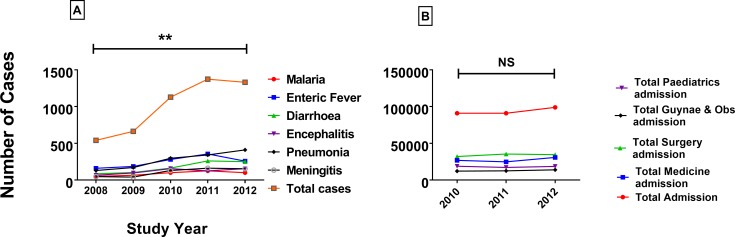
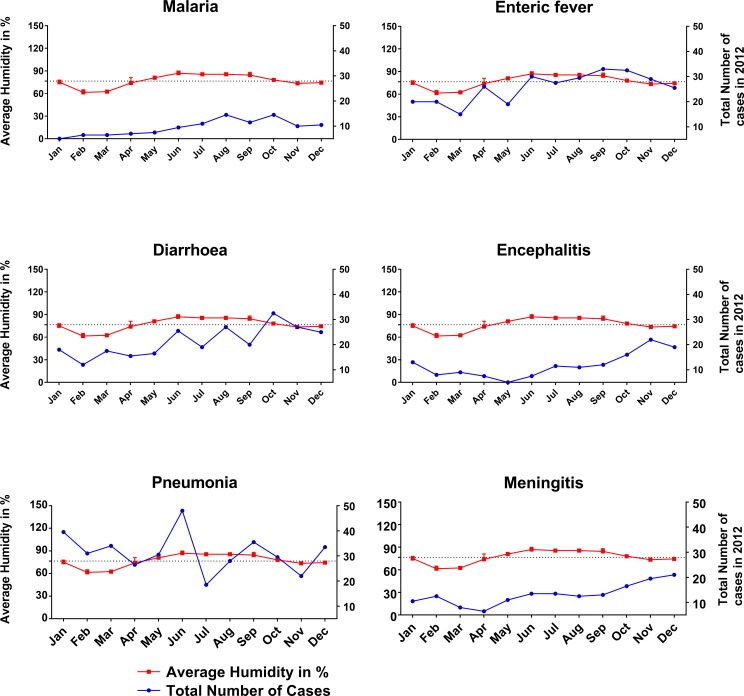
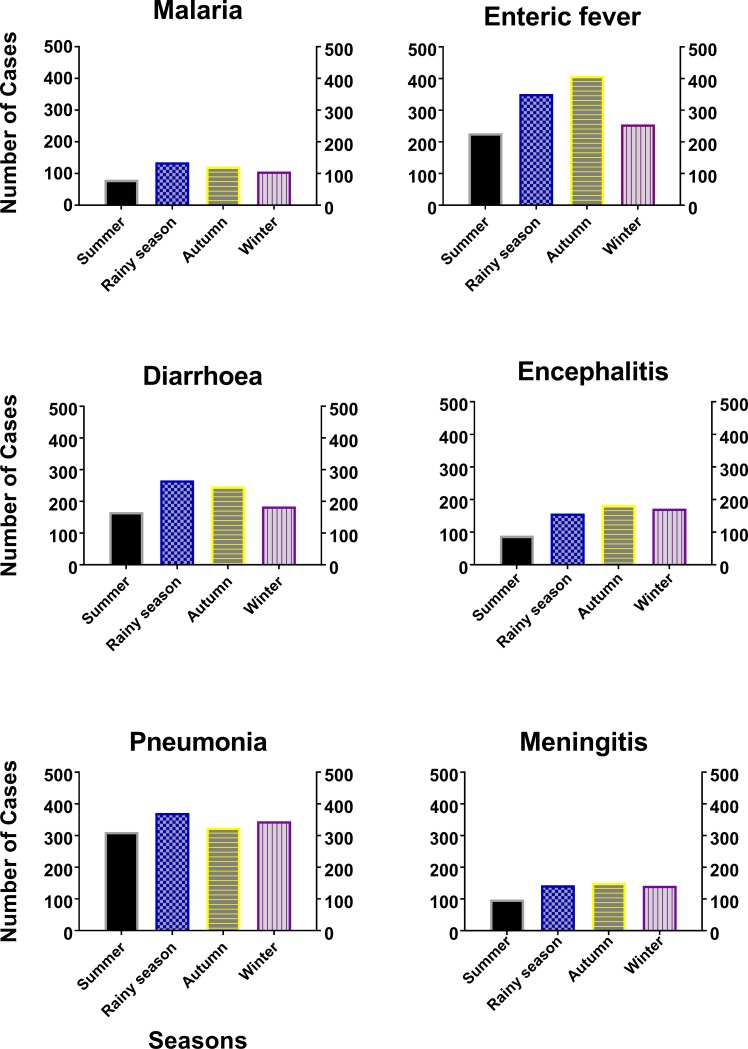
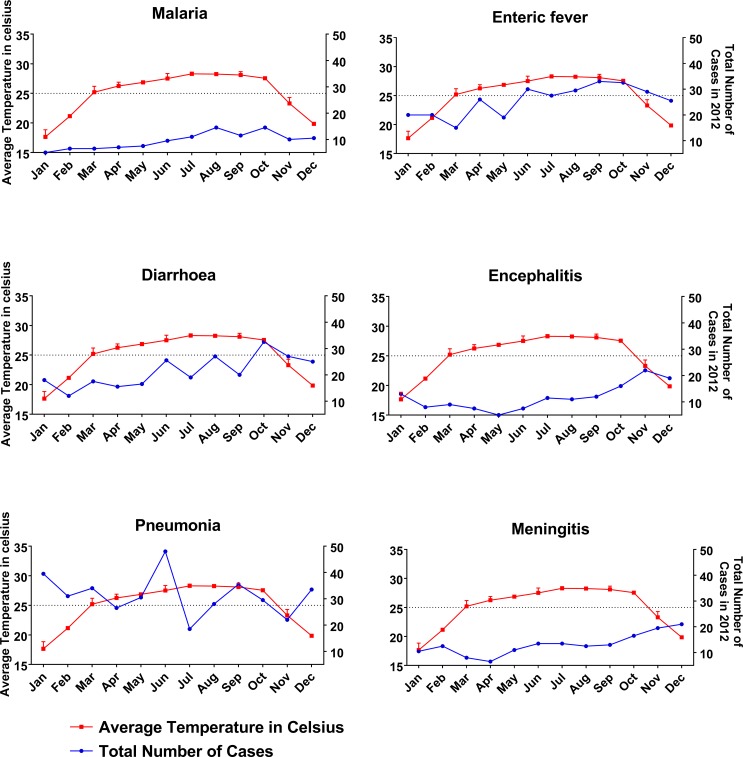
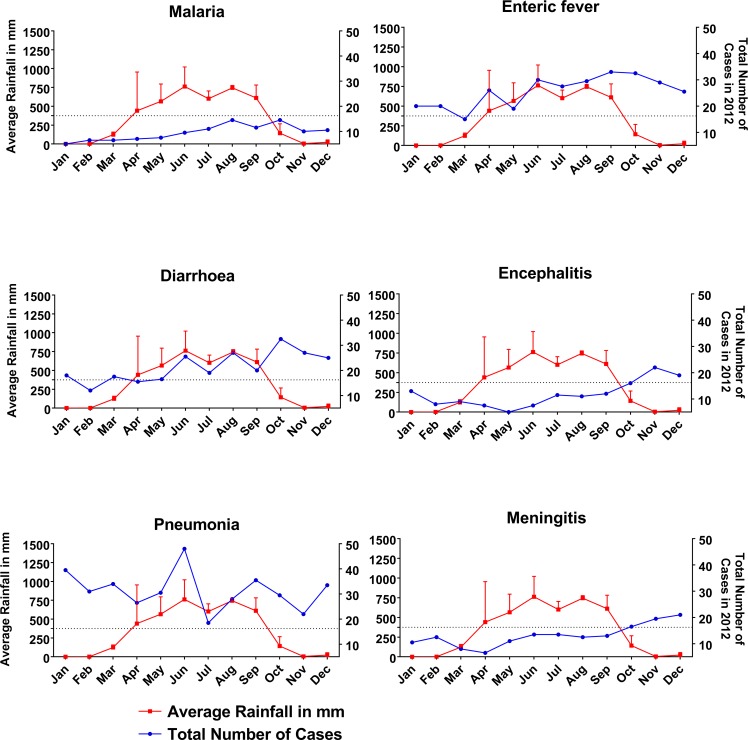
Bangladesh is one of the world's most vulnerable countries for climate change. This observational study examined the association of temperature, humidity and rainfall with six common climate-sensitive infectious diseases in adults (malaria, diarrheal disease, enteric fever, encephalitis, pneumonia and bacterial meningitis) in northeastern Bangladesh. Subjects admitted to the adult medicine ward of a tertiary referral hospital in Sylhet, Bangladesh from 2008 to 2012 with a diagnosis of one of the six chosen climate-sensitive infectious diseases were enrolled in the study. Climate-related data were collected from the Bangladesh Meteorological Institute. Disease incidence was then analyzed against mean temperature, humidity and average rainfall for the Sylhet region. Statistical significance was determined using Mann-Whitney test, Chi-square test and ANOVA testing. 5033 patients were enrolled (58% male, 42% female, ratio 1.3:1). All six diseases showed highly significant (p = 0.01) rises in incidence between the study years 2008 (540 cases) and 2012 (1330 cases), compared with no significant rise in overall all-cause hospital admissions in the same period (p = 0.19). The highest number of malaria (135), diarrhea (266) and pneumonia (371) cases occurred during the rainy season. On the other hand, the maximum number of enteric fever (408), encephalitis (183) and meningitis (151) cases occurred during autumn, which follows the rainy season. A positive (P = 0.01) correlation was observed between increased temperature and the incidence of malaria, enteric fever and diarrhea, and a negative correlation with encephalitis, meningitis and pneumonia. Higher humidity correlated (P = 0.01) with a higher number of cases of malaria and diarrhea, but inversely correlated with meningitis and encephalitis. Higher incidences of encephalitis and meningitis occurred while there was low rainfall. Incidences of diarrhea, malaria and enteric fever, increased with rainfall, and then gradually decreased. The findings support a relationship between weather patterns and disease incidence, and provide essential baseline data for future large prospective studies.
孟加拉国是世界上最易受气候变化影响的国家之一。本观察性研究旨在探讨孟加拉国东北部地区温度、湿度和降雨量与六种常见气候敏感传染病(疟疾、腹泻病、肠热病、脑炎、肺炎和细菌性脑膜炎)之间的关联。该研究纳入了 2008 年至 2012 年间在孟加拉国锡尔赫特的一家三级转诊医院成人内科病房因六种选定的气候敏感传染病之一而住院的成年人。气候相关数据由孟加拉国气象局收集。然后分析该地区的平均温度、湿度和平均降雨量与疾病发病率之间的关系。使用 Mann-Whitney 检验、卡方检验和 ANOVA 检验确定统计学意义。共纳入 5033 例患者(男性占 58%,女性占 42%,男女比例为 1.3:1)。与同期医院总入院人数无明显增加(p = 0.19)相比,六种疾病的发病率在研究年份 2008 年(540 例)和 2012 年(1330 例)之间均有显著升高(p = 0.01)。疟疾(135 例)、腹泻(266 例)和肺炎(371 例)患者人数最多的时期均为雨季。另一方面,肠热病(408 例)、脑炎(183 例)和脑膜炎(151 例)患者人数最多的时期为紧随雨季的秋季。温度升高与疟疾、肠热病和腹泻的发病率呈正相关(P = 0.01),与脑炎、脑膜炎和肺炎呈负相关。湿度升高与疟疾和腹泻患者人数增加呈正相关(P = 0.01),但与脑膜炎和脑炎呈负相关。脑炎和脑膜炎的发病率较低时降雨量较低。腹泻、疟疾和肠热病的发病率随着降雨量的增加而增加,然后逐渐减少。这些发现支持了天气模式与疾病发病率之间的关系,并为未来的大型前瞻性研究提供了重要的基线数据。