Shah Aridni, Jain Rikesh, Brockmann Axel
Tata Institute of Fundamental Research, National Centre for Biological Sciences, Bengaluru, India.
School of Chemical and Biotechnology, SASTRA University, Thanjavur, India.
Front Psychol. 2018 Jun 5;9:865. doi: 10.3389/fpsyg.2018.00865. eCollection 2018.
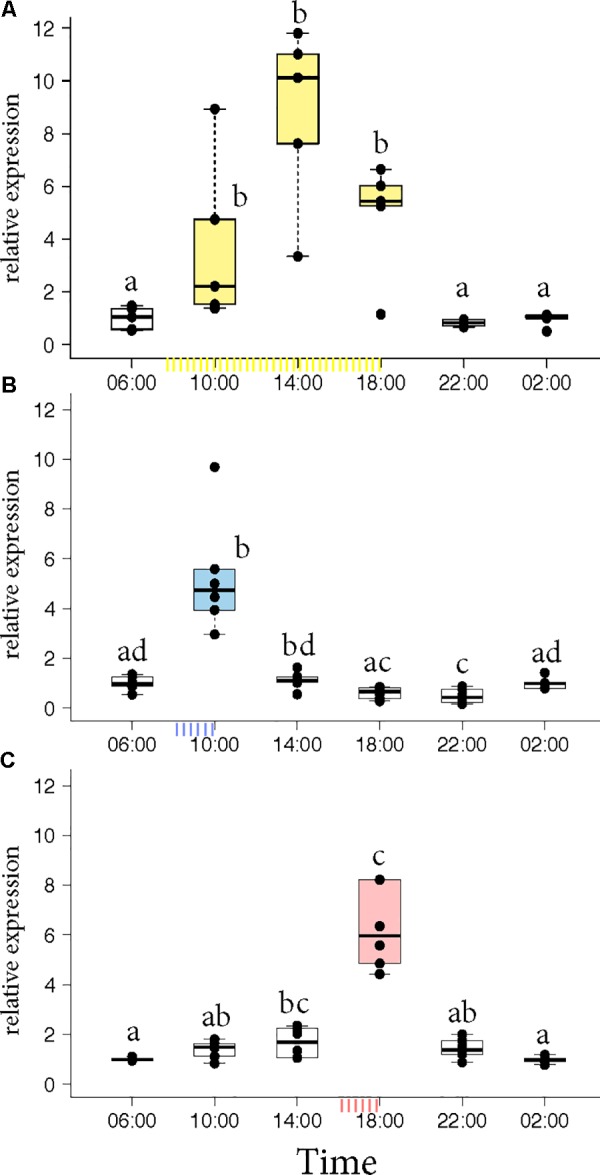
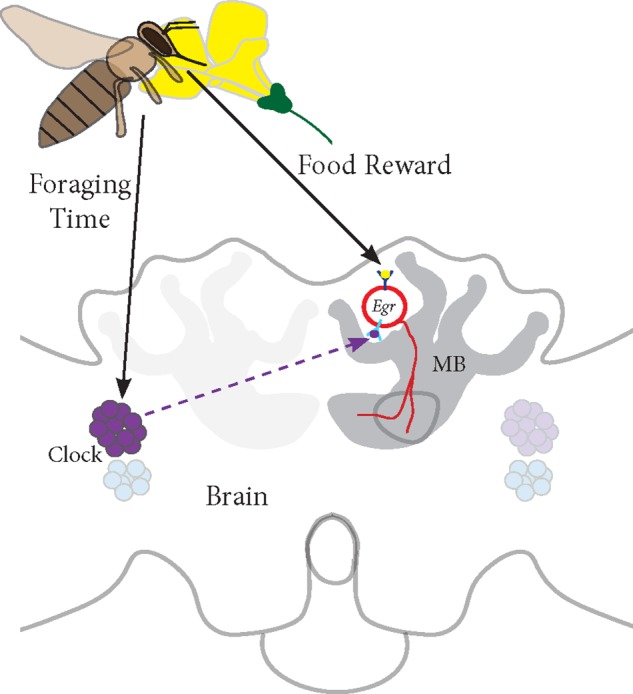
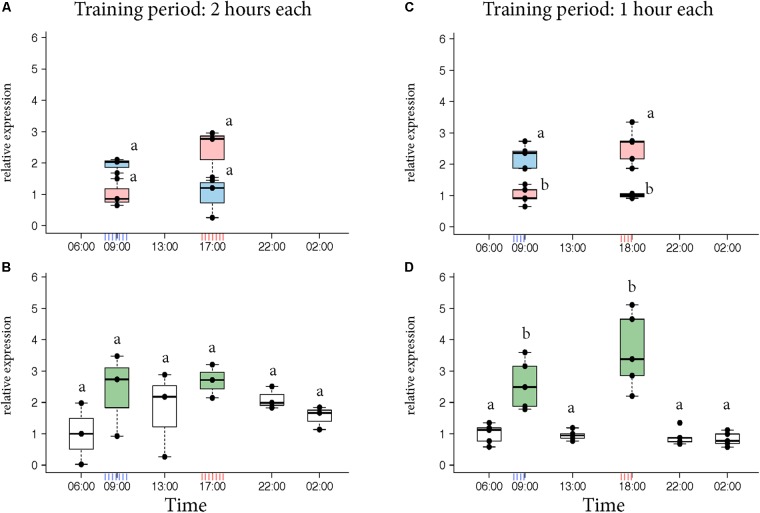
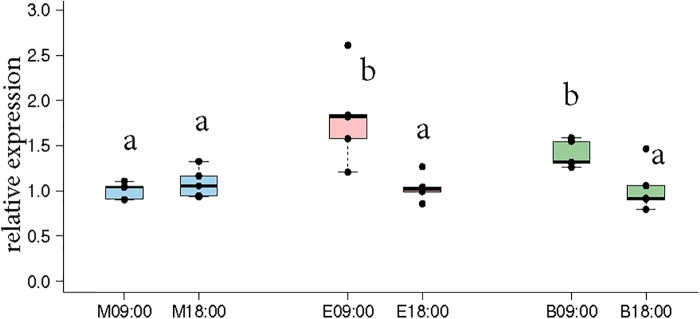
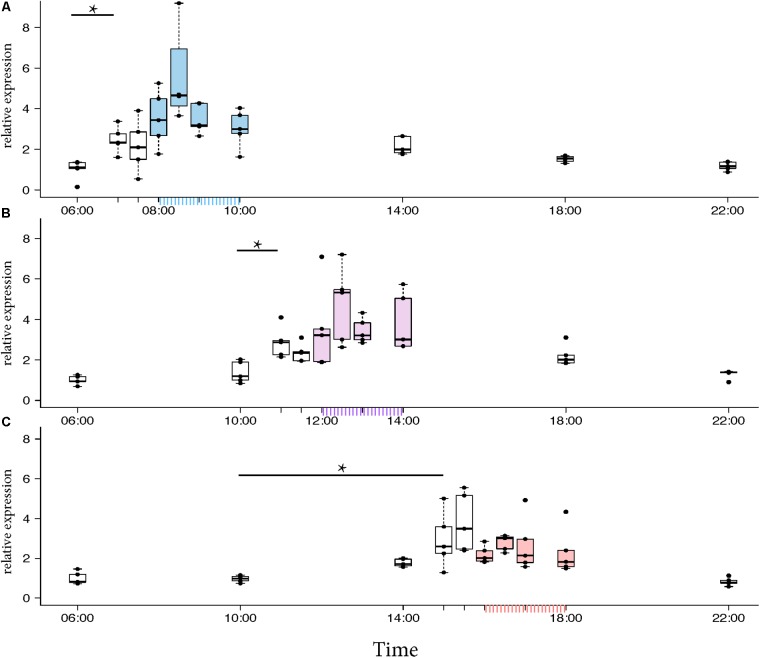
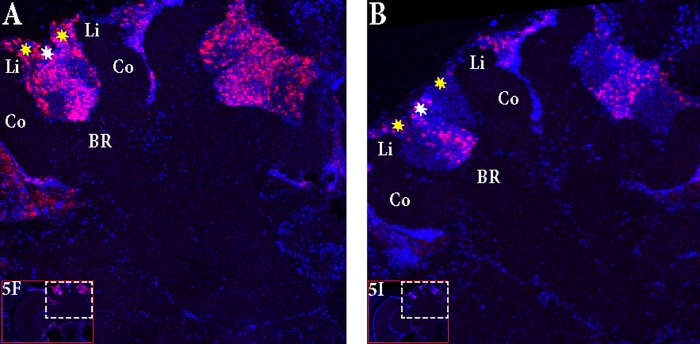
In honey bees, continuous foraging is accompanied by a sustained up-regulation of the immediate early gene (early growth response protein-1) and candidate downstream genes involved in learning and memory. Here, we present a series of feeder training experiments indicating that expression is highly correlated with the time and duration of training even in the absence of the food reward. Foragers that were trained to visit a feeder over the whole day and then collected on a day without food presentation showed up-regulation over the whole day with a peak expression around 14:00. When exposed to a time-restricted feeder presentation, either 2 h in the morning or 2 h in the evening, expression in the brain was up-regulated only during the hours of training. Foragers that visited a feeder in the morning as well as in the evening showed two peaks of expression. Finally, when we prevented time-trained foragers from leaving the colony using artificial rain, expression in the brains was still slightly but significantly up-regulated around the time of feeder training. hybridization studies showed that active foraging and time-training induced up-regulation occurred in the same brain areas, preferentially the small Kenyon cells of the mushroom bodies and the antennal and optic lobes. Based on these findings we propose that foraging induced expression can get regulated by the circadian clock after time-training over several days and is a candidate transcription factor involved in molecular processes underlying time-memory.
在蜜蜂中,持续觅食伴随着立即早期基因(早期生长反应蛋白-1)以及参与学习和记忆的候选下游基因的持续上调。在此,我们展示了一系列喂食器训练实验,结果表明,即使在没有食物奖励的情况下,该基因的表达也与训练时间和时长高度相关。经过一整天训练去访问喂食器,然后在没有食物展示的一天被收集的觅食者,在一整天内都表现出该基因上调,在14:00左右达到表达峰值。当暴露于限时喂食器展示时,无论是早上2小时还是晚上2小时,大脑中的该基因表达仅在训练时间内上调。早上和晚上都访问喂食器的觅食者表现出该基因表达的两个峰值。最后,当我们使用人工降雨阻止经过时间训练的觅食者离开蜂群时,大脑中的该基因表达在喂食器训练时间左右仍会轻微但显著地上调。原位杂交研究表明,活跃觅食和时间训练诱导的该基因上调发生在相同的脑区,优先是蘑菇体的小肯扬细胞以及触角叶和视叶。基于这些发现,我们提出,经过数天的时间训练后,觅食诱导的该基因表达可受昼夜节律时钟调节,并且该基因是参与时间记忆潜在分子过程的候选转录因子。