Varland Sylvia, Arnesen Thomas
Department of Biological Sciences, University of Bergen, 5006, Bergen, Norway.
Department of Biomedicine, University of Bergen, 5009, Bergen, Norway.
BMC Res Notes. 2018 Jun 22;11(1):404. doi: 10.1186/s13104-018-3513-4.
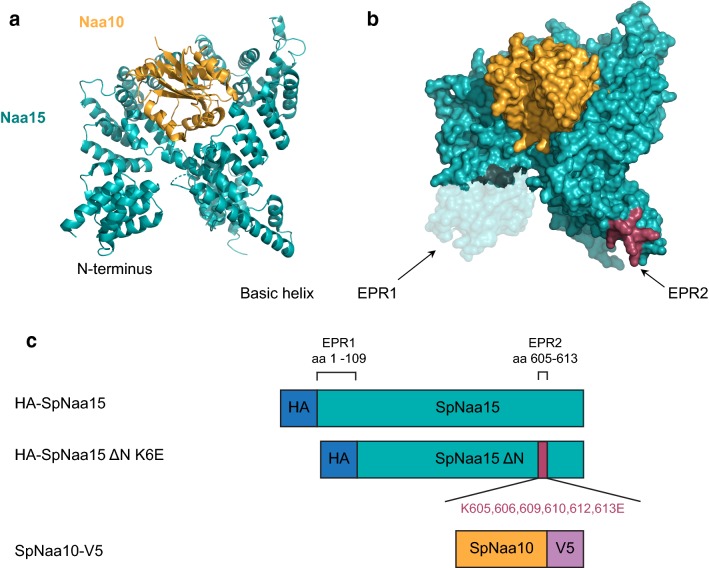
N-terminal acetylation is a common protein modification that occurs preferentially co-translationally as the substrate N-terminus is emerging from the ribosome. The major N-terminal acetyltransferase complex A (NatA) is estimated to N-terminally acetylate more than 40% of the human proteome. To form a functional NatA complex the catalytic subunit NAA10 must bind the auxiliary subunit NAA15, which properly folds NAA10 for correct substrate acetylation as well as anchors the entire complex to the ribosome. Mutations in these two genes are associated with various neurodevelopmental disorders in humans. The aim of this study was to investigate the in vivo functionality of a Schizosaccharomyces pombe NAA15 mutant that is known to prevent NatA from associating with ribosomes, but retains NatA-specific activity in vitro.
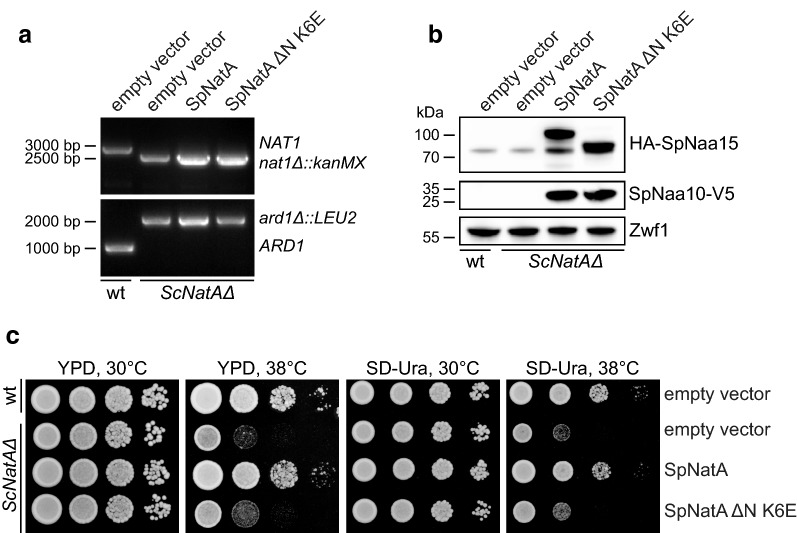
Here, we show that Schizosaccharomyces pombe NatA can functionally replace Saccharomyces cerevisiae NatA. We further demonstrate that the NatA ribosome-binding mutant Naa15 ΔN K6E is unable to rescue the temperature-sensitive growth phenotype of budding yeast lacking NatA. This finding indicates the in vivo importance of the co-translational nature of NatA-mediated N-terminal acetylation.
N 端乙酰化是一种常见的蛋白质修饰,主要在底物 N 端从核糖体露出时共翻译过程中发生。主要的 N 端乙酰转移酶复合物 A(NatA)估计可对超过 40%的人类蛋白质组进行 N 端乙酰化修饰。为形成功能性的 NatA 复合物,催化亚基 NAA10 必须与辅助亚基 NAA15 结合,NAA15 能使 NAA10 正确折叠以实现对底物的正确乙酰化,同时将整个复合物锚定到核糖体上。这两个基因的突变与人类多种神经发育障碍相关。本研究的目的是探究粟酒裂殖酵母 NAA15 突变体的体内功能,已知该突变体可阻止 NatA 与核糖体结合,但在体外保留 NatA 特异性活性。
在此,我们表明粟酒裂殖酵母 NatA 可在功能上替代酿酒酵母 NatA。我们进一步证明,NatA 核糖体结合突变体 Naa15ΔNK6E 无法挽救缺乏 NatA 的芽殖酵母的温度敏感生长表型。这一发现表明 NatA 介导的 N 端乙酰化共翻译性质在体内的重要性。