Zhan Jin-Qiong, Zheng Li-Li, Chen Hai-Bo, Yu Bin, Wang Wei, Wang Ting, Ruan Bo, Pan Bin-Xing, Chen Juan-Ru, Li Xue-Fen, Wei Bo, Yang Yuan-Jian
Biological Psychiatry Laboratory, Department of Psychiatry, Jiangxi Mental Hospital/Affiliated Mental Hospital of Nanchang University, Nanchang, China.
Department of Pharmacy, Jiangxi Maternal and Child Health Hospital, Nanchang, China.
Front Neurosci. 2018 Jun 7;12:390. doi: 10.3389/fnins.2018.00390. eCollection 2018.
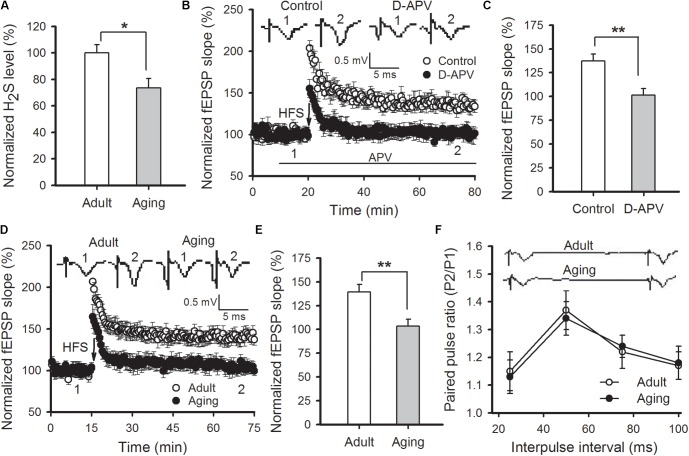
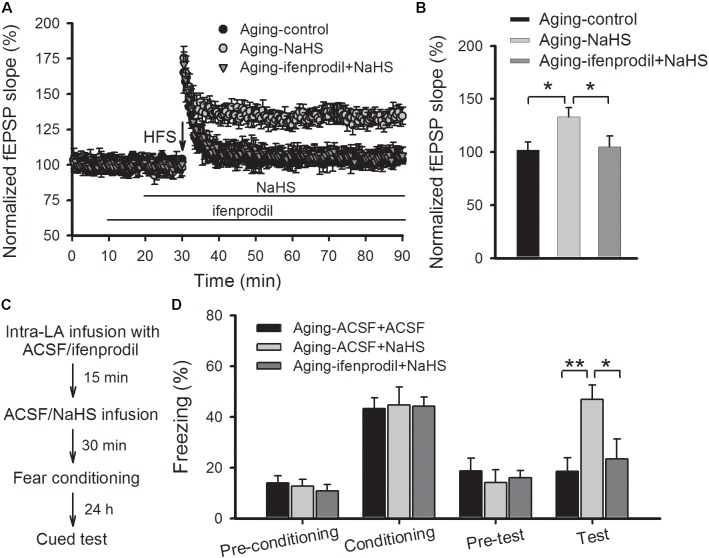
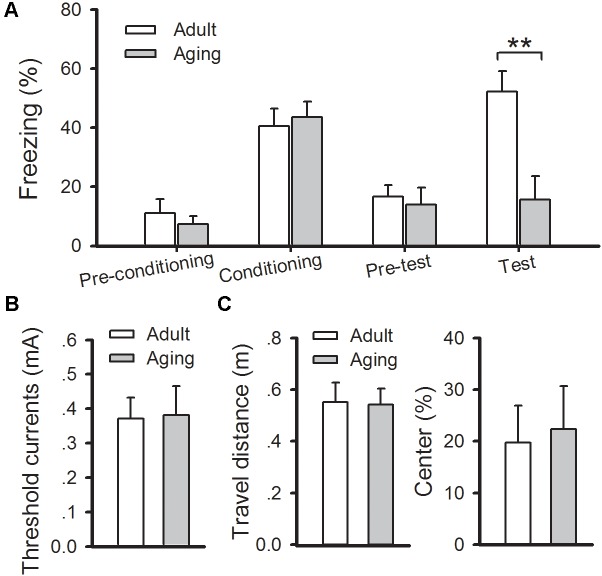
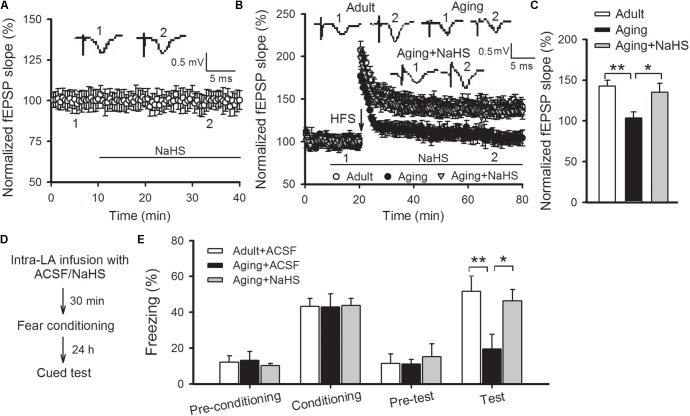
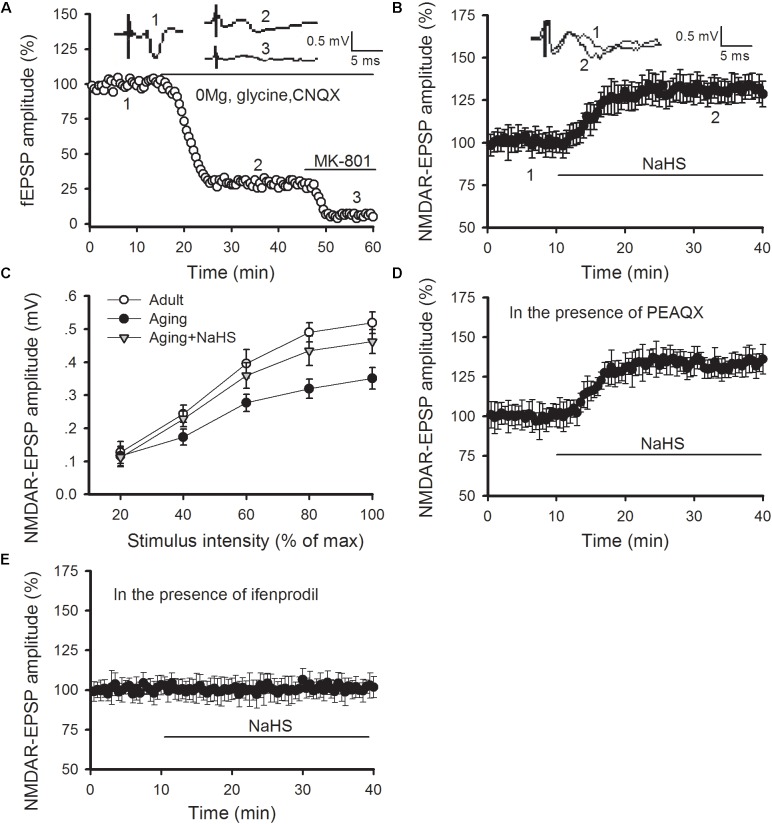
As an endogenous neuromodulator, hydrogen sulfide (HS) exerts multiple biological effects in the brain. Previous studies have shown that HS is involved in the regulation of neural synaptic plasticity and cognition in healthy rodents. It is well known that there is a progressive decline of cognitive function that occurs with increased age. The purpose of this study was to investigate the role of HS in aging-associated amygdalar synaptic plasticity and cued fear memory deficits as well as to explore the underlying mechanisms. We found that HS levels in the amygdala were significantly lower in aged rats when compared with healthy adult rates, which displayed significant deficits in long-term potentiation (LTP) in the thalamo-lateral amygdala (LA) pathway and amygdala-dependent cued fear memory. Bath application of an HS donor, sodium hydrogen sulfide (NaHS), significantly reversed the impaired LTP in brain slices from aged rats, and intra-LA infusion of NaHS restored the cued fear memory in aged rats. Mechanismly, we found that HS treatment significantly enhanced NMDAR-mediated synaptic responses in the thalamo-LA pathway of aged rats. Notably, GluN2B-containing NMDARs, but not GluN2A-containing NMDARs, contributed to the effects of HS on aging-associated impairments of amygdalar LTP and fear memory, because applying GluN2B antagonist could abolish the beneficial effects of NaHS treatment on amygdalar LTP and cognitive performance in aged rats. Collectively, these results show that HS can reverse aging-associated amygdalar synaptic plasticity and fear memory deficits by restoring the function of GluN2B-containing NMDARs, suggesting that supplement of HS might be a therapeutic approach for aging-related cognitive disorders.
作为一种内源性神经调节剂,硫化氢(HS)在大脑中发挥多种生物学作用。先前的研究表明,HS参与了健康啮齿动物神经突触可塑性和认知的调节。众所周知,认知功能会随着年龄的增长而逐渐下降。本研究的目的是探讨HS在衰老相关的杏仁核突触可塑性和线索性恐惧记忆缺陷中的作用,并探索其潜在机制。我们发现,与健康成年大鼠相比,老年大鼠杏仁核中的HS水平显著降低,老年大鼠在丘脑-外侧杏仁核(LA)通路的长时程增强(LTP)和杏仁核依赖性线索性恐惧记忆方面存在显著缺陷。浴用HS供体硫氢化钠(NaHS)可显著逆转老年大鼠脑片中受损的LTP,向LA内注射NaHS可恢复老年大鼠的线索性恐惧记忆。机制上,我们发现HS处理可显著增强老年大鼠丘脑-LA通路中NMDAR介导的突触反应。值得注意的是,含GluN2B的NMDAR,而非含GluN2A的NMDAR,介导了HS对衰老相关的杏仁核LTP和恐惧记忆损伤的作用,因为应用GluN2B拮抗剂可消除NaHS处理对老年大鼠杏仁核LTP和认知表现的有益作用。总的来说,这些结果表明,HS可通过恢复含GluN2B的NMDAR的功能来逆转衰老相关的杏仁核突触可塑性和恐惧记忆缺陷,提示补充HS可能是治疗衰老相关认知障碍的一种方法。