Kamaruzman Nur Izyani, Tiash Snigdha, Ashaie Maeirah, Chowdhury Ezharul Hoque
Jeffrey Cheah School of Medicine and Health Sciences, Faculty of Medicine, Nursing and Health Sciences, Monash University, Wellington Rd & Blackburn Rd, Clayton, VIC 3800, Australia.
Biomedicines. 2018 Jun 22;6(3):73. doi: 10.3390/biomedicines6030073.
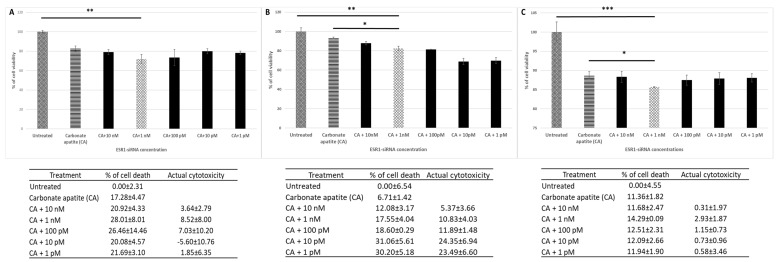
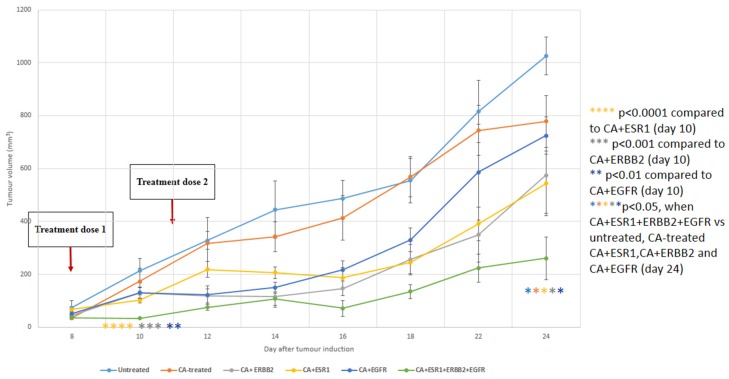
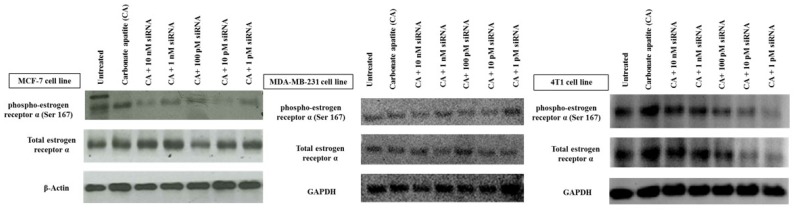
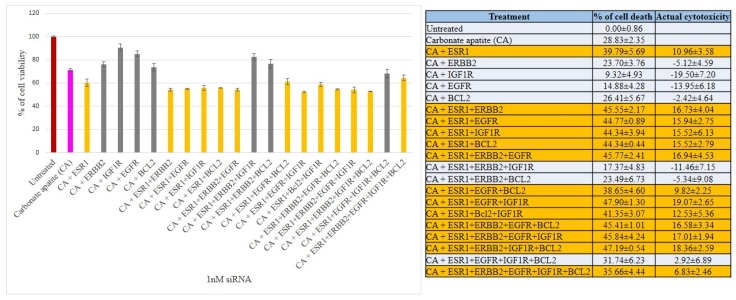
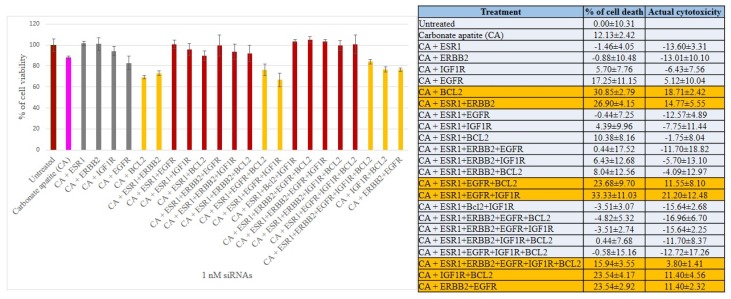
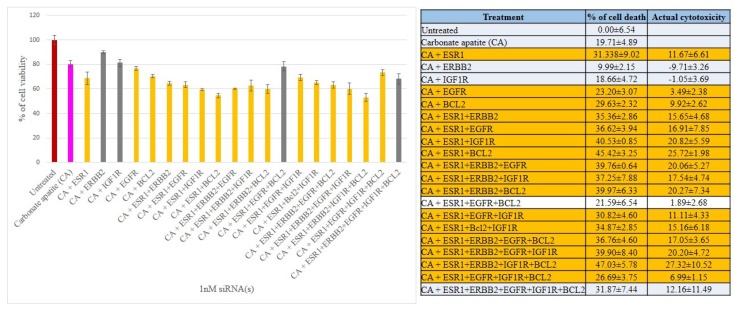
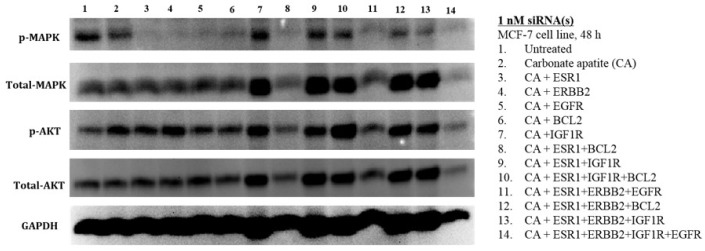
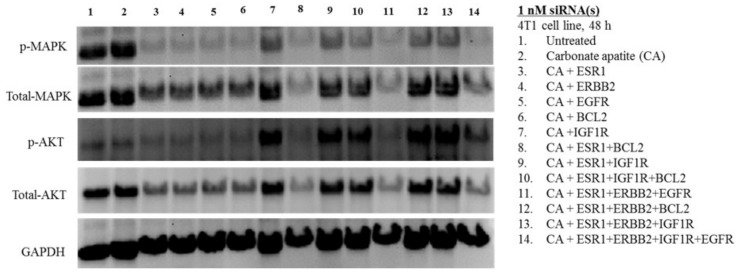
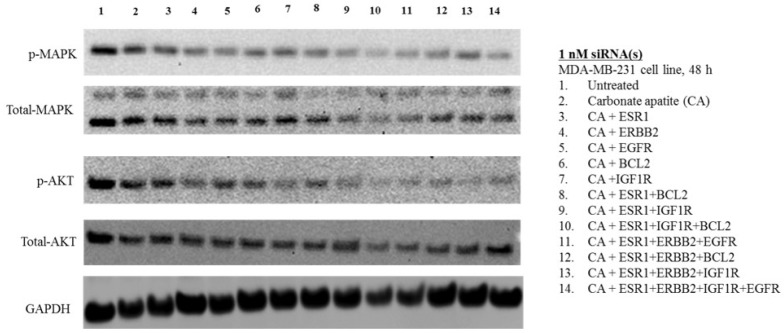
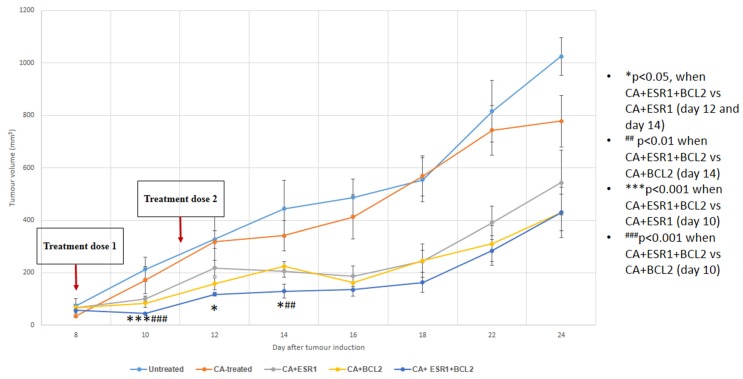
Breast cancer, the second leading cause of female deaths worldwide, is usually treated with cytotoxic drugs, accompanied by adverse side-effects, development of chemoresistance and relapse of disease condition. Survival and proliferation of the cancer cells are greatly empowered by over-expression or over-activation of growth factor receptors and anti-apoptotic factors. Identification of these key players that cross-talk to each other, and subsequently, knockdown with their respective siRNAs in a synchronous manner could be a promising approach to precisely treat the cancer. Since siRNAs demonstrate limited cell permeability and unfavorable pharmacokinetic behaviors, pH-sensitive nanoparticles of carbonate apatite were employed to efficiently carry the siRNAs in vitro and in vivo. By delivering selective siRNAs against the mRNA transcripts of the growth factor receptors, such as ER, ERBB2 (HER2), EGFR and IGFR, and anti-apoptotic protein, such as BCL2 in human (MCF-7 and MDA-MB-231) and murine (4T1) breast cancer cell lines, we found that ESR1 along with BCL-2, or with ERBB2 and EGFR critically contributes to the growth/survival of the cancer cells by activating the MAPK and PI-3 kinase pathways. Furthermore, intravenous delivery of the selected siRNAs aiming to suppress the expression of ER/BCL2 and ER/ERBB2/EGFR groups of proteins led to a significant retardation in tumor growth in a 4T1-induced syngeneic mouse model.
乳腺癌是全球女性死亡的第二大主要原因,通常采用细胞毒性药物治疗,同时伴有不良副作用、化疗耐药性的产生和病情复发。癌细胞的存活和增殖在很大程度上受到生长因子受体和抗凋亡因子的过度表达或过度激活的影响。识别这些相互作用的关键因子,随后以同步方式用各自的小干扰RNA(siRNA)将其敲低,可能是一种精确治疗癌症的有前景的方法。由于siRNA表现出有限的细胞通透性和不良的药代动力学行为,因此采用了pH敏感的碳酸磷灰石纳米颗粒在体外和体内有效携带siRNA。通过在人(MCF-7和MDA-MB-231)和小鼠(4T1)乳腺癌细胞系中递送针对生长因子受体(如雌激素受体(ER)、表皮生长因子受体-2(ERBB2,即HER2)、表皮生长因子受体(EGFR)和胰岛素样生长因子受体(IGFR))的mRNA转录本以及抗凋亡蛋白(如BCL2)的选择性siRNA,我们发现ESR1与BCL-2一起,或与ERBB2和EGFR一起,通过激活丝裂原活化蛋白激酶(MAPK)和磷脂酰肌醇-3激酶(PI-3激酶)途径,对癌细胞的生长/存活起着关键作用。此外,静脉内递送旨在抑制ER/BCL2和ER/ERBB2/EGFR蛋白组表达的选定siRNA,在4T1诱导的同基因小鼠模型中导致肿瘤生长显著延缓。