Division Systems Biology of Signal Transduction, German Cancer Research Center (DKFZ), 69120, Heidelberg, Germany.
Translational Lung Research Center Heidelberg (TLRC), German Center for Lung Research (DZL), 69120, Heidelberg, Germany.
Sci Rep. 2018 Jun 22;8(1):9517. doi: 10.1038/s41598-018-27912-1.
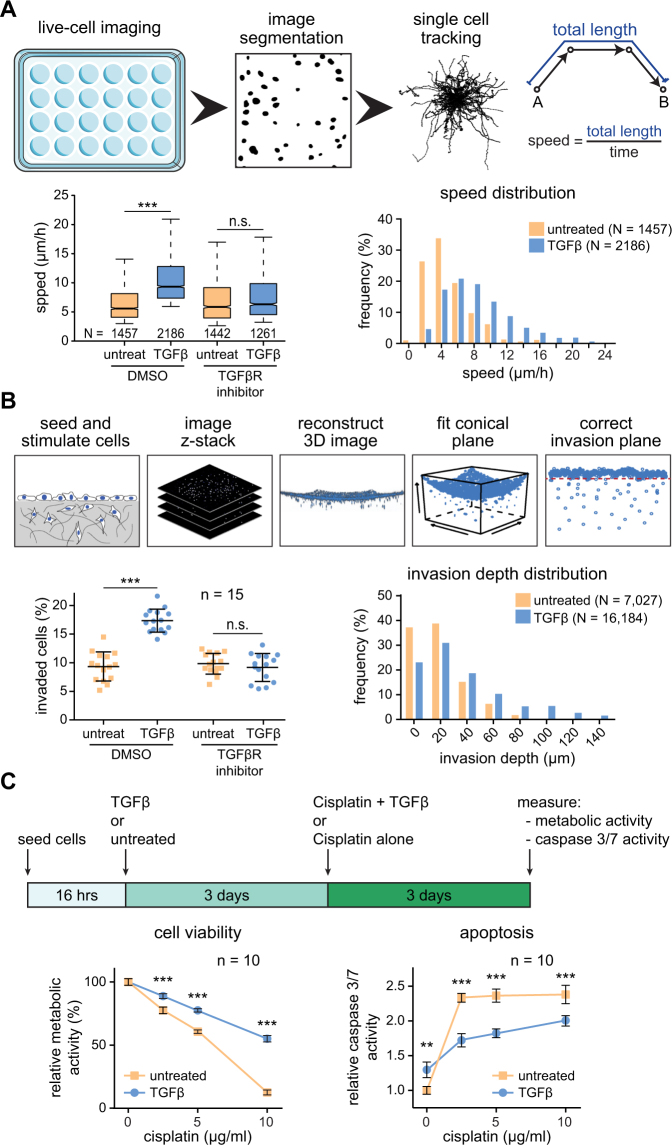
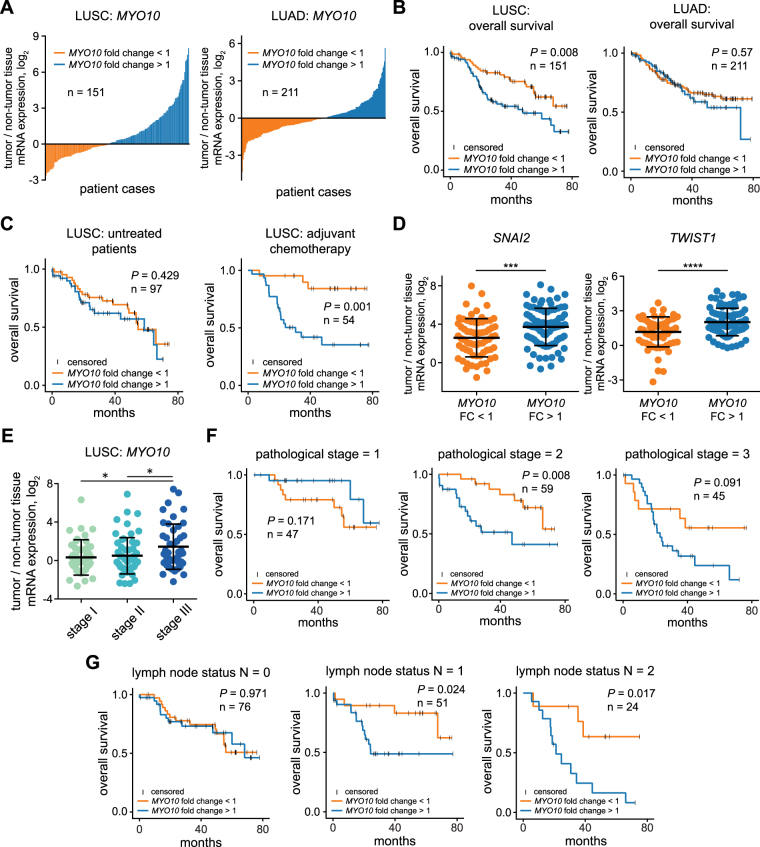
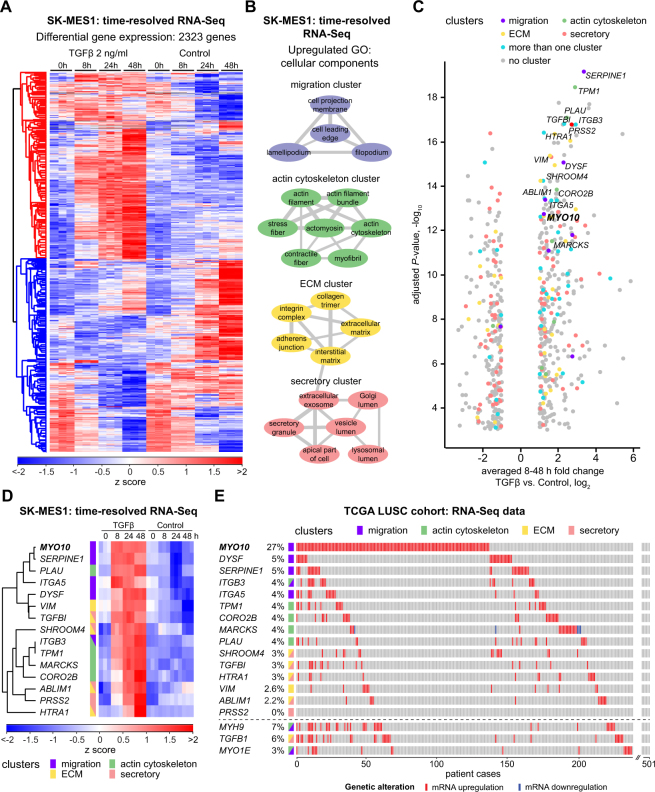
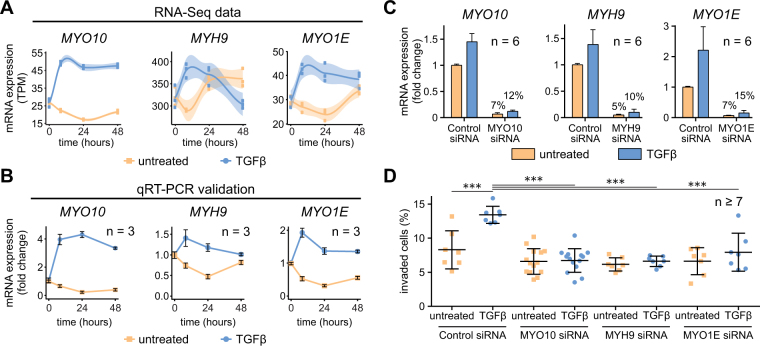
In lung cancer a deregulation of Transforming Growth Factor-β (TGFβ) signaling has been observed. Yet, the impact of TGFβ in squamous cell carcinoma of the lung (LUSC) remained to be determined. We combined phenotypic and transcriptome-wide studies and showed that the stimulation of the LUSC cell line SK-MES1 with TGFβ results in an increase of migratory invasive properties. The analysis of the dynamics of gene expression by next-generation sequencing revealed that TGFβ stimulation orchestrates the upregulation of numerous motility- and actin cytoskeleton-related genes. Among these the non-muscle myosin 10 (MYO10) showed the highest upregulation in a LUSC patient cohort of the Cancer Genome Atlas (TCGA). Knockdown of MYO10 abrogated TGFβ-induced collagen gel invasion of SK-MES1 cells. The analysis of MYO10 mRNA expression in paired tissues of 151 LUSC patients with corresponding 80-month clinical follow-up data showed that the mRNA expression ratio of MYO10 in tumor and tumor-free tissue is prognostic for overall survival of LUSC patients and predictive for the response of these patients to adjuvant chemotherapy. Thus, MYO10 represents a new clinical biomarker for this aggressive disease and due to its role in cellular motility and invasion could serve as a potential molecular target for therapeutic interventions in patients with LUSC.
在肺癌中,已经观察到转化生长因子-β(TGFβ)信号的失调。然而,TGFβ在肺鳞状细胞癌(LUSC)中的作用仍有待确定。我们结合表型和全转录组研究表明,TGFβ刺激 LUSC 细胞系 SK-MES1 会导致迁移侵袭特性增加。通过下一代测序分析基因表达的动态变化表明,TGFβ刺激协调了许多与运动性和肌动蛋白细胞骨架相关基因的上调。在这些基因中,非肌肉肌球蛋白 10(MYO10)在癌症基因组图谱(TCGA)的 LUSC 患者队列中的上调幅度最高。MYO10 的敲低消除了 TGFβ诱导的 SK-MES1 细胞胶原凝胶侵袭。对 151 例 LUSC 患者配对组织中 MYO10 mRNA 表达的分析,以及对 80 个月临床随访数据的分析表明,肿瘤和无肿瘤组织中 MYO10 的 mRNA 表达比值是 LUSC 患者总生存率的预后因素,并可预测这些患者对辅助化疗的反应。因此,MYO10 是这种侵袭性疾病的新的临床生物标志物,由于其在细胞运动性和侵袭性中的作用,它可能成为 LUSC 患者治疗干预的潜在分子靶点。