School of Biology and Biological Engineering, South China University of Technology, Guangzhou, 510006, China.
CAS Key Laboratory for Biomedical Effects of Nanomaterial & Nanosafety, Institute of High Energy Physics, Chinese Academy of Sciences, Beijing, 100049, China.
J Nanobiotechnology. 2018 Jun 23;16(1):54. doi: 10.1186/s12951-018-0380-z.
Tumor metastasis is the primary cause of mortality in cancer patients. Migratory breast cancer cells in lymphatic and blood vessels seek new sites and form metastatic colonies in the lung and bone, and then these cancer cells often wreak considerable havoc. With advances in nanotechnology, nanomaterials and nanotechnologies are widely applied in tumor therapy. In this paper, small size fullerenol nanoparticles, which are separated by isoelectric focusing electrophoresis (IFE) for discrepancy of isoelectric point (pI), are used in the study of tumor metastasis.
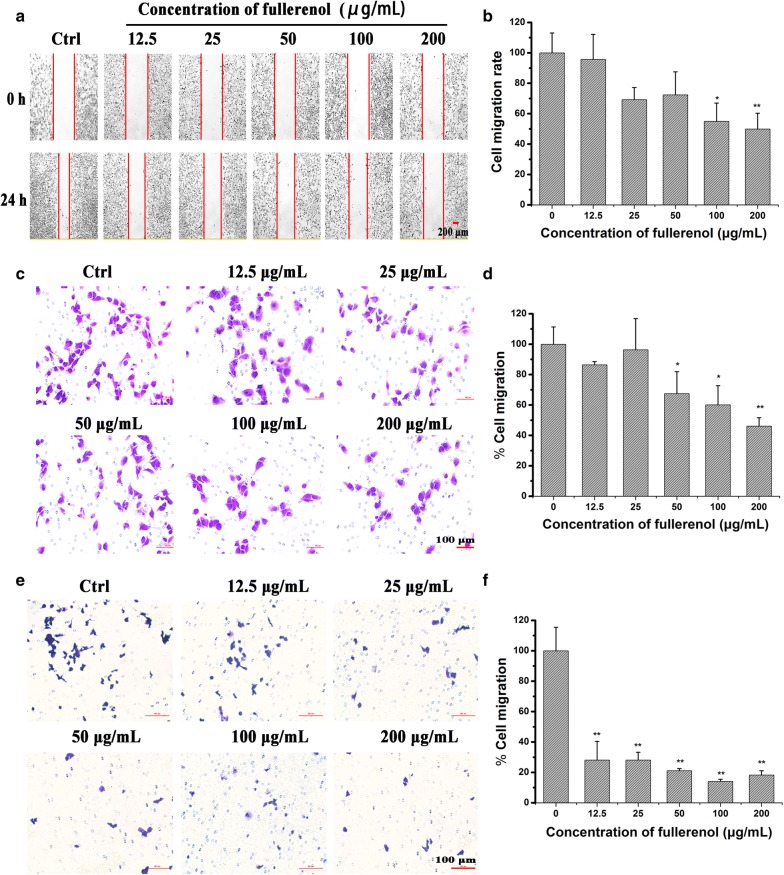
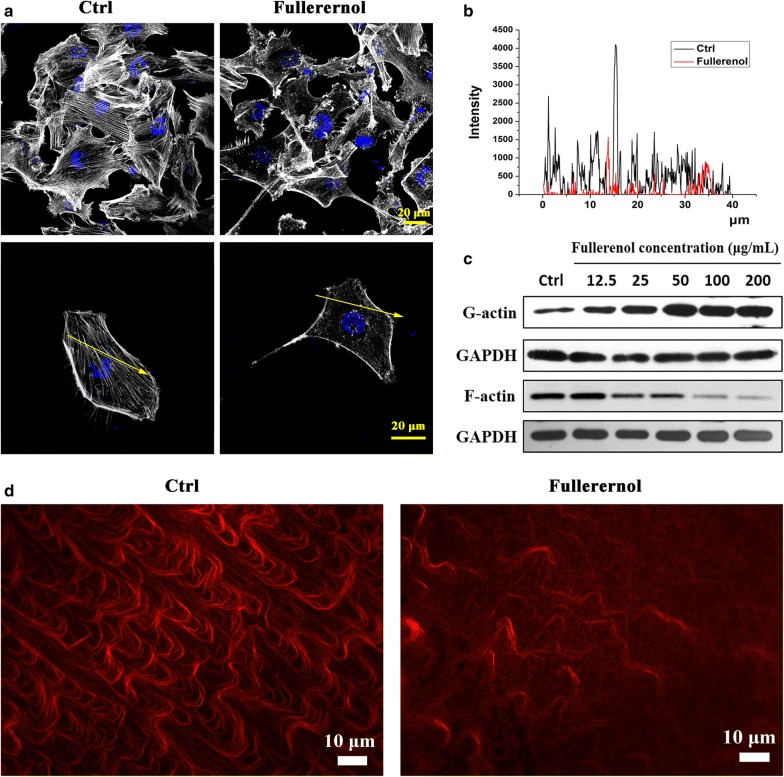
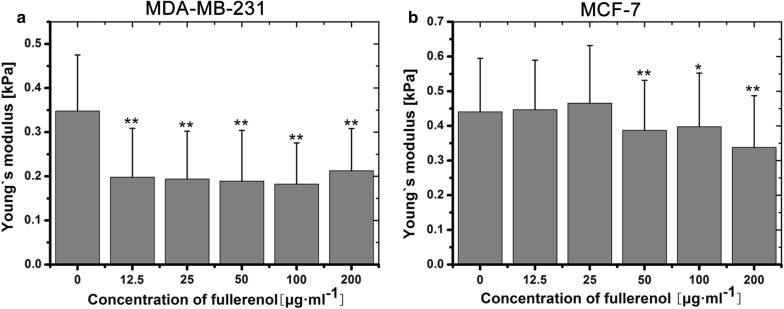
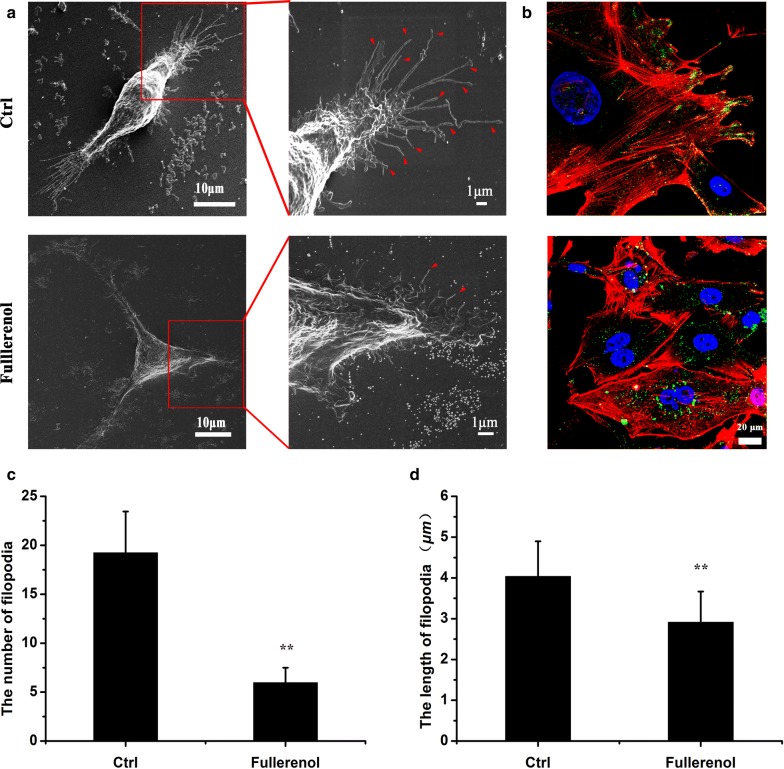
In this study, the commendable inhibition of tumor metastasis was uncovered by intravenous injection of purified fullerenol fraction with special surface charge and functional groups, which was separated by IFE for discrepancy of pI. By investigating the actin dynamics in several cancer cell lines, we found these small size fullerenol nanoparticles disturbed actin dynamics. Young's modulus detection and cell migration assays revealed that fullerenol lowered stiffness and restrained migration of breast cancer cells. Filopodia, the main supporting structures of actin bundles, are important for cell motility and adhesion. Scanning electron microscopy showed that fullerenol reduced the number and length of filopodia. Simultaneously, the inhibition of integrin to form clusters on filopodias, which was likely induced by reorganizing of actin cytoskeleton, impacted cancer cell adhesion and motility.
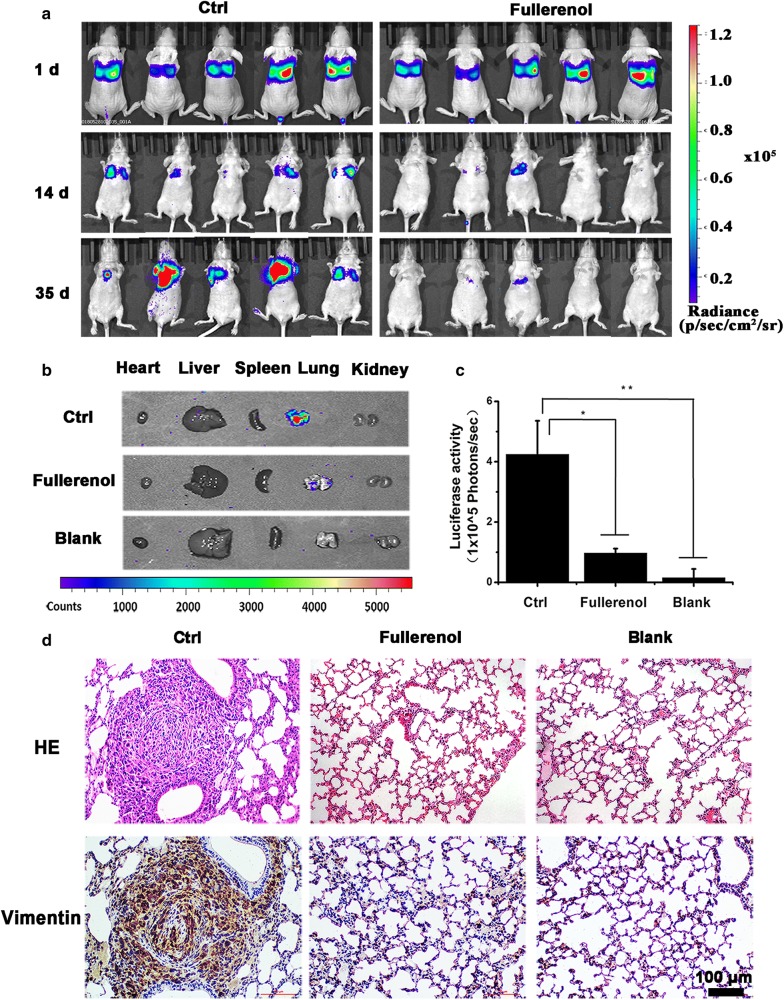
With intravenous injection of these fullerenol nanoparticles, tumor metastasis is well inhibited in vivo. The underlying mechanism most likely to be attributed to the effect of fullerenol nanoparticles on disturbing actin dynamics. With the disordered actin fiber, cell function is varied, including decreased cell stiffness, reduced filopodia formation, and inactivated integrin.
肿瘤转移是癌症患者死亡的主要原因。淋巴和血管中的迁移性乳腺癌细胞寻找新的部位,并在肺部和骨骼中形成转移性菌落,然后这些癌细胞经常造成相当大的破坏。随着纳米技术的进步,纳米材料和纳米技术被广泛应用于肿瘤治疗。在本文中,使用等电聚焦电泳(IFE)分离等电点(pI)差异的小尺寸富勒醇纳米粒子研究肿瘤转移。
本研究通过静脉注射具有特殊表面电荷和官能团的分离的富勒醇级分,发现对肿瘤转移有很好的抑制作用。通过研究几种癌细胞系中的肌动蛋白动力学,我们发现这些小尺寸富勒醇纳米粒子干扰了肌动蛋白动力学。杨氏模量检测和细胞迁移实验表明,富勒醇降低了乳腺癌细胞的刚性并抑制了其迁移。丝状伪足是肌动蛋白束的主要支撑结构,对于细胞运动和黏附很重要。扫描电子显微镜显示富勒醇减少了丝状伪足的数量和长度。同时,整合素在丝状伪足上形成簇的抑制作用,可能是由于肌动蛋白细胞骨架的重排引起的,这影响了癌细胞的黏附和运动。
通过静脉注射这些富勒醇纳米粒子,在体内很好地抑制了肿瘤转移。其潜在的机制很可能是富勒醇纳米粒子对干扰肌动蛋白动力学的影响。随着肌动蛋白纤维的紊乱,细胞功能发生变化,包括细胞刚性降低、丝状伪足形成减少和整合素失活。