Institute for Theoretical Biology (ITB), Charité - Universitätsmedizin Berlin, Freie Universität Berlin, Humboldt-Universität zu Berlin, Berlin Institute of Health, Germany; Medical Department of Hematology, Oncology, and Tumor Immunology, Molekulares Krebsforschungszentrum (MKFZ), Charité - Universitätsmedizin Berlin, Freie Universität Berlin, Humboldt-Universität zu Berlin, Berlin Institute of Health, Germany.
Institute for Theoretical Biology (ITB), Charité - Universitätsmedizin Berlin, Freie Universität Berlin, Humboldt-Universität zu Berlin, Berlin Institute of Health, Germany; Medical Department of Hematology, Oncology, and Tumor Immunology, Molekulares Krebsforschungszentrum (MKFZ), Charité - Universitätsmedizin Berlin, Freie Universität Berlin, Humboldt-Universität zu Berlin, Berlin Institute of Health, Germany.
EBioMedicine. 2018 Jul;33:68-81. doi: 10.1016/j.ebiom.2018.06.012. Epub 2018 Jun 21.
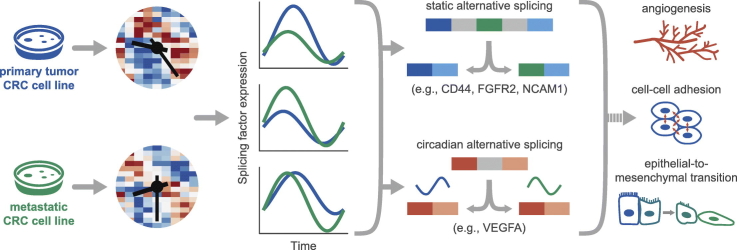
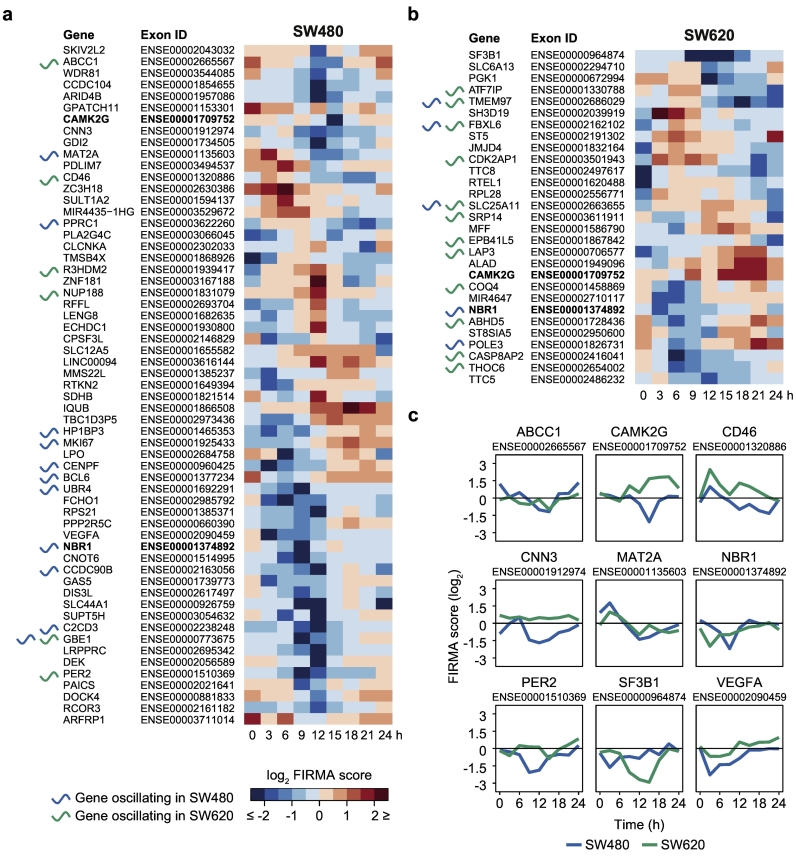
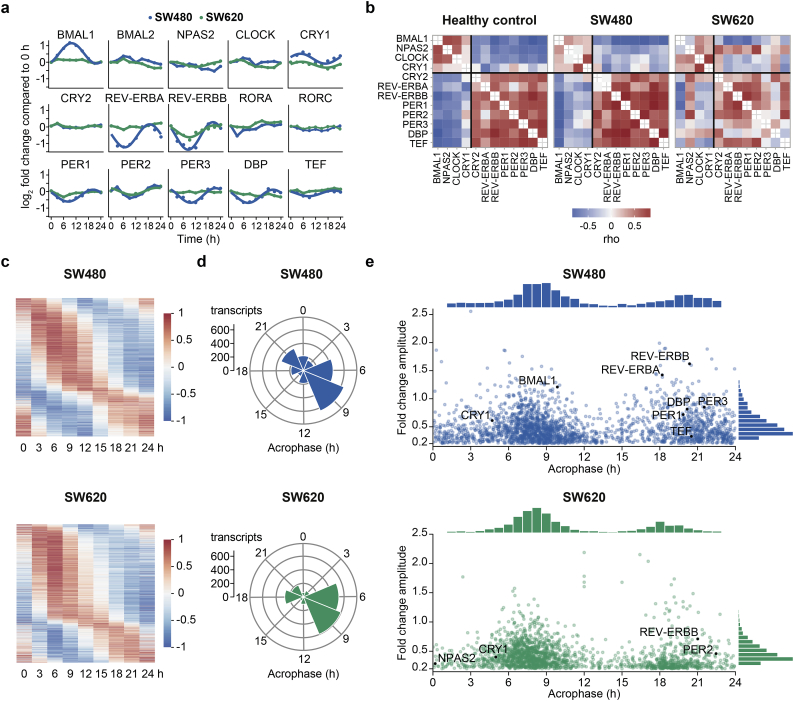
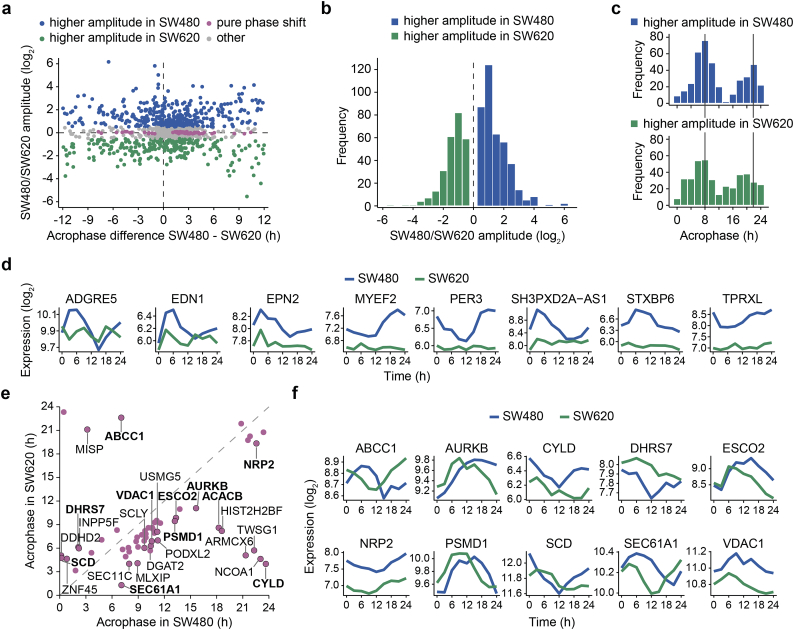
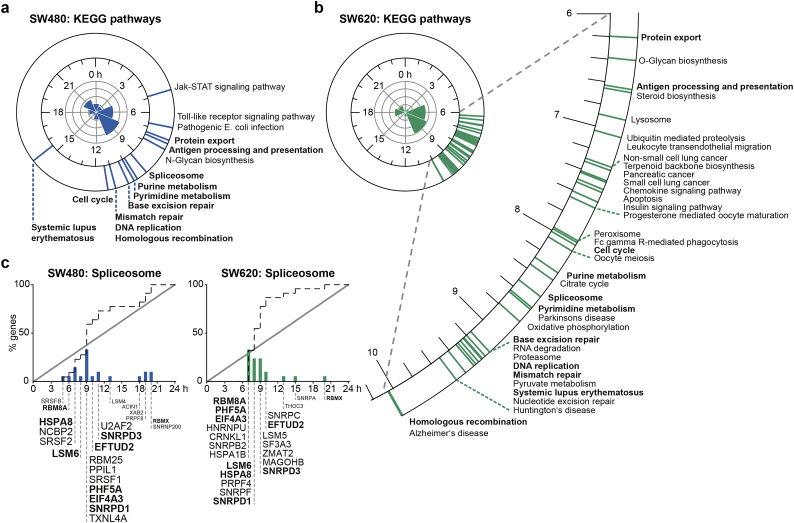
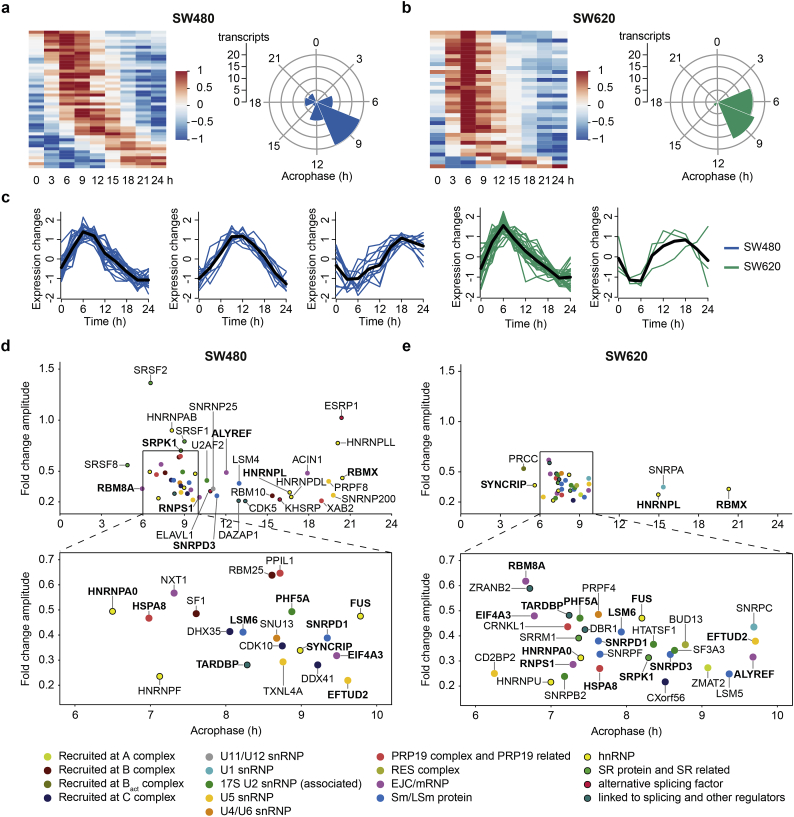
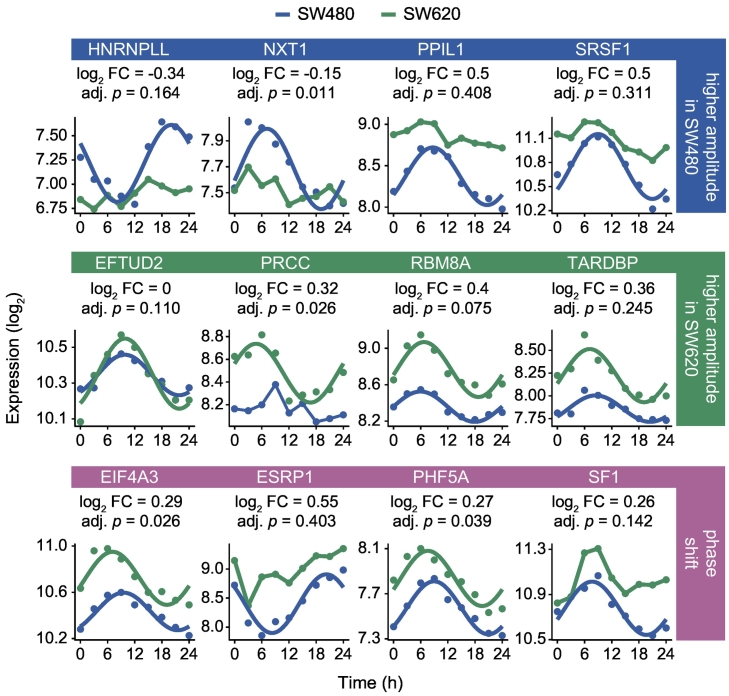
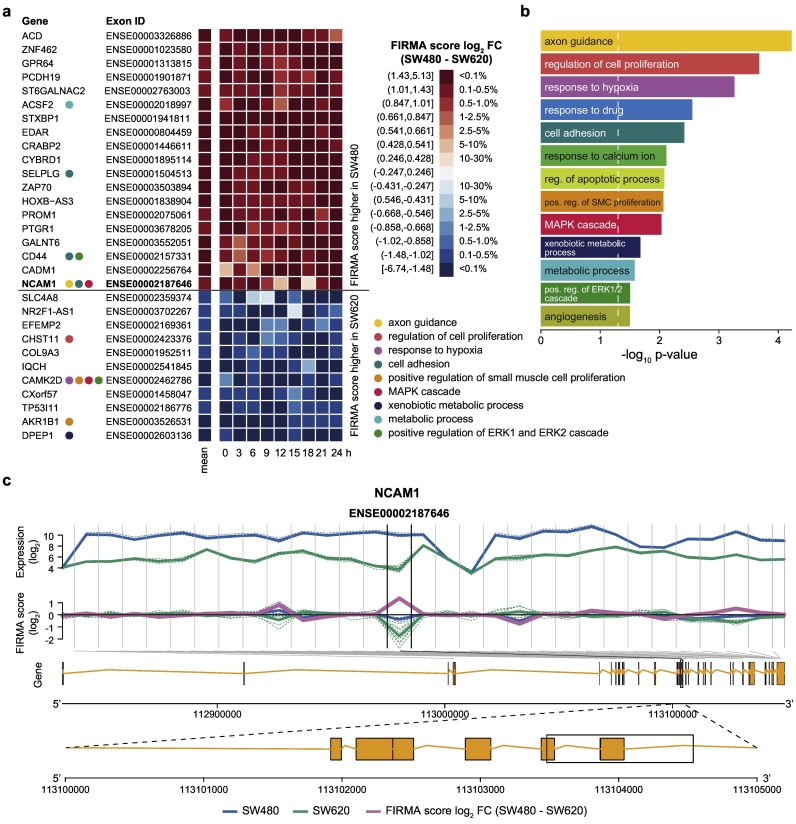
Accumulating evidence points to a significant role of the circadian clock in the regulation of splicing in various organisms, including mammals. Both dysregulated circadian rhythms and aberrant pre-mRNA splicing are frequently implicated in human disease, in particular in cancer. To investigate the role of the circadian clock in the regulation of splicing in a cancer progression context at the systems-level, we conducted a genome-wide analysis and compared the rhythmic transcriptional profiles of colon carcinoma cell lines SW480 and SW620, derived from primary and metastatic sites of the same patient, respectively. We identified spliceosome components and splicing factors with cell-specific circadian expression patterns including SRSF1, HNRNPLL, ESRP1, and RBM 8A, as well as altered alternative splicing events and circadian alternative splicing patterns of output genes (e.g., VEGFA, NCAM1, FGFR2, CD44) in our cellular model. Our data reveals a remarkable interplay between the circadian clock and pre-mRNA splicing with putative consequences in tumor progression and metastasis.
越来越多的证据表明,生物钟在各种生物体(包括哺乳动物)的剪接调控中起着重要作用。节律紊乱和前体 mRNA 剪接异常都经常与人类疾病有关,尤其是癌症。为了在癌症进展的系统水平上研究生物钟在剪接调控中的作用,我们进行了全基因组分析,并比较了源自同一患者原发和转移部位的结肠癌细胞系 SW480 和 SW620 的节律转录谱。我们鉴定了具有细胞特异性节律表达模式的剪接体成分和剪接因子,包括 SRSF1、HNRNPLL、ESRP1 和 RBM8A,以及在我们的细胞模型中发生的改变的可变剪接事件和输出基因(如 VEGFA、NCAM1、FGFR2、CD44)的节律性可变剪接模式。我们的数据揭示了生物钟和前体 mRNA 剪接之间的显著相互作用,这可能对肿瘤进展和转移有潜在影响。