Charité - Universitätsmedizin Berlin, corporate member of Freie Universität Berlin, Humboldt - Universität zu Berlin, and Berlin Institute of Health, Institute for Theoretical Biology, Berlin, Germany.
Charité - Universitätsmedizin Berlin, corporate member of Freie Universität Berlin, Humboldt - Universität zu Berlin, and Berlin Institute of Health, Medical Department of Hematology, Oncology, and Tumor Immunology, Molecular Cancer Research Center, Berlin, Germany.
Sci Rep. 2019 Jul 30;9(1):11062. doi: 10.1038/s41598-019-47343-w.
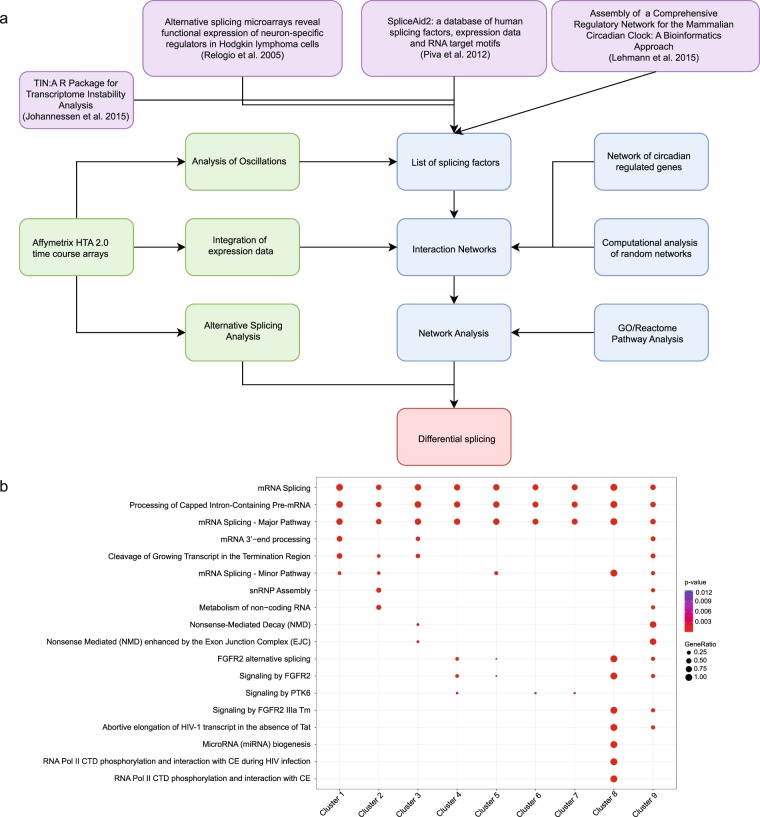
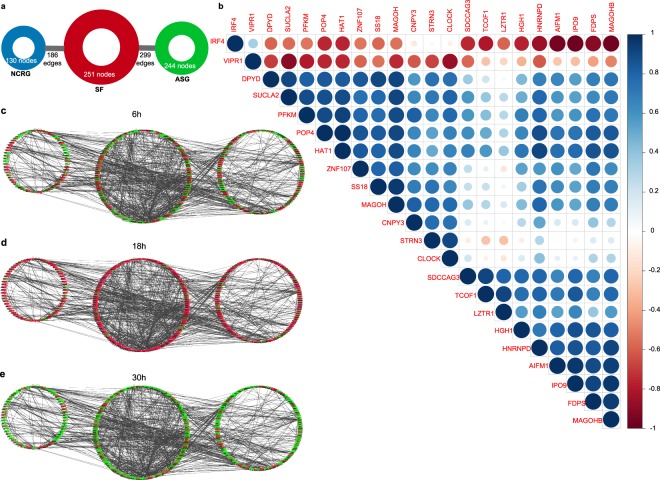
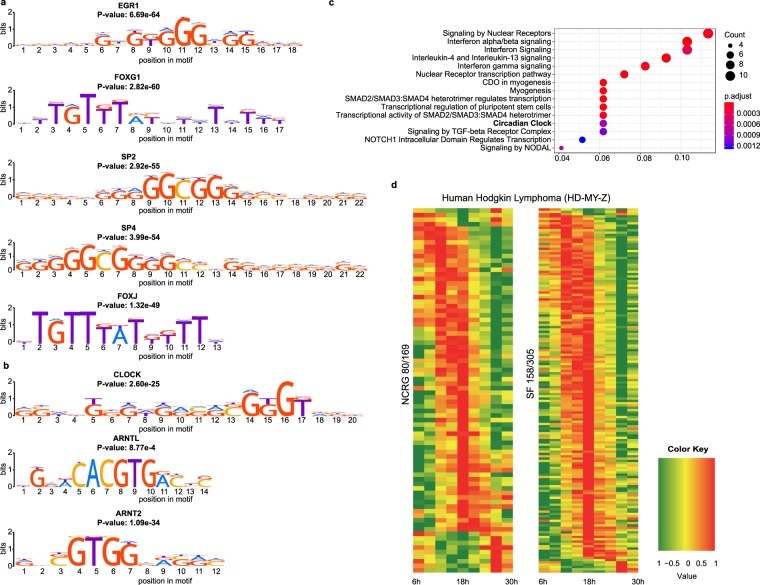
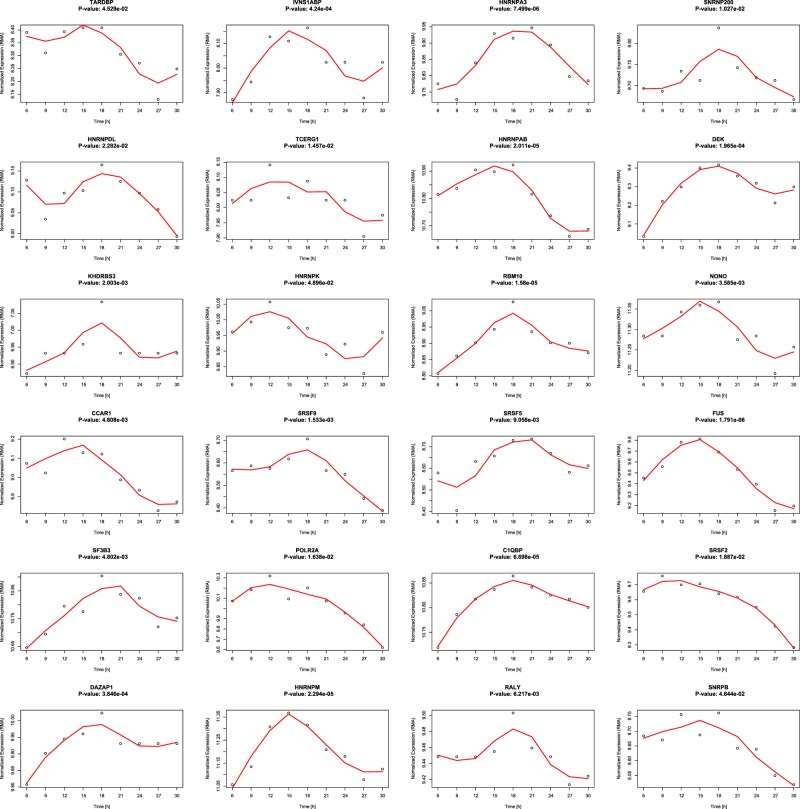
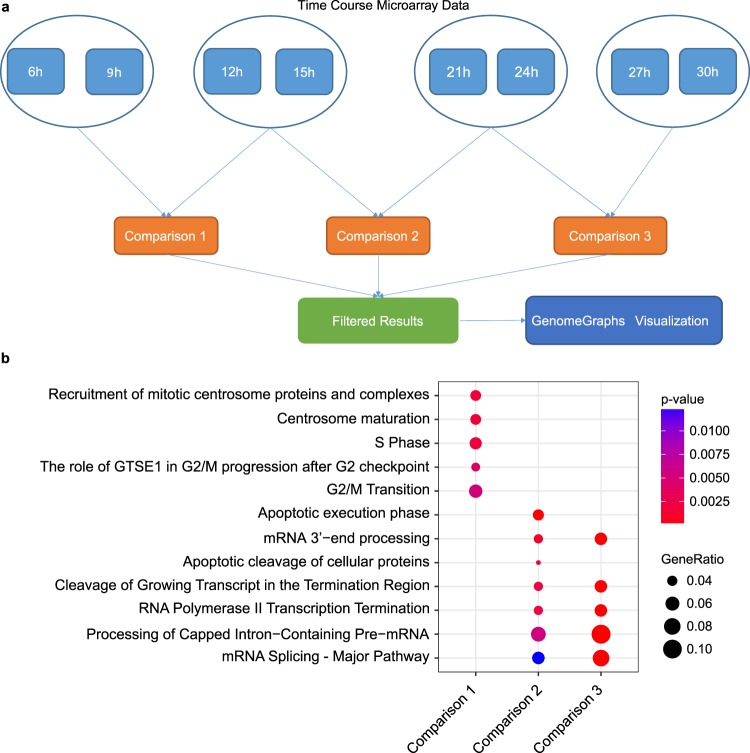
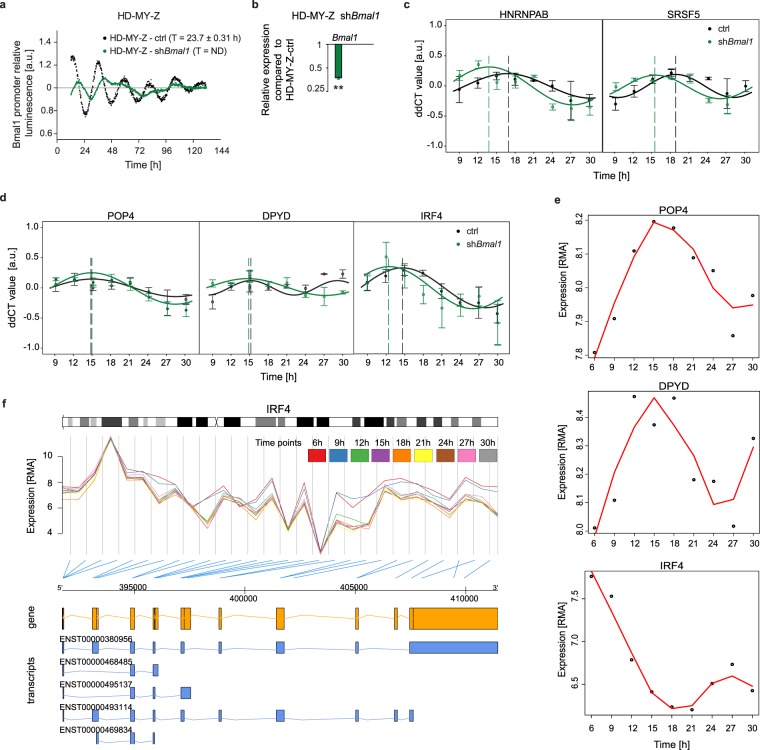
The circadian clock regulates key cellular processes and its dysregulation is associated to several pathologies including cancer. Although the transcriptional regulation of gene expression by the clock machinery is well described, the role of the clock in the regulation of post-transcriptional processes, including splicing, remains poorly understood. In the present work, we investigated the putative interplay between the circadian clock and splicing in a cancer context. For this, we applied a computational pipeline to identify oscillating genes and alternatively spliced transcripts in time-course high-throughput data sets from normal cells and tissues, and cancer cell lines. We investigated the temporal phenotype of clock-controlled genes and splicing factors, and evaluated their impact in alternative splice patterns in the Hodgkin Lymphoma cell line HD-MY-Z. Our data points to a connection between clock-controlled genes and splicing factors, which correlates with temporal alternative splicing in several genes in the HD-MY-Z cell line. These include the genes DPYD, SS18, VIPR1 and IRF4, involved in metabolism, cell cycle, apoptosis and proliferation. Our results highlight a role for the clock as a temporal regulator of alternative splicing, which may impact malignancy in this cellular model.
生物钟调节关键的细胞过程,其失调与包括癌症在内的几种病理有关。尽管时钟机制对基因表达的转录调控已有很好的描述,但时钟在调节包括剪接在内的转录后过程中的作用仍知之甚少。在本工作中,我们研究了生物钟与癌症环境中剪接的潜在相互作用。为此,我们应用了一种计算分析流程,以鉴定正常细胞和组织以及癌细胞系的时间序列高通量数据集中转录的基因和可变剪接转录本。我们研究了生物钟控制基因和剪接因子的时间表型,并评估了它们对 Hodgkin 淋巴瘤细胞系 HD-MY-Z 中可变剪接模式的影响。我们的数据表明,生物钟控制基因和剪接因子之间存在联系,这与 HD-MY-Z 细胞系中几个基因的时间性可变剪接相关。这些基因包括 DPYD、SS18、VIPR1 和 IRF4,它们参与代谢、细胞周期、凋亡和增殖。我们的结果强调了时钟作为可变剪接的时间调节剂的作用,这可能会影响该细胞模型中的恶性程度。