Pais Andrew L, Li Xu, Jenny Xiang Qiu-Yun
Department of Plant and Microbial Biology North Carolina State University Raleigh North Carolina.
Plants for Human Health Institute North Carolina State University Kannapolis North Carolina.
Ecol Evol. 2018 May 4;8(11):5619-5636. doi: 10.1002/ece3.4090. eCollection 2018 Jun.
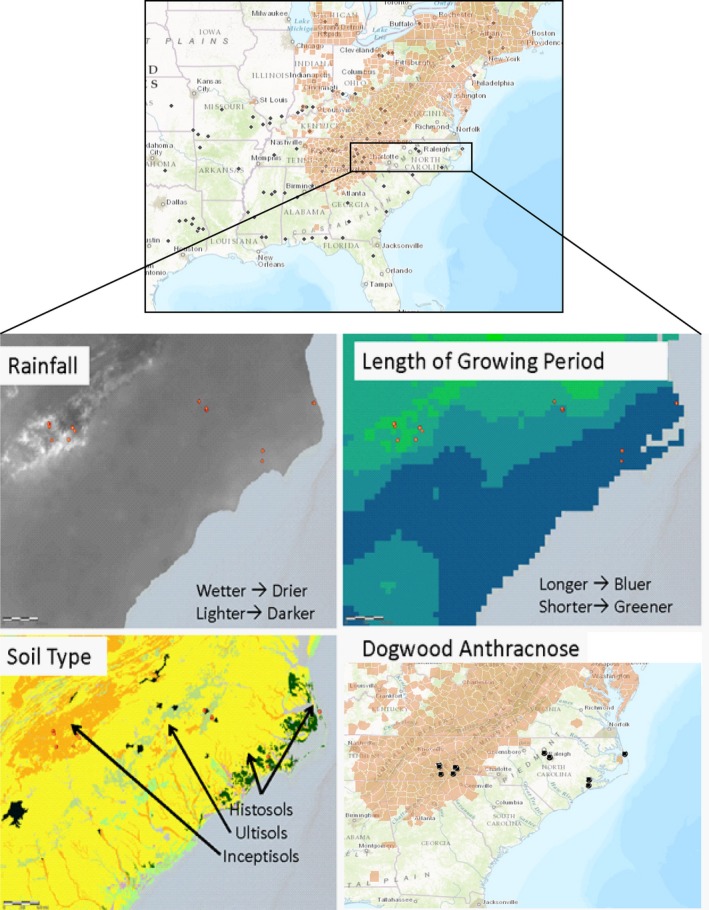
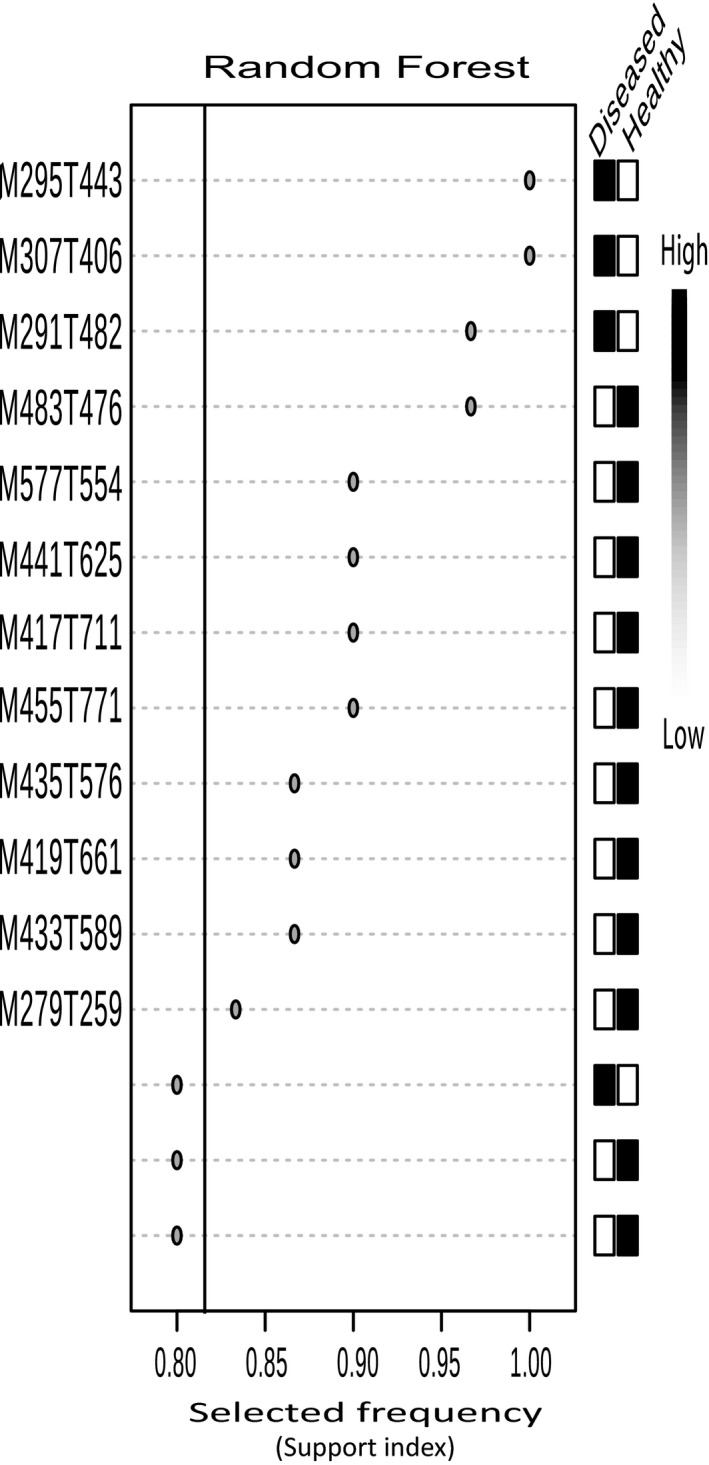
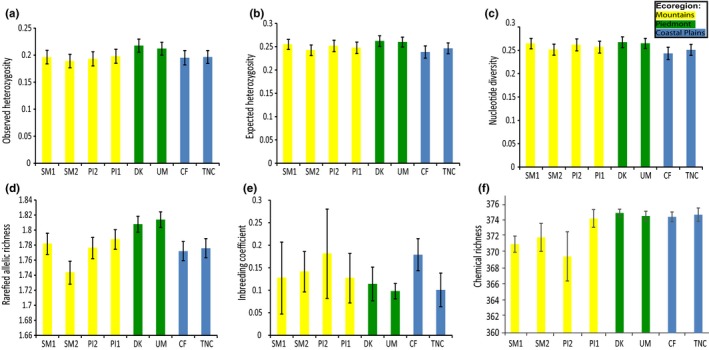
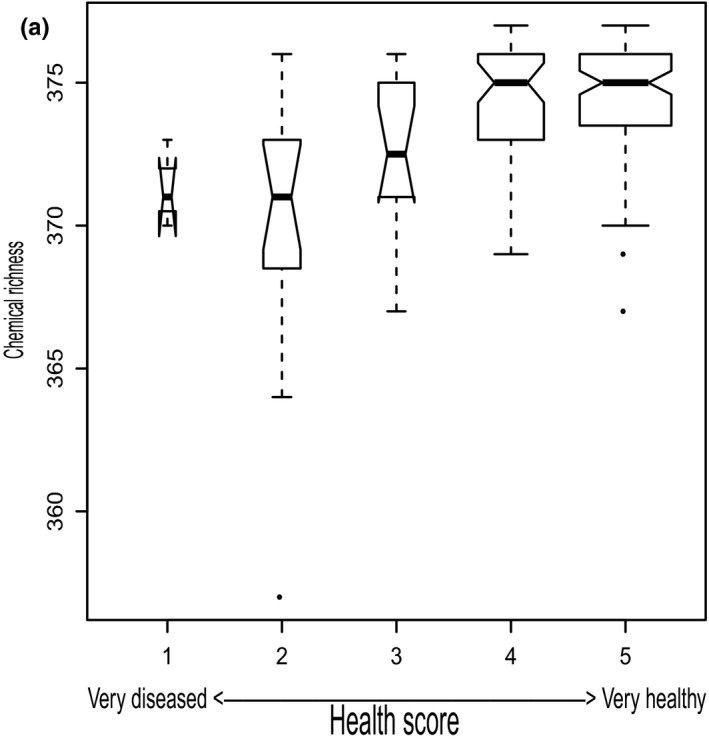
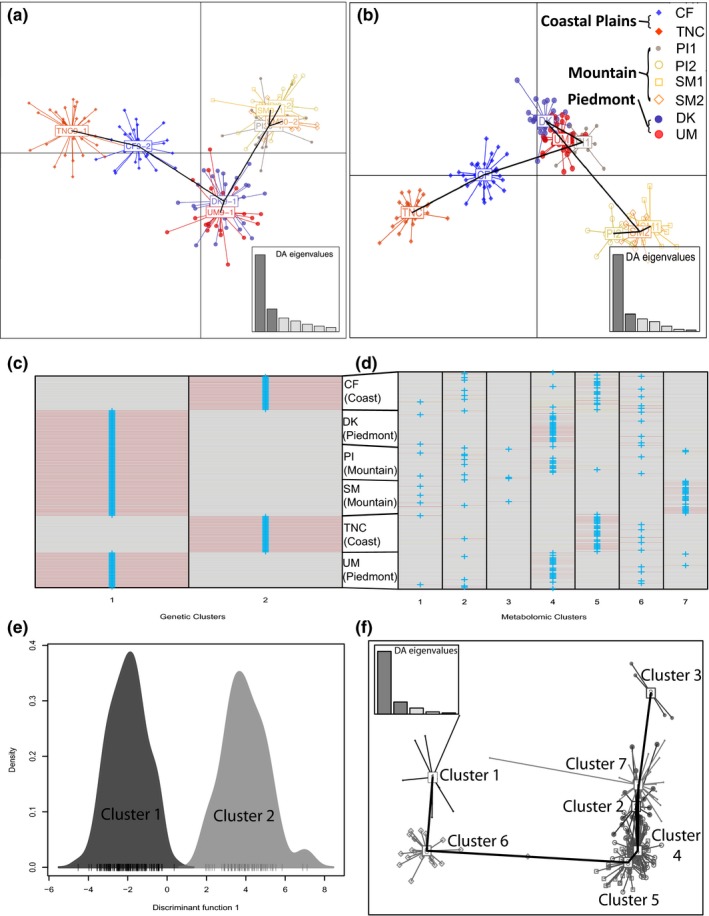
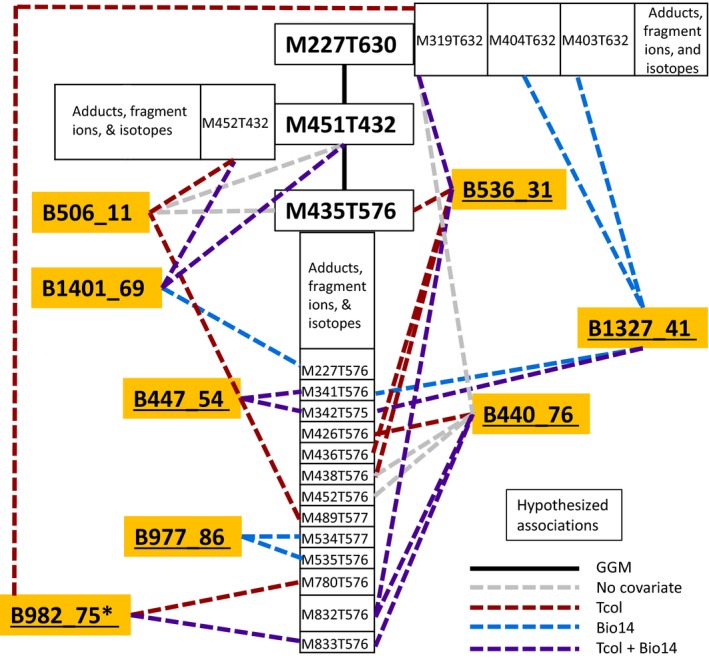
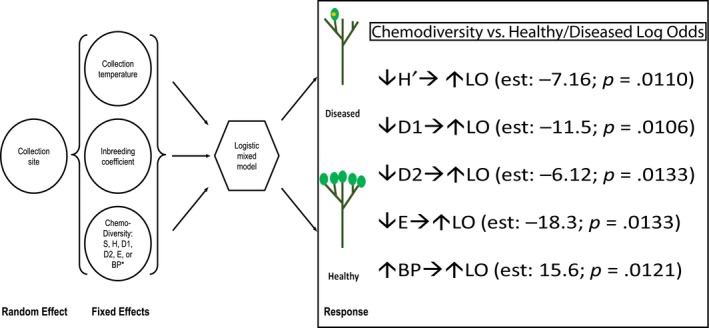
Understanding intraspecific relationships between genetic and functional diversity is a major goal in the field of evolutionary biology and is important for conserving biodiversity. Linking intraspecific molecular patterns of plants to ecological pressures and trait variation remains difficult due to environment-driven plasticity. Next-generation sequencing, untargeted liquid chromatography-mass spectrometry (LC-MS) profiling, and interdisciplinary approaches integrating population genomics, metabolomics, and community ecology permit novel strategies to tackle this problem. We analyzed six natural populations of the disease-threatened L. from distinct ecological regions using genotype-by-sequencing markers and LC-MS-based untargeted metabolite profiling. We tested the hypothesis that higher genetic diversity in yielded higher chemical diversity and less disease susceptibility (screening hypothesis), and we also determined whether genetically similar subpopulations were similar in chemical composition. Most importantly, we identified metabolites that were associated with candidate loci or were predictive biomarkers of healthy or diseased plants after controlling for environment. Subpopulation clustering patterns based on genetic or chemical distances were largely congruent. While differences in genetic diversity were small among subpopulations, we did observe notable similarities in patterns between subpopulation averages of rarefied-allelic and chemical richness. More specifically, we found that the most abundant compound of a correlated group of putative terpenoid glycosides and derivatives was correlated with tree health when considering chemodiversity. Random forest biomarker and genomewide association tests suggested that this putative iridoid glucoside and other closely associated chemical features were correlated to SNPs under selection.
理解遗传多样性与功能多样性之间的种内关系是进化生物学领域的一个主要目标,对于保护生物多样性也很重要。由于环境驱动的可塑性,将植物的种内分子模式与生态压力和性状变异联系起来仍然很困难。新一代测序、非靶向液相色谱 - 质谱(LC-MS)分析以及整合种群基因组学、代谢组学和群落生态学的跨学科方法为解决这一问题提供了新策略。我们使用测序分型标记和基于LC-MS的非靶向代谢物分析,分析了来自不同生态区域的六个受疾病威胁的[物种名称未给出]的自然种群。我们检验了这样一个假设,即[物种名称未给出]中更高的遗传多样性会产生更高的化学多样性和更低的疾病易感性(筛选假设),并且我们还确定了遗传上相似的亚种群在化学成分上是否相似。最重要的是,在控制环境因素后,我们鉴定出了与候选基因座相关的代谢物或健康或患病植物的预测生物标志物。基于遗传或化学距离的亚种群聚类模式在很大程度上是一致的。虽然亚种群之间的遗传多样性差异很小,但我们确实观察到了稀有等位基因和化学丰富度的亚种群平均值之间模式上的显著相似性。更具体地说,当考虑化学多样性时,我们发现一组相关的假定萜类糖苷及其衍生物中最丰富的化合物与树木健康相关。随机森林生物标志物和全基因组关联测试表明,这种假定的环烯醚萜苷和其他密切相关的化学特征与选择中的单核苷酸多态性(SNP)相关。