Department of Physiology, Tokyo Women's Medical University School of Medicine, Tokyo, Japan.
Department of Biological Sciences, Graduate School of Science, The University of Tokyo, Tokyo, Japan.
PLoS Genet. 2018 Jun 25;14(6):e1007477. doi: 10.1371/journal.pgen.1007477. eCollection 2018 Jun.
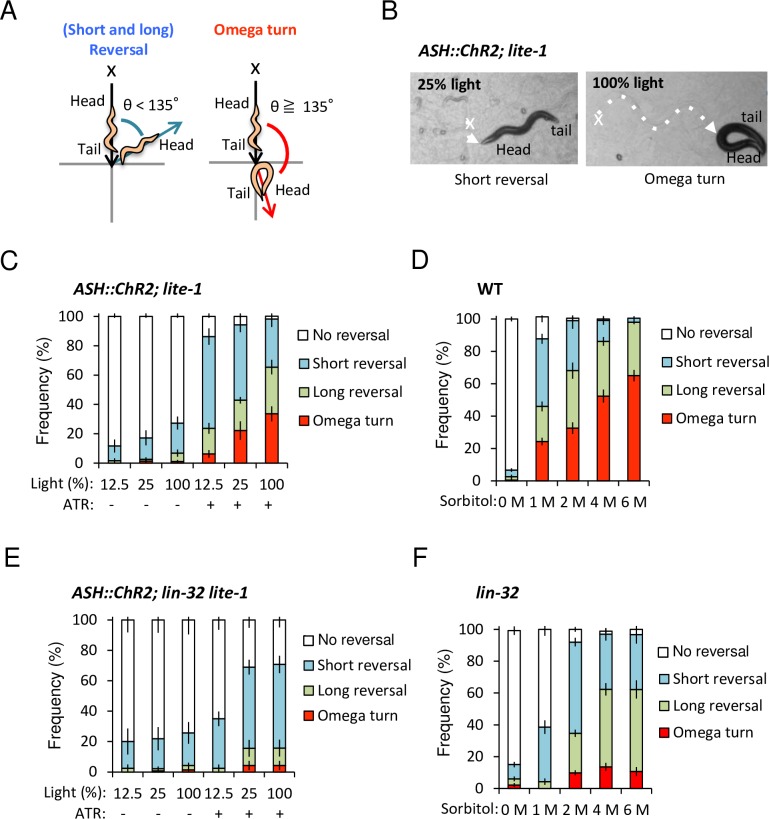
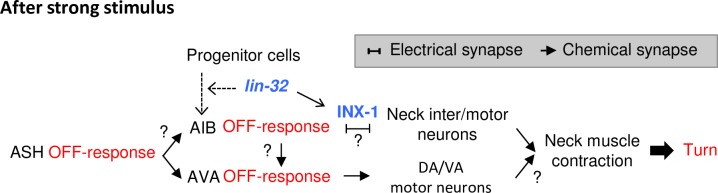
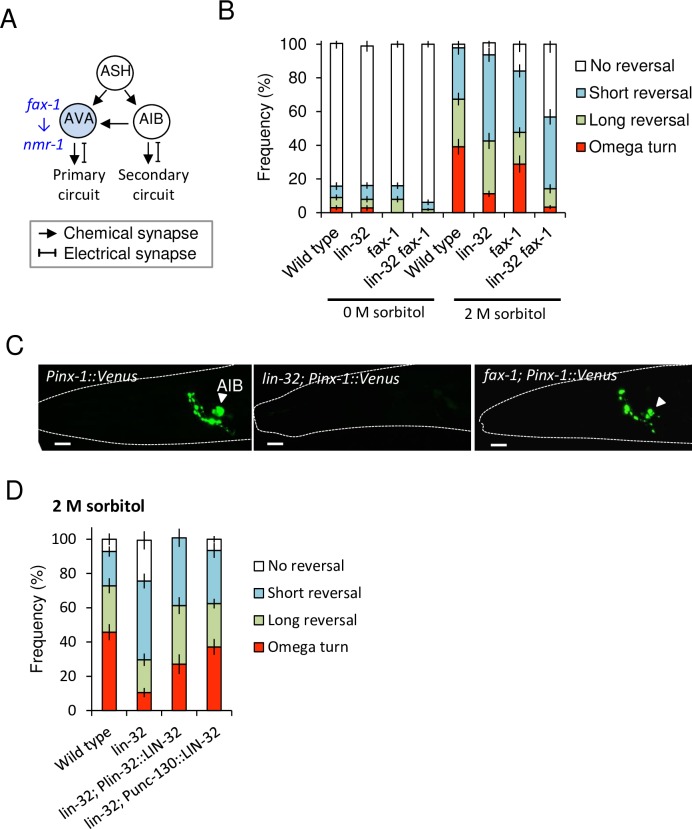
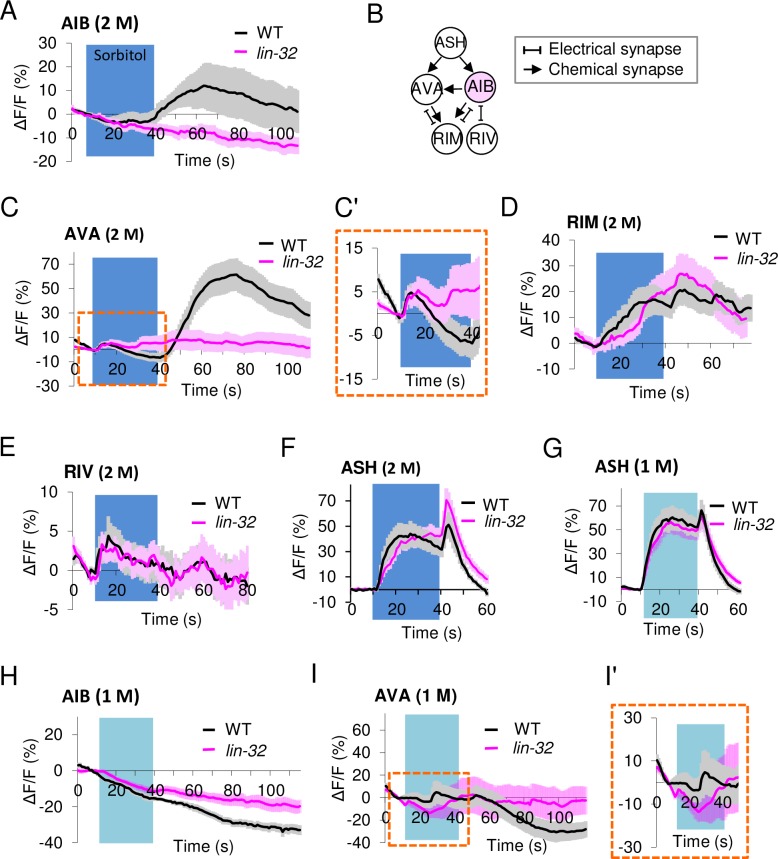
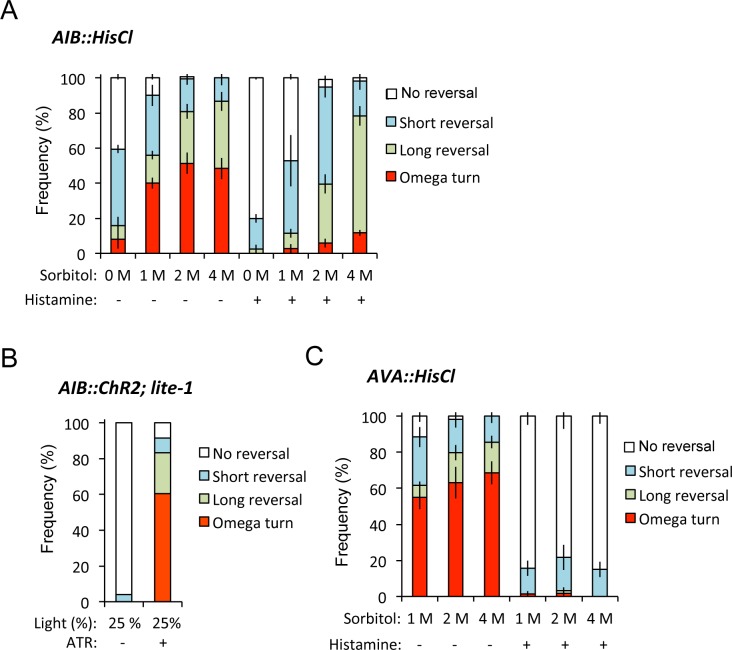
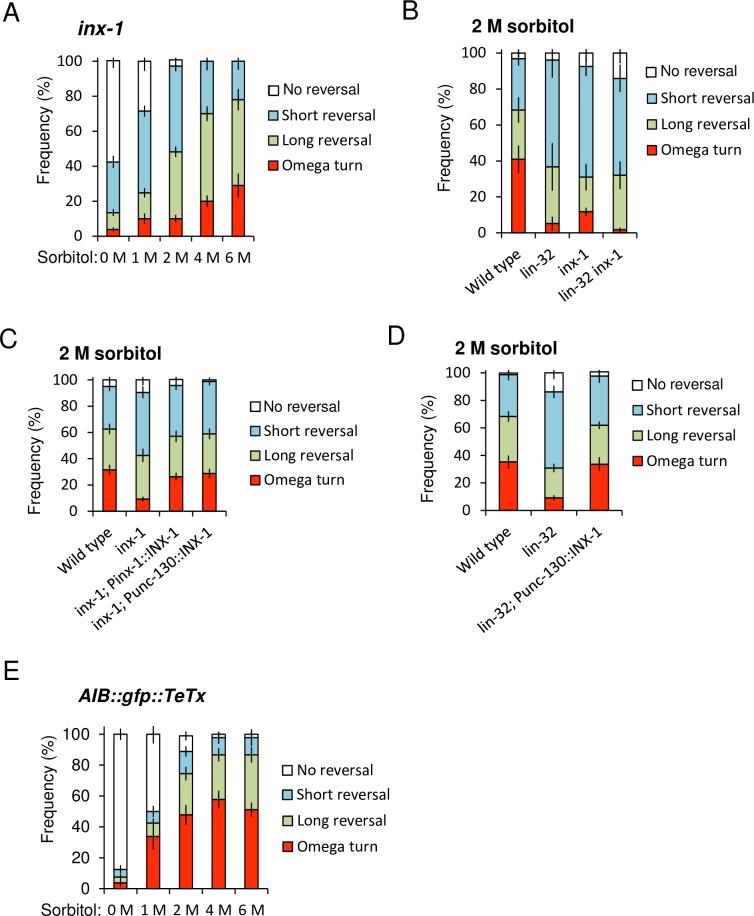
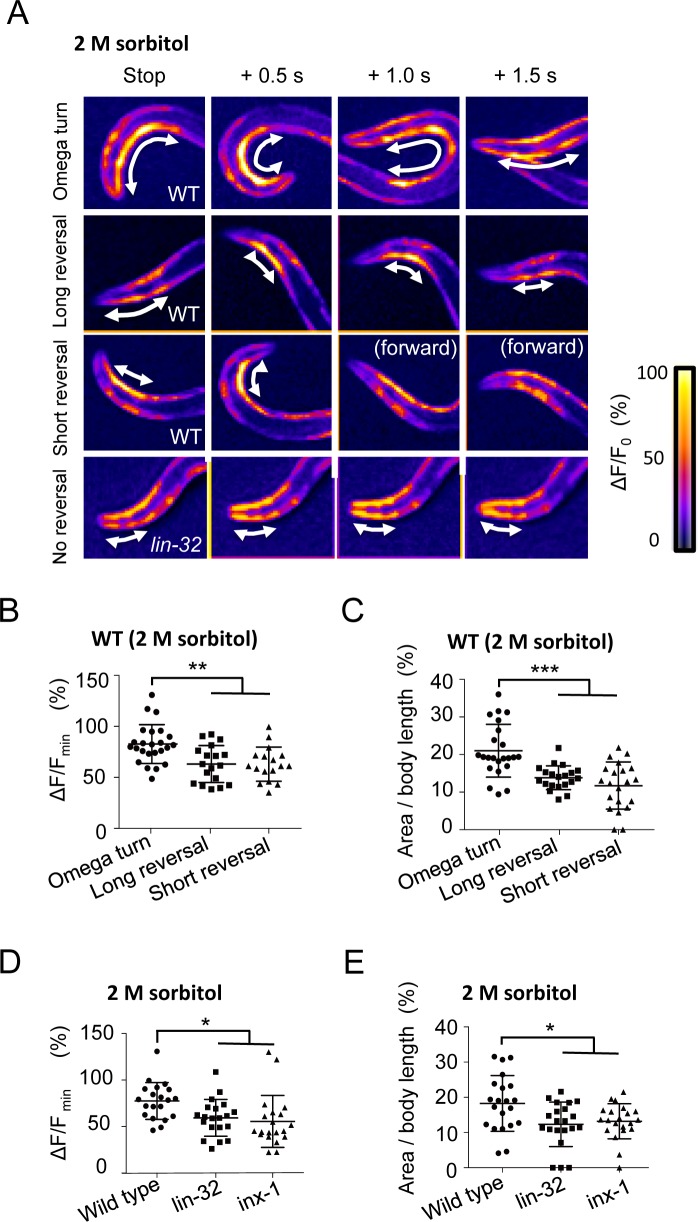
Optimization of the types and timing of avoidance behaviors depending on the intensity of a noxious stimulus is essential for survival; however, processing in the central nervous system and its developmental basis are largely unknown. Here, we report that Caenorhabditis elegans preferentially selects one of three different types of avoidance behaviors depending on the strength of the noxious stimulus. We screened 210 neuronal transcription factors using a combination of optogenetics and RNA interference methods and identified 19 candidates required for avoidance behaviors. One candidate, gene lin-32 (abnormal cell LINeage 32), which encodes an atonal homolog, is required for the neural fate determination of AIB interneurons and functions by regulating the expression of electrical and chemical synapse genes, namely, inx-1 (innexin 1) and AMPA-type ionotropic glutamate receptor glr-1. When examined by Ca imaging, AIB showed an OFF calcium increase to the noxious stimulus. The OFF calcium increase was provoked only by strong stimulation, suggesting a role for optimization of the avoidance behavior. However, lin-32 mutants showed an impaired AIB OFF calcium increase, concomitant with a reduced occurrence of the dynamic avoidance behavior called the "omega turn". The AIB neural responses may be transferred to downstream inter/motor neurons projecting to the neck muscles via electrical synapses comprising inx-1. Finally, we found a correlation between powerful contractions of the neck muscles and omega turns. Thus, the central regulation of the magnitude and timing of activation of the AIB interneurons optimizes the probability of omega turn depending on the stimulus context.
根据有害刺激的强度优化回避行为的类型和时机对于生存至关重要;然而,中枢神经系统的处理及其发育基础在很大程度上是未知的。在这里,我们报告秀丽隐杆线虫根据有害刺激的强度优先选择三种不同类型的回避行为之一。我们使用光遗传学和 RNA 干扰方法组合筛选了 210 种神经元转录因子,并确定了 19 种回避行为所需的候选基因。一个候选基因 lin-32(异常细胞谱系 32),它编码一个 atonal 同源物,是 AIB 中间神经元神经命运决定所必需的,通过调节电和化学突触基因的表达起作用,即 inx-1(连接蛋白 1)和 AMPA 型离子型谷氨酸受体 glr-1。通过钙成像检查,AIB 对有害刺激表现出 OFF 钙增加。只有强烈的刺激才能引起 OFF 钙增加,这表明它在优化回避行为方面发挥了作用。然而,lin-32 突变体表现出 AIB OFF 钙增加受损,同时动态回避行为“omega 转弯”的发生减少。AIB 神经反应可能通过包含 inx-1 的电突触传递到下游投射到颈部肌肉的中间/运动神经元。最后,我们发现颈部肌肉有力收缩与 omega 转弯之间存在相关性。因此,AIB 中间神经元激活的幅度和时间的中枢调节根据刺激情境优化 omega 转弯的概率。