Su Hong-Lin, Chiang Chien-Yi, Lu Zong-Han, Cheng Fu-Chou, Chen Chun-Jung, Sheu Meei-Ling, Sheehan Jason, Pan Hung-Chuan
Department of Life Sciences, Agriculture Biotechnology Center, National Chung-Hsing University, Taichung, Taiwan.
Department of Neurosurgery, Taichung Veterans General Hospital, 1650 Taiwan Boulevard Sec. 4, 40705, Taichung, Taiwan.
BMC Neurosci. 2018 Jun 25;19(1):37. doi: 10.1186/s12868-018-0437-9.
High-frequency transcutaneous neuromuscular electrical nerve stimulation (TENS) is currently used for the administration of electrical current in denervated muscle to alleviate muscle atrophy and enhance motor function; however, the time window (i.e. either immediate or delayed) for achieving benefit is still undetermined. In this study, we conducted an intervention of sciatic nerve crush injury using high-frequency TENS at different time points to assess the effect of motor and sensory functional recovery.
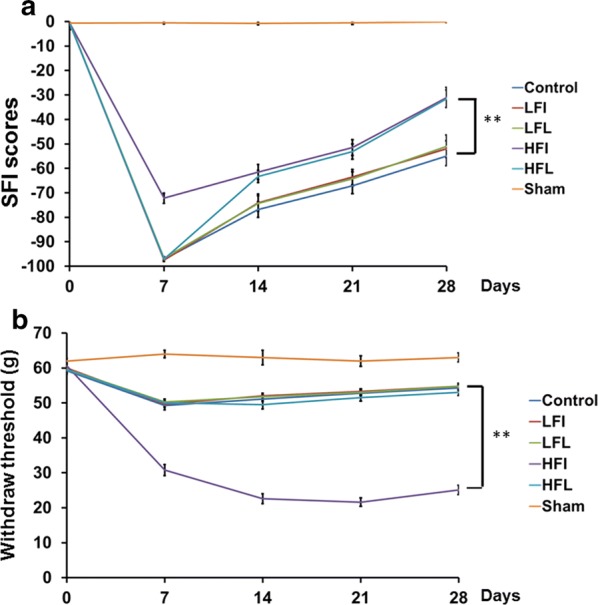
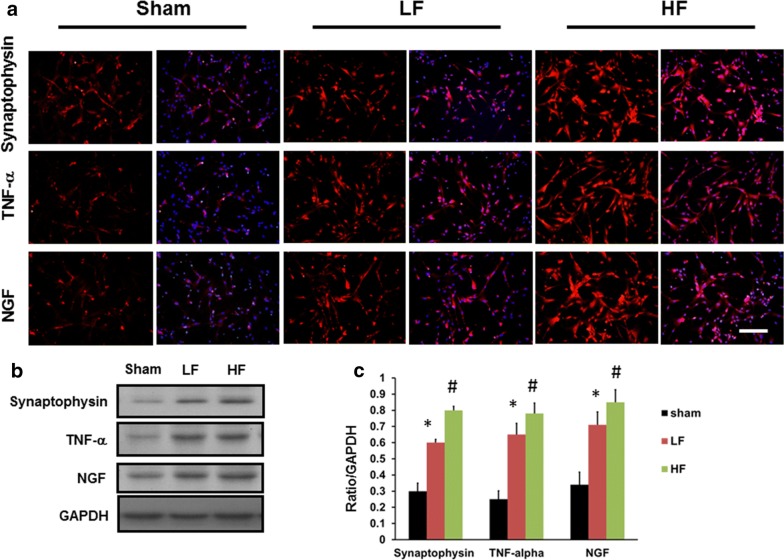
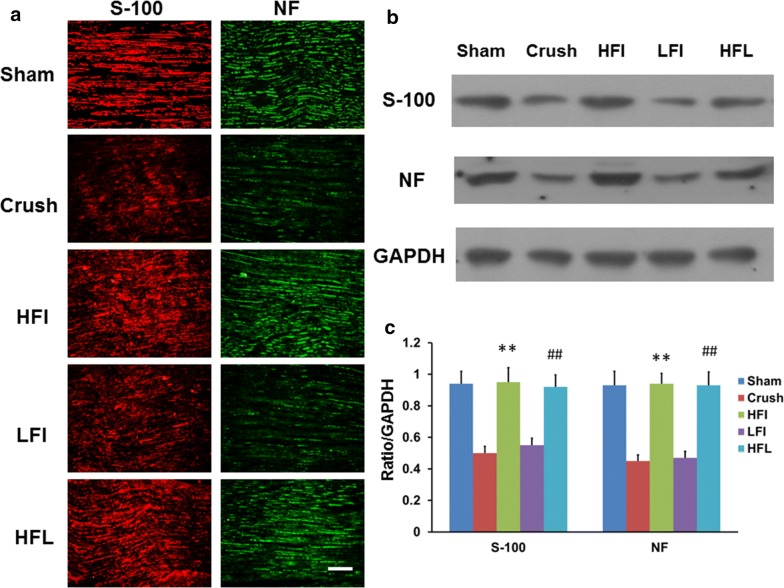
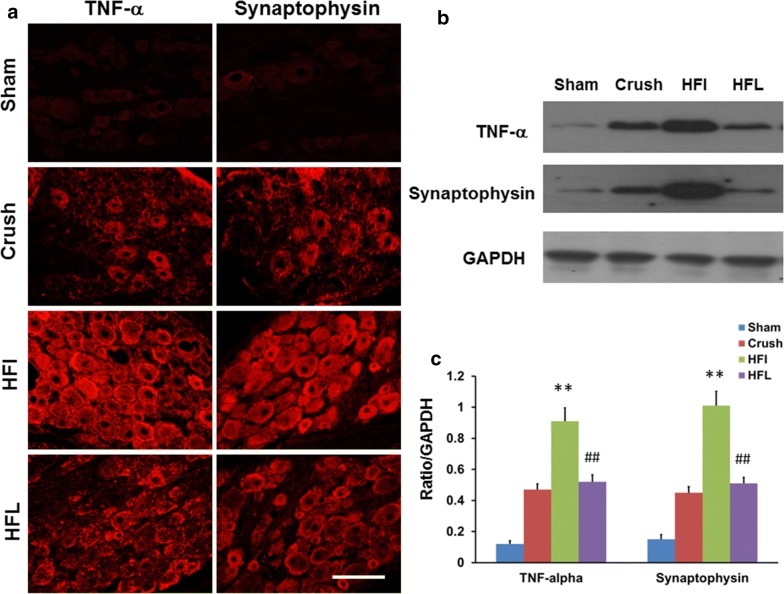
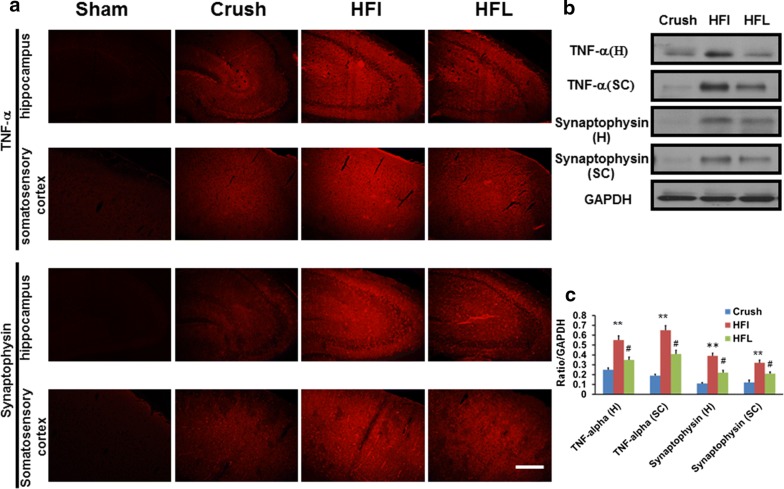
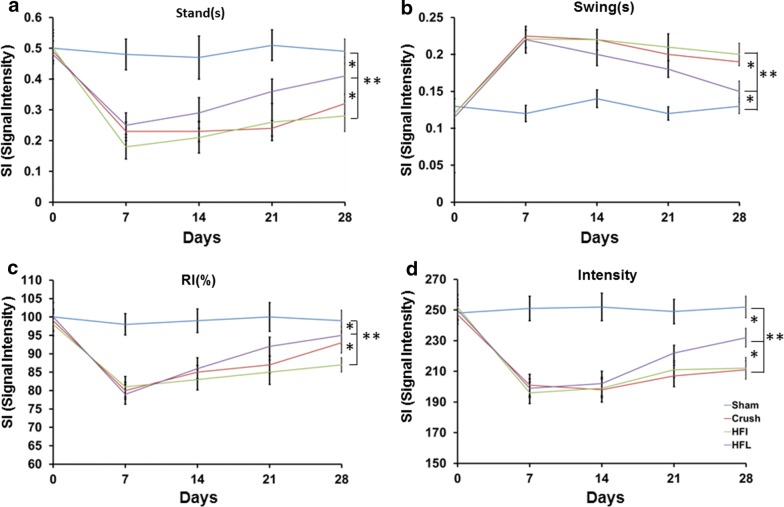
Animals with left sciatic nerve crush injury received TENS treatment starting immediately after injury or 1 week later at a high frequency(100 Hz) or at a low frequency (2 Hz) as a control. In SFI gait analysis, either immediate or late admission of high-frequency electrical stimulation exerted significant improvement compared to either immediate or late administration of low-frequency electrical stimulation. In an assessment of allodynia, immediate high frequency electrical stimulation caused a significantly decreased pain threshold compared to late high-frequency or low-frequency stimulation at immediate or late time points. Immunohistochemistry staining and western blot analysis of S-100 and NF-200 demonstrated that both immediate and late high frequency electrical stimulation showed a similar effect; however the effect was superior to that achieved with low frequency stimulation. Immediate high frequency electrical stimulation resulted in significant expression of TNF-α and synaptophysin in the dorsal root ganglion, somatosensory cortex, and hippocampus compared to late electrical stimulation, and this trend paralleled the observed effect on somatosensory evoked potential. The CatWalk gait analysis also showed that immediate electrical stimulation led to a significantly high regularity index. In primary dorsal root ganglion cells culture, high-frequency electrical stimulation also exerted a significant increase in expression of TNF-α, synaptophysin, and NGF in accordance with the in vivo results.
Immediate or late transcutaneous high-frequency electrical stimulation exhibited the potential to stimulate the motor nerve regeneration. However, immediate electrical stimulation had a predilection to develop neuropathic pain. A delay in TENS initiation appears to be a reasonable approach for nerve repair and provides the appropriate time profile for its clinical application.
高频经皮神经肌肉电刺激(TENS)目前用于向失神经支配的肌肉施加电流,以减轻肌肉萎缩并增强运动功能;然而,实现益处的时间窗(即立即或延迟)仍未确定。在本研究中,我们在不同时间点使用高频TENS对坐骨神经挤压伤进行干预,以评估运动和感觉功能恢复的效果。
左侧坐骨神经挤压伤的动物在受伤后立即或1周后接受TENS治疗,高频(100Hz)或低频(2Hz)作为对照。在SFI步态分析中,与立即或延迟给予低频电刺激相比,立即或延迟给予高频电刺激均有显著改善。在痛觉过敏评估中,与立即或延迟时间点的延迟高频或低频刺激相比,立即高频电刺激导致痛阈显著降低。对S-100和NF-200进行免疫组织化学染色和蛋白质印迹分析表明,立即和延迟高频电刺激均显示出相似的效果;然而,该效果优于低频刺激。与延迟电刺激相比,立即高频电刺激导致背根神经节、体感皮层和海马中TNF-α和突触素的显著表达,并且这种趋势与对体感诱发电位观察到的效果平行。CatWalk步态分析还表明,立即电刺激导致显著更高的规律性指数。在原代背根神经节细胞培养中,高频电刺激也根据体内结果显著增加了TNF-α、突触素和NGF的表达。
立即或延迟经皮高频电刺激具有刺激运动神经再生的潜力。然而,立即电刺激易引发神经性疼痛。延迟开始TENS似乎是一种合理的神经修复方法,并为其临床应用提供了合适的时间模式。