Eide Arne H, Dyrstad Karin, Munthali Alister, Van Rooy Gert, Braathen Stine H, Halvorsen Thomas, Persendt Frans, Mvula Peter, Rød Jan Ketil
SINTEF, Department of Health, P.B.124, N-0314, Oslo, Norway.
Department of Sociology and Political Science, Norwegian University of Science and Technology, NO-7491, Trondheim, Norway.
BMC Int Health Hum Rights. 2018 Jun 26;18(1):26. doi: 10.1186/s12914-018-0166-2.
Equitable access to health services is a key ingredient in reaching health for persons with disabilities and other vulnerable groups. So far, research on access to health services in low- and middle-income countries has largely relied on self-reported survey data. Realizing that there may be substantial discrepancies between perceived and actual access, other methods are needed for more precise knowledge to guide health policy and planning. The objective of this article is to describe and discuss an innovative methodological triangulation where statistical and spatial analysis of perceived distance and objective measures of access is combined with qualitative evidence.
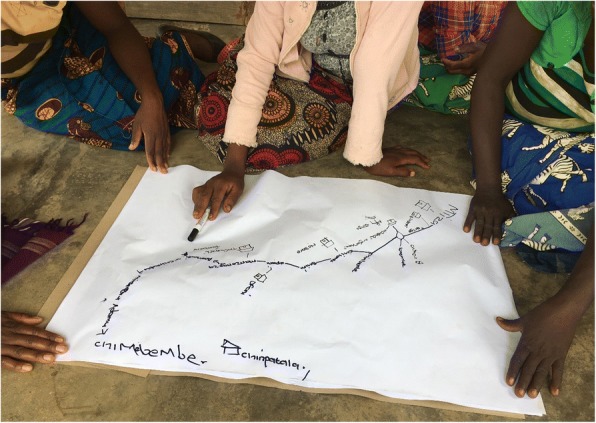
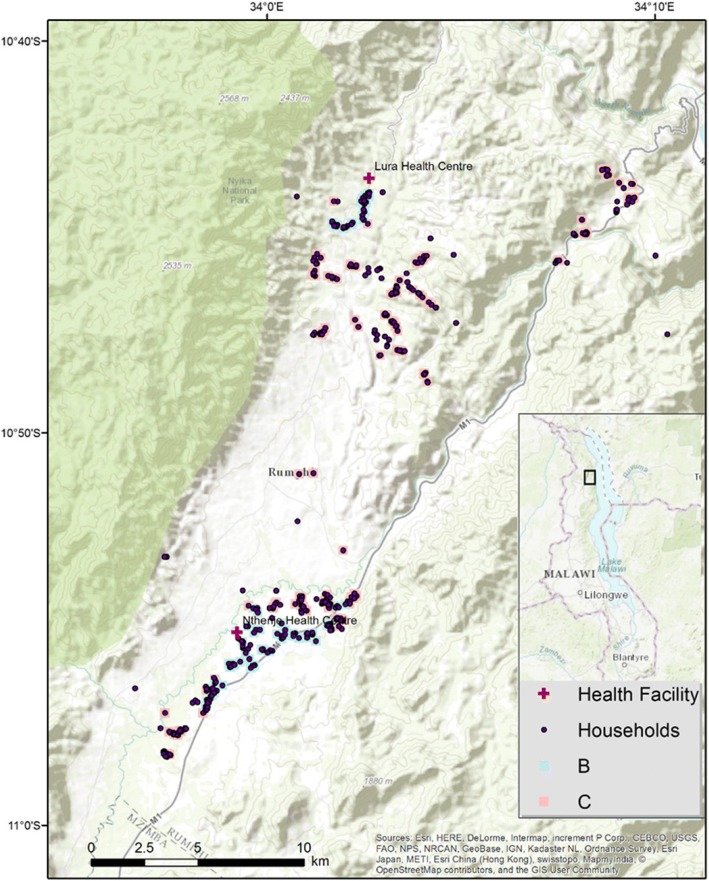
The data for the study was drawn from a large household and individual questionnaire based survey carried out in Namibia and Malawi. The survey data was combined with spatial data of respondents and health facilities, key informant interviews and focus group discussions. To analyse access and barriers to access, a model is developed that takes into account both measured and perceived access. The geo-referenced survey data is used to establish four outcome categories of perceived and measured access as either good or poor. Combined with analyses of the terrain and the actual distance from where the respondents live to the health facility they go to, the data allows for categorising areas and respondents according to the four outcome categories. The four groups are subsequently analysed with respect to variation in individual characteristics and vulnerability factors. The qualitative component includes participatory map drawing and is used to gain further insight into the mechanisms behind the different combinations of perceived and actual access.
Preliminary results show that there are substantial discrepancies between perceived and actual access to health services and the qualitative study provides insight into mechanisms behind such divergences.
The novel combination of survey data, geographical data and qualitative data will generate a model on access to health services in poor contexts that will feed into efforts to improve access for the most vulnerable people in underserved areas.
公平获得卫生服务是残疾人和其他弱势群体实现健康的关键要素。到目前为止,低收入和中等收入国家卫生服务可及性的研究主要依赖自我报告的调查数据。由于意识到感知到的可及性与实际可及性之间可能存在重大差异,需要其他方法来获取更精确的知识,以指导卫生政策和规划。本文的目的是描述和讨论一种创新的方法三角测量法,即将感知距离的统计和空间分析以及可及性的客观测量与定性证据相结合。
该研究的数据来自在纳米比亚和马拉维进行的一项基于家庭和个人问卷的大型调查。调查数据与受访者和卫生设施的空间数据、关键 informant 访谈以及焦点小组讨论相结合。为了分析可及性和可及性障碍,开发了一个模型,该模型同时考虑了测量到的和感知到的可及性。地理参考调查数据用于确定感知到的和测量到的可及性的四个结果类别,即良好或不佳。结合对地形以及受访者居住地点到他们前往的卫生设施的实际距离的分析,这些数据允许根据四个结果类别对地区和受访者进行分类。随后对这四组进行个体特征和脆弱性因素差异的分析。定性部分包括参与式地图绘制,用于进一步深入了解感知到的和实际可及性不同组合背后的机制。
初步结果表明,卫生服务的感知可及性与实际可及性之间存在重大差异,定性研究深入了解了这种差异背后的机制。
调查数据、地理数据和定性数据的新颖结合将生成一个关于贫困环境中卫生服务可及性的模型,这将有助于努力改善服务不足地区最弱势群体的可及性。