Guttmacher Institute, 125 Maiden Lane, 7th Floor, New York, NY, 10038, USA.
Department of Epidemiology, Johns Hopkins Bloomberg School of Public Health, Baltimore, MD, 21205, USA.
Reprod Health. 2018 Jun 25;15(1):113. doi: 10.1186/s12978-018-0560-1.
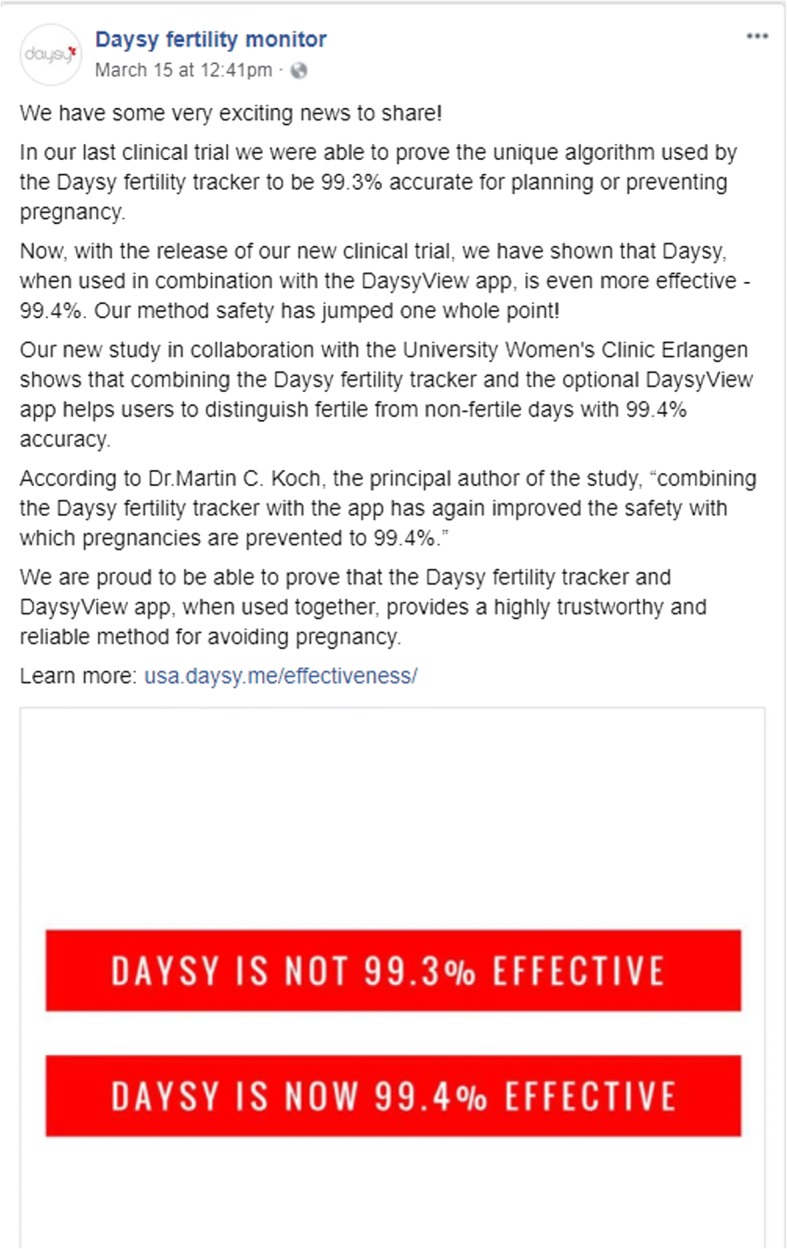
In March 2018, Dr. Martin C. Koch and colleagues published an analysis purporting to measure the effectiveness of the Daysy device and DaysyView app for the prevention of unintended pregnancy. Unfortunately, the analysis was flawed in multiple ways which render the estimates unreliable. Unreliable estimates of contraceptive effectiveness can endanger public health.
This commentary details multiple concerns pertaining to the collection and analysis of data in Koch et al. 2018. A key concern pertains to the inappropriate exclusion of all women with fewer than 13 cycles of use from the Pearl Index calculations, which has no basis in standard effectiveness calculations. Multiple additional methodological concerns, as well as prior attempts to directly convey concerns to the manufacturer regarding marketing materials based on prior inaccurate analyses, are also discussed.
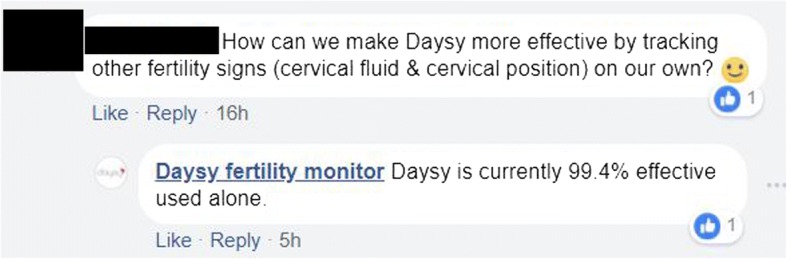
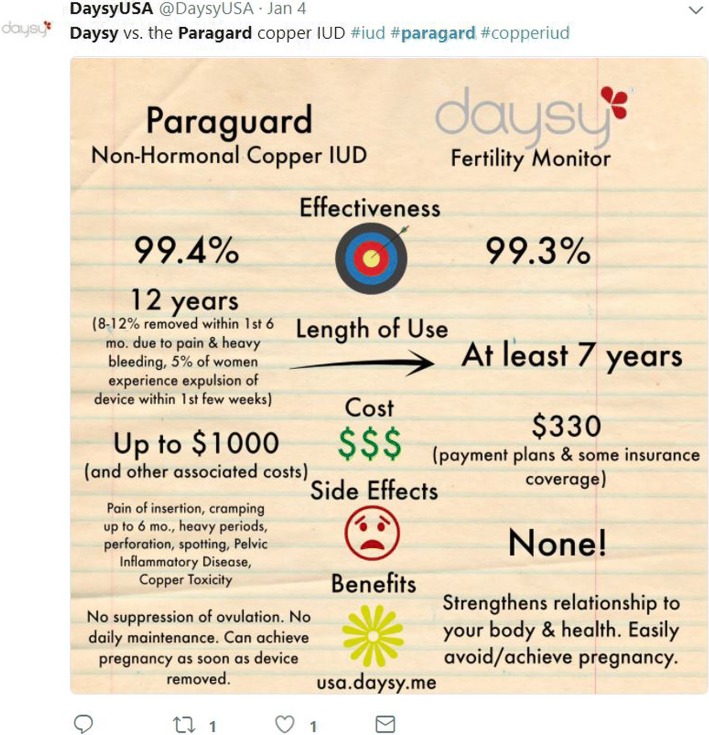
The Koch et al. 2018 publication produced unreliable estimates of contraceptive effectiveness for the Daysy device and DaysyView app, which are likely substantially higher than the actual contraceptive effectiveness of the device and app. Those estimates are being used in marketing materials which may inappropriately inflate consumer confidence and leave consumers more vulnerable than expected to the risk of unintended pregnancy. Prior attempts to directly convey concerns to the manufacturer of this device were unsuccessful in preventing publication of subsequent inaccurate analyses. To protect public health, concerns with this analysis should be documented in the published literature, the Koch et al. 2018 analysis should be retracted, and marketing materials on contraceptive effectiveness should be subjected to appropriate oversight.
2018 年 3 月,Martin C. Koch 博士及其同事发表了一项分析,旨在衡量 Daysy 设备和 DaysyView 应用程序在预防意外怀孕方面的有效性。不幸的是,该分析在多个方面存在缺陷,导致估计结果不可靠。不可靠的避孕效果估计可能会危及公共健康。
本评论详细介绍了 Koch 等人 2018 年研究中数据收集和分析存在的多个问题。一个主要问题是不恰当地将所有使用少于 13 个周期的女性排除在 Pearl 指数计算之外,这在标准效果计算中没有依据。还讨论了多个额外的方法学问题,以及先前试图就基于先前不准确分析的营销材料直接向制造商传达关注的问题。
Koch 等人 2018 年的出版物对 Daysy 设备和 DaysyView 应用程序的避孕效果产生了不可靠的估计,这些估计可能远高于该设备和应用程序的实际避孕效果。这些估计值正在营销材料中使用,可能会不恰当地夸大消费者的信心,使消费者比预期更容易面临意外怀孕的风险。先前试图直接向该设备制造商转达对这些分析的关注的尝试未能阻止随后发表不准确的分析。为了保护公众健康,应在已发表的文献中记录对该分析的关注,撤回 Koch 等人 2018 年的分析,并对避孕效果的营销材料进行适当的监督。