Riveros María E, Retamal Mauricio A
Centro de Fisiología Celular e Integrativa, Facultad de Medicina, Clínica Alemana Universidad del Desarrollo, Santiago, Chile.
Center of Applied Ecology and Sustainability, Santiago, Chile.
Front Physiol. 2018 Jun 12;9:693. doi: 10.3389/fphys.2018.00693. eCollection 2018.
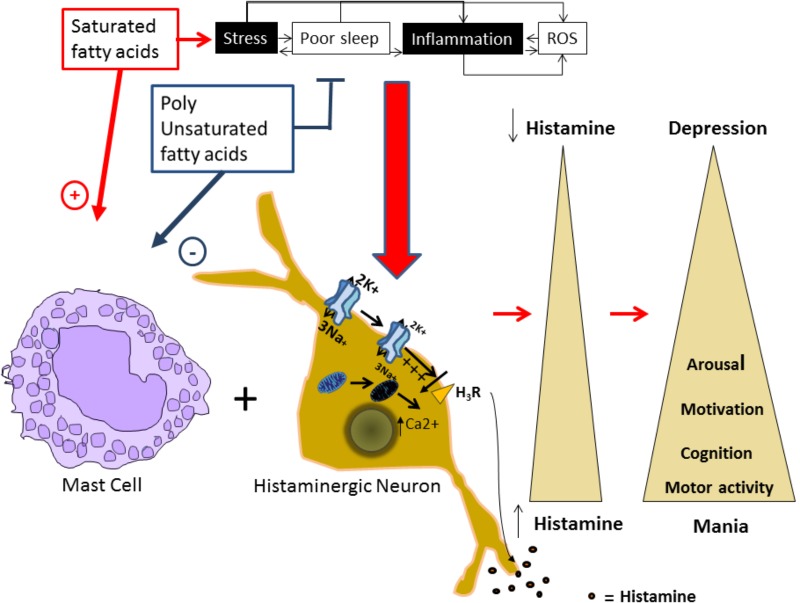
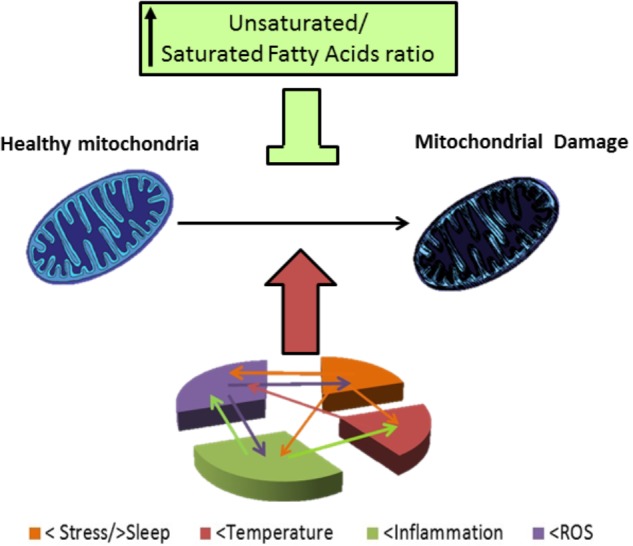
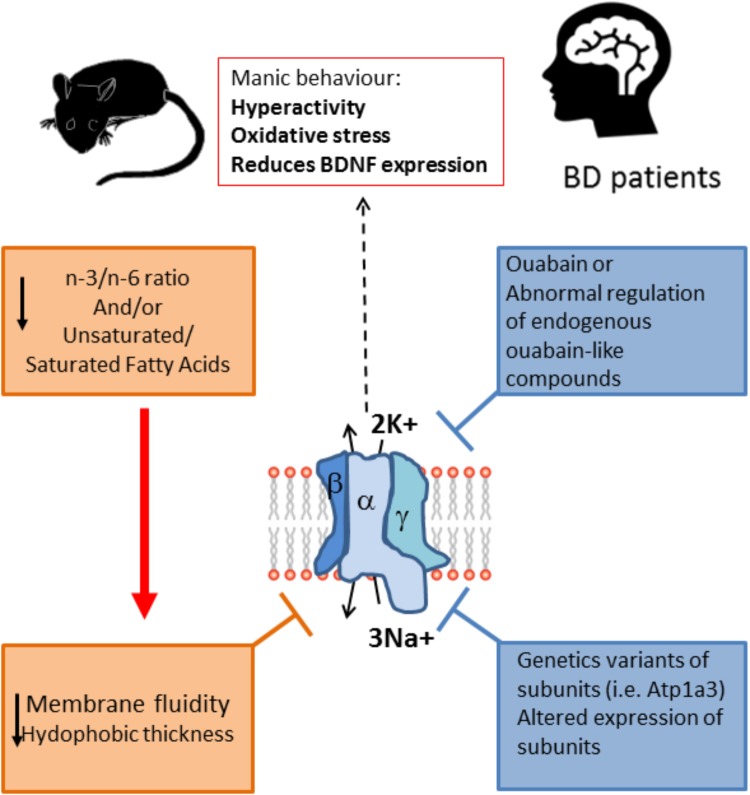
Bipolar disorder (BD) is an extremely disabling psychiatric disease, characterized by alternate states of mania (or hypomania) and depression with euthymic states in between. Currently, patients receive pharmacological treatment with mood stabilizers, antipsychotics, and antidepressants. Unfortunately, not all patients respond well to this type of treatment. Bipolar patients are also more prone to heart and metabolic diseases as well as a higher risk of suicide compared to the healthy population. For a correct brain function is indispensable a right protein and lipids (e.g., fatty acids) balance. In particular, the amount of fatty acids in the brain corresponds to a 50-70% of the dry weight. It has been reported that in specific brain regions of BD patients there is a reduction in the content of unsaturated n-3 fatty acids. Accordingly, a diet rich in n-3 fatty acids has beneficial effects in BD patients, while their absence or high levels of saturated fatty acids in the diet are correlated to the risk of developing the disease. On the other hand, the histamine system is likely to be involved in the pathophysiology of several psychiatric diseases such as BD. Histamine is a neuromodulator involved in arousal, motivation, and energy balance; drugs acting on the histamine receptor H3 have shown potential as antidepressants and antipsychotics. The histaminergic system as other neurotransmission systems can be altered by fatty acid membrane composition. The purpose of this review is to explore how polyunsaturated fatty acids content alterations are related to the histaminergic system modulation and their impact in BD pathophysiology.
双相情感障碍(BD)是一种极具致残性的精神疾病,其特征为躁狂(或轻躁狂)与抑郁交替发作,其间为心境正常状态。目前,患者接受心境稳定剂、抗精神病药物和抗抑郁药物的药物治疗。不幸的是,并非所有患者对这类治疗反应良好。与健康人群相比,双相情感障碍患者也更容易患心脏和代谢疾病,且自杀风险更高。正确的蛋白质和脂质(如脂肪酸)平衡对于正常的脑功能不可或缺。特别是,大脑中脂肪酸的含量占干重的50 - 70%。据报道,在双相情感障碍患者的特定脑区,不饱和n - 3脂肪酸的含量有所降低。因此,富含n - 3脂肪酸的饮食对双相情感障碍患者有有益影响,而饮食中缺乏n - 3脂肪酸或饱和脂肪酸含量过高与患该病的风险相关。另一方面,组胺系统可能参与了包括双相情感障碍在内的几种精神疾病的病理生理过程。组胺是一种神经调质,参与觉醒、动机和能量平衡;作用于组胺H3受体的药物已显示出作为抗抑郁药和抗精神病药的潜力。与其他神经传递系统一样,组胺能系统可因脂肪酸膜组成的改变而发生变化。本综述的目的是探讨多不饱和脂肪酸含量变化如何与组胺能系统调节相关,以及它们对双相情感障碍病理生理的影响。