Kollmus Heike, Pilzner Carolin, Leist Sarah R, Heise Mark, Geffers Robert, Schughart Klaus
Department of Infection Genetics, Helmholtz Centre for Infection Research, Brunswick, Germany.
Department of Epidemiology, University of North Carolina at Chapel Hill, Chapel Hill, USA.
Mamm Genome. 2018 Aug;29(7-8):446-470. doi: 10.1007/s00335-018-9750-y. Epub 2018 Jun 15.
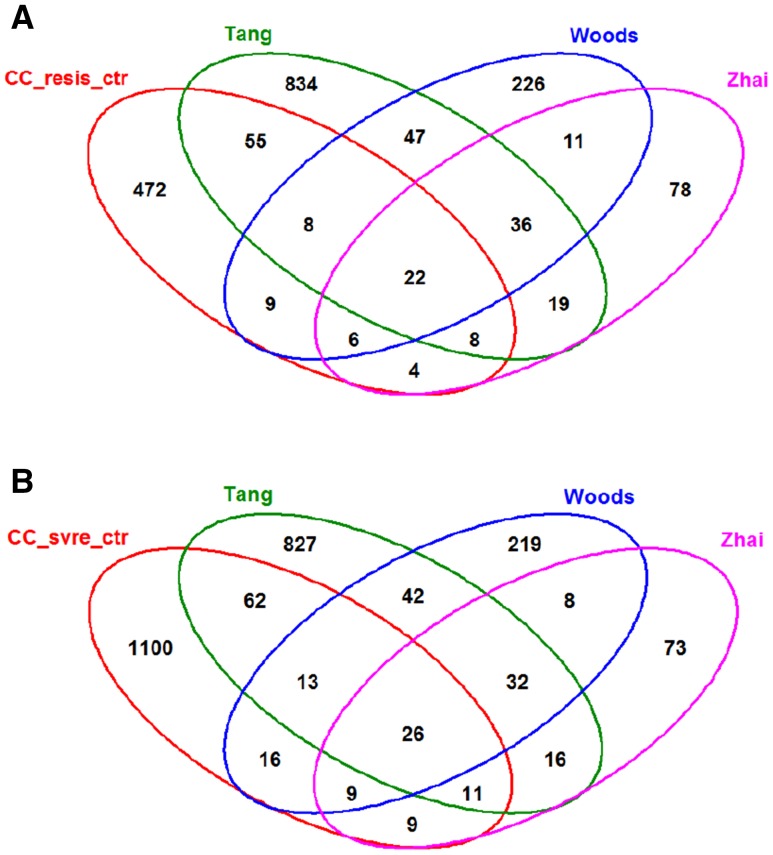
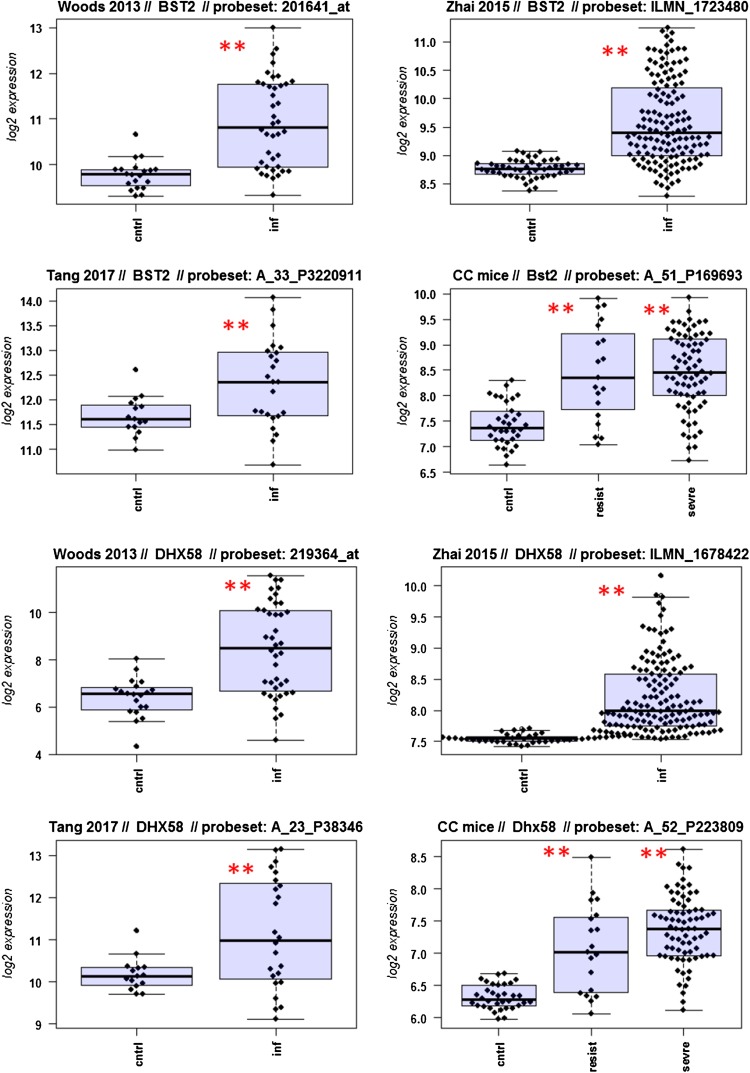
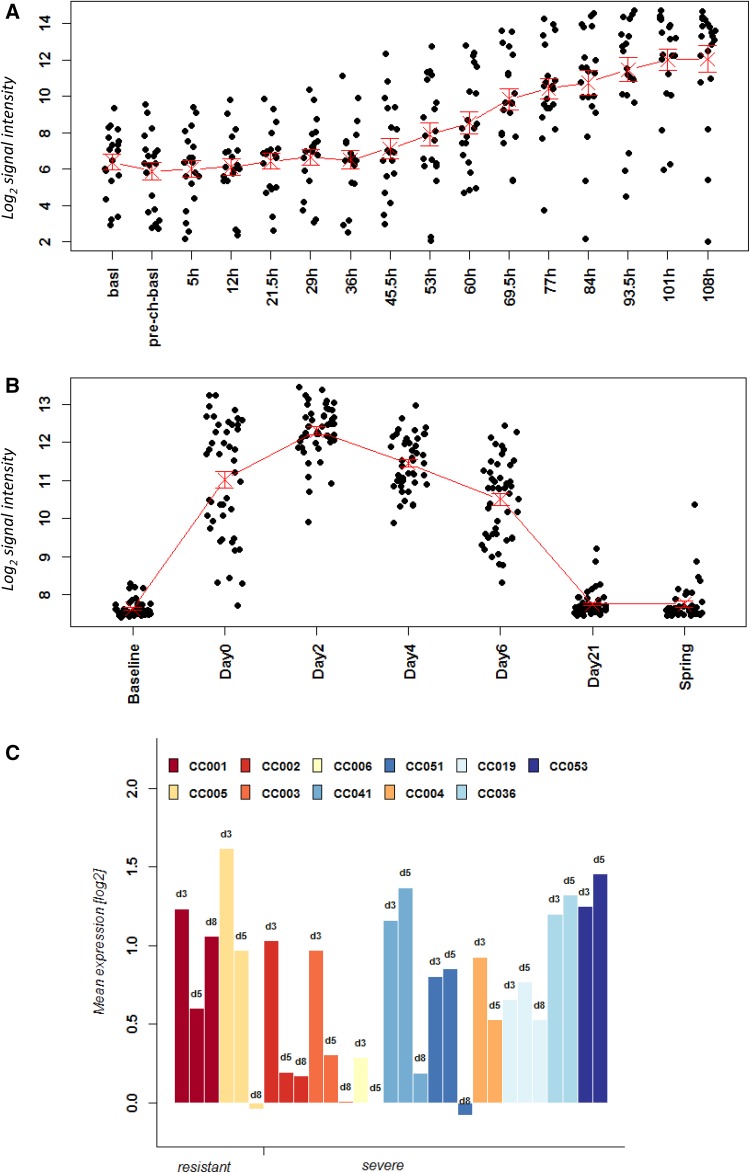
Influenza virus (IV) infections represent a very serious public health problem. At present, no established biomarkers exist to support diagnosis for respiratory viral infections and more importantly for severe IV disease. Studies in animal models are extremely important to understand the biological, genetic, and environmental factors that contribute to severe IV disease and to validate biomarker candidates from human studies. However, mouse human cross-species comparisons are often compromised by the fact that animal studies concentrate on the infected lungs, whereas in humans almost all studies use peripheral blood from patients. In addition, human studies do not consider genetic background as variable although human populations are genetically very diverse. Therefore, in this study, we performed a cross-species gene expression study of the peripheral blood from human patients and from the highly genetically diverse Collaborative Cross (CC) mouse population after IV infection. Our results demonstrate that changes of gene expression in individual genes are highly similar in mice and humans. The top-regulated genes in humans were also differentially regulated in mice. We conclude that the mouse is a highly valuable in vivo model system to validate and to discover gene candidates which can be used as biomarkers in humans. Furthermore, mouse studies allow confirmation of findings in humans in a well-controlled experimental system adding enormous value to the understanding of expression and function of human candidate genes.
流感病毒(IV)感染是一个非常严重的公共卫生问题。目前,尚无既定的生物标志物可用于支持呼吸道病毒感染的诊断,更重要的是用于诊断严重的IV疾病。动物模型研究对于理解导致严重IV疾病的生物学、遗传和环境因素以及验证来自人体研究的生物标志物候选物极为重要。然而,小鼠与人类的跨物种比较常常受到以下事实的影响:动物研究集中在受感染的肺部,而在人类中,几乎所有研究都使用患者的外周血。此外,尽管人类群体在基因上非常多样化,但人体研究并未将遗传背景视为变量。因此,在本研究中,我们对IV感染后的人类患者外周血以及高度基因多样化的协作杂交(CC)小鼠群体的外周血进行了跨物种基因表达研究。我们的结果表明,小鼠和人类个体基因中的基因表达变化高度相似。人类中上调最明显的基因在小鼠中也有差异调节。我们得出结论,小鼠是一种非常有价值的体内模型系统,可用于验证和发现可作为人类生物标志物的基因候选物。此外,小鼠研究能够在一个严格控制的实验系统中证实人体研究的结果,这对于理解人类候选基因的表达和功能具有巨大价值。