School of Kinesiology, University of Michigan, Ann Arbor, Michigan, United States of America.
Exercise Physiology Lab, University of Castilla-La Mancha, Toledo, Spain.
PLoS One. 2018 Jun 27;13(6):e0198372. doi: 10.1371/journal.pone.0198372. eCollection 2018.
Diets high in saturated fat acids (SFA) have been linked with cardio-metabolic disease risk. The purpose of this study was to determine whether only 1-2 weeks of a high SFA diet could impact disease risk factors in overweight adults who normally eat a relatively low proportion of SFA (i.e., <40% of dietary fat).
Twelve overweight (BMI: 27±1 kg/m2) young adults were studied before and after a 2-week diet that increased the proportion of SFA (<40% to 60% of dietary fat), while maintaining their daily intake of total fat, carbohydrate, protein, and calories. Insulin resistance, blood pressure, plasma markers of liver damage, total plasma cholesterol concentrations, and fatty acid profile within plasma and skeletal muscle lipid pools were assessed before and after the intervention.
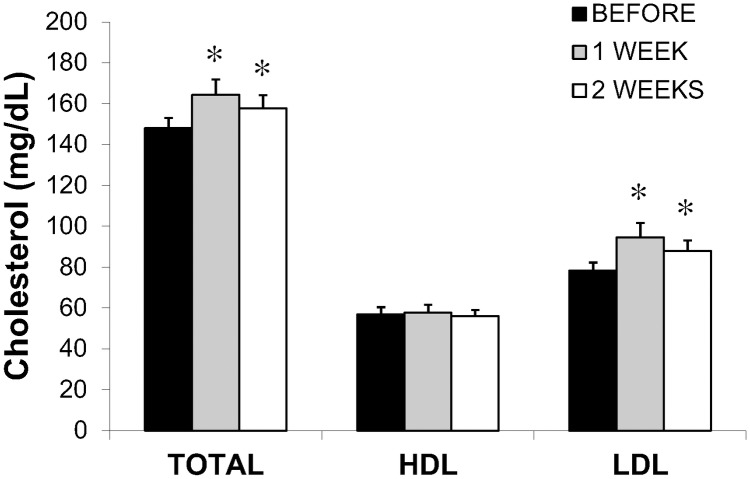
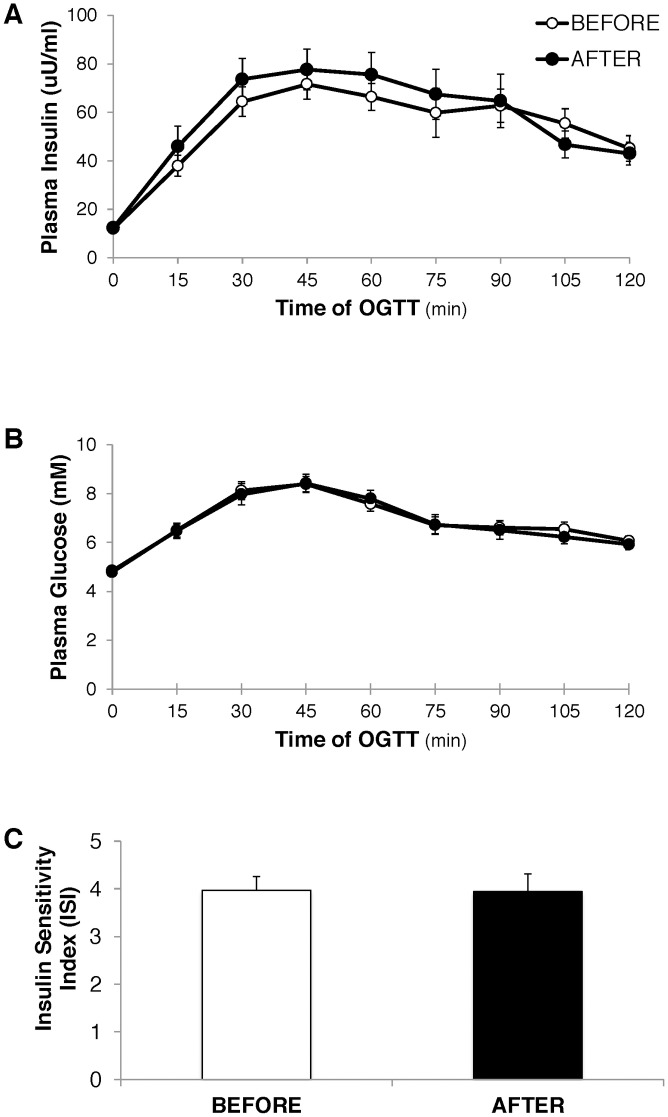
Total plasma cholesterol concentration increased (148±5 vs. 164±8 mg/dl; P<0.05) after only one week, due exclusively to an increase in LDL-cholesterol (78±4 vs. 95±7 mg/dl; P<0.05). After two weeks, plasma aspartate amino transferase (AST) concentration increased (P<0.05) but we found no change in insulin resistance, or resting blood pressure. The diet increase the proportion of SFA in plasma (35±1% vs. 39±2%; P<0.05) and the intramyocellular triglyceride pool (32±1% vs. 37±1%; P<0.05) suggesting the fatty acids in these pools may readily exchange.
Although blood lipids remain within normal clinical range, increasing saturated fat in diet for only 2 weeks raises plasma markers of cardiovascular risk (LDL-cholesterol) and liver damage (AST). In overweight, but healthy-young adults SFA accumulate in plasma and muscle after only 1-2 weeks of dietary increase.
高饱和脂肪酸(SFA)饮食与心血管代谢疾病风险有关。本研究的目的是确定仅 1-2 周的高 SFA 饮食是否会影响通常摄入相对低 SFA(即<40%的膳食脂肪)的超重成年人的疾病风险因素。
在进行为期 2 周的饮食干预之前和之后,研究了 12 名超重(BMI:27±1kg/m2)的年轻人,该饮食增加了 SFA 的比例(<40%至 60%的膳食脂肪),同时保持了他们的总脂肪、碳水化合物、蛋白质和卡路里的每日摄入量。在干预前后评估了胰岛素抵抗、血压、血浆肝损伤标志物、总血浆胆固醇浓度以及血浆和骨骼肌脂质池中的脂肪酸谱。
仅 1 周后,总血浆胆固醇浓度就升高(148±5 与 164±8mg/dl;P<0.05),这完全是由于 LDL-胆固醇增加(78±4 与 95±7mg/dl;P<0.05)。两周后,血浆天冬氨酸氨基转移酶(AST)浓度升高(P<0.05),但我们没有发现胰岛素抵抗或静息血压的变化。该饮食增加了血浆中 SFA 的比例(35±1%与 39±2%;P<0.05)和肌内甘油三酯池(32±1%与 37±1%;P<0.05),表明这些池中的脂肪酸可能容易交换。
尽管血脂仍在正常临床范围内,但仅增加 2 周的饮食饱和脂肪会升高心血管风险(LDL-胆固醇)和肝损伤(AST)的血浆标志物。在超重但健康的年轻成年人中,仅在饮食增加 1-2 周后,SFA 就会在血浆和肌肉中积累。