Ruiz Emma, Ávila José Manuel, Valero Teresa, Del Pozo Susana, Rodriguez Paula, Aranceta-Bartrina Javier, Gil Ángel, González-Gross Marcela, Ortega Rosa M, Serra-Majem Lluis, Varela-Moreiras Gregorio
Spanish Nutrition Foundation (FEN), C/General Álvarez de Castro 20, 1 pta, Madrid 28010, Spain.
Department of Preventive Medicine and Public Health, University of Navarra, C/Irunlarrea 1, Pamplona 31008, Spain.
Nutrients. 2016 Mar 22;8(3):177. doi: 10.3390/nu8030177.
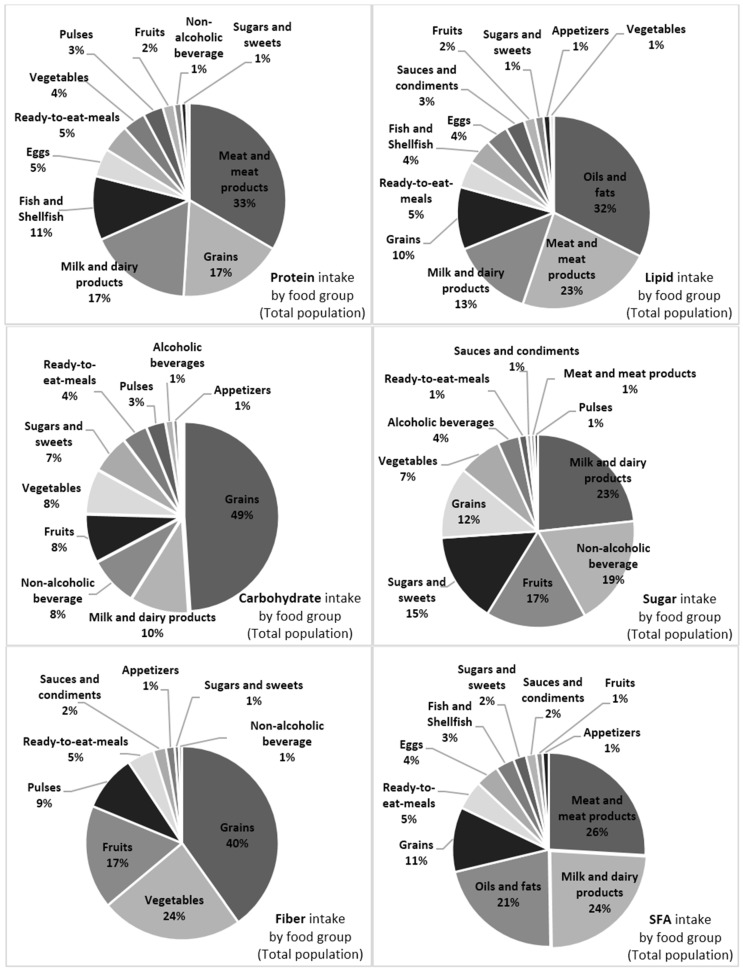
Our aim was to analyze dietary macronutrient intake and its main sources according to sex and age. Results were derived from the ANIBES ("Anthropometry, Intake and Energy Balance in Spain") cross-sectional study using a nationally-representative sample of the Spanish population (9-75 years old). Mean dietary protein intake was 74.5 ± 22.4 g/day, with meat and meat products as the main sources (33.0%). Mean carbohydrate intake was 185.4 ± 60.9 g/day and was higher in children and adolescents; grains (49%), mainly bread, were the main contributor. Milk and dairy products (23%) ranked first for sugar intake. Mean lipid intake was 78.1 ± 26.1 g/day and was higher in younger age groups; contributions were mainly from oils and fats (32.5%; olive oil 25.6%) and meat and meat products (22.0%). Lipid profiles showed relatively high monounsaturated fatty acid intake, of which olive oil contributed 38.8%. Saturated fatty acids were mainly (>70%) combined from meat and meat products, milk and dairy products and oils and fats. Polyunsaturated fatty acids were mainly from oils and fats (31.5%). The macronutrient intake and distribution in the Spanish population is far from population reference intakes and nutritional goals, especially for children and adolescents.
我们的目标是根据性别和年龄分析膳食常量营养素的摄入量及其主要来源。研究结果源自ANIBES(“西班牙人体测量、摄入量与能量平衡”)横断面研究,该研究采用了西班牙全国代表性样本(9至75岁)。膳食蛋白质平均摄入量为74.5±22.4克/天,主要来源是肉类和肉制品(占33.0%)。碳水化合物平均摄入量为185.4±60.9克/天,在儿童和青少年中更高;谷物(占49%,主要是面包)是主要贡献者。牛奶和奶制品在糖类摄入量中排名第一(占23%)。脂质平均摄入量为78.1±26.1克/天,在较年轻年龄组中更高;主要贡献来自油脂(占32.5%;橄榄油占25.6%)和肉类及肉制品(占22.0%)。血脂谱显示单不饱和脂肪酸摄入量相对较高,其中橄榄油贡献了38.8%。饱和脂肪酸主要(>70%)来自肉类和肉制品、牛奶和奶制品以及油脂。多不饱和脂肪酸主要来自油脂(占31.5%)。西班牙人群的常量营养素摄入量和分布远未达到人群参考摄入量和营养目标,尤其是儿童和青少年。