Centre de Biologie du Développement (CBD), Centre de Biologie Intégrative (CBI), Université de Toulouse, CNRS, UPS, F-31062, Toulouse, France.
Laboratoire d'Excellence Medalis, Université de Strasbourg, CNRS, LIT UMR 7200, F-67000, Strasbourg, France.
Sci Rep. 2018 Jun 27;8(1):9731. doi: 10.1038/s41598-018-28157-8.
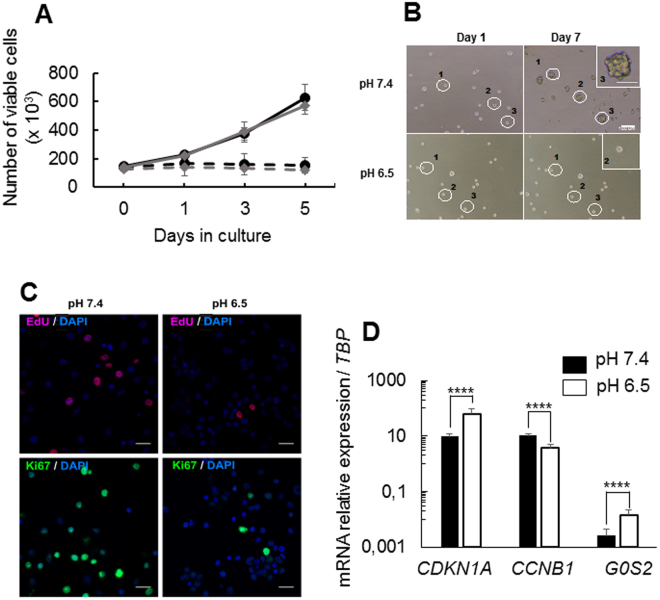
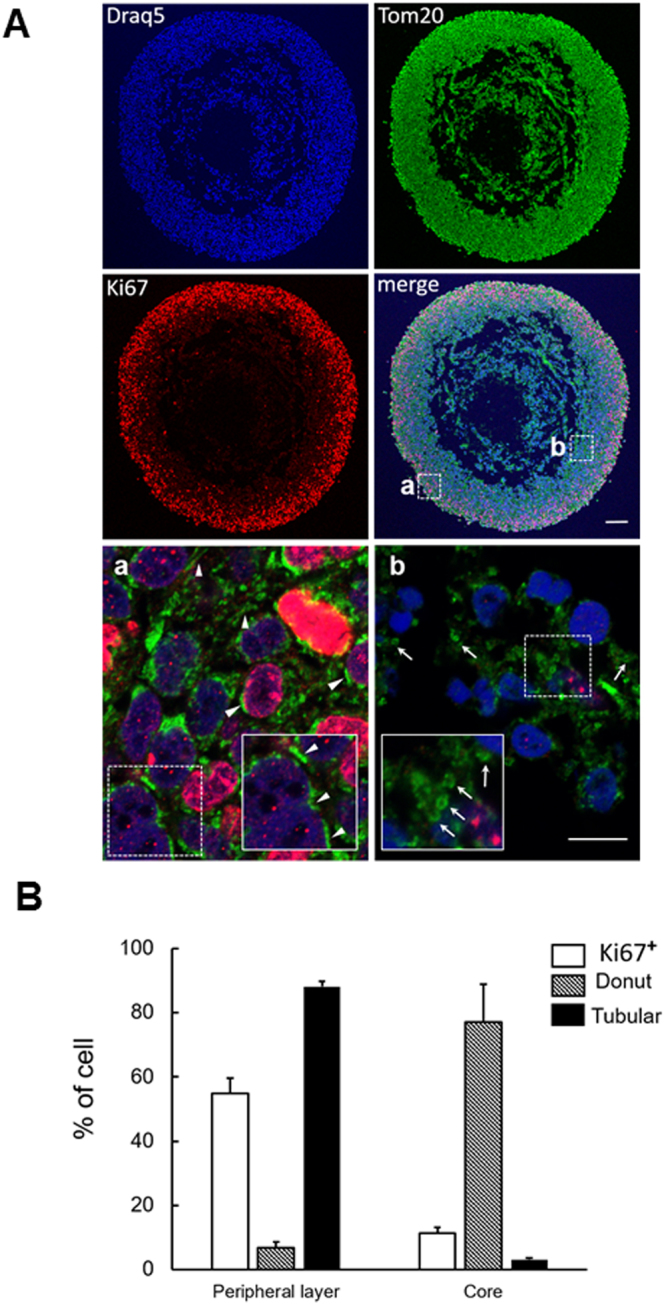
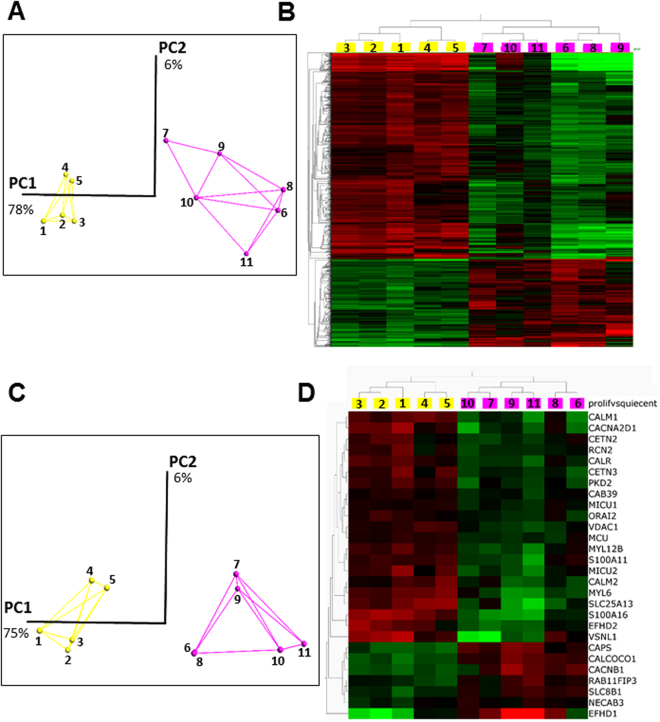
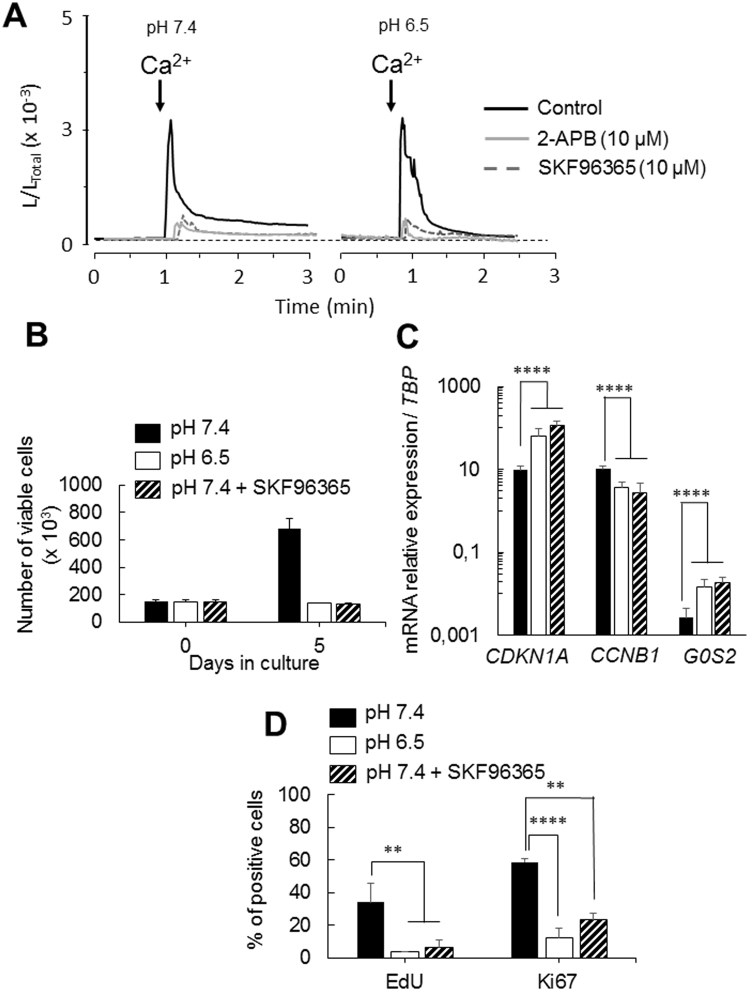
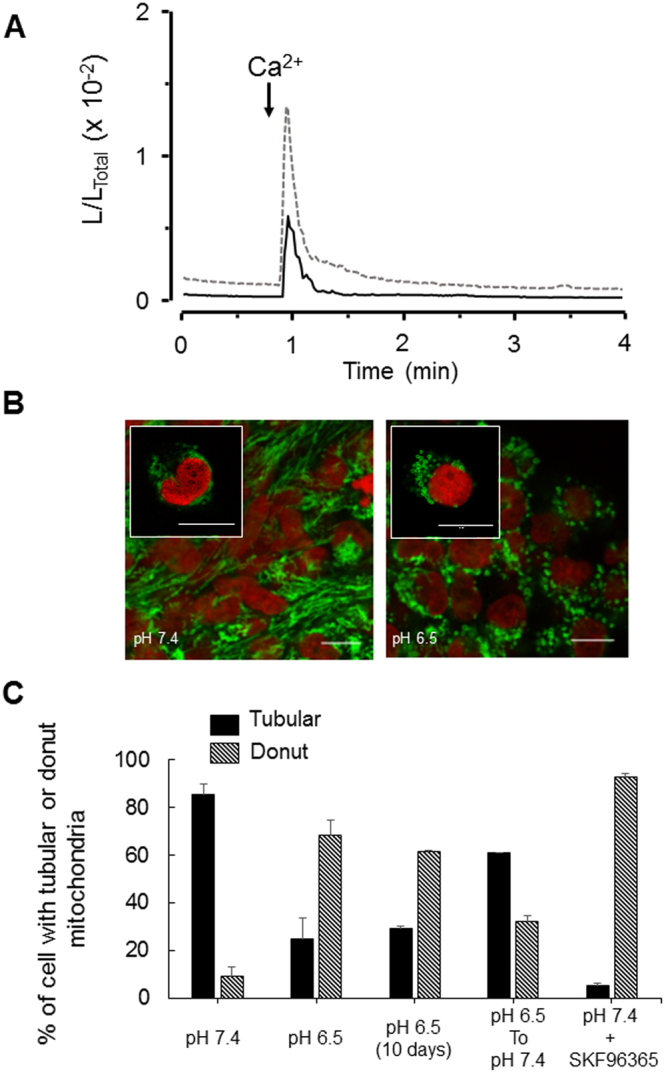
Quiescence is a reversible cell-cycle arrest which allows cancer stem-like cells to evade killing following therapies. Here, we show that proliferating glioblastoma stem-like cells (GSLCs) can be induced and maintained in a quiescent state by lowering the extracellular pH. Through RNAseq analysis we identified Ca signalling genes differentially expressed between proliferating and quiescent GSLCs. Using the bioluminescent Ca reporter EGFP-aequorin we observed that the changes in Ca homeostasis occurring during the switch from proliferation to quiescence are controlled through store-operated channels (SOC) since inhibition of SOC drives proliferating GSLCs to quiescence. We showed that this switch is characterized by an increased capacity of GSLCs' mitochondria to capture Ca and by a dramatic and reversible change of mitochondrial morphology from a tubular to a donut shape. Our data suggest that the remodelling of the Ca homeostasis and the reshaping of mitochondria might favours quiescent GSLCs' survival and their aggressiveness in glioblastoma.
静止是一种可逆的细胞周期停滞,使癌症干细胞样细胞能够在治疗后逃避杀伤。在这里,我们表明,通过降低细胞外 pH 值,可以诱导和维持增殖性神经胶质瘤干细胞样细胞(GSLC)处于静止状态。通过 RNAseq 分析,我们鉴定了在增殖和静止 GSLC 之间差异表达的钙信号基因。使用发光钙报告基因 EGFP-aequorin,我们观察到,从增殖到静止的转变过程中钙动态平衡的变化是通过储存操作通道(SOC)控制的,因为 SOC 的抑制会促使增殖的 GSLC 进入静止状态。我们表明,这种转变的特征是 GSLC 线粒体捕获 Ca 的能力增强,以及线粒体形态从管状到甜甜圈形状的剧烈和可逆变化。我们的数据表明,钙动态平衡的重塑和线粒体的重塑可能有利于静止的 GSLC 的存活及其在神经胶质瘤中的侵袭性。