Zhao Xudong, Zhang Wei, Ji Wenyue
Department of Otorhinolaryngology, Shengjing Hospital, China Medical University, Shenyang, China.
Department of Endocrinology, Shengjing Hospital, China Medical University, Shenyang, China.
Onco Targets Ther. 2018 Jun 21;11:3619-3635. doi: 10.2147/OTT.S164597. eCollection 2018.
Each year, ~50,000 patients worldwide die of laryngeal squamous cell carcinoma (LSCC) because of its highly metastatic properties. However, its pathogenic mechanisms are still unclear, and in particular, the prediction of metastasis remains elusive. This study aimed to define the role of microRNA-145 (miR-145) in LSCC progression. We also aimed to elucidate the clinical significance of the miR-145/MYO5A pathway, especially the predictive function of MYO5A in neck lymph node metastasis.
MYO5A and miR-145 expression was analyzed in 132 patients with LSCC, and associations between their expression and clinicopathological features were evaluated. We validated the regulatory relationship between miR-145b and MYO5A by dual luciferase reporter assay. The role of the miR-145/MYO5A pathway in proliferation, metastasis, and apoptosis was examined in vitro. The predictive functions of MYO5A in neck lymph node metastasis and prognosis were defined according to patient follow-up.
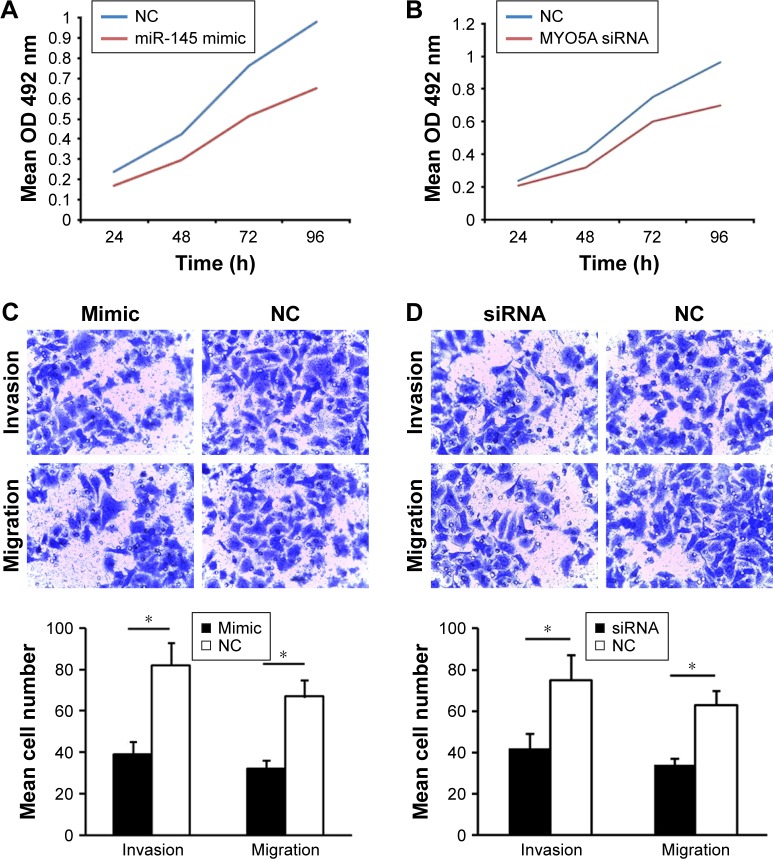
Our results showed downregulation of miR-145 in LSCC, which was negatively correlated with MYO5A suppression of LSCC progression and metastasis. MiR-145 directly regulated MYO5A expression in vitro and suppressed LSCC proliferation and invasion while promoting apoptosis by inhibiting MYO5A.
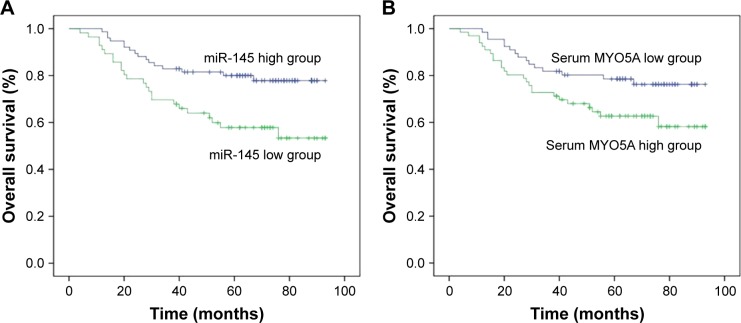
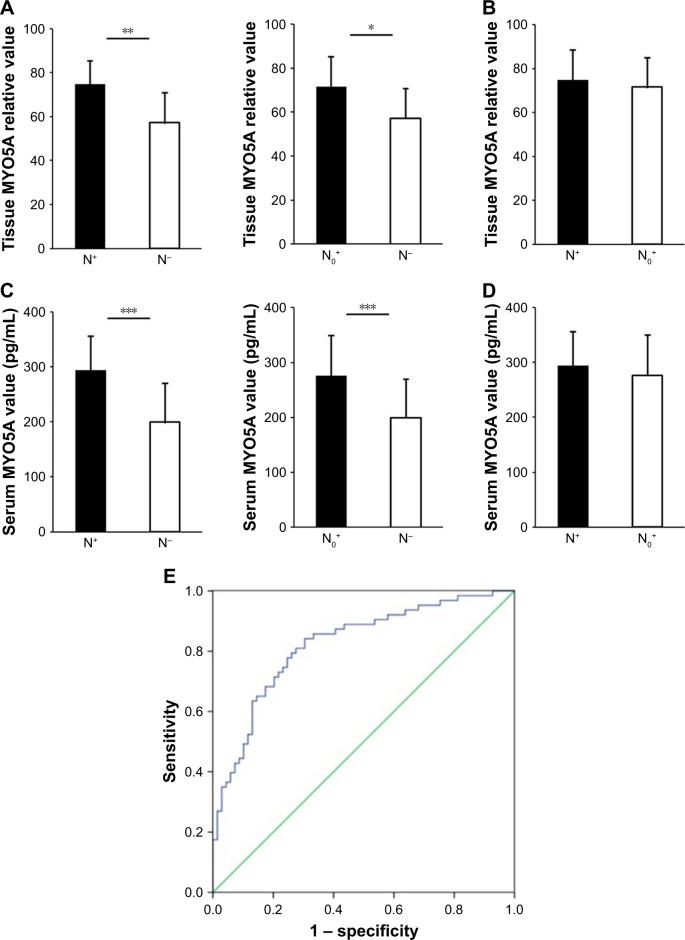
Notably, overexpression of serum MYO5A in LSCC predicted cervical nodal occult metastasis and poor prognosis, providing an effective indicator for predicting neck lymph node metastasis and assessing LSCC prognosis.
由于喉鳞状细胞癌(LSCC)具有高度转移性,全球每年约有50,000名患者死于该病。然而,其致病机制仍不清楚,尤其是转移的预测仍然难以捉摸。本研究旨在确定微小RNA-145(miR-145)在LSCC进展中的作用。我们还旨在阐明miR-145/MYO5A通路的临床意义,特别是MYO5A在颈部淋巴结转移中的预测功能。
分析了132例LSCC患者中MYO5A和miR-145的表达,并评估了它们的表达与临床病理特征之间的关联。我们通过双荧光素酶报告基因检测验证了miR-145b与MYO5A之间的调控关系。在体外研究了miR-145/MYO5A通路在增殖、转移和凋亡中的作用。根据患者随访确定了MYO5A在颈部淋巴结转移和预后中的预测功能。
我们的结果显示LSCC中miR-145表达下调,这与MYO5A抑制LSCC进展和转移呈负相关。miR-145在体外直接调节MYO5A的表达,通过抑制MYO5A抑制LSCC的增殖和侵袭,同时促进凋亡。
值得注意的是,LSCC患者血清MYO5A的过表达预示着颈部淋巴结隐匿性转移和预后不良,为预测颈部淋巴结转移和评估LSCC预后提供了一个有效的指标。