Li John Zeng-Hong, Gao Wei, Lei Wen-Bin, Zhao Jing, Chan Jimmy Yu-Wai, Wei William Ignace, Ho Wei-Kuen, Wong Thian-Sze
Department of Surgery, The University of Hong Kong, Queen Mary Hospital, Hong Kong.
Department of Otolaryngology, The First People's Hospital of Foshan, Foshan, People's Republic of China.
Oncotarget. 2016 Sep 6;7(36):58218-58233. doi: 10.18632/oncotarget.11280.
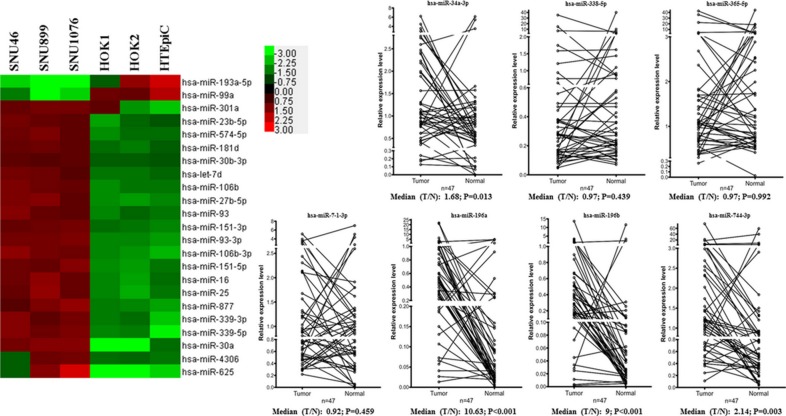
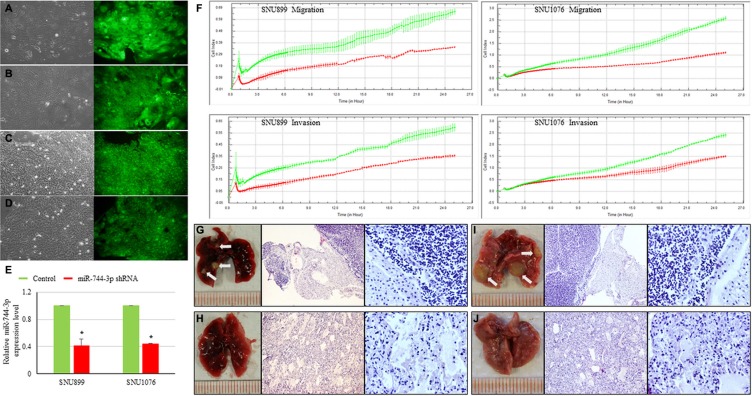
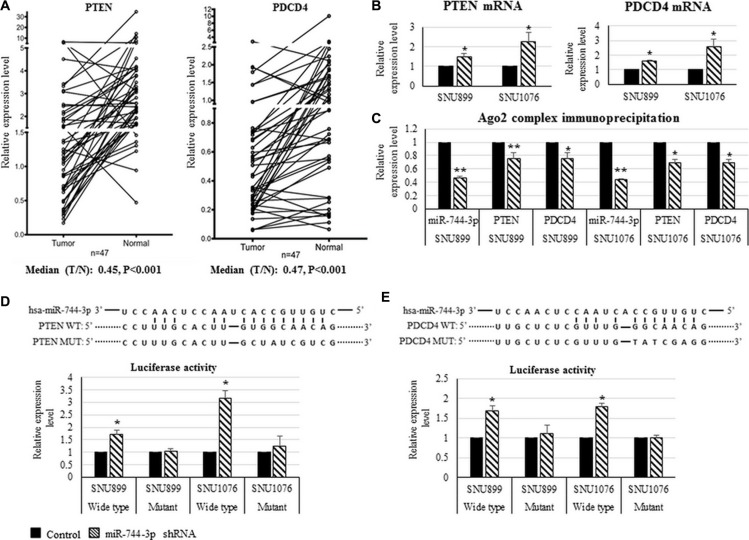
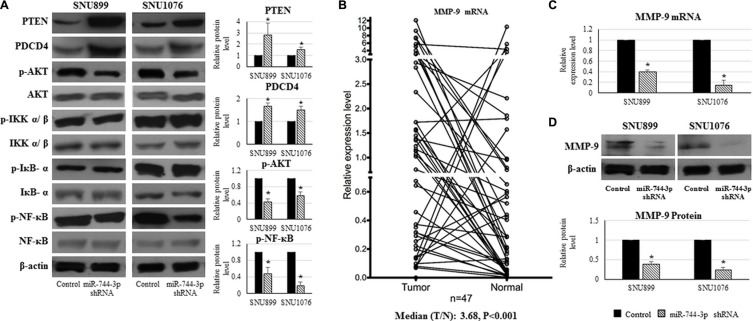
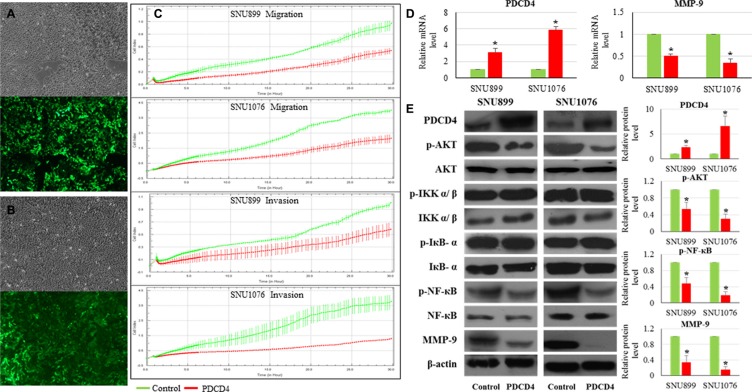
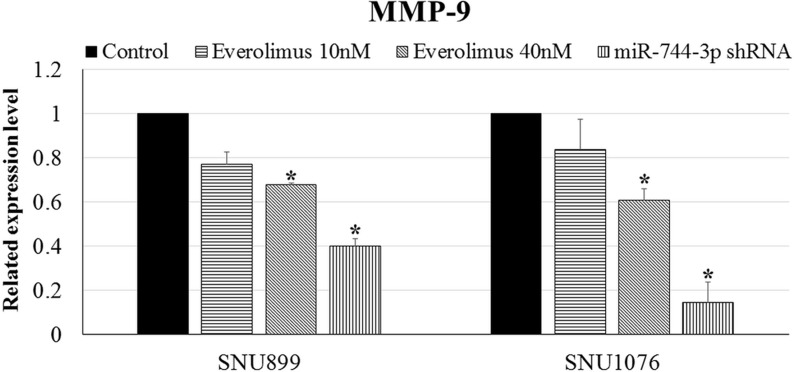
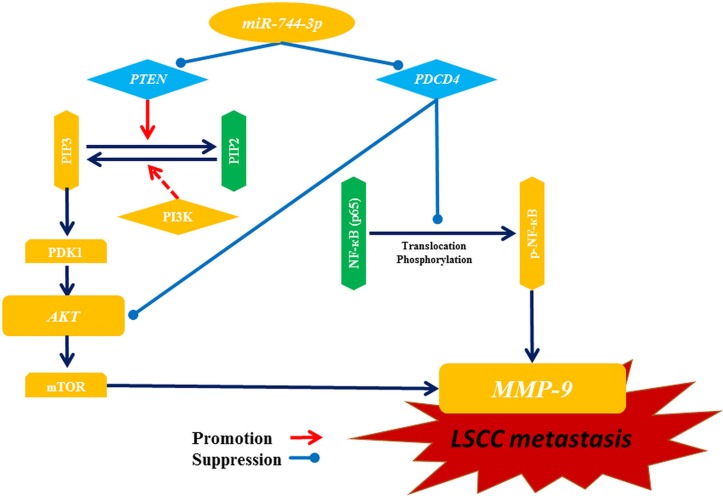
MicroRNA controls cancer invasion by governing the expression of gene regulating migration and invasion. Here, we reported a novel regulatory pathway controlled by miR-744-3p, which enhanced expression of matrix metallopeptidase 9 (MMP-9) in laryngeal squamous cell carcinoma (LSCC). We profiled the differential micoRNA expression pattern in LSCC cell lines and normal epithelial cultures derived from the head and neck mucosa using microRNA microarray. MiR-7-1-3p, miR-196a/b and miR-744-3p were expressed differentially in the LSCC cell lines. Subsequent validation using real-time PCR revealed that high miR-744-3p level was positively correlated with regional lymph node metastasis of LSCC. Real-time cellular kinetic analysis showed that suppressing miR-744-3p could inhibit migration and invasion of LSCC cell lines and reduce the number of lung metastatic nodules in nude mice modules. In silico analysis revealed that miR-744-3p targeted 2 distinct signaling cascades which eventually upregulated MMP-9 expression in LSCC. First, miR-744-3p could suppress programmed cell death 4 (PDCD4), a direct suppressor of NF-κB (p65). PDCD4 could also prevent AKT activation and suppress MMP-9 expression. Further, suppressing miR-744-3p expression could restore phosphatase and tensin homolog (PTEN) expression. PTEN could inhibit AKT activation and inhibit MMP-9 expression in LSCC cells. The results revealed that suppressing miR-744-3p was effective to inhibit LSCC metastasis by inactivating AKT/mTOR and NF-κB (p65) signaling cascade. Targeting miR-744-3p could be a valuable therapeutic intervention to suppress the aggressiveness of LSCC.
微小RNA通过调控与迁移和侵袭相关基因的表达来控制癌症侵袭。在此,我们报道了一种由miR - 744 - 3p控制的新型调控途径,该途径增强了喉鳞状细胞癌(LSCC)中基质金属蛋白酶9(MMP - 9)的表达。我们使用微小RNA微阵列分析了LSCC细胞系以及源自头颈部黏膜的正常上皮培养物中差异微小RNA表达模式。miR - 7 - 1 - 3p、miR - 196a/b和miR - 744 - 3p在LSCC细胞系中表达存在差异。随后通过实时PCR验证发现,高miR - 744 - 3p水平与LSCC的区域淋巴结转移呈正相关。实时细胞动力学分析表明,抑制miR - 744 - 3p可抑制LSCC细胞系的迁移和侵袭,并减少裸鼠模型中肺转移结节的数量。计算机分析显示,miR - 744 - 3p靶向2个不同的信号级联反应,最终上调LSCC中MMP - 9的表达。首先,miR - 744 - 3p可抑制程序性细胞死亡4(PDCD4),而PDCD4是NF - κB(p65)的直接抑制剂。PDCD4还可阻止AKT激活并抑制MMP - 9表达。此外,抑制miR - 744 - 3p表达可恢复磷酸酶和张力蛋白同源物(PTEN)的表达。PTEN可抑制AKT激活并抑制LSCC细胞中MMP - 9的表达。结果表明,抑制miR - 744 - 3p可通过使AKT/mTOR和NF - κB(p65)信号级联失活来有效抑制LSCC转移。靶向miR - 744 - 3p可能是抑制LSCC侵袭性的一种有价值的治疗干预措施。