Sharafi Mastaneh, Alamdari Nima, Wilson Michael, Leidy Heather J, Glynn Erin L
Research and Development, Beachbody, LLC, Santa Monica, CA.
Scientific Affairs, Beachbody, LLC, Santa Monica, CA.
Curr Dev Nutr. 2018 Jun 23;2(6):nzy022. doi: 10.1093/cdn/nzy022. eCollection 2018 Jun.
Dietary protein and fiber have been shown to independently improve subjective measures of appetite control.
The aim of this study was to determine the acute effects of a high-protein, high-fiber (HP/HFb) beverage taken as a preload compared with an isocaloric lower-protein, lower-fiber (LP/LFb) placebo beverage on subjective appetite ratings and subsequent energy intake at an ad libitum meal in healthy adults.
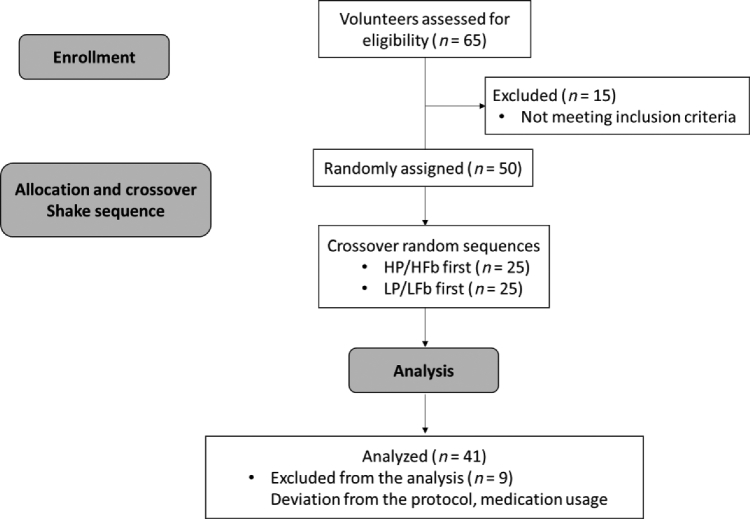
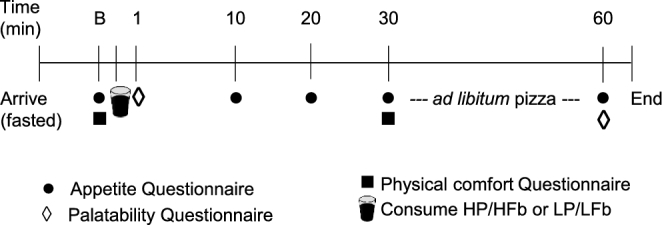
A total of 50 overweight/obese men and women [ = 25 men, 25 women; age 30 ± 2 y; body mass index (BMI) 29.6 ± 0.3 kg/m] received a 160 kcal HP/HFb beverage containing 17 g protein and 6 g fiber on one occasion and an isocaloric LP/LFb placebo beverage containing 1 g protein and 3 g fiber on another occasion in a randomized, double-blind, crossover design. Thirty min after consumption of the beverage preload, an ad libitum pizza meal was provided to be consumed over a 30-min period. Visual analog scales (VAS) were used to assess subjective appetite ratings throughout the testing period. The Revised Restraint Scale (RRS) was used to classify participants as restrained or unrestrained eaters.
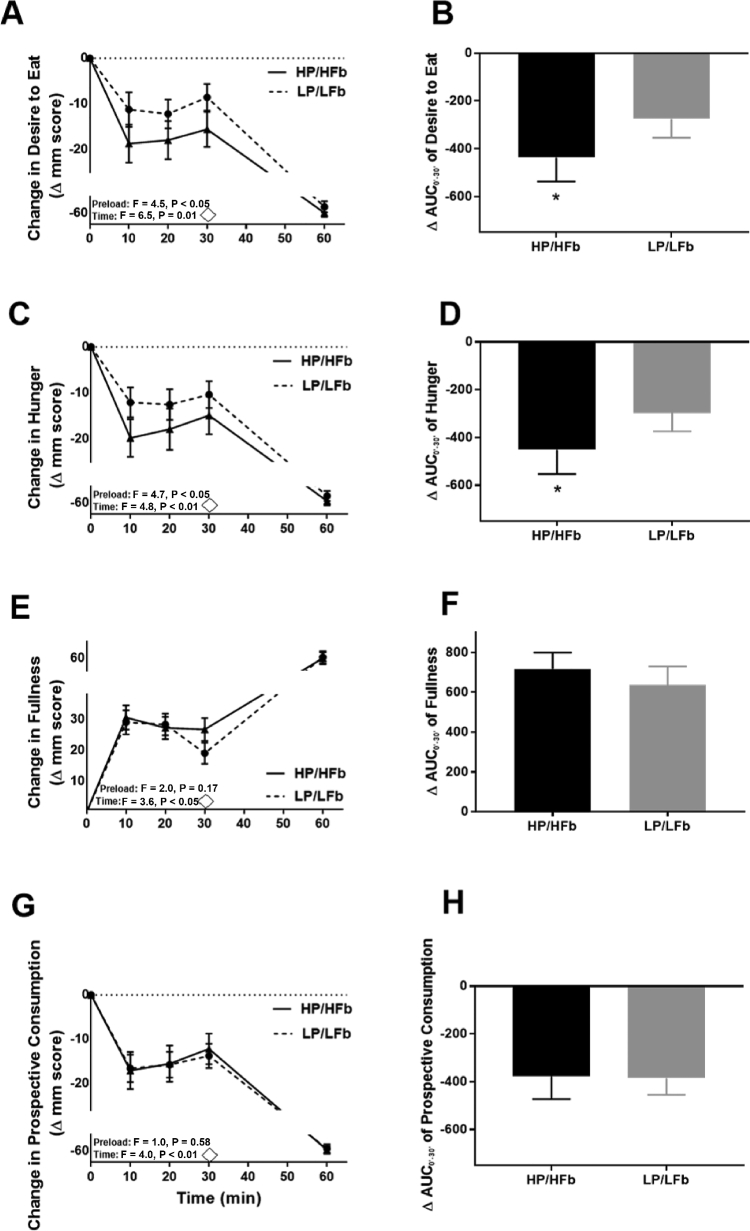
HP/HFb led to greater reductions in postprandial desire to eat and hunger compared with LP/LFb (both, < 0.05) but did not significantly affect postprandial fullness or prospective food consumption. Subsequent meal energy intake tended to be lower after HP/HFb compared with LP/LFb ( = 0.09). A subanalysis showed lower energy intake after HP/HFb in older participants (≥25 y) compared with LP/LFb, which was not observed in the younger participants (<25 y).
Compared with LP/LFb, a HP/HFb beverage preload reduced hunger, desire to eat, and tended to reduce subsequent food intake. Dietary restraint and age appear to influence subsequent energy intake and should be taken into account when designing nutrition interventions for weight reduction and/or maintenance. This trial was registered at clinicaltrials.gov as NCT02979717.
膳食蛋白质和纤维已被证明可独立改善食欲控制的主观指标。
本研究的目的是确定与等热量的低蛋白、低纤维(LP/LFb)安慰剂饮料相比,作为预负荷的高蛋白、高纤维(HP/HFb)饮料对健康成年人随意进餐时主观食欲评分和随后能量摄入的急性影响。
共有50名超重/肥胖男性和女性[男性25名,女性25名;年龄30±2岁;体重指数(BMI)29.6±0.3kg/m²],采用随机、双盲、交叉设计,一次接受含有17g蛋白质和6g纤维的160kcal HP/HFb饮料,另一次接受含有1g蛋白质和3g纤维的等热量LP/LFb安慰剂饮料。饮用饮料预负荷30分钟后,提供一顿随意的披萨餐,在30分钟内食用。在整个测试期间,使用视觉模拟量表(VAS)评估主观食欲评分。使用修订后的克制量表(RRS)将参与者分类为克制型或非克制型进食者。
与LP/LFb相比,HP/HFb导致餐后进食欲望和饥饿感的降低幅度更大(两者均P<0.05),但对餐后饱腹感或预期食物摄入量没有显著影响。与LP/LFb相比,HP/HFb后随后餐食的能量摄入倾向于更低(P=0.09)。一项亚分析显示,与LP/LFb相比,老年参与者(≥25岁)在饮用HP/HFb后的能量摄入更低,而年轻参与者(<25岁)未观察到这种情况。
与LP/LFb相比,HP/HFb饮料预负荷可降低饥饿感、进食欲望,并倾向于减少随后的食物摄入量。饮食克制和年龄似乎会影响随后的能量摄入,在设计减肥和/或维持体重的营养干预措施时应予以考虑。该试验已在clinicaltrials.gov注册,注册号为NCT02979717。