School of Medicine and Life Sciences, Nanjing University of Chinese Medicine, Nanjing 210023, P.R. China.
Department of Pharmacology, Emory University School of Medicine, Atlanta, GA 30322, USA.
Oncol Rep. 2018 Sep;40(3):1339-1347. doi: 10.3892/or.2018.6531. Epub 2018 Jun 27.
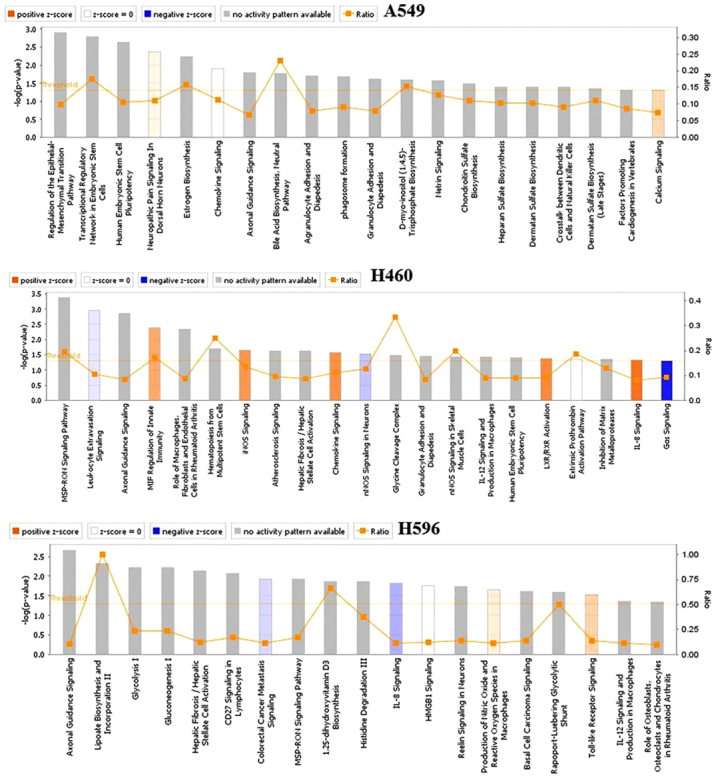
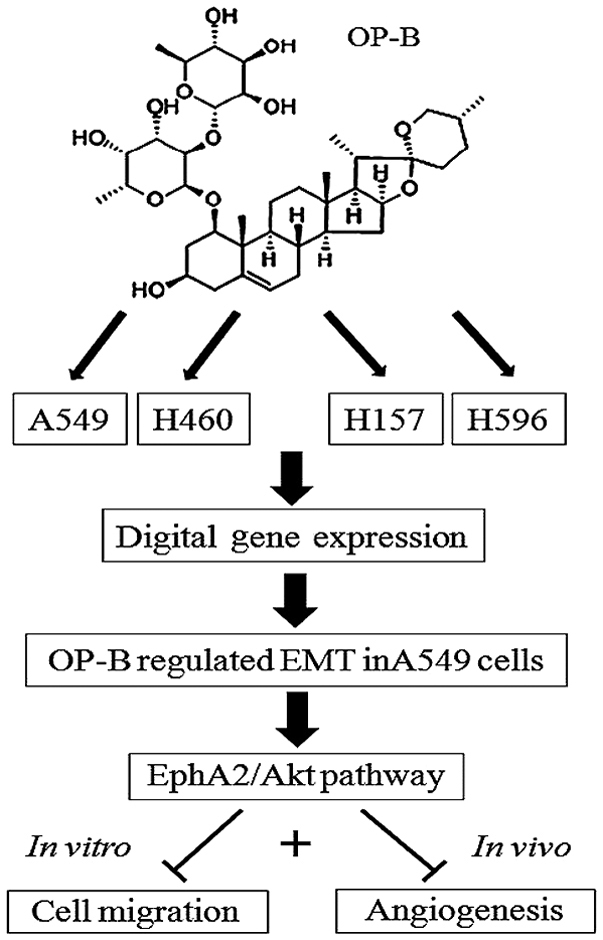
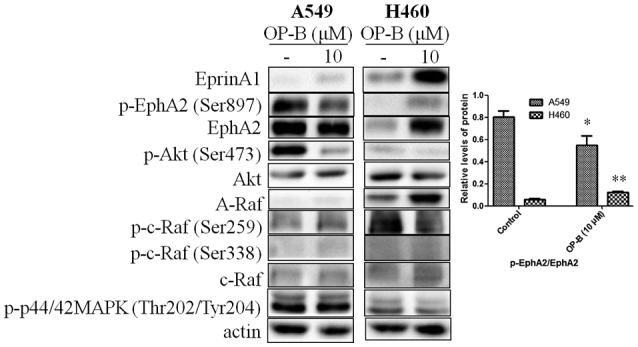
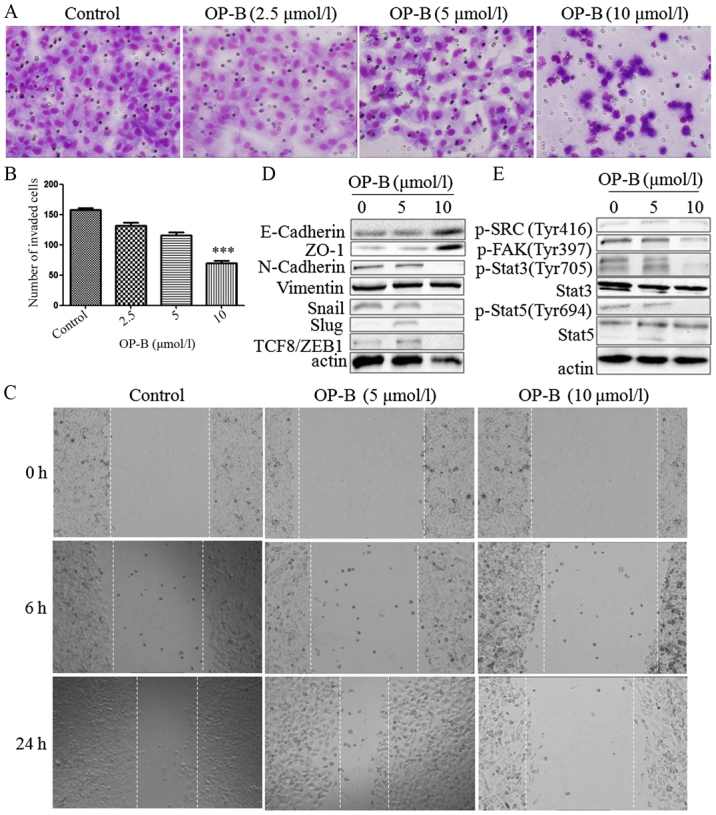
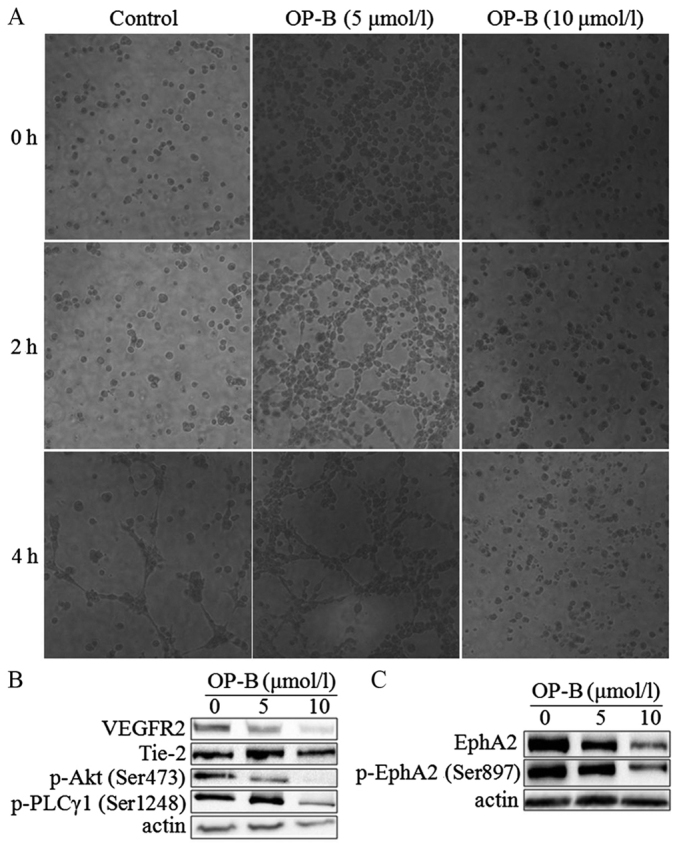
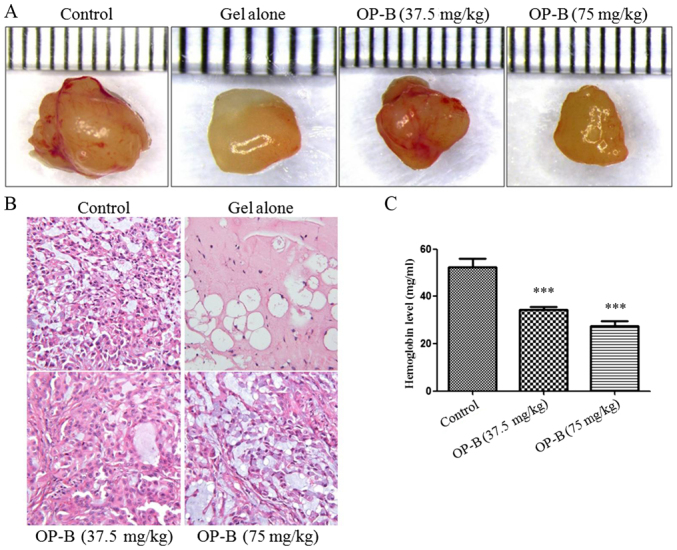
Lung adenocarcinoma is the most common metastatic cancer, and is associated with high patient mortality. Therefore, investigation of anti‑metastatic treatments for lung adenocarcinoma is crucial. Ophiopogonin B (OP‑B) is a bioactive component of Radix Ophiopogon Japonicus, which is often used in Chinese traditional medicine to treat pulmonary disease. Screening of transcriptome and digital gene expression (DGE) profiling data in NSCLC cell lines showed that OP‑B regulated the epithelial‑mesenchymal transition (EMT) pathway in A549 cells. Further results showed that 10 µmol/l OP‑B downregulated EphA2 expression and phosphorylation (Ser897) in A549 cells but upregulated them in NCI‑H460 cells. Meanwhile, the Ras/ERK pathway was unaffected in A549 cells and stimulated in NCI‑H460 cells. More importantly, detection of the EMT pathway showed that OP‑B treatment increased the epithelial markers ZO‑1 and E‑cadherin and decreased the expression of the mesenchymal marker N‑cadherin and the transcriptional repressors Snail, Slug and ZEB1. Furthermore, through Transwell migration and scratch wound healing assays, we found that 10 µmol/l OP‑B significantly reduced the invasion and migration of A549 cells. In vivo, we found that 75 mg/kg OP‑B inhibited A549 cell metastasis in a pulmonary metastasis nude mouse model. In addition, we also found that 10 µmol/l OP‑B significantly inhibited tube formation in EA.hy926 cells. The expression of VEGFR2 and Tie‑2, the phosphorylation of Akt (S473) and PLC (S1248), and the levels of EphA2 and phosphorylated EphA2 (S897) were all inhibited by OP‑B in this cell line. In vivo, using a Matrigel plug assay, we found that OP‑B inhibited angiogenesis and the hemoglobin content of A549 transplanted tumors. Taken together, OP‑B inhibited the metastasis and angiogenesis of A549 cells by inhibiting EphA2/Akt and the corresponding pathway. The investigation gives new recognition to the anticancer mechanism of OP‑B in NSCLC and this compound is a promising inhibitor of metastasis and angiogenesis of lung adenocarcinoma cells.
肺腺癌是最常见的转移性癌症,与患者高死亡率相关。因此,研究肺腺癌的抗转移治疗至关重要。麦冬 B(OP-B)是麦冬的一种生物活性成分,常用于中药治疗肺部疾病。非小细胞肺癌细胞系的转录组和数字基因表达(DGE)谱分析数据筛选表明,OP-B 调节 A549 细胞中的上皮-间充质转化(EMT)途径。进一步的结果表明,10μmol/L 的 OP-B 下调 A549 细胞中 EphA2 的表达和磷酸化(Ser897),但上调 NCI-H460 细胞中的 EphA2 表达和磷酸化。同时,Ras/ERK 途径在 A549 细胞中不受影响,在 NCI-H460 细胞中受到刺激。更重要的是,检测 EMT 途径表明,OP-B 处理增加了上皮标记物 ZO-1 和 E-钙粘蛋白的表达,降低了间充质标记物 N-钙粘蛋白和转录抑制因子 Snail、Slug 和 ZEB1 的表达。此外,通过 Transwell 迁移和划痕愈合实验,我们发现 10μmol/L 的 OP-B 显著降低了 A549 细胞的侵袭和迁移能力。在体内,我们发现 75mg/kg 的 OP-B 抑制了肺转移裸鼠模型中 A549 细胞的转移。此外,我们还发现 10μmol/L 的 OP-B 显著抑制了 EA.hy926 细胞的管形成。在该细胞系中,OP-B 抑制了 VEGFR2 和 Tie-2 的表达、Akt(S473)和 PLC(S1248)的磷酸化以及 EphA2 和磷酸化 EphA2(S897)的表达。在体内,通过 Matrigel plugs 实验,我们发现 OP-B 抑制了 A549 移植瘤的血管生成和血红蛋白含量。综上所述,OP-B 通过抑制 EphA2/Akt 及其相应途径抑制 A549 细胞的转移和血管生成。该研究为 OP-B 在非小细胞肺癌中的抗癌机制提供了新的认识,该化合物是一种有前途的肺腺癌细胞转移和血管生成抑制剂。