Li Liqiu, Gao Qian, Wang Jin, Gu Ling, Li Zhihui, Zhang Shiping, Hu Cheng, He Menglin, Wang Yulin, Wang Zixuan, Yi Yongxiang, Fu Jin, Zhang Xiongfei, Ge Fei, Chen Meijuan, Zhang Xu
School of Medicine & Holistic Integrative Medicine, Nanjing University of Chinese Medicine, Nanjing, China.
The Second Hospital of Nanjing, Nanjing University of Chinese Medicine, Nanjing, China.
Front Oncol. 2022 Jun 28;12:833814. doi: 10.3389/fonc.2022.833814. eCollection 2022.
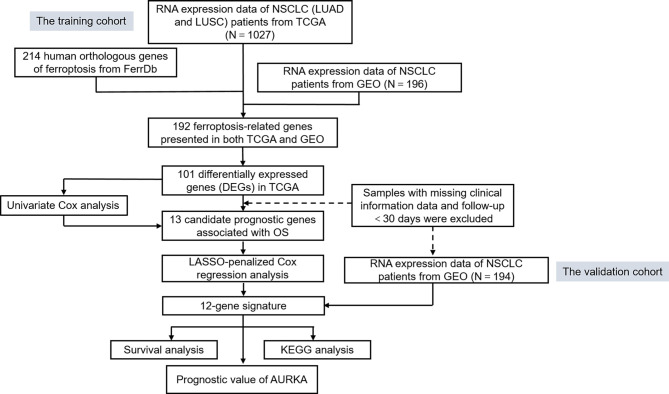
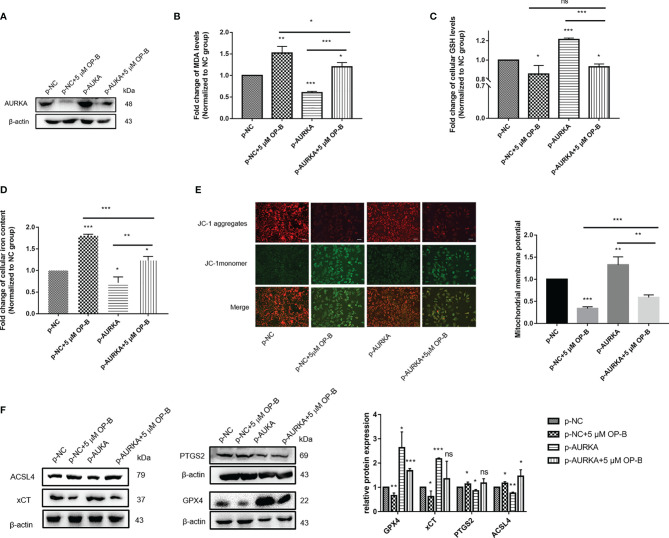
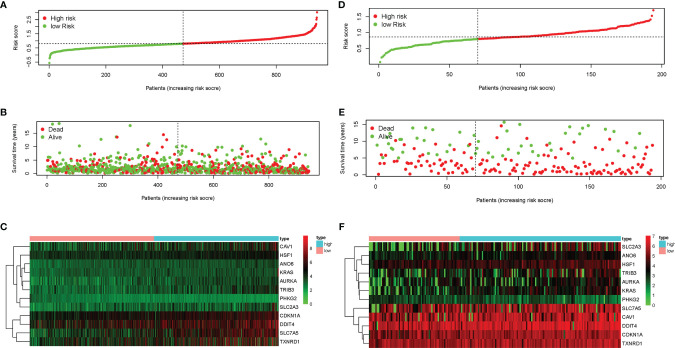
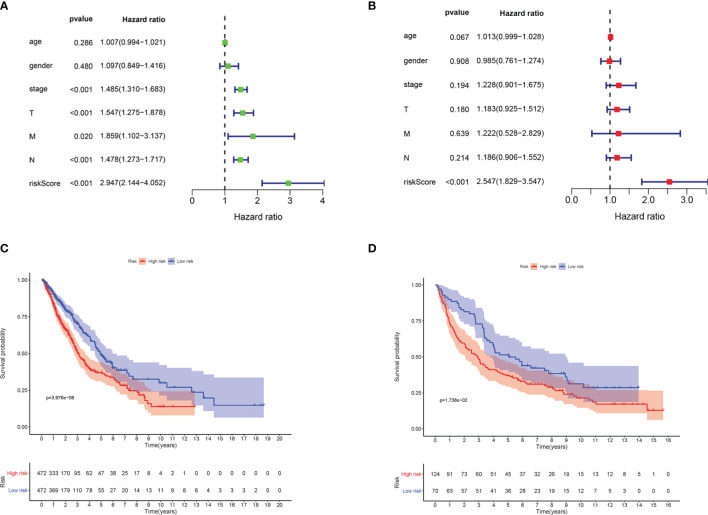
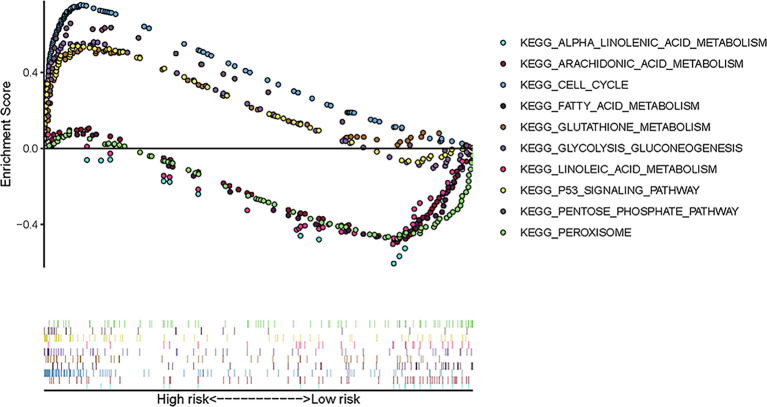
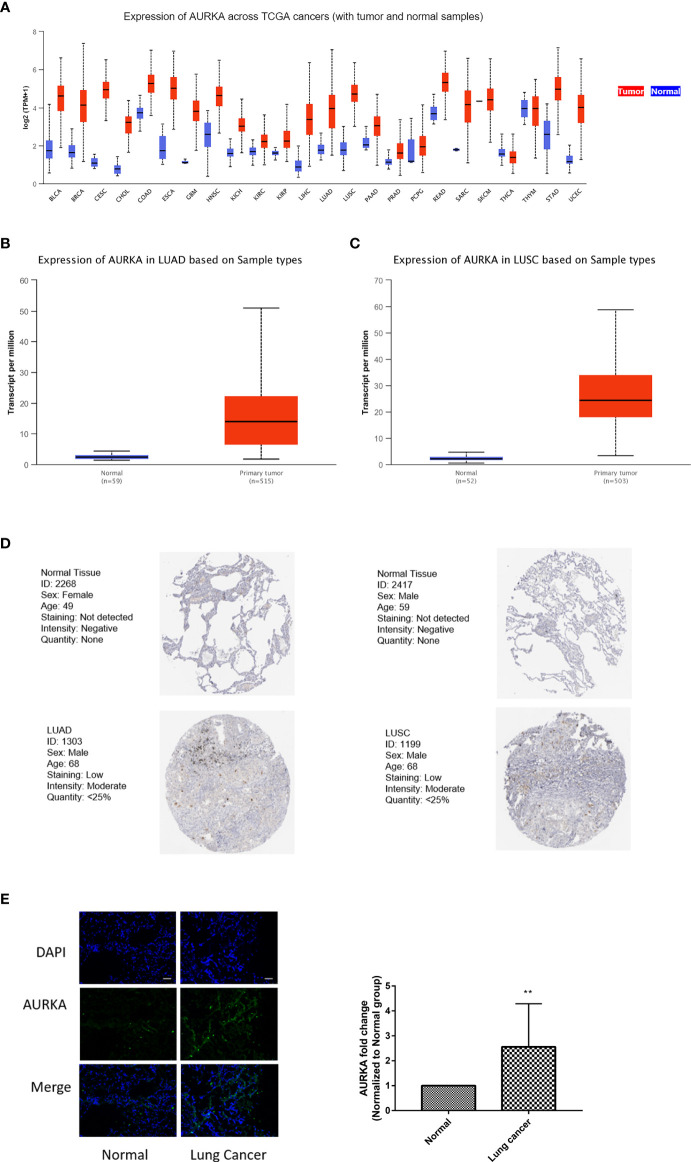
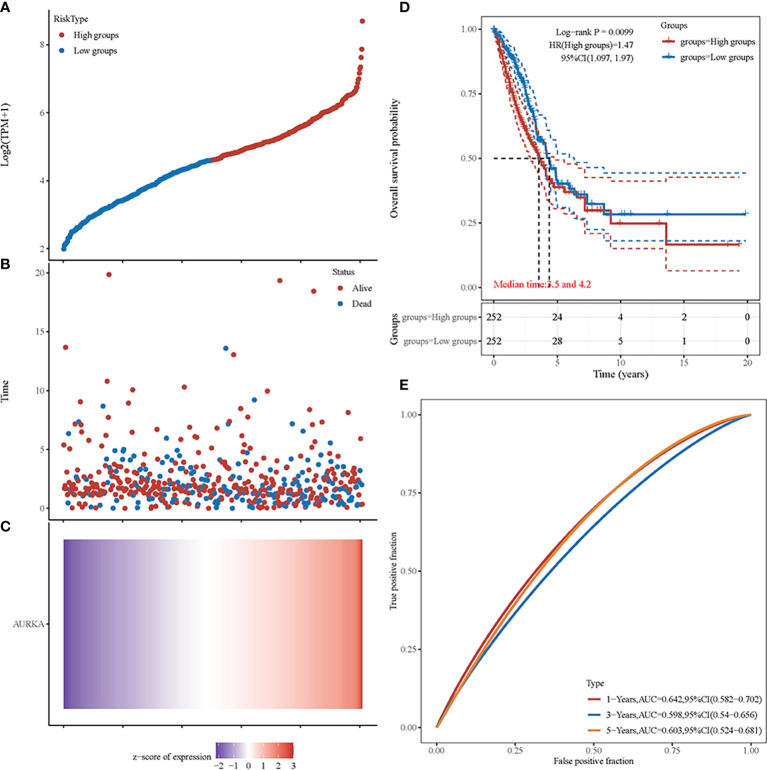
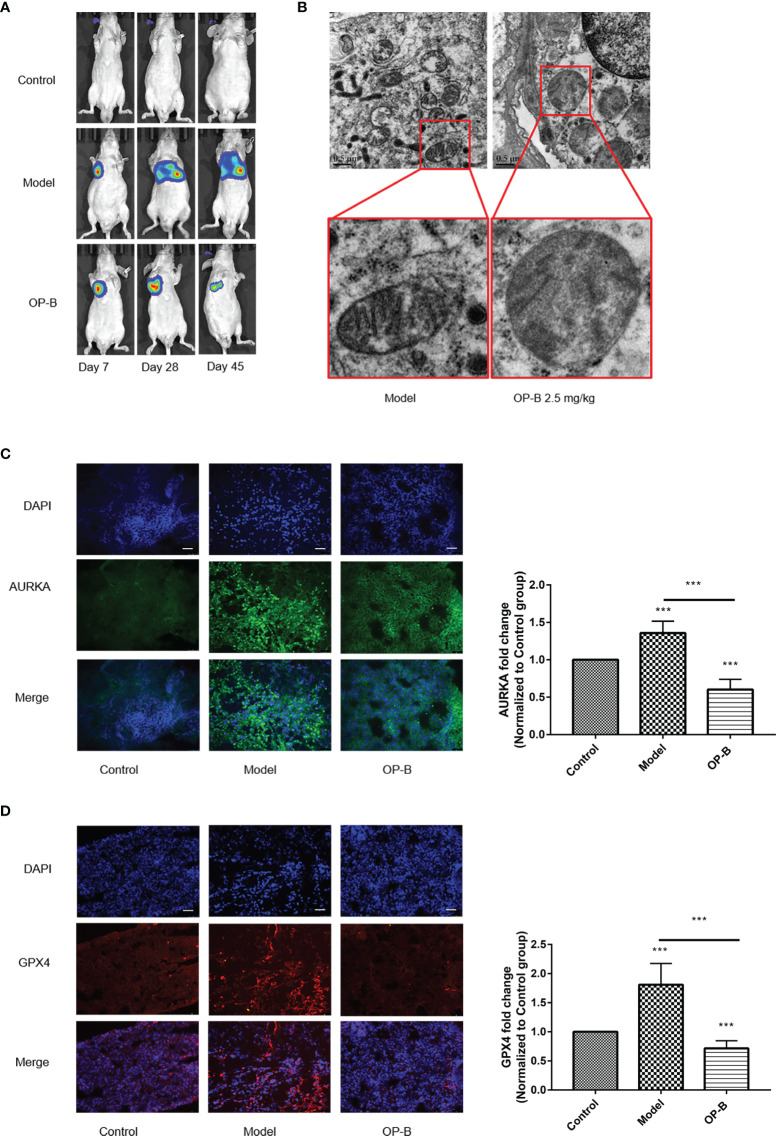
Ferroptosis is a new type of iron-dependent programmed cell death. In recent years, its role in the diagnosis and treatment of multiple tumors, including non-small cell lung cancer (NSCLC), has been continuously observed. The relationship between the ferroptosis-related genes and the prognosis of patients with NSCLC needs to be clarified. In this study, The Cancer Genome Atlas (TCGA) and the Gene Expression Synthesis database (Gene Expression Omnibus, GEO) were used to build a model of ferroptosis-related differentially expressed genes (DEGs). A total of 101 ferroptosis-related DEGs were screened using R language, and a 12-gene signature was finally established through univariate Cox regression analysis and least absolute shrinkage and selection operator (LASSO)-penalized Cox regression analysis. According to the risk scores, the patients were divided into a high-risk or a low-risk group, with patients in the low-risk group showing better prognosis. , one of the genes in the 12-gene signature, was found to be highly expressed in tumors. In addition, further study verified to be a negative regulator of ferroptosis in NSCLC cells. Ophiopogonin B (OP-B) had been reported to induce apoptosis, mitotic catastrophe, and autophagy in NSCLC cells. Herein, proteomic sequencing analysis and OP-B administration revealed the upregulation of and the downregulation of and in the 12-gene signature, indicating that OP-B induced ferroptosis in NSCLC. Determination of the concentrations of malondialdehyde (MDA), glutathione (GSH), and intracellular iron and the mitochondrial membrane potential (MMP) confirmed the induction of ferroptosis by OP-B . Furthermore, transmission electron microscopy (TEM) examination of lung cancer xenotransplantation in nude mice confirmed that OP-B induced ferroptosis . Further study of the molecular mechanism showed that the ferroptosis effect caused by OP-B can be partially reversed by the overexpression of . Overall, our study established a new ferroptosis-related risk prediction model for the prognosis of patients with NSCLC, revealed the enrichment pathways of ferroptosis in NSCLC, and discovered the negative regulation of in ferroptosis. On this basis, we demonstrated that OP-B can induce ferroptosis in NSCLC and clarified the specific molecular mechanism of OP-B inducing ferroptosis by regulating the expression of .
铁死亡是一种新型的铁依赖性程序性细胞死亡。近年来,其在包括非小细胞肺癌(NSCLC)在内的多种肿瘤的诊断和治疗中的作用不断被观察到。NSCLC患者中铁死亡相关基因与预后的关系有待阐明。在本研究中,利用癌症基因组图谱(TCGA)和基因表达综合数据库(基因表达 omnibus,GEO)构建了铁死亡相关差异表达基因(DEGs)模型。使用R语言共筛选出101个铁死亡相关的DEGs,最终通过单变量Cox回归分析和最小绝对收缩和选择算子(LASSO)惩罚Cox回归分析建立了一个12基因特征模型。根据风险评分,将患者分为高风险组或低风险组,低风险组患者预后较好。12基因特征模型中的一个基因被发现在肿瘤中高表达。此外,进一步研究证实该基因是NSCLC细胞中铁死亡的负调节因子。已报道麦冬皂苷B(OP-B)可诱导NSCLC细胞凋亡、有丝分裂灾难和自噬。在此,蛋白质组测序分析和OP-B给药显示12基因特征模型中该基因上调,而另外两个基因下调,表明OP-B可诱导NSCLC细胞发生铁死亡。丙二醛(MDA)、谷胱甘肽(GSH)、细胞内铁浓度及线粒体膜电位(MMP)的测定证实了OP-B可诱导铁死亡。此外,对裸鼠肺癌异种移植瘤的透射电子显微镜(TEM)检查证实OP-B可诱导铁死亡。对分子机制的进一步研究表明,OP-B引起的铁死亡效应可通过该基因的过表达部分逆转。总体而言,我们的研究建立了一种新的与铁死亡相关的NSCLC患者预后风险预测模型,揭示了NSCLC中铁死亡的富集途径,并发现该基因在铁死亡中的负调节作用。在此基础上,我们证明了OP-B可诱导NSCLC细胞发生铁死亡,并阐明了OP-B通过调节该基因表达诱导铁死亡的具体分子机制。