Vanelli Maurizio, Munari Alberto, Fabbri Donata, Iovane Brunella, Scarabello Chiara, Dodi Icilio, Mastrorilli Carla, Fainardi Valentina, Di Mauro Dora, Caffarelli Carlo
University Unit on Health systems organization, quality and sustainability, Parma, Italy.
Past-professor, Faculty of Psychology, Geneva University, Switzerland.
Acta Biomed. 2018 Jun 15;89(2):233-241. doi: 10.23750/abm.v89i2.7172.
to finding what young patients with type-1 diabetes (T1D) knows about their body and also on their illness in perspective to tailor educational interventions to their real ability to understand.
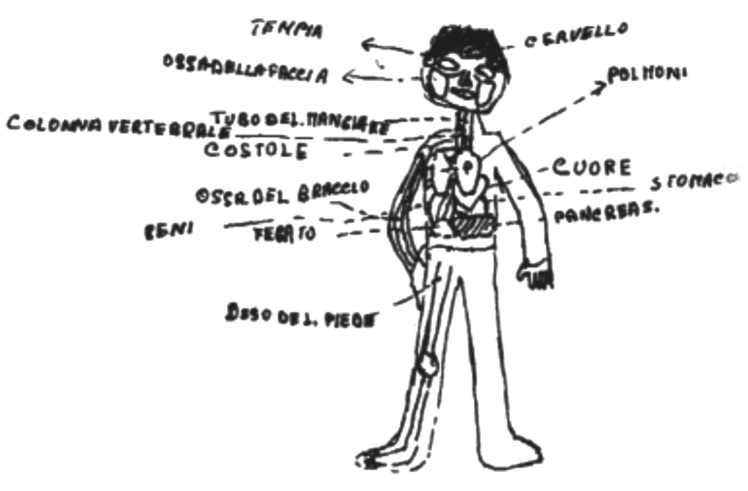
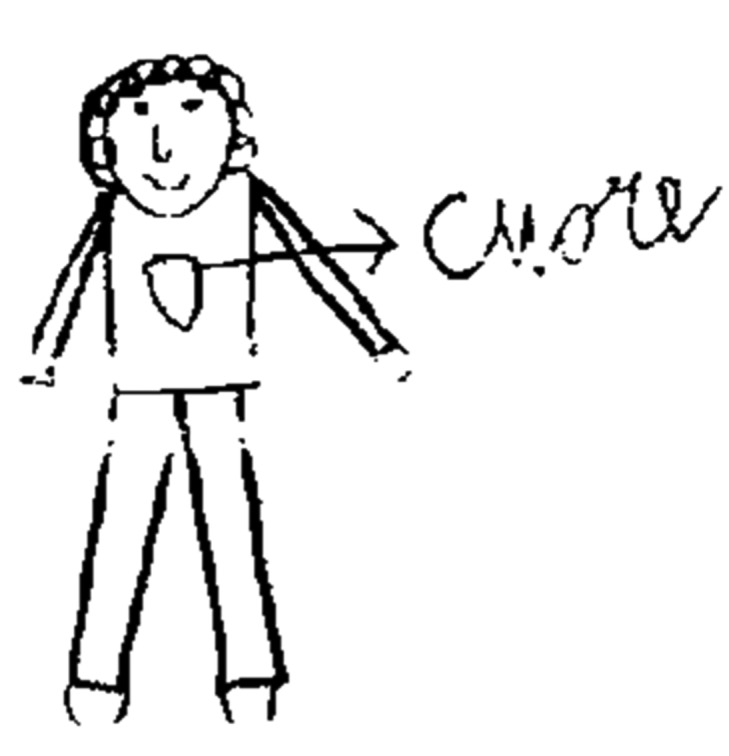
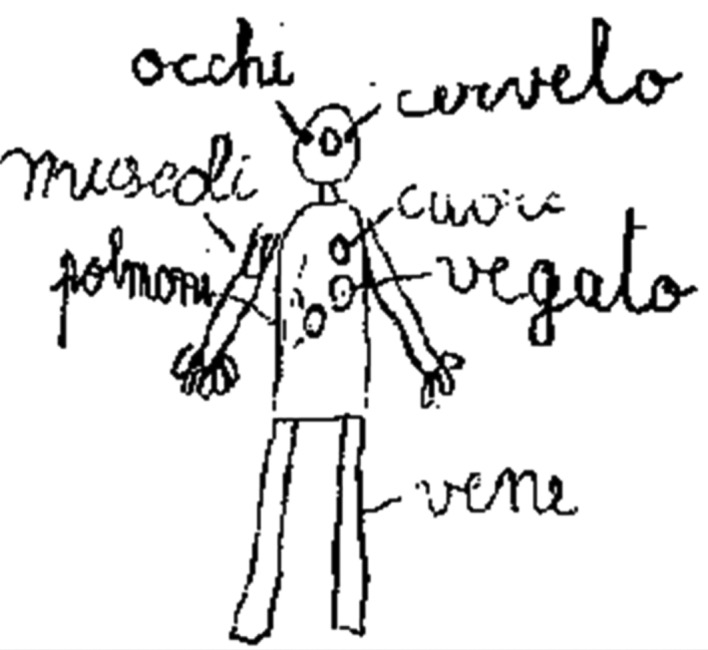
the present study involved 68 children with T1D , 5 to 14 years old with a duration of diabetes ranging from 2 to 6 years and a total HbA1c mean value of 7.96±0.87%. The sample was divided into two age Groups: 28 children 5 to 10 years old were gathered in the Group 1 and 40 teenagers aged from 11 to 14 years in the Group 2. These patients were invited to draw over a white paper using a black pencil "The human body as it is made inside". Subsequently they were asked to explain: "what is diabetes?" and "where does insulin go?". According to the methodology of the "interactive drawing", the interviewer interacted with the children while drawing, forcing them to verbalize the reasons for their choices, to justify their proceeding, to explain their plan and then to explicit their theories. Drawings and replies were classified as Correct, Correct-but-Incomplete and Incorrect.
the overall production of correct/correct-but-incomplete drawings was 83.82% vs 16.20% of the incorrect ones. One-hundred of the children who have produced a correct drawing supplied also a correct verbal reply, whereas 100% of the children who have produced an incorrect drawing was unable to supply any information on diabetes or about insulin. Both younger and older subjects who produced a complete-but-incorrect drawing appeared to have misunderstood the action of insulin therapy (only 23% and 17% of correct replies). Children who produced incomplete drawings and provided incorrect replies to the questions about their disease showed also a HbA1c mean value higher (8.36±0.97%) compared to the children who drew and answered correctly (p=0.0023).
the operative epistemic approach could represent a promising tool for a health professional team to verify the real understanding acquired by a child about T1D, and to provide pediatrician a guideline to directly communicate with his patient.
了解1型糖尿病(T1D)青少年患者对自身身体及病情的认知,以便根据他们的实际理解能力制定教育干预措施。
本研究纳入了68例T1D患儿,年龄在5至14岁之间,糖尿病病程为2至6年,糖化血红蛋白(HbA1c)均值为7.96±0.87%。样本分为两个年龄组:5至10岁的28名儿童为第1组,11至14岁的40名青少年为第2组。邀请这些患者用黑色铅笔在白纸上画出“人体内部结构”。随后询问他们:“什么是糖尿病?”以及“胰岛素去了哪里?”。根据“互动绘图”方法,访谈者在绘图过程中与儿童互动,促使他们阐述选择的原因、为自己的行为辩护、解释计划并阐明理论。绘图和回答分为正确、正确但不完整和错误三类。
正确/正确但不完整绘图的总体比例为83.82%,错误绘图的比例为16.20%。绘制正确图的100名儿童也给出了正确的口头回答,而绘制错误图的儿童中100%无法提供任何关于糖尿病或胰岛素的信息。绘制完整但错误图的年轻和年长受试者似乎都误解了胰岛素治疗的作用(正确回答仅占23%和17%)。绘制不完整图且对疾病问题回答错误的儿童,其HbA1c均值(8.36±0.97%)也高于绘图和回答正确的儿童(p=0.0023)。
操作性认知方法可能是健康专业团队验证儿童对T1D实际理解程度的一种有前景的工具,并为儿科医生与患者直接沟通提供指导。