Department of Entomology and Plant Pathology and Center for Human Health and the Environment, North Carolina State University, Raleigh, North Carolina, USA
Center for Genomics and Systems Biology, Department of Biology, New York University, New York, New York, USA.
Appl Environ Microbiol. 2018 Aug 17;84(17). doi: 10.1128/AEM.01037-18. Print 2018 Sep 1.
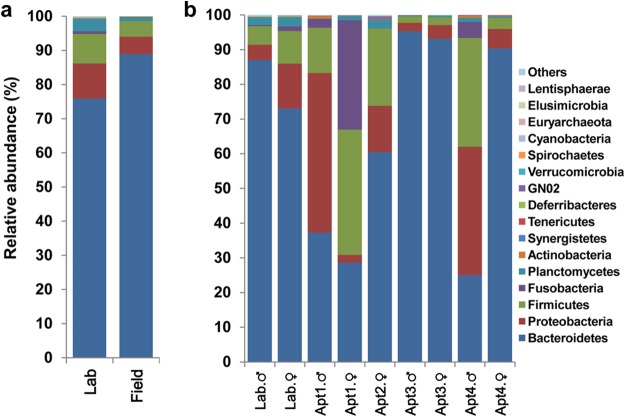
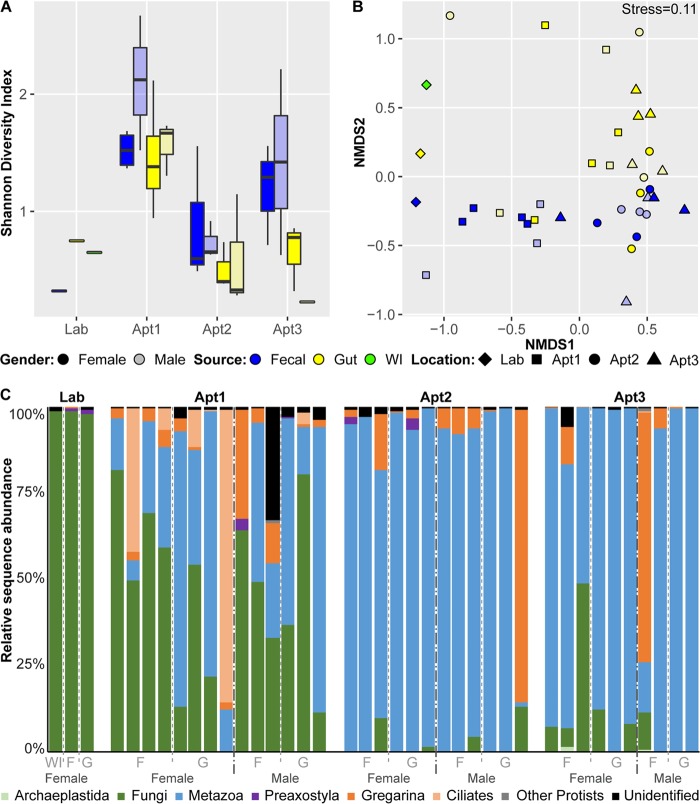
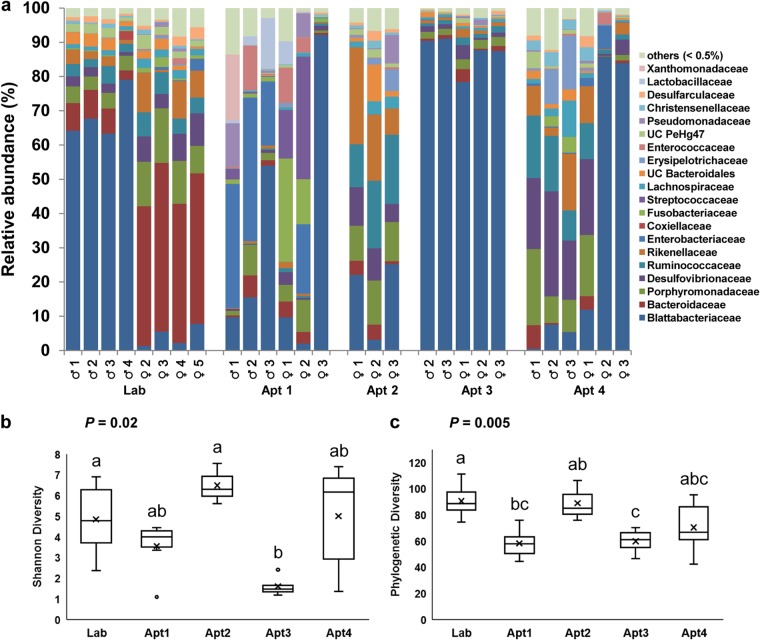
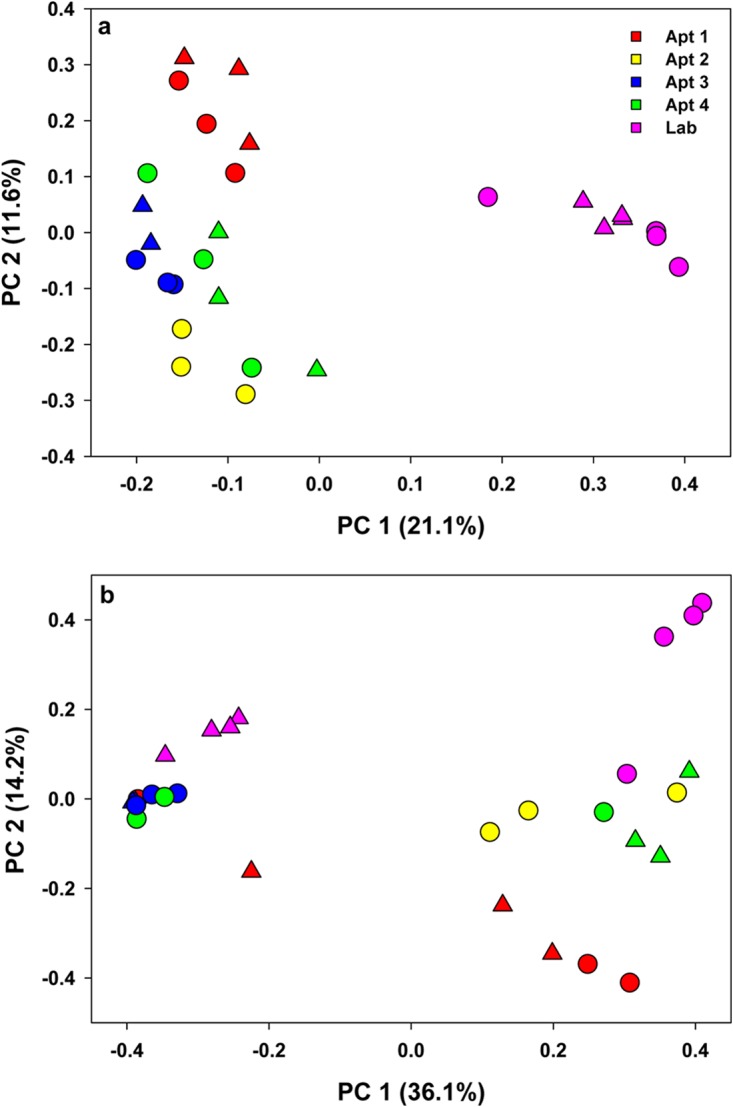
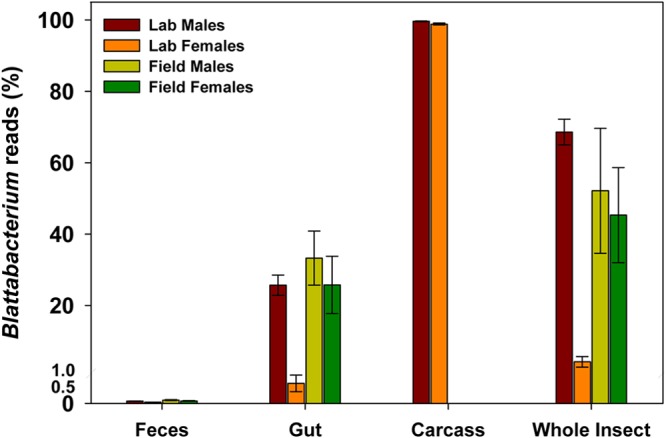
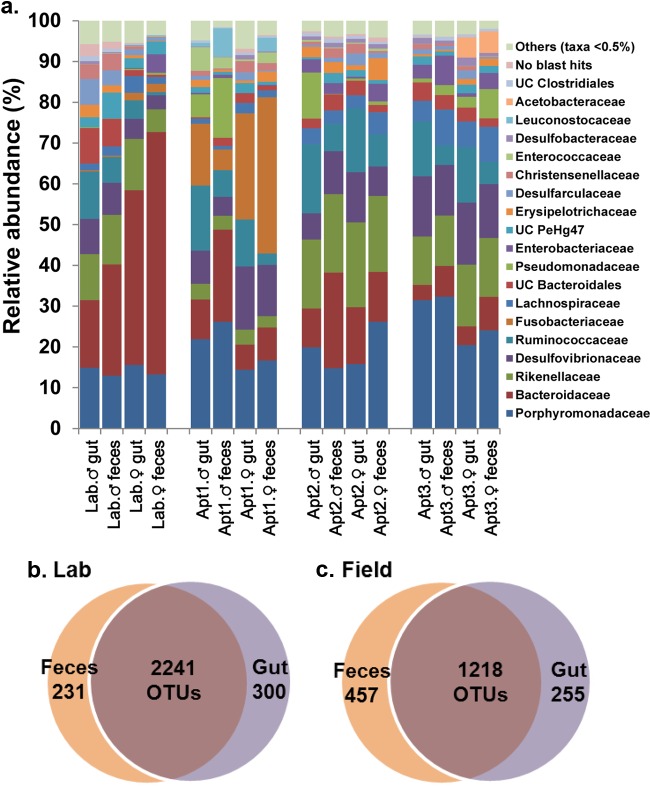
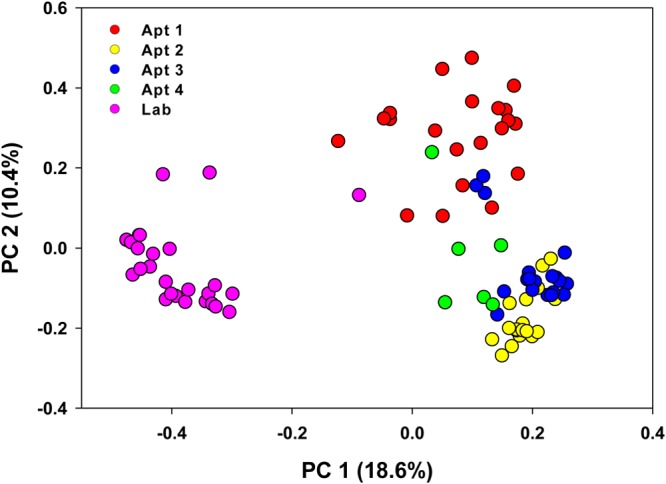
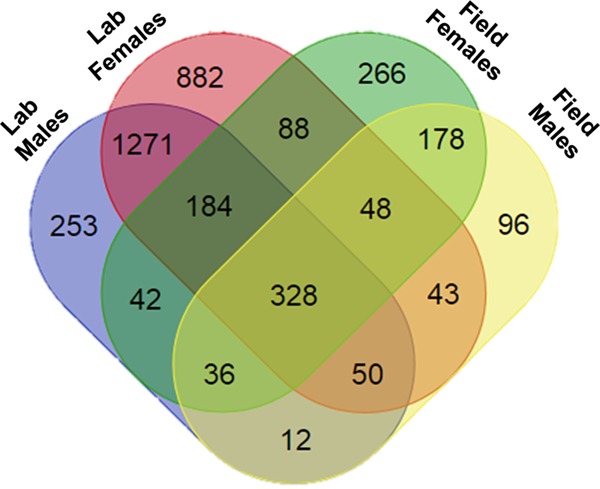
German cockroaches, (Blattodea: Ectobiidae), are human commensals that move freely between food and waste, disseminating bacteria, including potential pathogens, through their feces. However, the relationship between the microbial communities of the cockroach gut and feces is poorly understood. We analyzed the V4 region of the 16S rRNA gene and the V9 region of the 18S rRNA gene by next-generation sequencing (NGS) to compare the bacterial and protist diversities in guts versus feces and males versus females, as well as assess variation across cockroach populations. Cockroaches harbored a diverse array of bacteria, and 80 to 90% of the operational taxonomic units (OTUs) were shared between the feces and gut. Lab-reared and field-collected cockroaches had distinct microbiota, and whereas lab-reared cockroaches had relatively conserved communities, considerable variation was observed in the microbial community composition of cockroaches collected in different apartments. Nonetheless, cockroaches from all locations shared some core bacterial taxa. The eukaryotic community in the feces of field-collected cockroaches was found to be more diverse than that in lab-reared cockroaches. These results demonstrate that cockroaches disseminate their gut microbiome in their feces, and they underscore the important contribution of the cockroach fecal microbiome to the microbial diversity of cockroach-infested homes. The German cockroach infests diverse human-built structures, including homes and hospitals. It produces potent allergens that trigger asthma and disseminates opportunistic pathogens in its feces. A comprehensive understanding of gut and fecal microbial communities of cockroaches is essential not only to understand their contribution to the biology of the cockroach, but also for exploring their clinical relevance. In this study, we compare the diversity of bacteria and eukaryotes in the cockroach gut and feces and assess the variation in the gut microbiota across cockroach populations.
德国蟑螂(蜚蠊目:蜚蠊科)是人类的共生生物,它们在食物和废物之间自由移动,通过粪便传播细菌,包括潜在的病原体。然而,蟑螂肠道和粪便中的微生物群落之间的关系还知之甚少。我们通过下一代测序(NGS)分析了 16S rRNA 基因的 V4 区和 18S rRNA 基因的 V9 区,以比较肠道和粪便以及雄性和雌性蟑螂中的细菌和原生动物多样性,并评估蟑螂种群之间的变异。蟑螂体内栖息着各种各样的细菌,80%到 90%的操作分类单位(OTUs)存在于粪便和肠道之间。实验室饲养和野外采集的蟑螂具有不同的微生物群,而实验室饲养的蟑螂具有相对保守的群落,在不同公寓中采集的蟑螂微生物群落组成则存在较大差异。尽管如此,来自所有地点的蟑螂都共享一些核心细菌类群。野外采集的蟑螂粪便中的真核生物群落多样性比实验室饲养的蟑螂更高。这些结果表明,蟑螂在粪便中传播其肠道微生物群,并且突出了蟑螂粪便微生物群对蟑螂滋生的家庭微生物多样性的重要贡献。德国蟑螂栖息在各种人类建造的结构中,包括家庭和医院。它产生强效过敏原,引发哮喘,并在粪便中传播机会性病原体。全面了解蟑螂的肠道和粪便微生物群落不仅对于了解它们对蟑螂生物学的贡献至关重要,而且对于探索它们的临床相关性也至关重要。在这项研究中,我们比较了蟑螂肠道和粪便中细菌和真核生物的多样性,并评估了蟑螂种群中肠道微生物群的变异性。