Li Jacky Yu-Chung, Ho James Chung-Man, Wong Kam-Hung
Department of Clinical Oncology, Queen Elizabeth Hospital, Hong Kong SAR.
Division of Respiratory Medicine, Department of Medicine, The University of Hong Kong, Queen Mary Hospital, Hong Kong SAR.
Oncotarget. 2018 Jun 15;9(46):27929-27939. doi: 10.18632/oncotarget.25332.
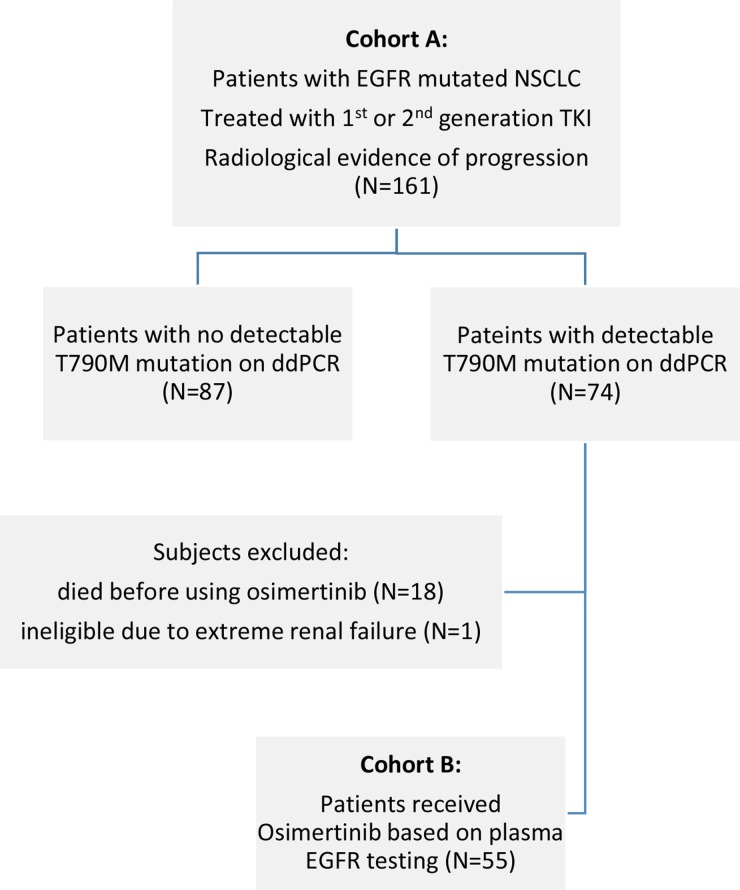
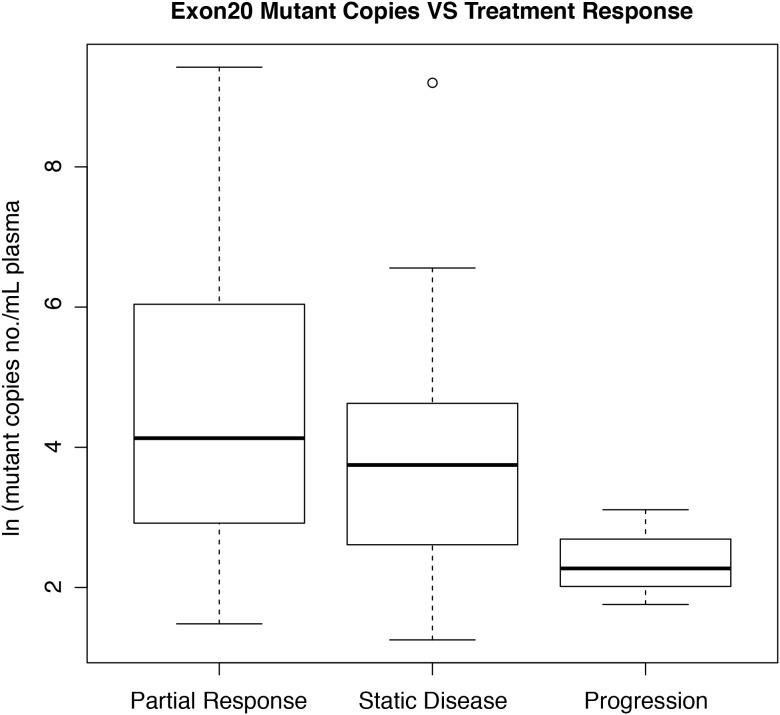
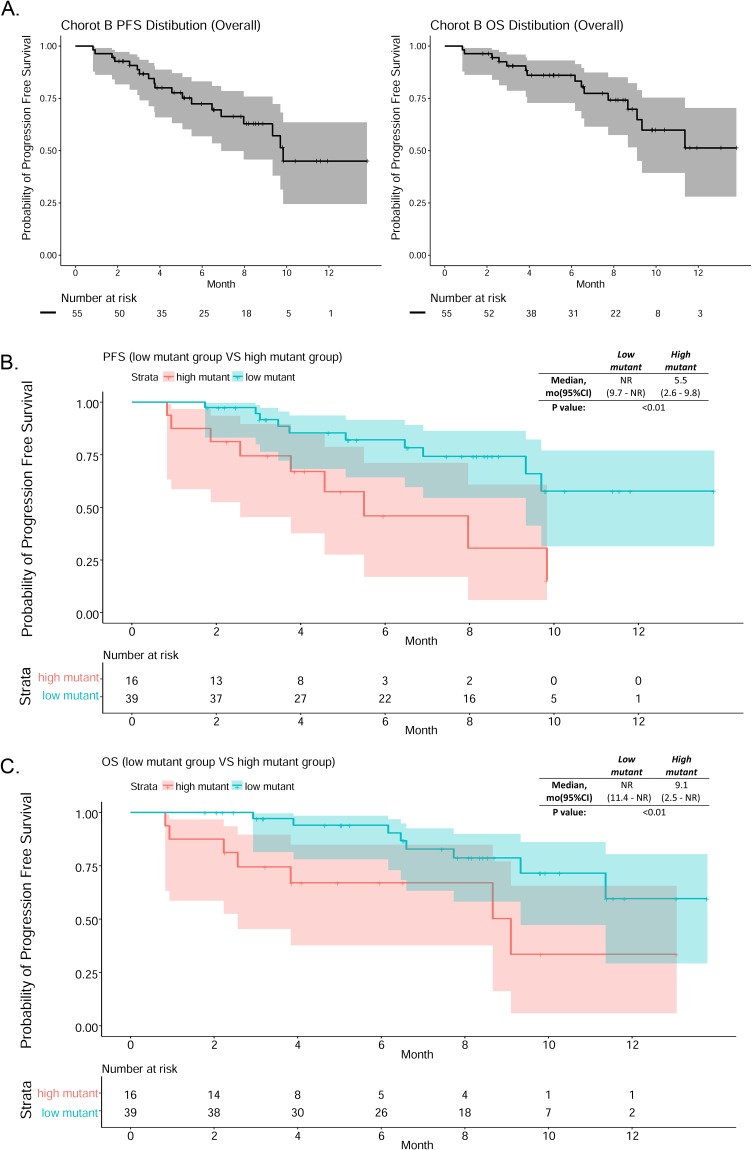
Osimertinib prolongs progression-free survival (PFS) in patients with metastatic, epidermal growth factor receptor (EGFR) T790M-mutated, non-small cell lung cancer (NSCLC) after failure of EGFR tyrosine kinase inhibitor (TKI) therapy. We investigated the utility of T790M mutant copy number quantification in a plasma cell-free DNA (cfDNA) assay for predicting clinical outcomes of osimertinib treatment. We retrospectively examined 161 patients who underwent plasma EGFR testing using a digital droplet polymerase chain reaction (ddPCR) technique after EGFR-TKI failure. Of the 74 (46%) patients with detectable T790M mutations in plasma, 55 received osimertinib treatment. Patients who achieved partial response had a higher plasma mutant copy levels than those with progressive disease. Patients who achieved stable disease also tended to have higher plasma mutant copy levels than those with progressive disease. High mutant copy number (≥ 105 per mL of plasma) was associated with shorter PFS (median: 5.5 months vs. not reached) and overall survival (median: 9.1 months vs. NR). Quantitative measurements of T790M mutant copy number in plasma cfDNA by ddPCR thus predicted treatment response and survival outcomes after osimertinib in NSCLC patients resistant to EGFR TKI.
奥希替尼可延长转移性表皮生长因子受体(EGFR)T790M突变的非小细胞肺癌(NSCLC)患者在EGFR酪氨酸激酶抑制剂(TKI)治疗失败后的无进展生存期(PFS)。我们研究了在血浆游离DNA(cfDNA)检测中T790M突变拷贝数定量对预测奥希替尼治疗临床结局的实用性。我们回顾性分析了161例在EGFR-TKI治疗失败后使用数字液滴聚合酶链反应(ddPCR)技术进行血浆EGFR检测的患者。在74例(46%)血浆中可检测到T790M突变的患者中,55例接受了奥希替尼治疗。达到部分缓解的患者血浆突变拷贝水平高于疾病进展的患者。病情稳定的患者血浆突变拷贝水平也往往高于疾病进展的患者。高突变拷贝数(≥每毫升血浆105个)与较短的PFS(中位数:5.5个月对未达到)和总生存期(中位数:9.1个月对未达到)相关。因此,通过ddPCR对血浆cfDNA中T790M突变拷贝数进行定量测量可预测EGFR TKI耐药的NSCLC患者接受奥希替尼治疗后的反应和生存结局。