Division of Molecular Hematology, Lund Stem Cell Center, Department of Laboratory Medicine, Lund University, 22184 Lund, Sweden.
Department of Clinical and Experimental Medicine, Linköping University, SE-581 85 Linköping, Sweden.
Int J Mol Sci. 2018 Jun 30;19(7):1928. doi: 10.3390/ijms19071928.
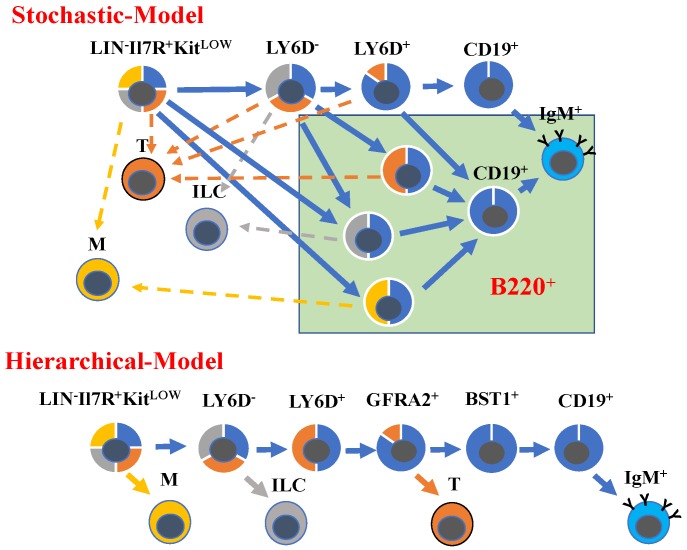
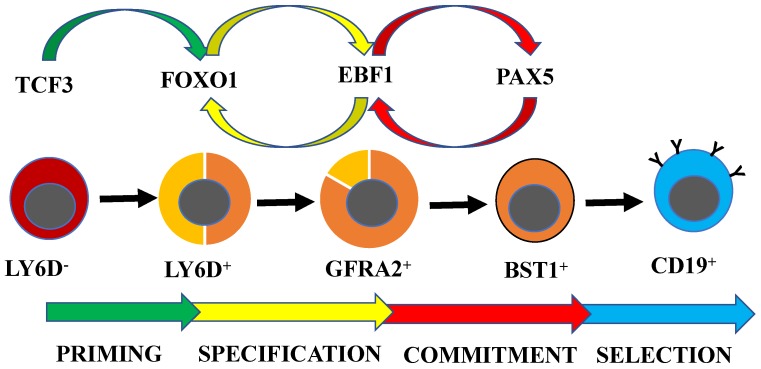
B-lymphocyte differentiation is one of the best understood developmental pathways in the hematopoietic system. Our understanding of the developmental trajectories linking the multipotent hematopoietic stem cell to the mature functional B-lymphocyte is extensive as a result of efforts to identify and prospectively isolate progenitors at defined maturation stages. The identification of defined progenitor compartments has been instrumental for the resolution of the molecular features that defines given developmental stages as well as for our understanding of the mechanisms that drive the progressive maturation process. Over the last years it has become increasingly clear that the regulatory networks that control normal B-cell differentiation are targeted by mutations in human B-lineage malignancies. This generates a most interesting link between development and disease that can be explored to improve diagnosis and treatment protocols in lymphoid malignancies. The aim of this review is to provide an overview of our current understanding of molecular regulation in normal and malignant B-cell development.
B 淋巴细胞分化是造血系统中研究得最透彻的发育途径之一。由于努力识别和前瞻性分离处于特定成熟阶段的祖细胞,我们对将多能造血干细胞与成熟功能 B 淋巴细胞联系起来的发育轨迹有了广泛的了解。明确祖细胞隔室的鉴定对于解析定义特定发育阶段的分子特征以及理解驱动渐进成熟过程的机制都至关重要。在过去的几年中,越来越明显的是,控制正常 B 细胞分化的调控网络是人类 B 细胞恶性肿瘤突变的靶点。这在发育和疾病之间产生了一个非常有趣的联系,可以探索该联系来改善淋巴恶性肿瘤的诊断和治疗方案。本文综述的目的是提供对正常和恶性 B 细胞发育中分子调控的最新理解。