Laboratory for Immune Regeneration, RIKEN Center for Integrative Medical Sciences, Yokohama 230-0045, Japan.
Laboratory for Developmental Genetics, RIKEN Center for Integrative Medical Sciences, Yokohama 230-0045, Japan.
Genes Dev. 2018 Jan 15;32(2):112-126. doi: 10.1101/gad.309575.117. Epub 2018 Feb 9.
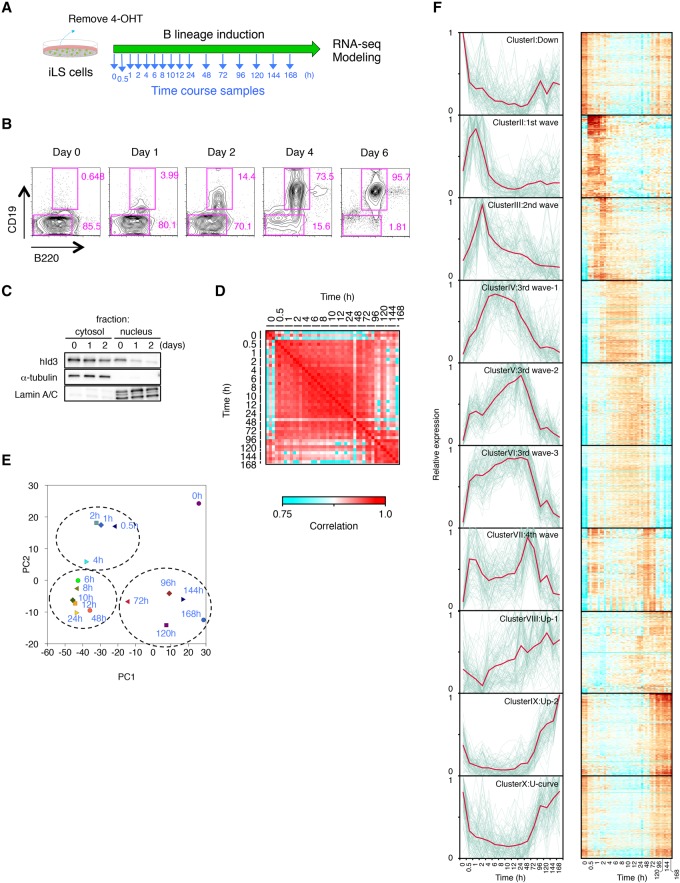
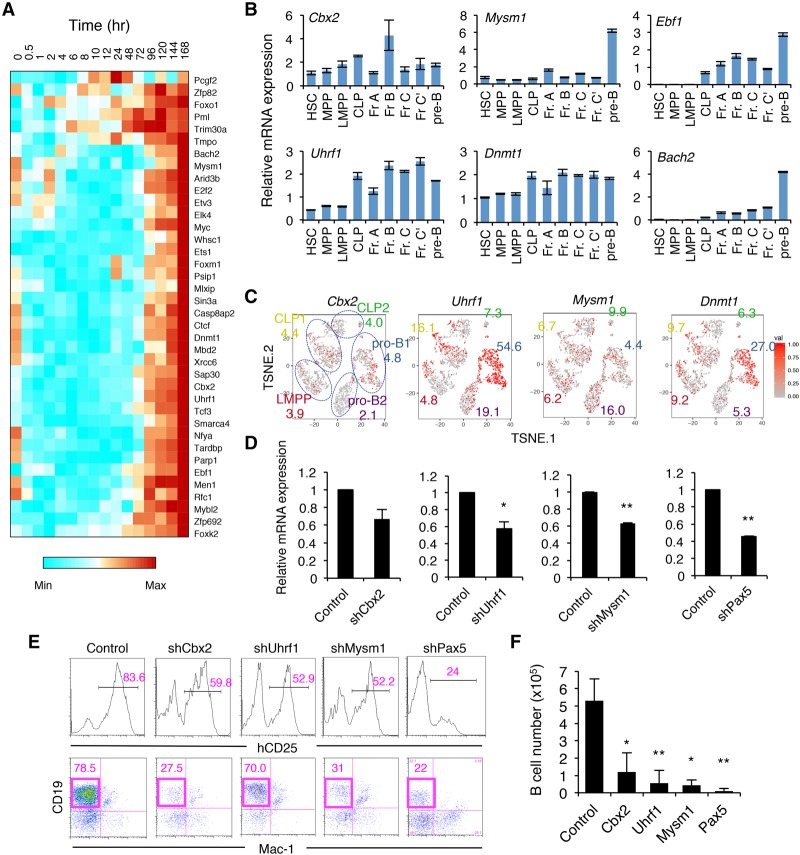
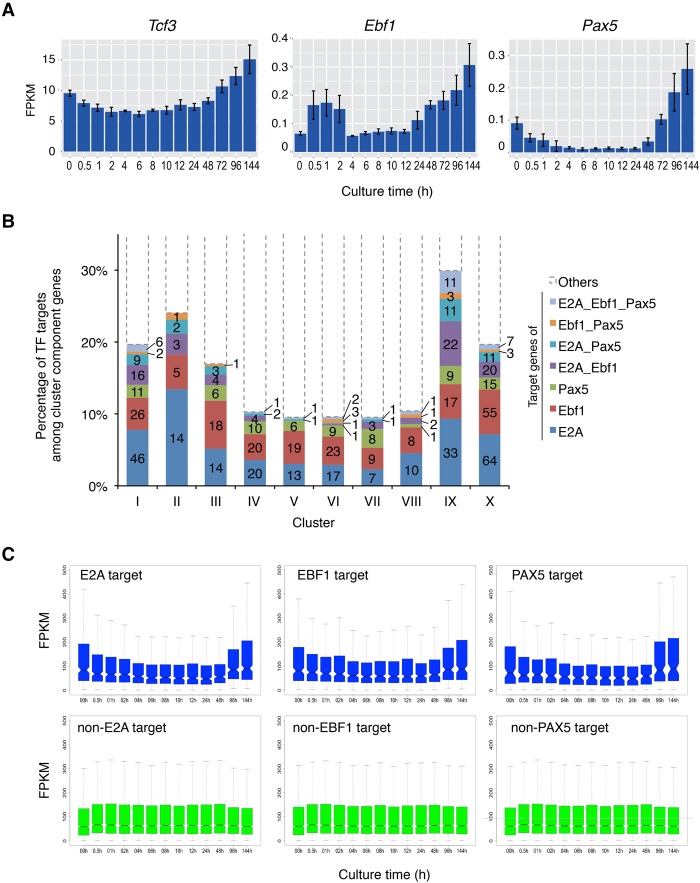
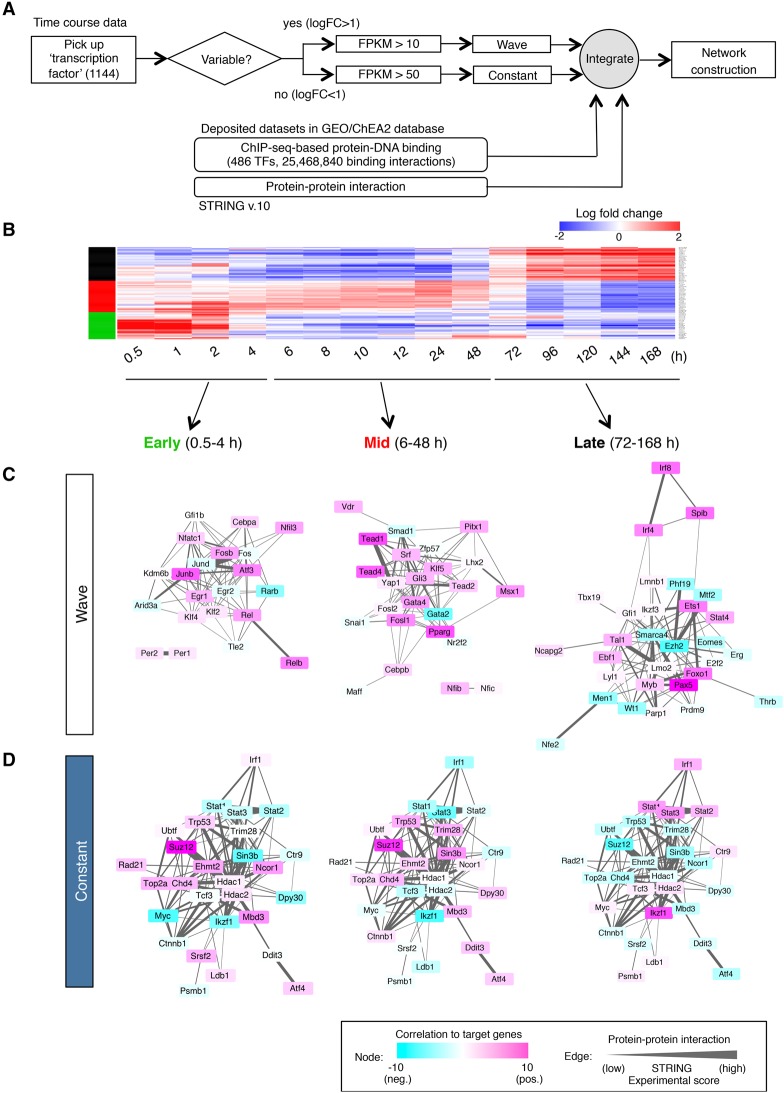
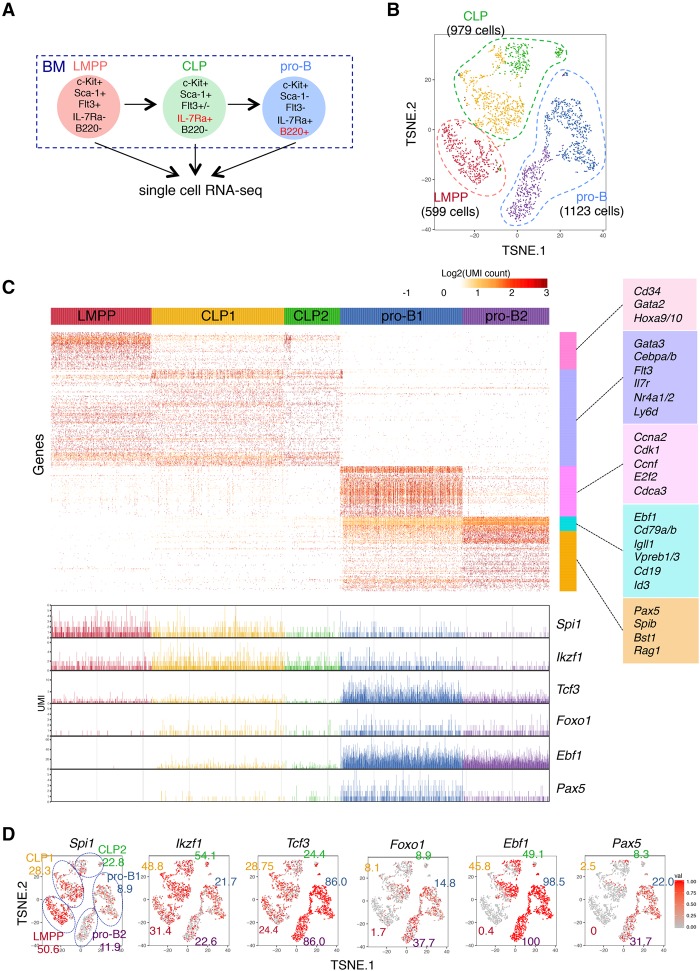
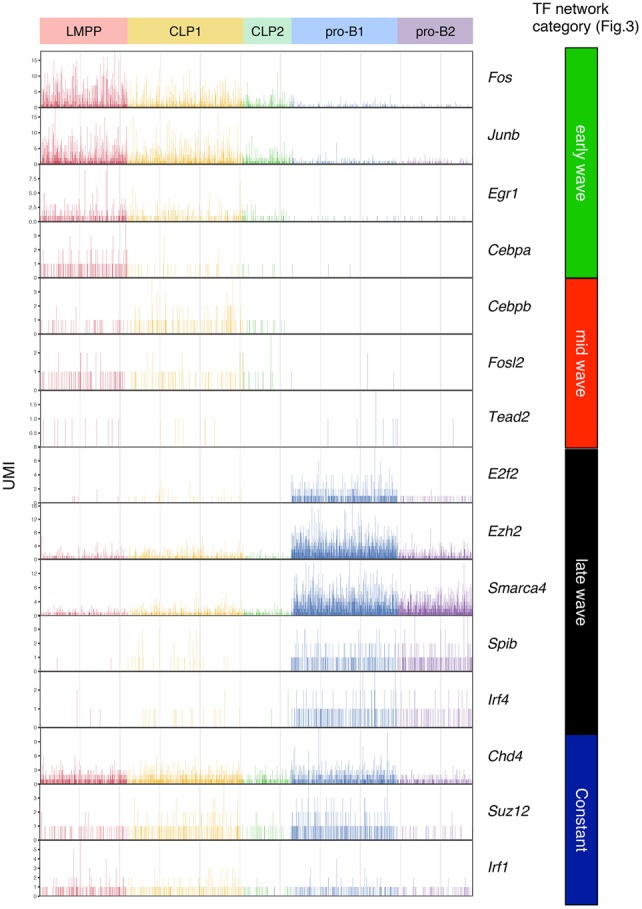
Stem cell fate is orchestrated by core transcription factors (TFs) and epigenetic modifications. Although regulatory genes that control cell type specification are identified, the transcriptional circuit and the cross-talk among regulatory factors during cell fate decisions remain poorly understood. To identify the "time-lapse" TF networks during B-lineage commitment, we used multipotent progenitors harboring a tamoxifen-inducible form of Id3, an in vitro system in which virtually all cells became B cells within 6 d by simply withdrawing 4-hydroxytamoxifen (4-OHT). Transcriptome and epigenome analysis at multiple time points revealed that ∼10%-30% of differentially expressed genes were virtually controlled by the core TFs, including E2A, EBF1, and PAX5. Strikingly, we found unexpected transcriptional priming before the onset of the key TF program. Inhibition of the immediate early genes such as , , and severely impaired the generation of B cells. Integration of multiple data sets, including transcriptome, protein interactome, and epigenome profiles, identified three representative transcriptional circuits. Single-cell RNA sequencing (RNA-seq) analysis of lymphoid progenitors in bone marrow strongly supported the three-step TF network model during specification of multipotent progenitors toward B-cell lineage in vivo. Thus, our findings will provide a blueprint for studying the normal and neoplastic development of B lymphocytes.
干细胞命运由核心转录因子(TFs)和表观遗传修饰调控。虽然已经确定了控制细胞类型特化的调节基因,但在细胞命运决策过程中,转录回路和调节因子之间的串扰仍知之甚少。为了鉴定 B 细胞谱系承诺过程中的“实时”TF 网络,我们使用携带他莫昔芬诱导型 Id3 的多能祖细胞,这是一种体外系统,只需去除 4-羟他莫昔芬(4-OHT),实际上所有细胞在 6 天内都成为 B 细胞。在多个时间点进行转录组和表观基因组分析表明,大约 10%-30%的差异表达基因实际上受到核心 TF 的控制,包括 E2A、EBF1 和 PAX5。引人注目的是,我们发现了关键 TF 程序开始前的意外转录启动。早期基因如 、 和 的抑制严重损害了 B 细胞的生成。多个数据集的整合,包括转录组、蛋白质互作组和表观基因组图谱,确定了三个有代表性的转录回路。骨髓中淋巴祖细胞的单细胞 RNA 测序(RNA-seq)分析强烈支持了体内多能祖细胞向 B 细胞谱系特化过程中的三步骤 TF 网络模型。因此,我们的研究结果将为研究 B 淋巴细胞的正常和肿瘤发育提供蓝图。