Feinstein Institute for Medical Research and Hofstra Northwell Medical School, Manhasset, NY, U.S.A.
Key Laboratory for Aging and Regenerative Medicine, School of Pharmacy, Southwest Medical University, Luzhou, Sichuan, China
Biosci Rep. 2018 Aug 29;38(4). doi: 10.1042/BSR20171713. Print 2018 Aug 31.
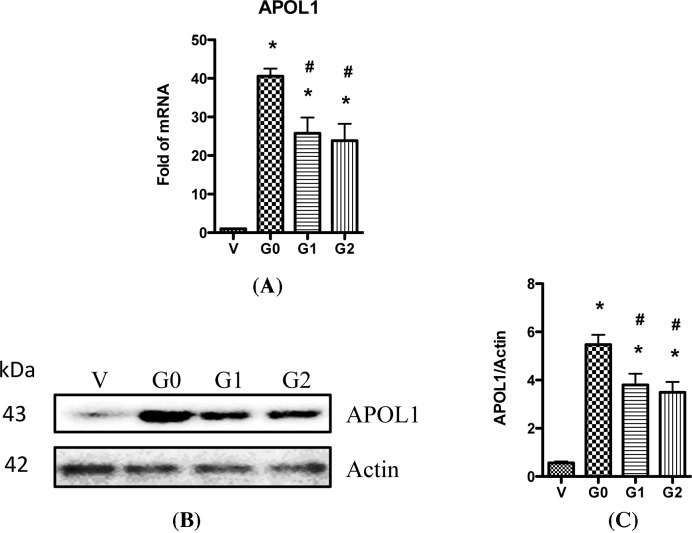
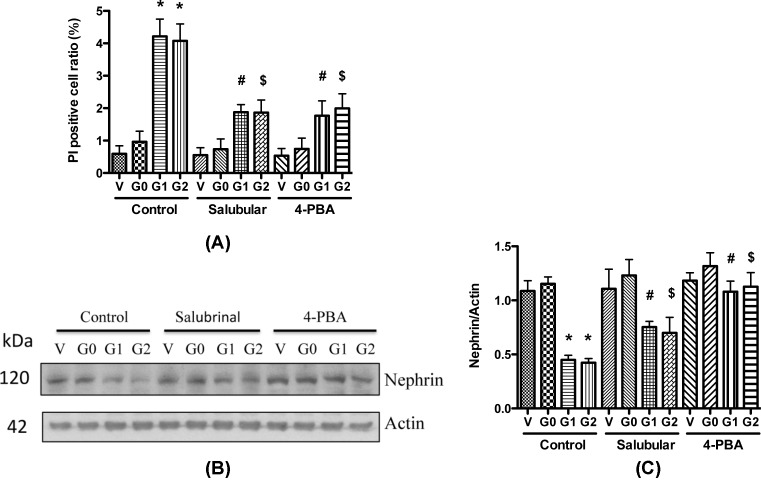
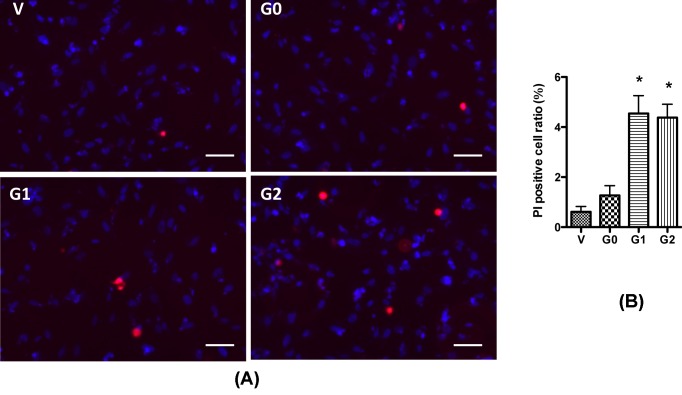
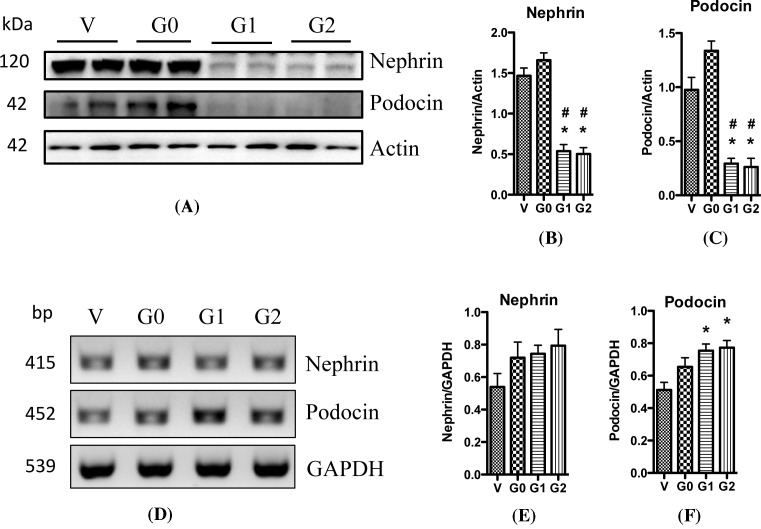
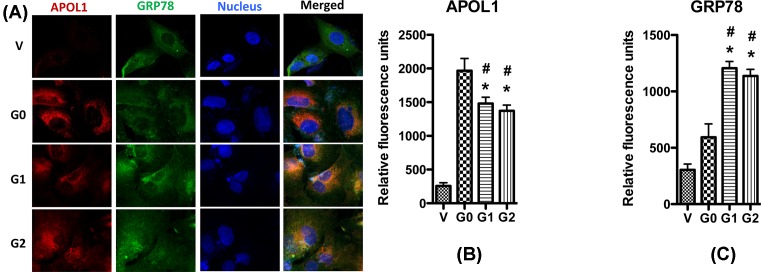
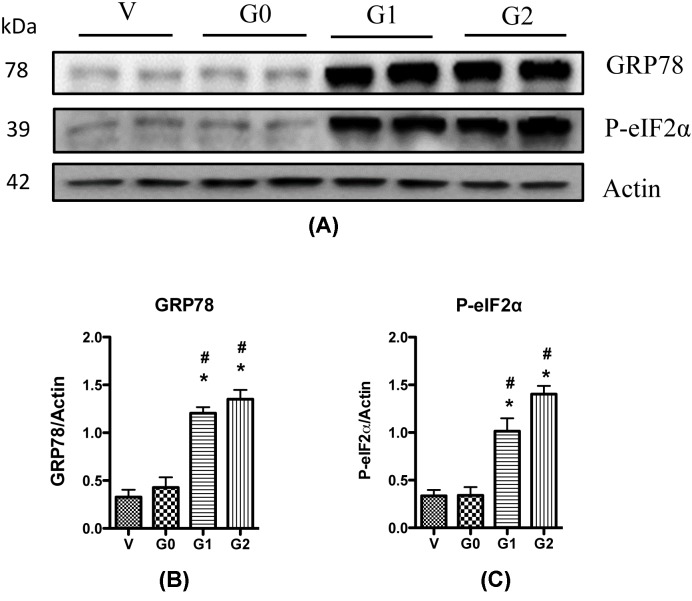
Two coding sequence variants (G1 and G2) of Apolipoprotein L1 () gene have been implicated as a higher risk factor for chronic kidney diseases (CKD) in African Americans when compared with European Americans. Previous studies have suggested that the APOL1 G1 and G2 variant proteins are more toxic to kidney cells than the wild-type APOL1 G0, but the underlying mechanisms are poorly understood. To determine whether endoplasmic reticulum (ER) stress contributes to podocyte toxicity, we generated human podocytes (HPs) that stably overexpressed APOL1 G0, G1, or G2 (Vec/HPs, G0/HPs, G1/HPs, and G2/HPs). Propidium iodide staining showed that HP overexpressing the APOL1 G1 or G2 variant exhibited a higher rate of necrosis when compared with those overexpressing the wild-type G0 counterpart. Consistently, the expression levels of nephrin and podocin proteins were significantly decreased in the G1- or G2-overexpressing cells despite the maintenance of their mRNA expressions levels. In contrast, the expression of the 78-kDa glucose-regulated protein ((GRP78), also known as the binding Ig protein, BiP) and the phosphorylation of the eukaryotic translation initiation factor 1 (eIF1) were significantly elevated in the G1/HPs and G2/HPs, suggesting a possible occurrence of ER stress in these cells. Furthermore, ER stress inhibitors not only restored nephrin protein expression, but also provided protection against necrosis in G1/HPs and G2/HPs, suggesting that APOL1 risk variants cause podocyte injury partly through enhancing ER stress.
载脂蛋白 L1()基因的两个编码序列变异体(G1 和 G2)被认为是非洲裔美国人慢性肾脏病(CKD)的更高风险因素,与欧洲裔美国人相比。先前的研究表明,APOL1 G1 和 G2 变异蛋白比野生型 APOL1 G0 对肾细胞更具毒性,但潜在机制尚不清楚。为了确定内质网(ER)应激是否导致足细胞毒性,我们生成了稳定过表达 APOL1 G0、G1 或 G2 的人足细胞(HPs)(Vec/HPs、G0/HPs、G1/HPs 和 G2/HPs)。碘化丙啶染色显示,与过表达野生型 G0 对应物的 HP 相比,过表达 APOL1 G1 或 G2 变体的 HP 表现出更高的坏死率。一致地,尽管维持其 mRNA 表达水平,但在 G1 或 G2 过表达的细胞中,nephrin 和 podocin 蛋白的表达水平显著降低。相比之下,在 G1/HPs 和 G2/HPs 中,78kDa 葡萄糖调节蛋白((GRP78),也称为结合 Ig 蛋白,BiP)的表达和真核翻译起始因子 1(eIF1)的磷酸化水平显著升高,表明这些细胞中可能发生内质网应激。此外,内质网应激抑制剂不仅恢复了 nephrin 蛋白的表达,而且还为 G1/HPs 和 G2/HPs 中的坏死提供了保护,表明 APOL1 风险变体通过增强内质网应激导致足细胞损伤。