Applied Statistics Unit, Indian Statistical Institute, 203 B.T. Road, Kolkata, 700108, West Bengal, India.
Department of Zoology, Pingla Thana Mahavidyalaya, Paschim Medinipur, 722140, West Bengal, India.
Sci Rep. 2018 Jul 2;8(1):9974. doi: 10.1038/s41598-018-28289-x.
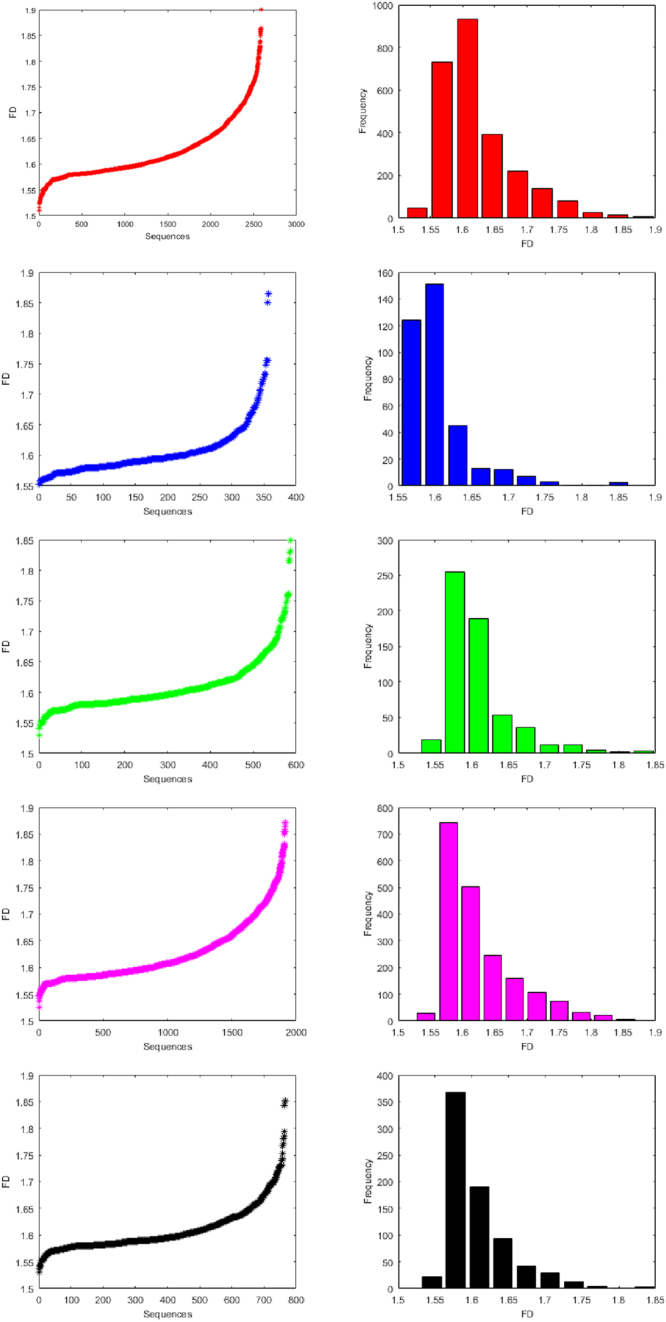
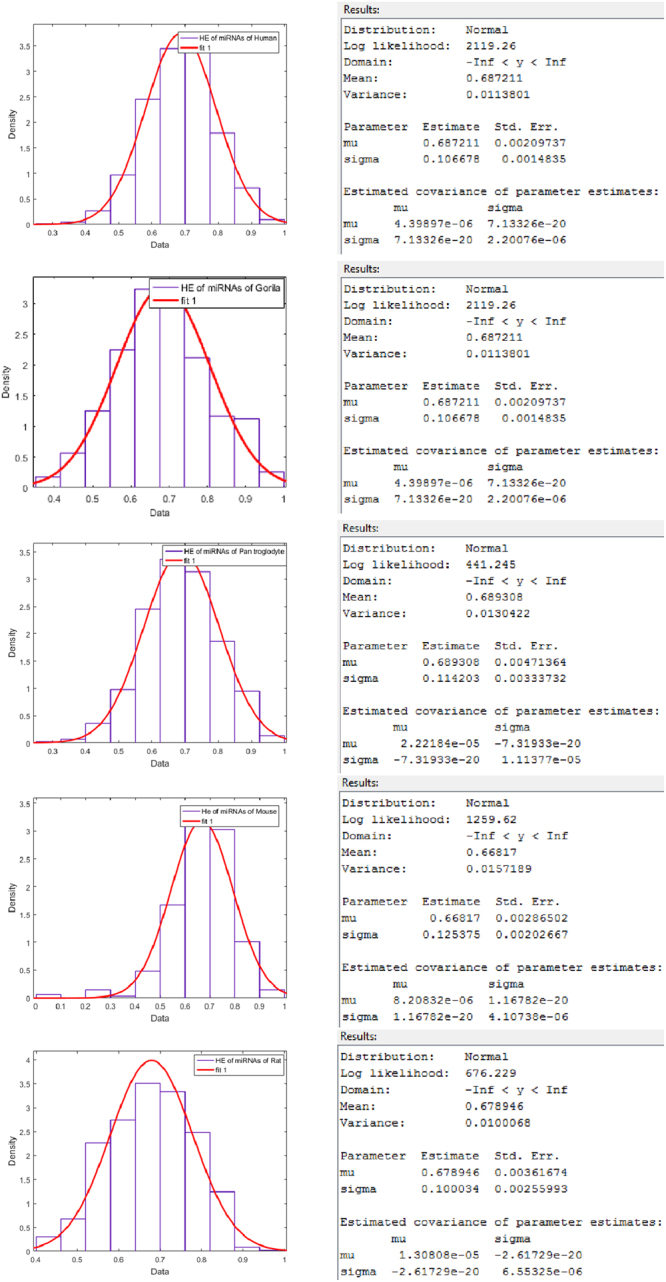
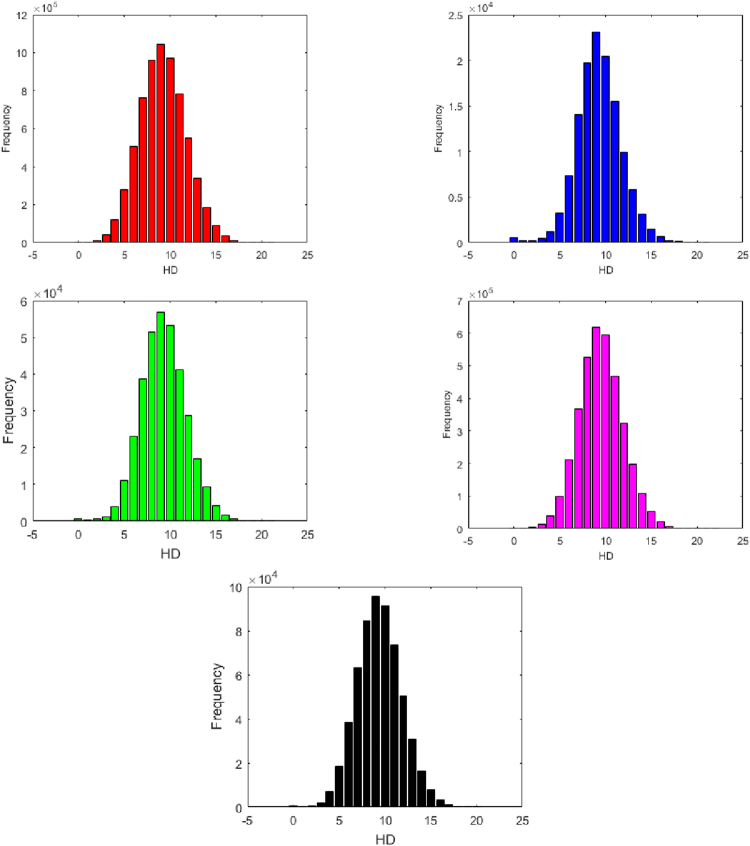
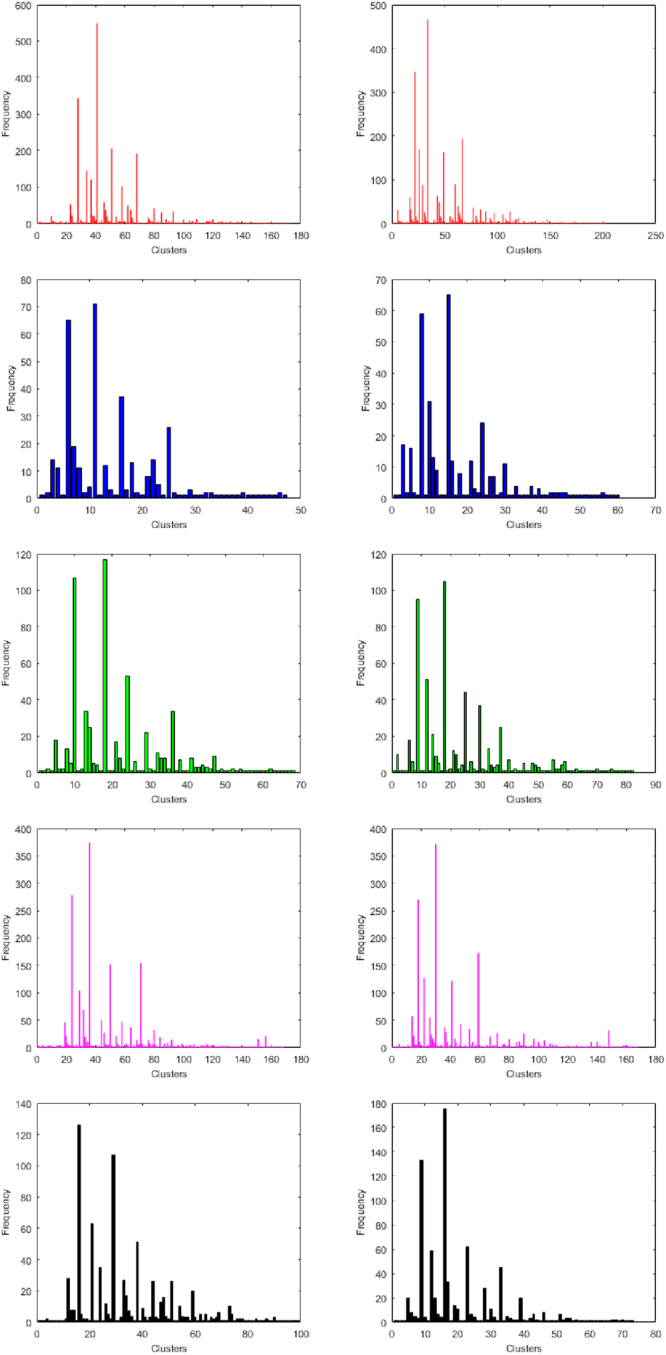
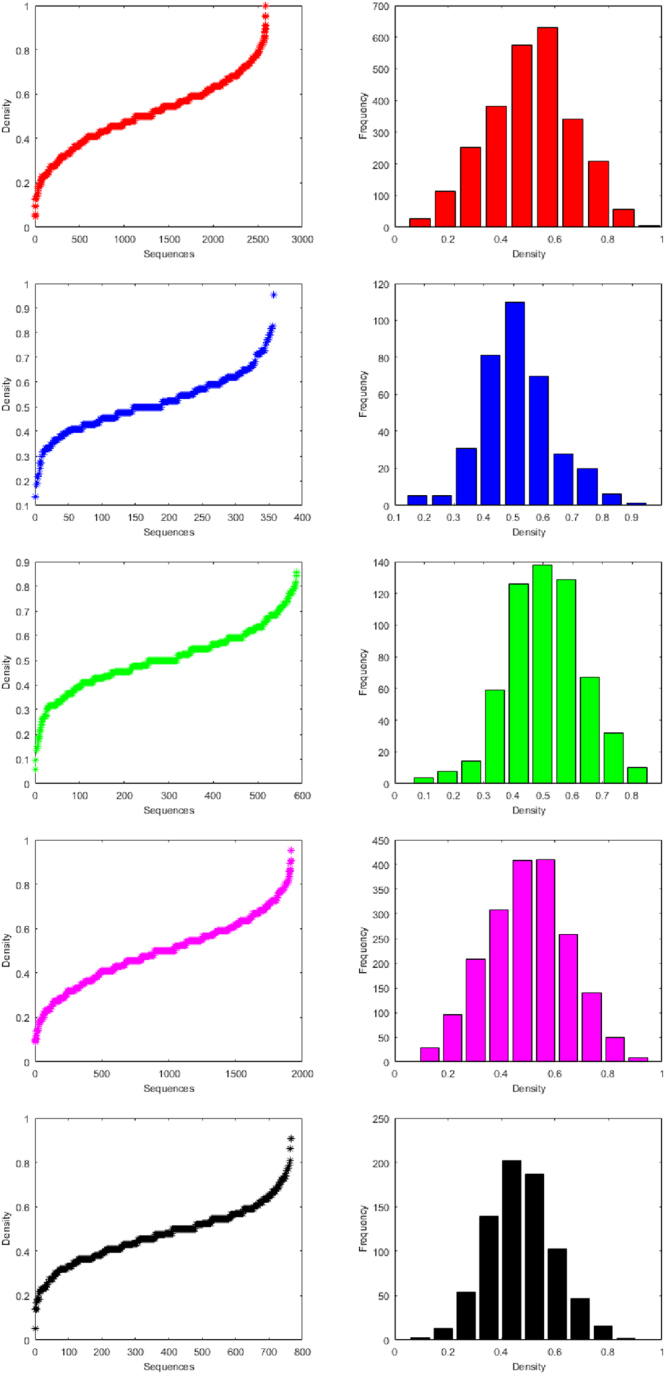
Meaningful words in English need vowels to break up the sounds that consonants make. The Nature has encoded her messages in RNA molecules using only four alphabets A, U, C and G in which the nine member double-ring bases (adenine (A) and Guanine (G)) are purines, while the six member single-ring bases (cytosine (C) and uracil (U)) are pyrimidines. Four bases A, U, C and G of RNA sequences are divided into three kinds of classifications according to their chemical properties. One of the three classifications, the purine-pyrimidine class is important. In understanding the distribution (organization) of purines and pyrimidines over some of the non-coding RNAs, all miRNAs of the three species (human, gorilla and chimpanzee) of Hominidae family and two species (mouse and rat) from of Muridae family are considered. The distribution of purines and pyrimidines over miRNA shows deviation from randomness. Based on the quantitative metrics (fractal dimension, Hurst exponent, Hamming distance, distance pattern of purine-pyrimidine, density distribution of purine-pyrimidine and Shannon entropy) five different clusters have been made for the five species. We have observed some couple of results including the closeness of different clusters among the five species.
英文中有意义的单词需要元音来打破辅音的发音。大自然仅使用四个字母 A、U、C 和 G 将她的信息编码在 RNA 分子中,其中九个成员双环碱基(腺嘌呤 (A) 和鸟嘌呤 (G)) 是嘌呤,而六个成员单环碱基(胞嘧啶 (C) 和尿嘧啶 (U)) 是嘧啶。RNA 序列的四个碱基 A、U、C 和 G 根据其化学性质分为三类。其中一类,嘌呤嘧啶类是重要的。在理解某些非编码 RNA 中嘌呤和嘧啶的分布(组织)时,考虑了人科(Hominidae)三种物种(人类、大猩猩和黑猩猩)和两种物种(鼠和大鼠)的所有 miRNA。miRNA 中嘌呤和嘧啶的分布偏离随机性。基于定量指标(分形维数、赫斯特指数、汉明距离、嘌呤嘧啶距离模式、嘌呤嘧啶密度分布和香农熵),对五个物种进行了五个不同的聚类。我们观察到了一些结果,包括五个物种之间不同聚类的接近程度。