The MOE Key Laboratory of Cell Proliferation and Differentiation, School of Life Sciences, Peking University, Beijing, 100871, China.
Department of Human Population Genetics, Human Aging Research Institute and School of Life Science, Nanchang University, Nanchang, 330031, China.
Nat Commun. 2018 Jul 2;9(1):2560. doi: 10.1038/s41467-018-04994-z.
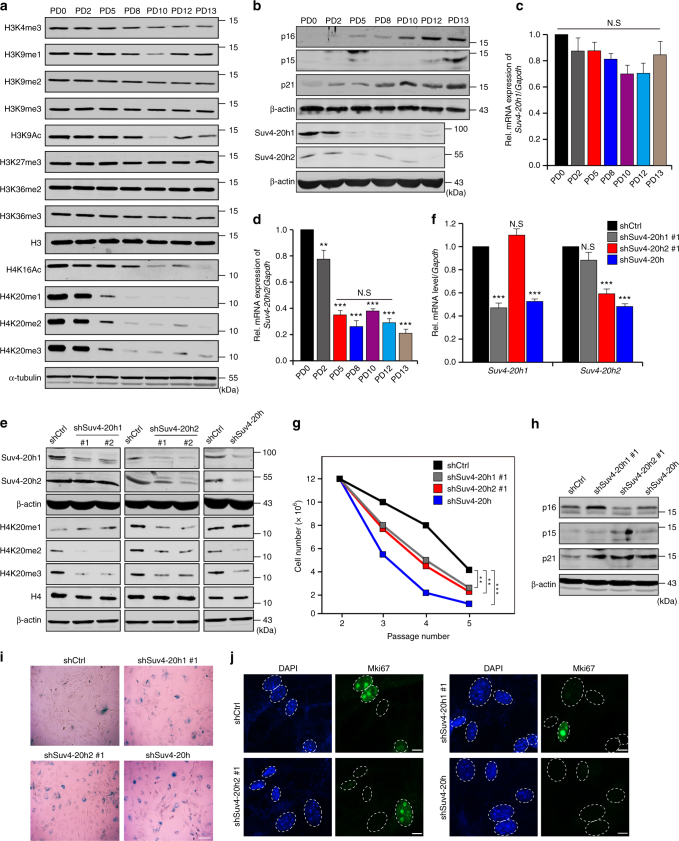
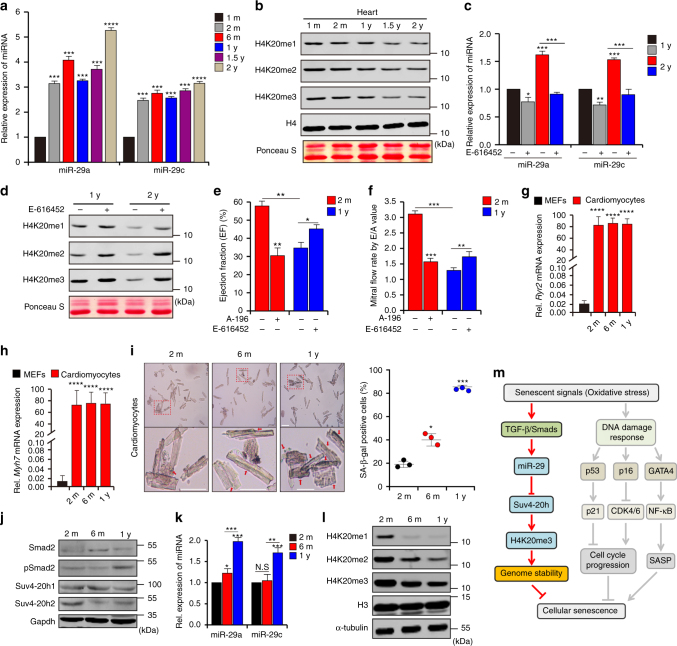
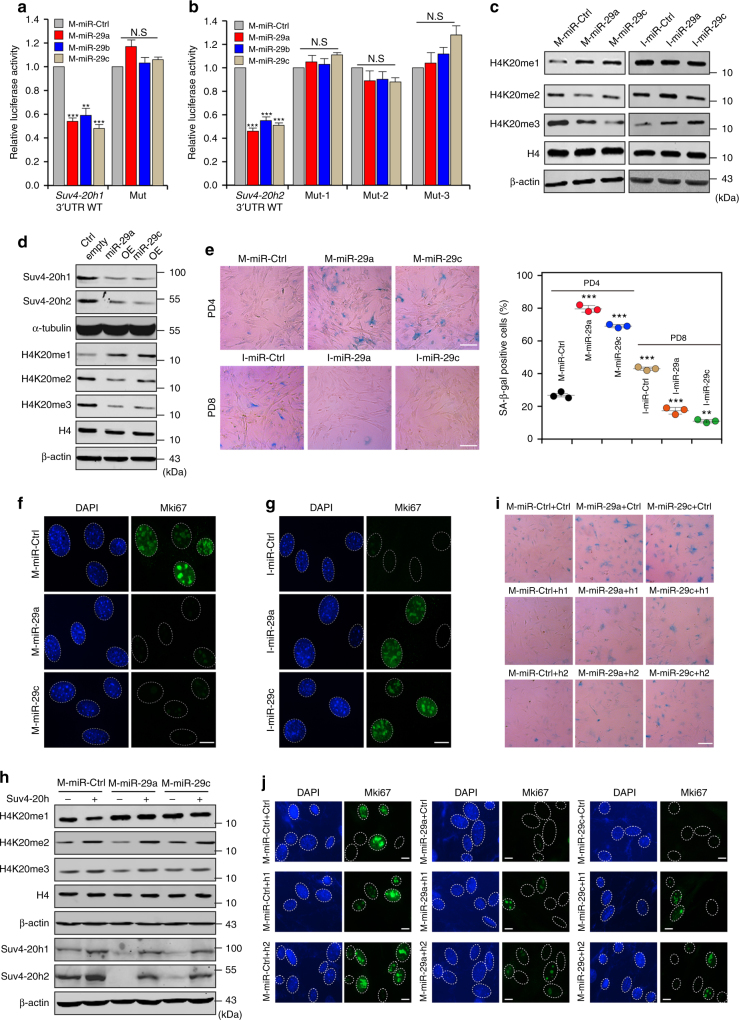
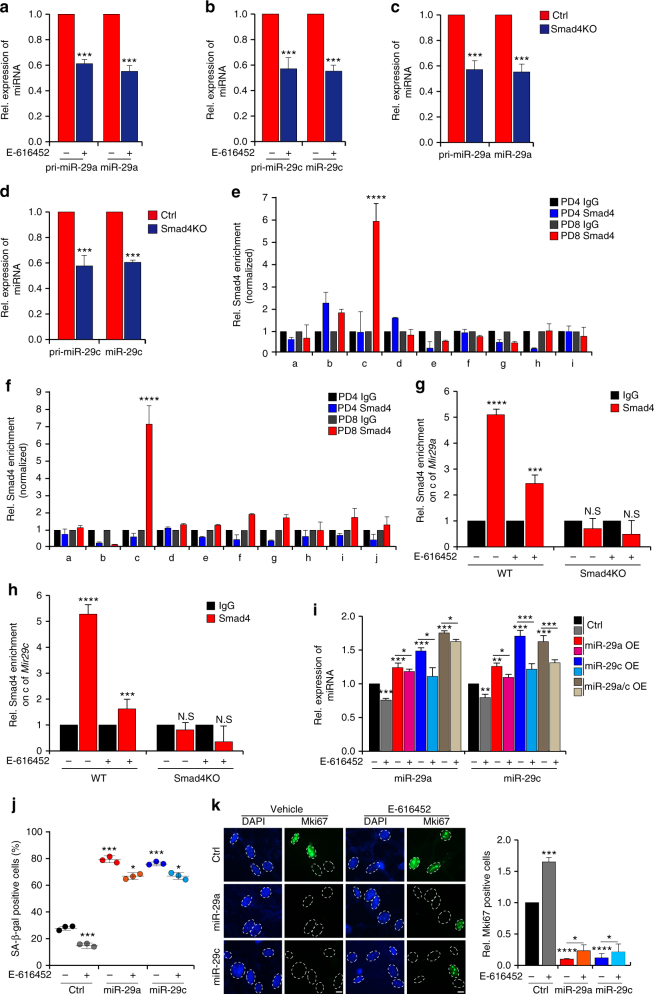
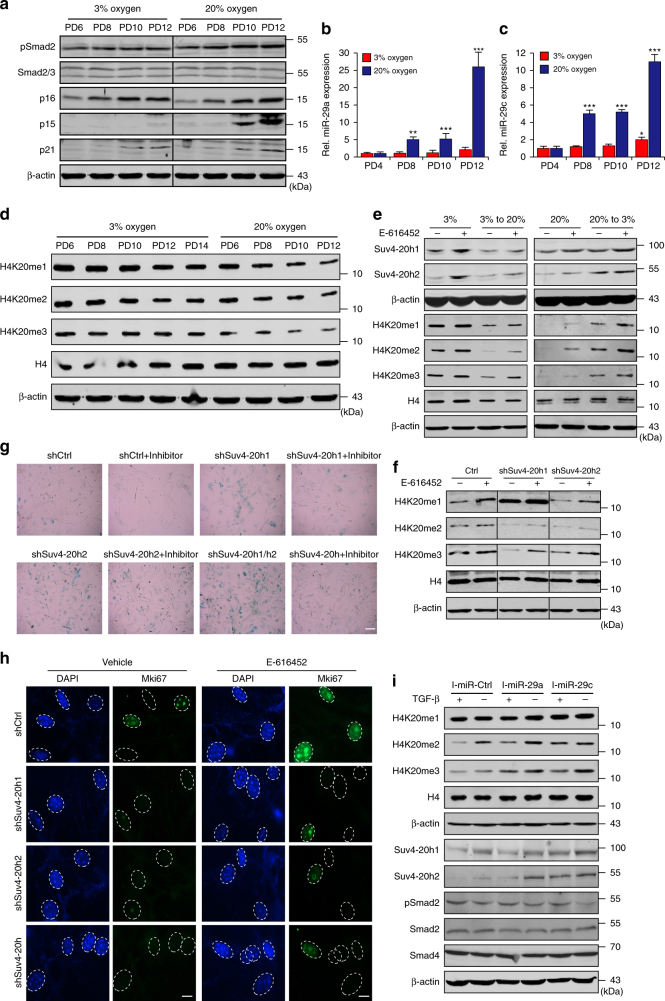
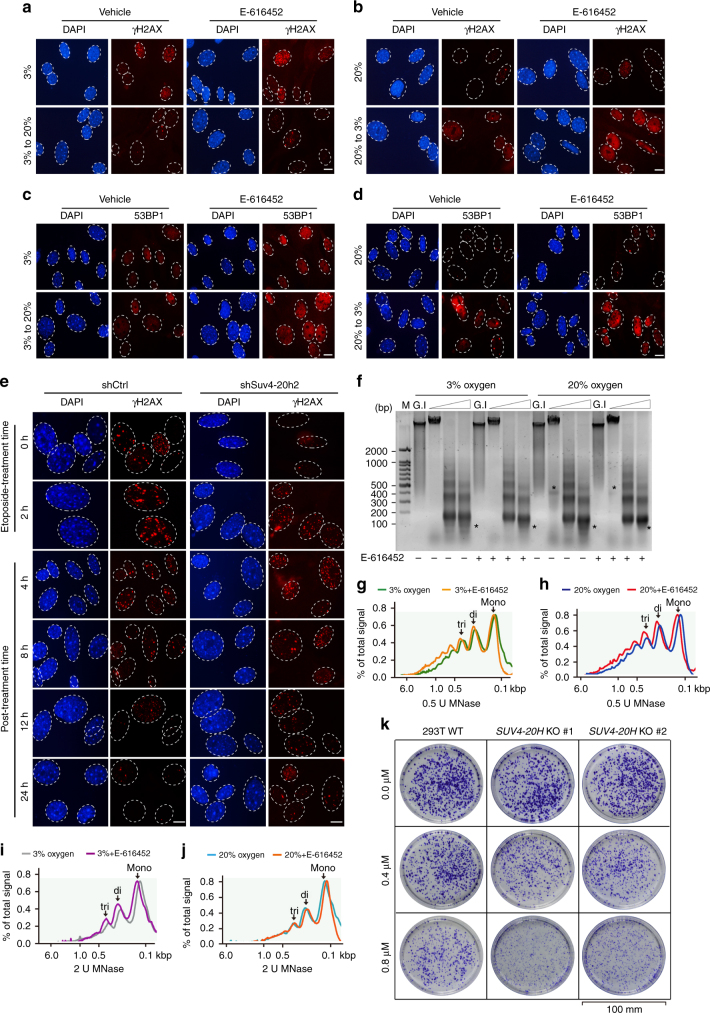
Cellular senescence is a well-orchestrated programmed process involved in age-related pathologies, tumor suppression and embryonic development. TGF-β/Smad is one of the predominant pathways that regulate damage-induced and developmentally programmed senescence. Here we show that canonical TGF-β signaling promotes senescence via miR-29-induced loss of H4K20me3. Mechanistically, oxidative stress triggers TGF-β signaling. Activated TGF-β signaling gives rise to acute accumulation of miR-29a and miR-29c, both of which directly suppress their novel target, Suv4-20h, thus reducing H4K20me3 abundance in a Smad-dependent manner, which compromises DNA damage repair and genome maintenance. Loss of H4K20me3 mediated by the senescent TGF-β/miR-29 pathway contributes to cardiac aging in vivo. Disruption of TGF-β signaling restores H4K20me3 and improves cardiac function in aged mice. Our study highlights the sequential mechanisms underlying the regulation of senescence, from senescence-inducing triggers to activation of responsive signaling followed by specific epigenetic alterations, shedding light on potential therapeutic interventions in cardiac aging.
细胞衰老(cellular senescence)是一种涉及与年龄相关的病理学、肿瘤抑制和胚胎发育的精心协调的程序化过程。TGF-β/Smad 是调节损伤诱导和发育程序化衰老的主要途径之一。在这里,我们表明经典的 TGF-β 信号通过 miR-29 诱导的 H4K20me3 丧失来促进衰老。在机制上,氧化应激触发 TGF-β 信号。激活的 TGF-β 信号导致 miR-29a 和 miR-29c 的急性积累,两者都直接抑制它们的新靶标 Suv4-20h,从而以 Smad 依赖性方式降低 H4K20me3 的丰度,这会损害 DNA 损伤修复和基因组维护。衰老的 TGF-β/miR-29 途径介导的 H4K20me3 丧失导致体内心脏衰老。破坏 TGF-β 信号会恢复 H4K20me3 并改善老年小鼠的心脏功能。我们的研究强调了衰老调控的顺序机制,从衰老诱导触发到响应信号的激活,再到特定的表观遗传改变,为心脏衰老的潜在治疗干预提供了线索。