Lab of Biochemistry & Molecular Biology, School of Life Sciences, Yunnan University, Kunming, Yunnan, 650091, China.
Key Lab of Molecular Cancer Biology, Yunnan Education Department, Kunming, Yunnan, 650091, China.
Sci Rep. 2018 Jul 3;8(1):9993. doi: 10.1038/s41598-018-28404-y.
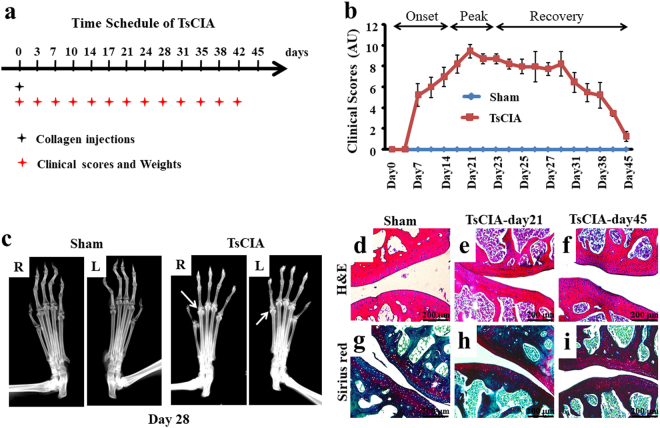
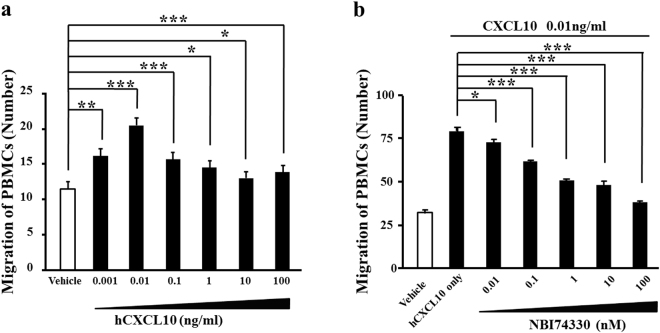
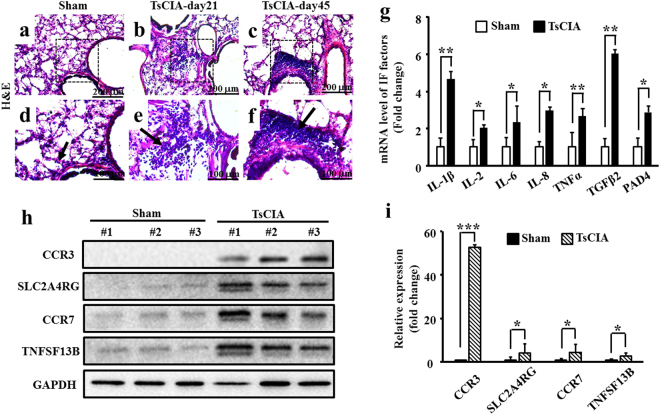
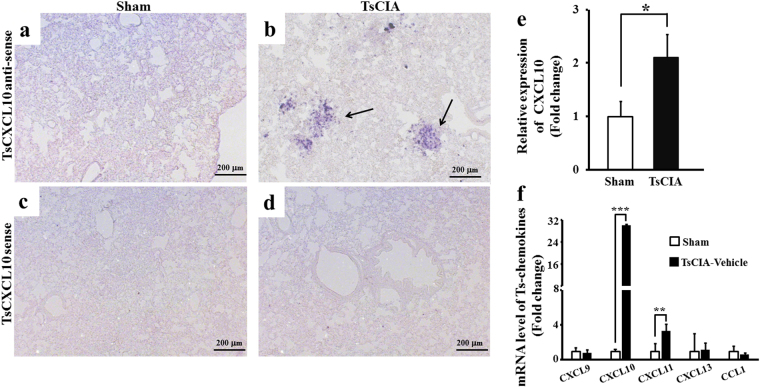
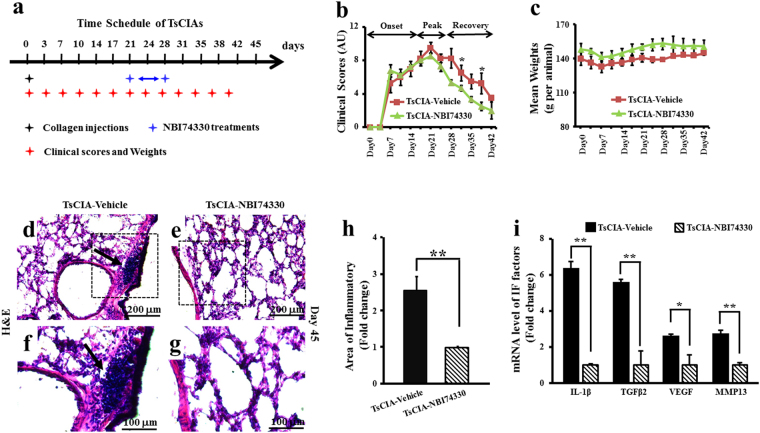
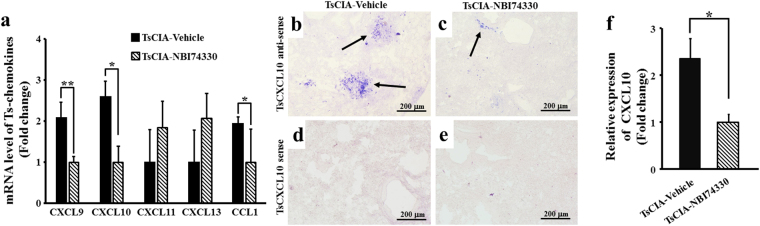
Chronic pulmonary inflammation (CPI) gives rise to serious lung injuries in rheumatoid arthritis (RA) patients. However, the molecular mechanism underlying the pathogenesis of RA-associated CPI remains little understood. Here we established a novel tree shrew-based collagen-induced arthritis (TsCIA) model to study RA-associated CPI. Our results showed that typical CPI but not fibrosis developed pathologically in the TsCIA model. Furthermore, abnormal up-regulation of pulmonary chemokine CXCL10 was directly associated with lung damage. Specific blockage of CXCR3 (a CXCL10 receptor) significantly decreased the severity of CPI by decreasing the recruitment of inflammatory cells. Therefore, CXCL10 is proposed as a key player responsible for the development of TsCIA-associated CPI. Our findings also suggest that CXCR3 could be developed as a potential diagnosis biomarker for RA-associated CPI.
慢性肺部炎症(CPI)可导致类风湿关节炎(RA)患者发生严重的肺部损伤。然而,RA 相关 CPI 的发病机制的分子机制仍知之甚少。在这里,我们建立了一种新的树鼩胶原诱导关节炎(TsCIA)模型来研究 RA 相关 CPI。我们的结果表明,该 TsCIA 模型中出现了典型的 CPI,但没有纤维化。此外,肺部趋化因子 CXCL10 的异常上调与肺部损伤直接相关。特异性阻断 CXCR3(CXCL10 受体)可通过减少炎症细胞的募集来显著降低 CPI 的严重程度。因此,CXCL10 被认为是导致 TsCIA 相关 CPI 发展的关键因素。我们的研究结果还表明,CXCR3 可作为 RA 相关 CPI 的潜在诊断生物标志物进行开发。