Department of Gastroenterology, Fukushima Medical University School of Medicine, Fukushima, Japan.
Department of Internal Medicine, Hanawa Kosei Hospital, Higashishirakawa, Japan.
PLoS One. 2018 Jul 3;13(7):e0198757. doi: 10.1371/journal.pone.0198757. eCollection 2018.
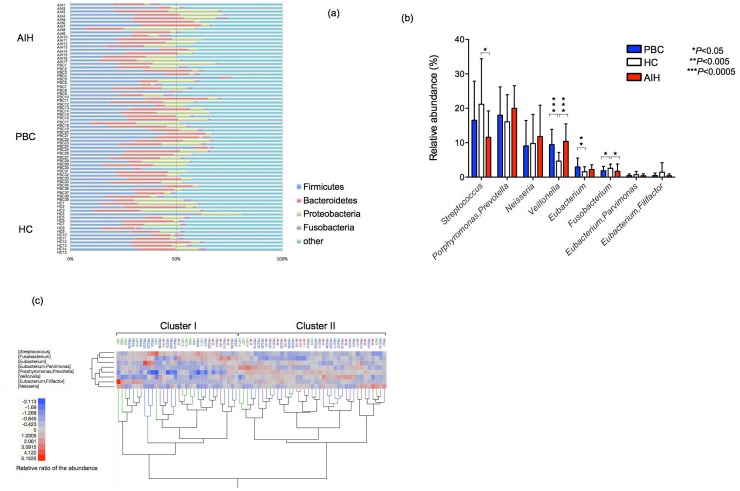
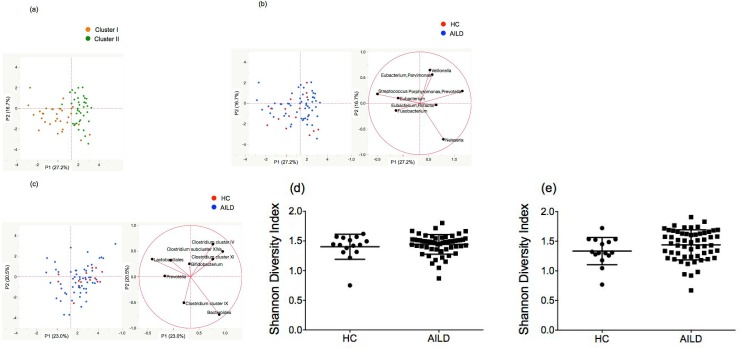
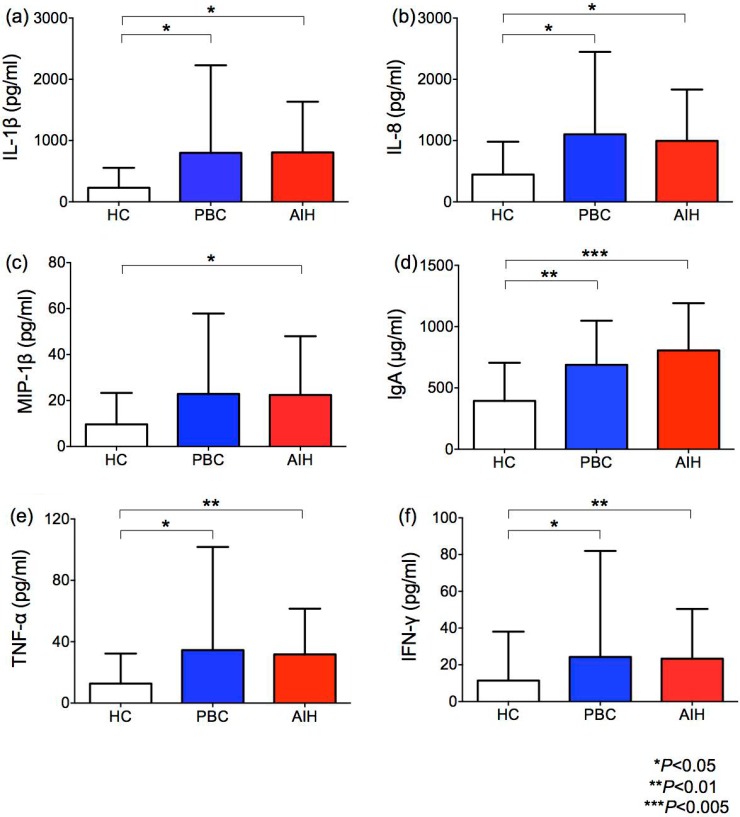
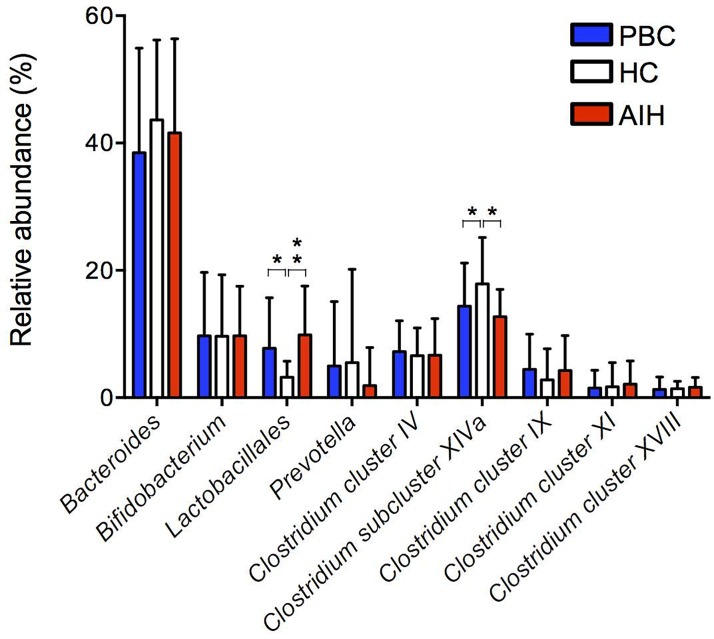
The gut microbiota has recently been recognized to play a role in the pathogenesis of autoimmune liver disease (AILD), mainly primary biliary cholangitis (PBC) and autoimmune hepatitis (AIH). This study aimed to analyze and compare the composition of the oral microbiota of 56 patients with AILD and 15 healthy controls (HCs) and to evaluate its association with salivary immunological biomarkers and gut microbiota. The subjects included 39 patients with PBC and 17 patients with AIH diagnosed at our hospital. The control population comprised 15 matched HCs. Salivary and fecal samples were collected for analysis of the microbiome by terminal restriction fragment length polymorphism of 16S rDNA. Correlations between immunological biomarkers measured by Bio-Plex assay (Bio-Rad) and the oral microbiomes of patients with PBC and AIH were assessed. Patients with AIH showed a significant increase in Veillonella with a concurrent decrease in Streptococcus in the oral microbiota compared with the HCs. Patients with PBC showed significant increases in Eubacterium and Veillonella and a significant decrease in Fusobacterium in the oral microbiota compared with the HCs. Immunological biomarker analysis showed elevated levels of inflammatory cytokines (IL-1β, IFN-γ, TNF-α, IL-8) and immunoglobulin A in the saliva of patients with AILD. The relative abundance of Veillonella was positively correlated with the levels of IL-1β, IL-8 and immunoglobulin A in saliva and the relative abundance of Lactobacillales in feces. Dysbiosis of the oral microbiota is associated with inflammatory responses and reflects changes in the gut microbiota of patients with AILD. Dysbiosis may play an important role in the pathogenesis of AILD.
肠道微生物群最近被认为在自身免疫性肝病(AILD)的发病机制中起作用,主要是原发性胆汁性胆管炎(PBC)和自身免疫性肝炎(AIH)。本研究旨在分析和比较 56 例 AILD 患者和 15 例健康对照(HC)的口腔微生物群组成,并评估其与唾液免疫生物标志物和肠道微生物群的关系。研究对象包括我院诊断的 39 例 PBC 患者和 17 例 AIH 患者。对照组包括 15 名匹配的 HC。收集唾液和粪便样本,通过 16S rDNA 末端限制性片段长度多态性分析微生物组。评估通过 Bio-Plex 检测(Bio-Rad)测量的免疫生物标志物与 PBC 和 AIH 患者口腔微生物群之间的相关性。与 HCs 相比,AIH 患者口腔微生物群中韦荣球菌显著增加,而链球菌显著减少。与 HCs 相比,PBC 患者口腔微生物群中真杆菌和韦荣球菌显著增加,梭杆菌显著减少。免疫生物标志物分析显示,AILD 患者唾液中炎症细胞因子(IL-1β、IFN-γ、TNF-α、IL-8)和免疫球蛋白 A 水平升高。韦荣球菌的相对丰度与唾液中 IL-1β、IL-8 和免疫球蛋白 A 以及粪便中乳杆菌相对丰度呈正相关。口腔微生物群失调与炎症反应有关,并反映了 AILD 患者肠道微生物群的变化。肠道微生物群失调可能在 AILD 的发病机制中起重要作用。