Laboratory of Vaccine Materials and Laboratory of Gut Environmental System, National Institutes of Biomedical Innovation, Health and Nutrition (NIBIOHN), Osaka, 567-0085, Japan.
Department of Physical Activity Research, National Institutes of Biomedical Innovation, Health and Nutrition (NIBIOHN), Tokyo, 162-8636, Japan.
Sci Rep. 2017 Jun 28;7(1):4339. doi: 10.1038/s41598-017-04511-0.
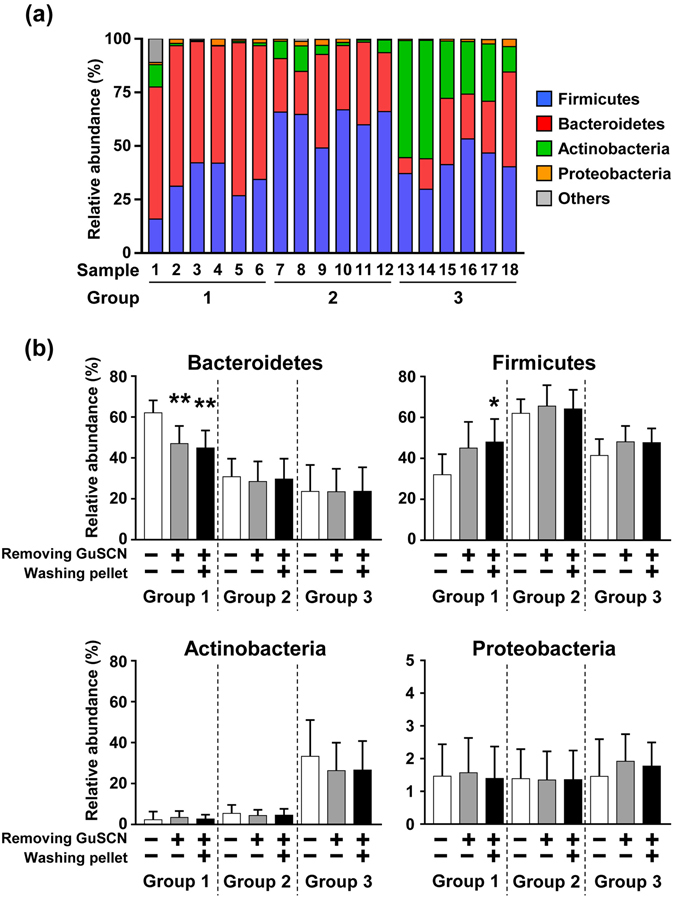
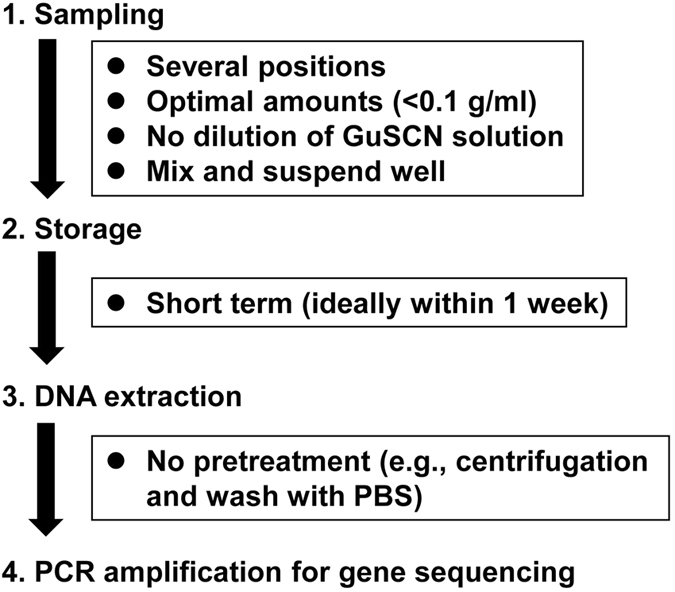
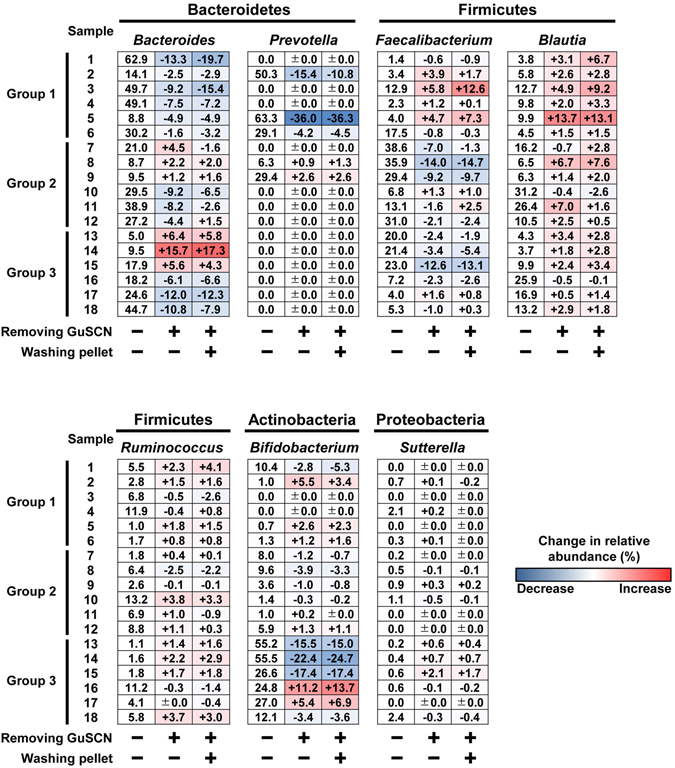
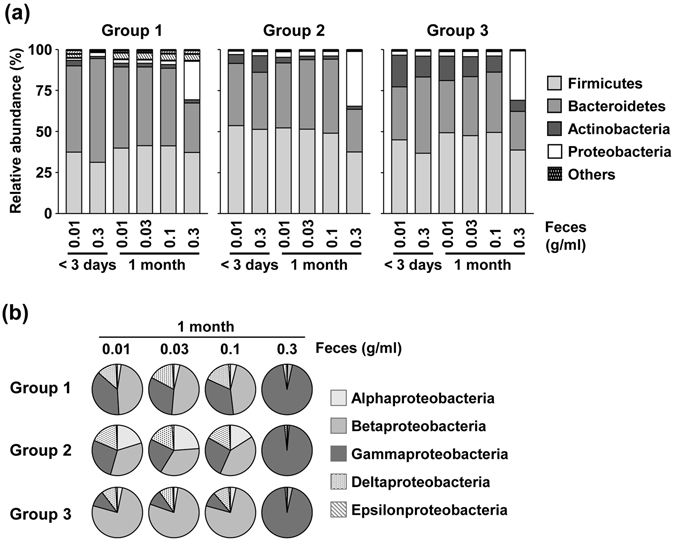
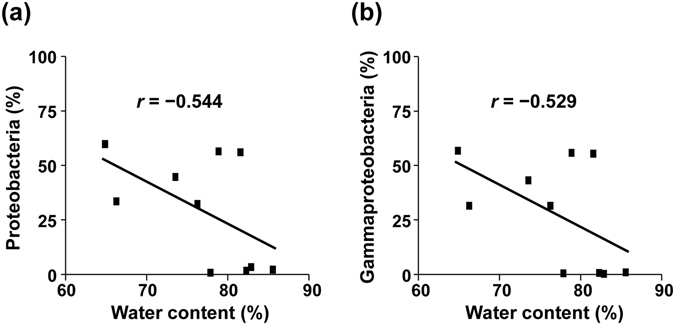
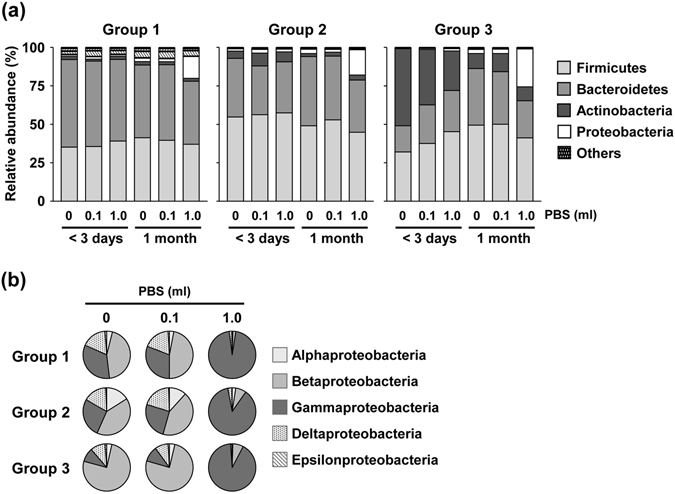
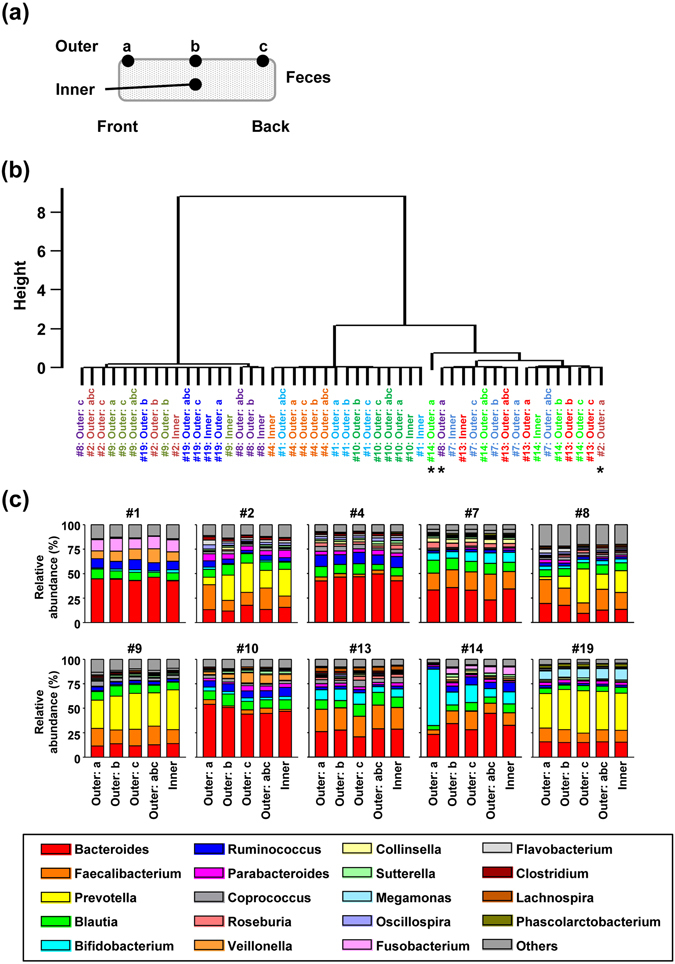
Metagenomic analysis based on the 16S rRNA gene is generally performed to examine the diversity and abundance of commensal bacteria in feces, which is now recognized to be associated with human health and diseases. Guanidine thiocyanate (GuSCN) solution is used as a less onerous way compared with a frozen method to transport and stock fecal samples at room temperature for DNA analysis; however, optimal methods to measure fecal bacterial composition in GuSCN solution remain to be investigated. Here, we examined the influence of various factors such as pretreatment (e.g., removing GuSCN solution and washing feces with phosphate-buffered saline (PBS) before mechanical lysis), fecal concentration in the GuSCN solution, storage time, and position of fecal subsampling on the 16S rRNA-based analysis of fecal bacteria in GuSCN solution. We found that pretreatment and fecal concentration affected the bacterial composition, and a little change was noted with subsampling position. Based on these results, we propose a basic protocol, including fecal sampling, sample storage, and DNA extraction, for the 16S rRNA-based analysis of bacterial composition in feces suspended in GuSCN solution.
基于 16S rRNA 基因的宏基因组分析通常用于检查粪便中共生细菌的多样性和丰度,现在人们认识到这些细菌与人类健康和疾病有关。与冷冻方法相比,硫氰酸胍(GuSCN)溶液是一种更简便的方法,可在室温下运输和储存粪便样本用于 DNA 分析;然而,GuSCN 溶液中测量粪便细菌组成的最佳方法仍有待研究。在这里,我们研究了各种因素的影响,如预处理(例如,在机械裂解前用磷酸盐缓冲盐水(PBS)去除 GuSCN 溶液并清洗粪便)、GuSCN 溶液中的粪便浓度、储存时间和粪便亚等分样的位置对 GuSCN 溶液中粪便细菌 16S rRNA 分析的影响。我们发现预处理和粪便浓度会影响细菌组成,而亚等分样位置的变化很小。基于这些结果,我们提出了一个基本方案,包括粪便采样、样品储存和 DNA 提取,用于基于 16S rRNA 的 GuSCN 溶液悬浮粪便细菌组成分析。