Institution of Nutrition and Health, Qingdao University, Qingdao 266071, China.
Department of Food Science and Nutrition, Zhejiang University, Hangzhou 310058, China.
Nutrients. 2018 Jul 3;10(7):860. doi: 10.3390/nu10070860.
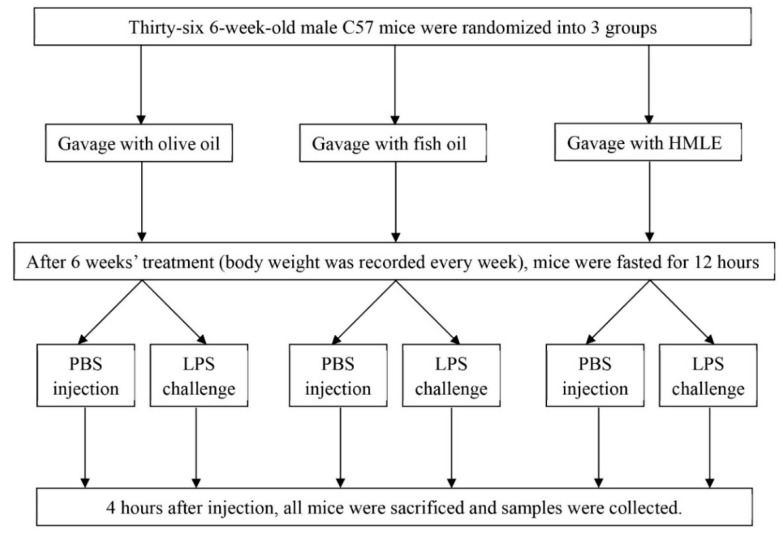
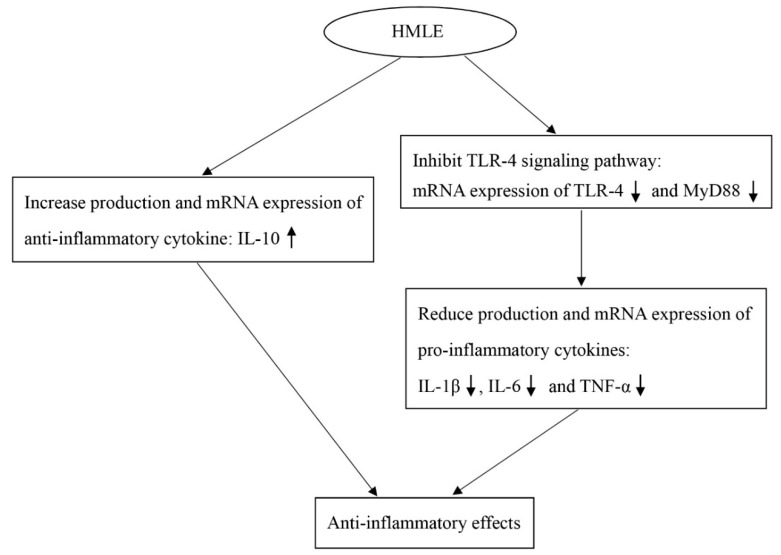
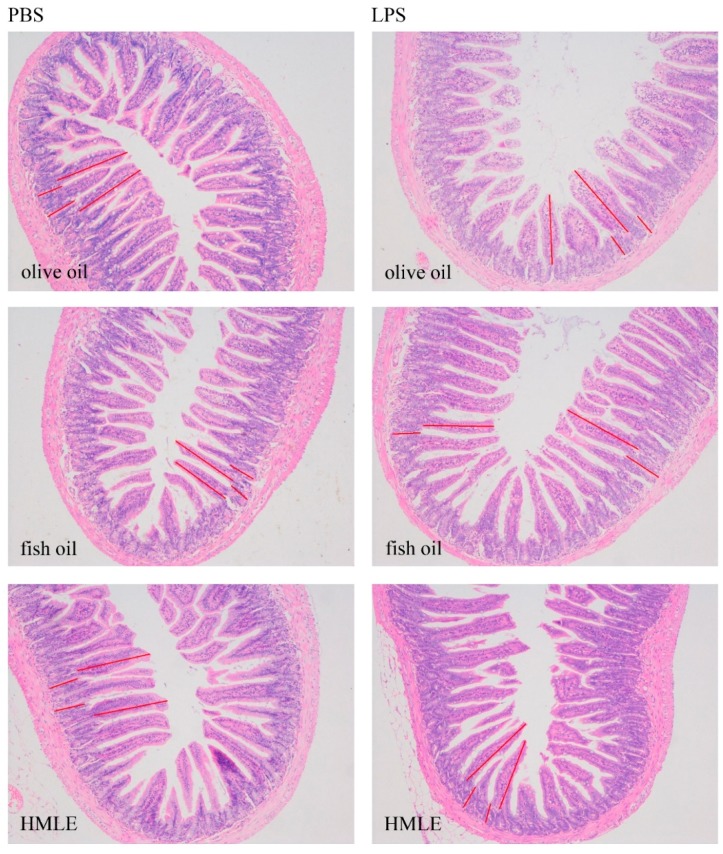
This study investigated the protective effects of a lipid extract from hard-shelled mussel (HMLE) on intestinal integrity and the underlying mechanisms after a lipopolysaccharide (LPS) challenge in mice by using a 3 × 2 factorial design. Mice received olive oil, fish oil, and HMLE ( = 12 per group) by using gastric gavage for six weeks, respectively. Then half the mice in each group was injected intraperitoneally with LPS and the other half with phosphate buffered saline. Four hours after injection, mice were sacrificed and samples were collected. n-3 PUFAs were significantly enriched in erythrocytes following fish oil and HMLE supplementation. Both fish oil and HMLE improved intestinal morphology by restoring the ileac villus height and barrier function, which is indicated by decreased colonic myeloperoxidase activity and increased diamine oxidase activity as well as enhanced mRNA expression of intestinal tight junction proteins known as occludin and claudin-1 when compared with olive oil. In addition, both fish oil and HMLE increased colon production and the expression of anti-inflammatory cytokine, IL-10, while they inhibited the abnormal production and expression of pro-inflammatory cytokines including TNF-α, IL-1β, and IL-6 relative to the olive oil. Lastly, in comparison with olive oil, both fish oil and HMLE downregulated the TLR-4 signaling pathway by reducing the expression of two key molecules in this pathway, which are called TLR-4 and MyD88. These results suggest that HMLE had a protective effect on intestinal integrity after the LPS challenge, which was equivalent to that of fish oil. This effect might be associated with the regulation of inflammatory mediators and the inhibition of the TLR-4 signaling pathway.
本研究采用 3×2 析因设计,研究了硬壳贻贝(HMLE)脂提取物对脂多糖(LPS)攻击后小鼠肠道完整性的保护作用及其机制。通过胃灌胃,分别给小鼠喂食橄榄油、鱼油和 HMLE(每组 12 只)6 周。然后,每组一半的小鼠腹腔内注射 LPS,另一半注射磷酸盐缓冲液。注射 4 小时后,处死小鼠并收集样本。n-3 PUFAs 在鱼油和 HMLE 补充后在红细胞中显著富集。与橄榄油相比,鱼油和 HMLE 均通过恢复回肠绒毛高度和屏障功能来改善肠道形态,这表现为结肠髓过氧化物酶活性降低,二胺氧化酶活性增加,以及紧密连接蛋白 occludin 和 claudin-1 的 mRNA 表达增强。此外,与橄榄油相比,鱼油和 HMLE 均增加了结肠的产量和抗炎细胞因子 IL-10 的表达,同时抑制了促炎细胞因子 TNF-α、IL-1β和 IL-6 的异常产生和表达。最后,与橄榄油相比,鱼油和 HMLE 通过降低该途径中的两个关键分子 TLR-4 和 MyD88 的表达,下调了 TLR-4 信号通路。这些结果表明,HMLE 对 LPS 攻击后肠道完整性具有保护作用,与鱼油相当。这种作用可能与炎症介质的调节和 TLR-4 信号通路的抑制有关。