GFZ German Research Centre for Geosciences, Telegrafenberg, Potsdam, 14473, Germany.
ÍSOR Iceland GeoSurvey, Grensásvegi 9, Reykjavik, 108, Iceland.
Nat Commun. 2018 Jul 3;9(1):2509. doi: 10.1038/s41467-018-04860-y.
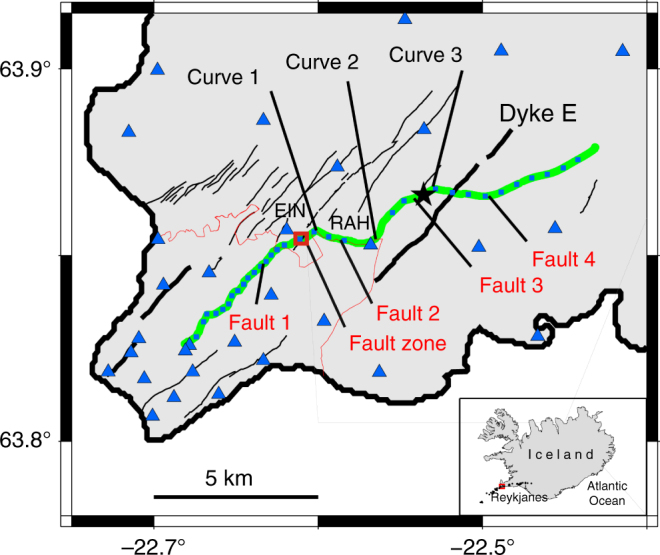
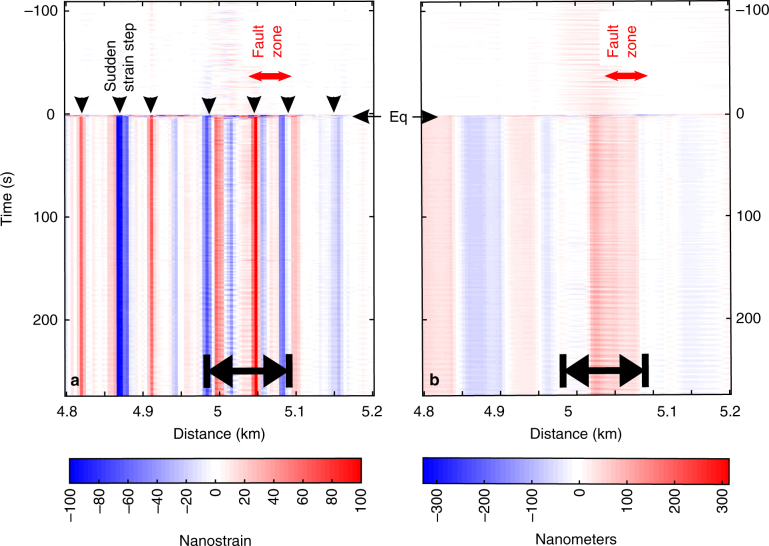
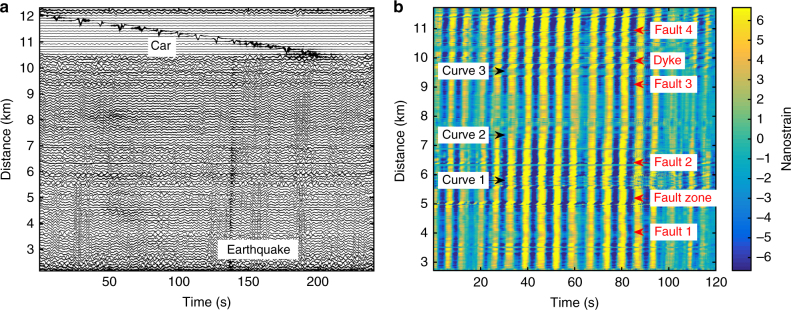
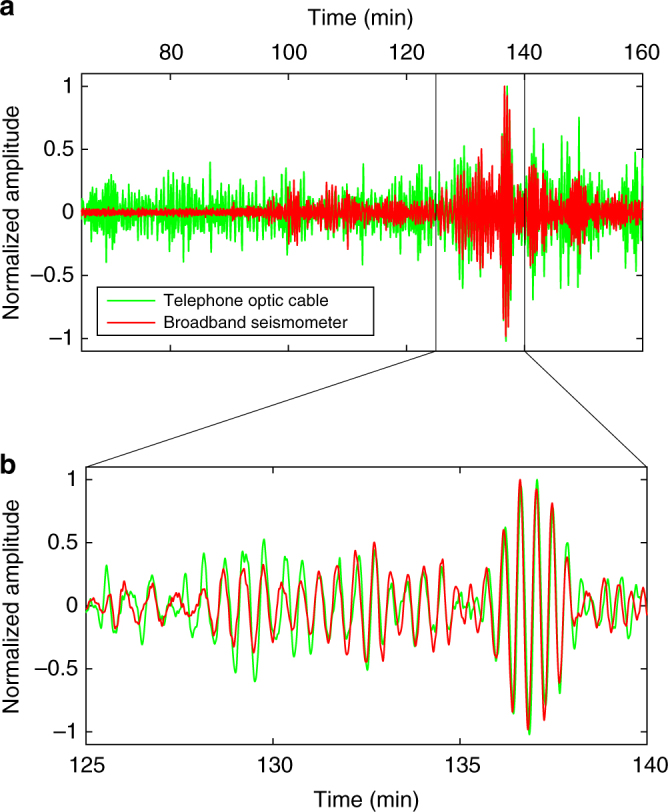
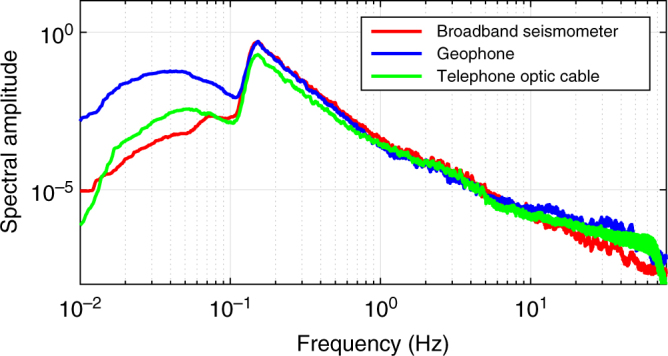
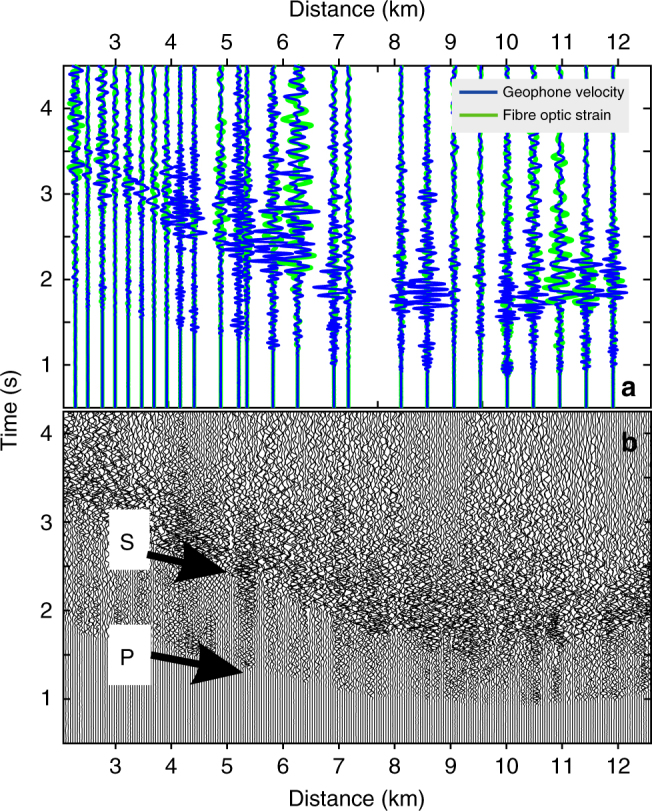
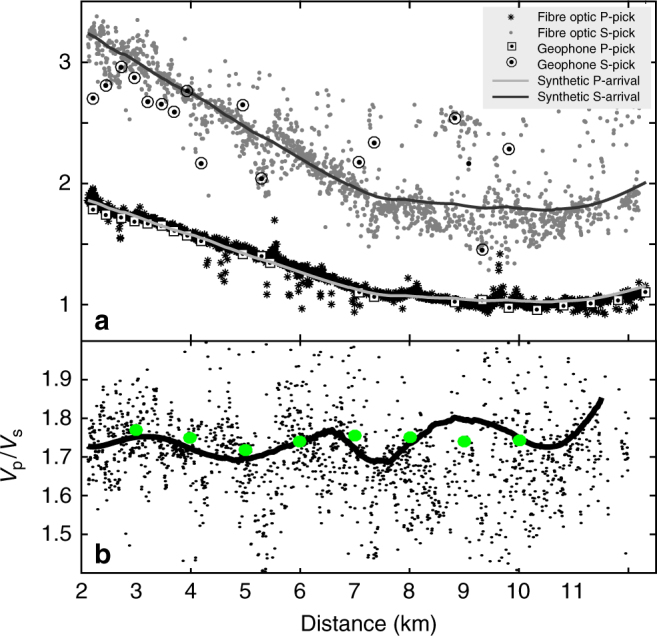
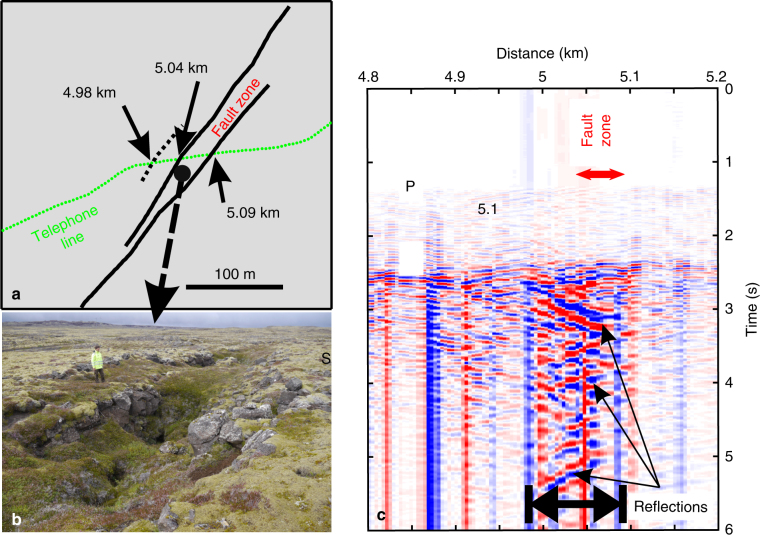
Natural hazard prediction and efficient crust exploration require dense seismic observations both in time and space. Seismological techniques provide ground-motion data, whose accuracy depends on sensor characteristics and spatial distribution. Here we demonstrate that dynamic strain determination is possible with conventional fibre-optic cables deployed for telecommunication. Extending recently distributed acoustic sensing (DAS) studies, we present high resolution spatially un-aliased broadband strain data. We recorded seismic signals from natural and man-made sources with 4-m spacing along a 15-km-long fibre-optic cable layout on Reykjanes Peninsula, SW-Iceland. We identify with unprecedented resolution structural features such as normal faults and volcanic dykes in the Reykjanes Oblique Rift, allowing us to infer new dynamic fault processes. Conventional seismometer recordings, acquired simultaneously, validate the spectral amplitude DAS response between 0.1 and 100 Hz bandwidth. We suggest that the networks of fibre-optic telecommunication lines worldwide could be used as seismometers opening a new window for Earth hazard assessment and exploration.
自然灾害预测和高效地壳勘探需要在时间和空间上进行密集的地震观测。地震学技术提供了地面运动数据,其准确性取决于传感器的特性和空间分布。在这里,我们证明了使用传统的光纤电缆进行电信部署可以实现动态应变的测定。在最近的分布式声学传感 (DAS) 研究的基础上,我们提出了高分辨率的空间非混淆宽带应变数据。我们在冰岛西南部雷克雅内斯半岛上的一条 15 公里长的光纤电缆布局上,以 4 米的间隔记录了来自天然和人为源的地震信号。我们以前所未有的分辨率识别了雷克雅内斯斜裂谷中的构造特征,如正断层和火山岩脉,从而推断出新的动态断层过程。同时采集的传统地震仪记录验证了在 0.1 到 100 Hz 带宽之间的 DAS 响应的谱振幅。我们建议,全球的光纤电信网络可以用作地震仪,为地球灾害评估和勘探开辟新的窗口。